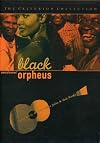
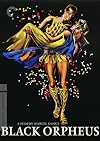
Black Orpheus [1959 film]
by Marcel Camus (Director/Screenwriter), Jacques Viot (Screenwriter)
On This Page
Description
Story based on the legend of Orpheus and Eurydice set against the colorful background of the carnival in Rio de Janiero. With its magnificent color photography and lively soundtrack, this film brought the infectious bossa nova beat to the United States.Tags
Recommendations





Member Reviews
Ambientación del mito griego en el carnaval de Río de Janeiro. La bella Eurídice visita la ciudad brasileña en vísperas de su famoso carnaval, invitada por una prima que vive en los arrabales. Hasta allí llega en un tranvía cuyo conductor, un guitarrista llamado Orfeo, queda prendado de sus encantos. Sin embargo su relación se verá empañada por las sospechas de su celosa novia. (FILMAFFINITY)
Nov 13, 2024Spanish
Musta Orfeus (port. Orfeu Negro) on ranskalais-italialais-brasilialainen elokuva vuodelta 1959. Elokuvan ohjasi Marcel Camus, ja sen pääosia näyttelevät ohjaajan itsensä lisäksi Breno Mella, Fausto Guezzoni, Lourdes de Oliveira ja Adenaur Da Silva. Antiikin Orfeus-myyttiä tulkitsevaa elokuvaa kuvattiin Brasiliassa, ja se tuli tunnetuksi Luiz Bonfán ja Antônio Carlos Jobimin säveltämästä bossa nova -musiikista.
Musta Orfeus palkittiin julkaisuvuonna parhaan vieraskielisen elokuvan Oscar-palkinnolla sekä Kultainen palmu -palkinnolla. The New York Timesin kriitikot valitsivat sen vuonna 2004 yhdeksi kaikkien aikojen tuhannesta parhaasta elokuvasta maailmassa.[1]
http://www.imdb.com/title/tt0053146/
show more target="_top">https://www.youtube.com/watch?v=NkxGkL7o9xk show less
Musta Orfeus palkittiin julkaisuvuonna parhaan vieraskielisen elokuvan Oscar-palkinnolla sekä Kultainen palmu -palkinnolla. The New York Timesin kriitikot valitsivat sen vuonna 2004 yhdeksi kaikkien aikojen tuhannesta parhaasta elokuvasta maailmassa.[1]
http://www.imdb.com/title/tt0053146/
show more target="_top">https://www.youtube.com/watch?v=NkxGkL7o9xk show less
Jan 6, 2018Swedish
Black Orpheus (Portuguese: Orfeu Negro) is a 1959 film made in Brazil by French director Marcel Camus and starring Marpessa Dawn and Breno Mello. It is based on the play Orfeu da Conceição by Vinicius de Moraes, which is an adaptation of the Greek legend of Orpheus and Eurydice, set in the modern context of a favela in Rio de Janeiro during Carnaval. The film was an international co-production among production companies in Brazil, France and Italy.
The film is particularly noted for its soundtrack by two Brazilian composers: Antônio Carlos Jobim, whose song "A Felicidade" opens the film; and Luiz Bonfá, whose "Manhã de Carnaval" and "Samba de Orfeu" have become bossa nova classics. The songs sung by the character Orfeu were dubbed show more by singer Agostinho dos Santos.[2]
Lengthy passages of the film were shot in the Morro da Babilônia, a favela (slum) in the Leme neighbourhood of Rio de Janeiro. (Wiki) show less
The film is particularly noted for its soundtrack by two Brazilian composers: Antônio Carlos Jobim, whose song "A Felicidade" opens the film; and Luiz Bonfá, whose "Manhã de Carnaval" and "Samba de Orfeu" have become bossa nova classics. The songs sung by the character Orfeu were dubbed show more by singer Agostinho dos Santos.[2]
Lengthy passages of the film were shot in the Morro da Babilônia, a favela (slum) in the Leme neighbourhood of Rio de Janeiro. (Wiki) show less
May 31, 2017Finnish
Ratings
Members
- Recently Added By
Author Information

All Editions
Awards and Honors
Awards
Series
Belongs to Publisher Series
Work Relationships
Is contained in
Is an adaptation of
Inspired
Has as a supplement
Common Knowledge
- Canonical title
- Black Orpheus [1959 film]
- Original title
- Orfeu Negro
- Original publication date
- 1959-06-12
- People/Characters
- Orpheus; Eurydice; Ernesto; Fausto; Mira; Serafina (show all 11); Death; Hermes; Chico; Benedito; Zeca
- Important places
- Rio de Janeiro, Rio de Janeiro, Brasil; Rio de Janeiro, Brazil; Brazil
- Important events
- Carnival
- Related movies
- Black Orpheus (1959 | IMDb)
- Original language
- Portuguese
Classifications
Statistics
- Members
- 87
- Popularity
- 368,544
- Reviews
- 3
- Rating
- (4.31)
- Languages
- English, Portuguese
- ISBNs
- 5
- UPCs
- 4
- ASINs
- 15