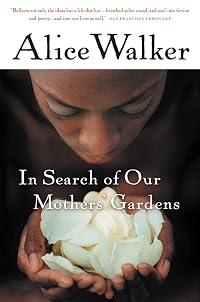
In Search of Our Mothers' Gardens: Womanist Prose
by Alice Walker
On This Page
Description
Walker's collection of early nonfiction serves as the manifesto of a young artist-and an illuminating self-portrait What is a womanist? Alice Walker sets out to define the concept in this anthology of early essays and other nonfiction pieces. As she outlines it, a womanist is a person who prefers to side with the oppressed: with women, with people of color, with the poor. As a writer, Walker has always taken such people as her primary subjects, and her search for paths toward self-possession show more and freedom always holds out hope for the transformative power of compassion and love. Whether she's taking on nuclear proliferation, the promise and problems of the civil rights movement, or her own creative process, Walker always brings to bear a fearless determination to tell the truth. This ebook features an illustrated biography of Alice Walker including rare photos from the author's personal collection. show lessTags
Recommendations





Member Reviews
Such an inclusive and intimate collection of essays from the Alice Walker of the 70s, where she relays her own childhood and life experiences as a Black girl and women to the racism and colourism of her days (which I feel is still relevant to now); and admires the survival of Black creativity and art, while mourning the lost works of art that had to lie dormant beneath the struggle to survive; and expounds the necessity for a continuity and history of Black artists for future Black artists, and an appreciation for what the Black art that did survive while acknowledging their own inherited subconscious biases.
Another thing I really appreciated is how frequently Walker champions and references Black writers throughout these essays. It was show more clear how important Walker felt that future Black writers should know the genealogy of the family tree of Black writers. If I recall correctly, Zora Neale Hurston is really only nowadays still in literary consciousness due to Walker's efforts, and it makes me despair how many ZNHs remain unacknowledged and forgotten.
Aside: Reading this collection also gave me an odd jarring experience when I remembered Walker's more recent anti-Semitism, when the Walker of 1983 actively denounced such abhorrent behaviour.
What happened in those thirty-odd years? Walker had already been divorced from her civil rights lawyer husband who was Jewish for some years pre-83 and also their daughter is Jewish. How do they feel about her spouting these personally hateful views? How do readers themselves feel when a writer who has brought the world such a beautiful shared experience engages in such public hate?
It seems no longer an option to separate the art from the artist, with the extra onus being put upon the reader to be constantly engaged, to acknowledge or maybe even justify, and perhaps eventually to pinpoint their own breaking point. There's no perfection in the art and the artist as one, nor should there be an expectation of it, but seeing as art itself doesn't happen in a vacuum, I feel it's better and more important to accept the artist as part and parcel of their art, than to separate and ignore. show less
Another thing I really appreciated is how frequently Walker champions and references Black writers throughout these essays. It was show more clear how important Walker felt that future Black writers should know the genealogy of the family tree of Black writers. If I recall correctly, Zora Neale Hurston is really only nowadays still in literary consciousness due to Walker's efforts, and it makes me despair how many ZNHs remain unacknowledged and forgotten.
Aside: Reading this collection also gave me an odd jarring experience when I remembered Walker's more recent anti-Semitism, when the Walker of 1983 actively denounced such abhorrent behaviour.
What happened in those thirty-odd years? Walker had already been divorced from her civil rights lawyer husband who was Jewish for some years pre-83 and also their daughter is Jewish. How do they feel about her spouting these personally hateful views? How do readers themselves feel when a writer who has brought the world such a beautiful shared experience engages in such public hate?
It seems no longer an option to separate the art from the artist, with the extra onus being put upon the reader to be constantly engaged, to acknowledge or maybe even justify, and perhaps eventually to pinpoint their own breaking point. There's no perfection in the art and the artist as one, nor should there be an expectation of it, but seeing as art itself doesn't happen in a vacuum, I feel it's better and more important to accept the artist as part and parcel of their art, than to separate and ignore. show less
Alice Walker is a formidable novelist and "theologian" in her own right [write / rite / rights]. She is also infamous for defining "Womanist", and for resurrecting the treasure trove of Zora Neale Hurston, whose anthropology novels had been deliberately subordinated. In this "Search", Walker provides perspective on that discovery. It is a brilliant unfolding of stories within stories--gems poking out from the vein of treasure in the cordillera of literature. Walker steps boldly into authentic theology with the first Chapter--"Saving the Life that is your own". She begins by recounting the letter written by an obscure French painter to another. Within six months, the writer put paint to canvas, fell into depression, mutilated his ear, show more and destroyed his life "behind a pile of manure in the yard". Knowing the story, the message of the letter itself jumps off the page. She presents the "salvation" model of caring, and explains Why. This is robust Theology.
Walker also answers questions often put to her, by telling stories that reflect on the "Southern experience" she shares with other writers. Her sketches are the "anatomically correct" perspective needed for reading literature. For example, noting the fact that the writings of white male racist Faulkner are well-known, a rich legacy of black writers remains--"continues"--to be subordinated. However, this book is not bitter, and is whine-free. She mirrors the "advantageous heritage" bequeathed to Southerners, and to those of color whose morals, achievements and intelligence far exceeds those who claim to be entitled or "superior". In her words, "We inherit a great responsibililty as well, for we must give voice to centuries not only of silent bitterness and hate but also of neighborly kindness and sustaining love." The volume is a resource for those who are building and repairing the Kin-dom of god on Earth. show less
Walker also answers questions often put to her, by telling stories that reflect on the "Southern experience" she shares with other writers. Her sketches are the "anatomically correct" perspective needed for reading literature. For example, noting the fact that the writings of white male racist Faulkner are well-known, a rich legacy of black writers remains--"continues"--to be subordinated. However, this book is not bitter, and is whine-free. She mirrors the "advantageous heritage" bequeathed to Southerners, and to those of color whose morals, achievements and intelligence far exceeds those who claim to be entitled or "superior". In her words, "We inherit a great responsibililty as well, for we must give voice to centuries not only of silent bitterness and hate but also of neighborly kindness and sustaining love." The volume is a resource for those who are building and repairing the Kin-dom of god on Earth. show less
A disappointing read but I enjoyed reading this more than reading Alice Walker’s journal: Blossoms Under Fire. This book has more details and information in the way I had expected but I was also left wanting more, in the essay From An Interview, Alice Walker says she taught a course in black women writers at Wellesley, so I was expecting much more about Zora Neale Hurston, Nella Larson, Gwendolyn Brooks and Dorothy West, I also thought there's be a lot more on Langston Hughes, Richard Wright, James Baldwin and Ralph Ellison. I also wanted to read about how she related to these books and authors, whilst imparting context and history of her own time. There was some of this but not as much as I hoped, this book is 400 pages.
My favourite show more essay was Alice Walker’s interview with Corretta King, there were also parts of other essays that were interesting but I wanted the discussions of the journey and the trials of the black woman writer and artist to be broadened than what was presented here.
When these essays were first written they were articles for a different medium that was not a book. They were also written over a long period of time. When these were first published, in the moment I can imagine the impact each individual essay would make on the reader, but when they are all collated in one book then it’s different. I have quite a few books where originally the content was written for another medium, as it is here, but for a book it was redesigned. Reading a book and reading articles or posts are two different mediums and are also prepared differently for the reader. So, next time when I read this, I’ll give myself more space between each essay, and also I will not read them in the order they are organised in this book (which is not chronologically, making it a disruptive read: especially when in the book a later dated essay is placed before an earlier dated one and where Alice Walker has changed her view on the subject).
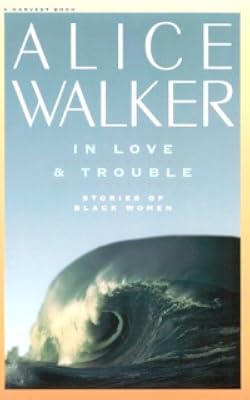
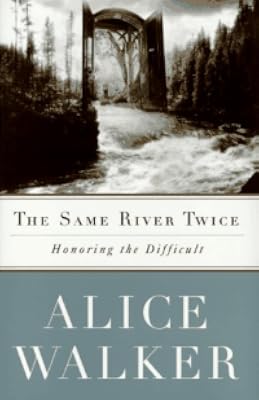
This is my fifth book I have read by Alice Walker, this is my third favourite, The Color Purple remains to be my first favourite for now, I say for now as I have on my tbr Alice Walker’s The Same River Twice and In Love and Trouble to read. show less
My favourite show more essay was Alice Walker’s interview with Corretta King, there were also parts of other essays that were interesting but I wanted the discussions of the journey and the trials of the black woman writer and artist to be broadened than what was presented here.
When these essays were first written they were articles for a different medium that was not a book. They were also written over a long period of time. When these were first published, in the moment I can imagine the impact each individual essay would make on the reader, but when they are all collated in one book then it’s different. I have quite a few books where originally the content was written for another medium, as it is here, but for a book it was redesigned. Reading a book and reading articles or posts are two different mediums and are also prepared differently for the reader. So, next time when I read this, I’ll give myself more space between each essay, and also I will not read them in the order they are organised in this book (which is not chronologically, making it a disruptive read: especially when in the book a later dated essay is placed before an earlier dated one and where Alice Walker has changed her view on the subject).
This is my fifth book I have read by Alice Walker, this is my third favourite, The Color Purple remains to be my first favourite for now, I say for now as I have on my tbr Alice Walker’s The Same River Twice and In Love and Trouble to read. show less
I enjoyed reading this book. I find Alice Walker to be an intelligent, thoughtful woman. While we are not particularly alike in any way, I found that I related to a lot of what she says. She's Southern Black and I'm Northern White, but we are both women. She grew up rural and I grew up inner city. In an odd way that's a connection. Her essays open doors and windows for me, help me to see, to better understand a life other than one like my own. I would recommend it to anyone, particularly White women wanting to better understand our Black sisters, anyone wanting in insiders view of feminism from a Black woman's perspective, and anyone wanting to understand why the Civil Rights movement was so important. She covers all these topics and more.
I have yet to read a book by Alice Walker that I did not love... Her ability with writing, whether fiction or non-fiction, is astounding and I enjoyed these essays as much as I have enjoyed her fiction. I've also been prompted to look into reading some of the black authors she mentions and recommends in this book.
Really loved this when I read it in my early thirties. In fact, I think I want to go back and read it again.
We have all pretty much seen the movie. However, the book was far more detailed oriented.
A collection of letters detailing the life of Ciele. This book was an excellent read. A tear jerker for sure. I could not stop reading it once I picked it up. The interaction and growth of all the characters was very well written.
I would highly recommend this book to anyone reading it. I do not want to give spoilers here other than, if you think you know the whole story by watching the movie? You are missing out on all the tiny details if you do not read this book.
A collection of letters detailing the life of Ciele. This book was an excellent read. A tear jerker for sure. I could not stop reading it once I picked it up. The interaction and growth of all the characters was very well written.
I would highly recommend this book to anyone reading it. I do not want to give spoilers here other than, if you think you know the whole story by watching the movie? You are missing out on all the tiny details if you do not read this book.
Members
- Recently Added By
Lists

Must-Read Books by Black Authors
114 works; 92 members

Bibliography for How to be a Heroine
148 works; 12 members

Zora Canon
100 works; 6 members

The Zora Canon
98 works; 4 members
Author Information

96+ Works 40,776 Members
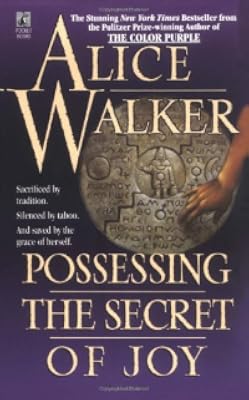
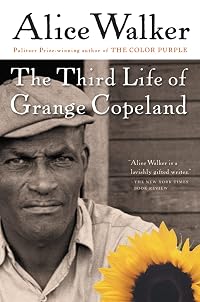
Alice Walker won the Pulitzer Prize and the American Book Award for her novel The Color Purple. Her other bestselling novels include By the Light of My Father's Smile, Possessing the Secret of Joy, and The Temple of My Familiar. She is also the author of two collections of short stories, three collections of essays, five volumes of poetry, and show more several children's books. Her books have been translated into more than two dozen languages. Born in Eaton, Georgia, Walker now lives in Northern California. Like so many characters in her fiction, Alice Walker was born into a family of sharecroppers in Eaton, Georgia. She began Spelman College on a scholarship and graduated from Sarah Lawrence College in 1965. While still in college, Walker became active in the civil rights movement and continued her involvement after she graduated, serving as a voter registration worker in Georgia. She also worked in a Head Start program in Mississippi and was on the staff of the New York City welfare department. She has lectured and taught at several colleges and universities and currently operates a publishing house, Wild Trees Press, of which she is a co-founder. Walker began her literary career as a poet, publishing Once: Poems in 1968. The collection reflects her experiences in the civil rights movement and her travels in Africa. Her second collection of poetry, Revolutionary Petunias and Other Poems (1973), is a celebration of the struggle against oppression and racism. In between these two collections, she published her first novel, The Third Life of Grange Copeland (1970), the story of Ruth Copeland, a young black girl, and her grandfather, Grange, who brutalizes his own family out of the frustrations of racial prejudice and his own sense of inadequacy. Walker's first collection of short stories, In Love and Trouble: Stories of Black Women (1973), established her special concern for the struggles, hardships, loyalties, and triumphs of black women, a powerful force in the rest of her fiction. Meridian (1976), her second novel, is the story of Meridian Hill, a civil rights worker. In her second collection of short stories, You Can't Keep A Good Woman Down (1981), Walker again portrays black women struggling against sexual, racial, and economic oppression. Walker's third novel, The Color Purple (1982), brought her the national recognition denied her earlier works. Through this story of the sharecropper Celie and the abuses she endures, Walker draws together the themes that have run through her earlier work into a concentrated and powerful attack on racism and sexism, and produces a triumphant celebration of the spirit and endurance of black women. The book received the Pulitzer Prize and was made into a successful film. Walker describes her most recent novel, The Temple of My Familiar (1989) as "a romance of the last 500,000 years." The book is a blend of myth and history revolving around three marriages. As the married couples tell their stories, they explore both their origins and the inner life of modern African Americans. (Bowker Author Biography) show less
Some Editions
Awards and Honors
Awards
Distinctions
Notable Lists
Work Relationships
Has as a student's study guide
Common Knowledge
- Original title
- In search of our mothers' gardens
- Original publication date
- 1983
- Dedication
- To my daughter Rebecca
who saw in me
what I considered
a scar
And redefined it
as
a world. - First words
- There is a letter Vincent Van Gogh wrote to Emile Bernard that is very meaningful to me.
- Quotations
- I had that wonderful feeling writers get sometimes, not very often, of being WITH a great many people, ancient spirits, all very happy to see me consulting and acknowledging them, and eager to let me know, through the joy of ... (show all)their presence, that, indeed, I am not alone. [13]
- Last words
- (Click to show. Warning: May contain spoilers.)You have Rebecca--who is
much more delightful
and less distracting
than any of the calamities
above. - Original language
- English
Classifications
Statistics
- Members
- 1,602
- Popularity
- 14,146
- Reviews
- 13
- Rating
- (4.16)
- Languages
- Dutch, English, French, German
- Media
- Paper, Audiobook, Ebook
- ISBNs
- 21
- ASINs
- 14