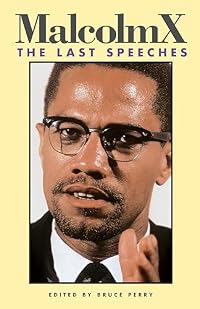
Malcolm X: The Last Speeches
by Malcolm X
On This Page
Description
Any kind of movement for freedom of Black people based solely within the confines of America is absolutely doomed to fail. Speeches and interviews from the last two years of Malcolm X's life.Tags
Recommendations

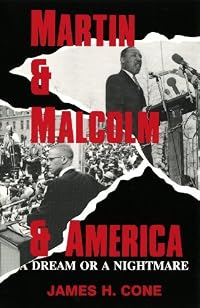

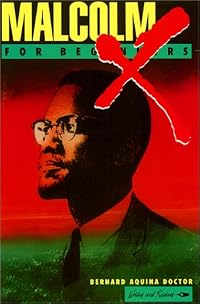
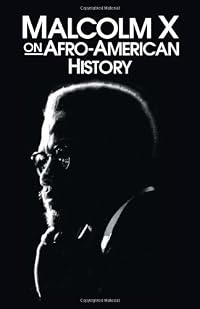
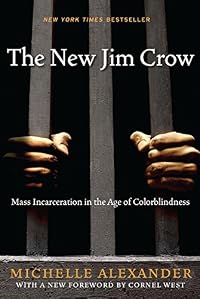




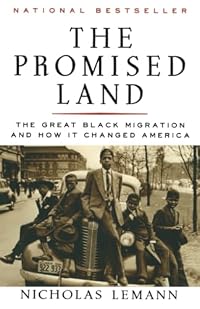
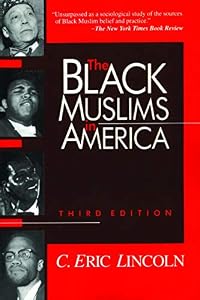
Member Reviews
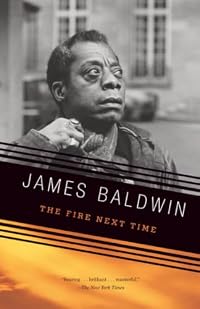
Certain themes repeat: empowerment through segregation, anti-micegenation, black nationalism as a response to white nationalism etc. How can one say Malcolm X was wrong? How can one deny that his anger and reaction to white supremacy was legitimate? And yet, somewhere between X's powerful angry truth and King's naively optimistic 'arc of history,' (destroyed by Coates) lies Baldwin (who embodies Gramsci's 'pessimism of the intelligence, optimism of the will'). It is fascinating how the question of love towards one's oppressor comes up repeatedly between all these African American thinkers. X says he will never love the white man, who cannot love blacks. Baldwin understands this and speaks to it, while also recognising there must be some show more point after anger. It can become a trap. We do not forgive our oppressors for their sake, because they deserve our love. No, we forgive them for ourselves. To move beyond the lie they have chosen to create that we are opposites at war. Why should they alone get to decide? Because they have the guns? Guns be damned. There is power, also, in choosing how one reacts to oppression. For X, loving whites is submission. For Baldwin, what he calls love can also be a kind of opposition. show less
For my thoughts: Bridget Blogs Books
Circuito Ubu - Agosto de 2021
Apr 14, 2022Portuguese (Brazil)
Ratings
Members
- Recently Added By
Author Information

39+ Works 13,204 Members
Born in Omaha, Nebraska, and the son of a Baptist minister, Malcolm Little grew up with violence. Whites killed several members of his family, including his father. As a youngster, he went to live with a sister in Boston where he started a career of crime that he continued in New York's Harlem as a drug peddler and pimp. While serving a prison show more term for burglary in 1952, he converted to Islam and undertook an intensive program of study and self-improvement, movingly detailed in "Autobiography of Malcolm X." He wrote constantly to Elijah Muhammad (Elijah Poole, 1897--1975), head of the black separatist Nation of Islam, which already claimed the loyalty of several of his brothers and sisters. Upon release from prison, Little went to Detroit, met with Elijah Muhammad, and dropped the last name Little, adopting X to symbolize the unknown African name his ancestors had been robbed of when they were enslaved. Soon he was actively speaking and organizing as a Muslim minister. In his angry and articulate preaching, he condemned white America for its treatment of blacks, denounced the integration movement as black self-delusion, and advocated black control of black communities. During the turbulent 1960's, he was seen as inflammatory and dangerous. In 1963, a storm broke out when he called President Kennedy's assassination a case of "chickens coming home to roost," meaning that white violence, long directed against blacks, had now turned on itself. The statement was received with fury, and Elijah Muhammad denounced him publicly. Shocked and already disillusioned with the leader because of his reputed involvement with several women, Malcolm X went on a pilgrimage to Mecca and then traveled to several African countries, where he was received as a fellow Muslim. When he returned home, he was bearing a new message: Islam is a religion that welcomes and unites people of all races in the Oneness of Allah. On the night of February 21, 1965, as he was preaching at Harlem's Audubon Ballroom, he was assassinated. (Bowker Author Biography) show less
Common Knowledge
- Canonical title
- Malcolm X: The Last Speeches
- Original publication date
- 1989
- People/Characters
- Malcolm X
- Important events
- African-American Civil Rights Movement
Classifications
- Genres
- Nonfiction, Anthropology, General Nonfiction, History, Politics and Government, Religion & Spirituality
- DDC/MDS
- 305.8 — Society, Government, and Culture Social sciences, sociology & anthropology Social group - Age, Gender, Ethnicity Ethnic and national groups
- LCC
- BP223 .Z8 .L58 — Philosophy, Psychology and Religion Islam. Bahaism. Theosophy, etc. Islam. Bahai Faith. Theosophy, etc. Branches, sects, etc. Black Muslims
Statistics
- Members
- 270
- Popularity
- 119,236
- Reviews
- 3
- Rating
- (3.97)
- Languages
- 5 — English, French, Italian, Portuguese (Portugal), Spanish
- Media
- Paper, Audiobook, Ebook
- ISBNs
- 9
- ASINs
- 4