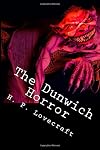
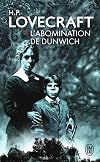
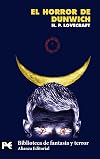
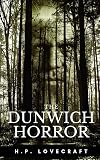
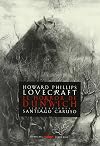
The Dunwich Horror (short story)
by H. P. Lovecraft
On This Page
Description
This spine chilling tale by HP Lovecraft, depicts an unimaginable horror arising in the isolated village of Dunwich, which poses a threat to the whole world. Narrated by Michael Ward.Tags
Recommendations

















Member Recommendations

Member Reviews
En mi afán por revisar la obra completa de H.P. Lovecraft, ahora toca 'El horror de Dunwich', que incluye cuatro narraciones: 'El horror de Dunwich', que da nombre a la antología, 'El modelo de Pickman', 'El susurrador en la oscuridad' y 'El extraño'. En mi opinión, estos cuentos son de lo mejor que escribió el Maestro de Providence. En ellos se conjugan a la perfección los llamados Mitos de Cthulhu y los relatos del ciclo de Nueva Inglaterra, llegando a unas cotas de horror y suspense extraordinarias, sin dejar de lado la gran calidad literaria (a pesar de la opinión de algunos críticos pedantes de la época, como bien comenta August Derleth en el prólogo sobre la vida y obra de Lovecraft).
Cito a Lovecraft: "La literatura de show more terror debe ser realista y ambiental, limitando su desviación de la naturaleza al canal sobrenatural elegido, y recordando que el escenario, el tono y los acontecimientos son más importantes a la hora de comunicar lo que se pretende que los personajes y la acción misma." Y esto es lo que mejor sabía hacer Lovecraft, crear atmósferas asfixiantes y sobrecogedoras, donde lo macabro y sobrenatural "eran" posibles. Cuando lees uno de estos relatos, casi parecen artículos periodísticos dada su erudición y documentación sobre los hechos que se suceden, donde los personajes son lo de menos, aunque estén narrados en primera persona; lo importante es la sensación que transmite al lector, casi de simbiosis con el narrador, arrastrándolos a ambos por los incríbles cauces de lo sobrenatural.
Estos son los cuentos que incluye el volumen:
- El horror de Dunwich (The Dunwich Horror). La granja Whatheley, situada en el municipio de Dunwich, tiene muy mala fama entre sus vecinos; su nombre está asociado a la brujería y a elementos extraños. Y desde el nacimiento de Wilbur Whateley, aquélla se ha acrecentado. Esta es la historia de un horror, un horror asociado al apellido Whateley en general, y a Wilbur en particular; un horror que asolará la región, y que tendrá como testigo de primera fila al doctor Henry Armitage, gran erudito y bibliotecario en Miskatonic. Este es un relato imprescindible, construido magistralmente, que te envuelve en el misterio y el horror hasta su terrible final.
- El modelo de Pickman (Pickman's Model). El protagonista le está contando a su amigo Eliot su obsesión por la obra del pintor Richard Upton Pickman, un artista tan genial como provocador, cuyos cuadros sólo aprecian unos pocos, dado su cariz morboso. Y es que Pickman pinta el horror, cuadros donde late lo siniestro y espectral. Será esta obsesión la que haga que acepte una invitación de Pickman para visitar su casa privada, donde guarda algunas de sus "mejores" obras...
- El susurrador en la oscuridad (The Whisperer in Darkness). Wilmarth, profesor de literatura en la Universidad de Miskatonic en Arkham, nos relata cómo se vio envuelto en unos asombrosos hechos a raíz de relacionarse con Akeley. Todo empezó cuando unas inundaciones sacaron a la luz unos extraños seres. Esto provoca que las gentes del lugar rememoren antiguas leyendas relacionadas con las montañas de Vermont. Wilmarth, experto en folklore, tiene algo que decir sobre el tema. Es entonces cuando Akeley, que vive en estas montañas en su granja, escribe al profesor comunicándole que estas leyendas podrían guardar más verdades de lo que parece... De nuevo la maestría de Lovecraft sale a relucir en esta historia fascinante de principio a fin.
- El extraño (The Outsider). El protagonista, que vive en un castillo, no recuerda nada de su pasado. Recorre el castillo y alrededores lleno de temor y tristeza, y su único deseo es poder vislumbrar el sol. Un cuento, corto, pero espeluznante. show less
Cito a Lovecraft: "La literatura de show more terror debe ser realista y ambiental, limitando su desviación de la naturaleza al canal sobrenatural elegido, y recordando que el escenario, el tono y los acontecimientos son más importantes a la hora de comunicar lo que se pretende que los personajes y la acción misma." Y esto es lo que mejor sabía hacer Lovecraft, crear atmósferas asfixiantes y sobrecogedoras, donde lo macabro y sobrenatural "eran" posibles. Cuando lees uno de estos relatos, casi parecen artículos periodísticos dada su erudición y documentación sobre los hechos que se suceden, donde los personajes son lo de menos, aunque estén narrados en primera persona; lo importante es la sensación que transmite al lector, casi de simbiosis con el narrador, arrastrándolos a ambos por los incríbles cauces de lo sobrenatural.
Estos son los cuentos que incluye el volumen:
- El horror de Dunwich (The Dunwich Horror). La granja Whatheley, situada en el municipio de Dunwich, tiene muy mala fama entre sus vecinos; su nombre está asociado a la brujería y a elementos extraños. Y desde el nacimiento de Wilbur Whateley, aquélla se ha acrecentado. Esta es la historia de un horror, un horror asociado al apellido Whateley en general, y a Wilbur en particular; un horror que asolará la región, y que tendrá como testigo de primera fila al doctor Henry Armitage, gran erudito y bibliotecario en Miskatonic. Este es un relato imprescindible, construido magistralmente, que te envuelve en el misterio y el horror hasta su terrible final.
- El modelo de Pickman (Pickman's Model). El protagonista le está contando a su amigo Eliot su obsesión por la obra del pintor Richard Upton Pickman, un artista tan genial como provocador, cuyos cuadros sólo aprecian unos pocos, dado su cariz morboso. Y es que Pickman pinta el horror, cuadros donde late lo siniestro y espectral. Será esta obsesión la que haga que acepte una invitación de Pickman para visitar su casa privada, donde guarda algunas de sus "mejores" obras...
- El susurrador en la oscuridad (The Whisperer in Darkness). Wilmarth, profesor de literatura en la Universidad de Miskatonic en Arkham, nos relata cómo se vio envuelto en unos asombrosos hechos a raíz de relacionarse con Akeley. Todo empezó cuando unas inundaciones sacaron a la luz unos extraños seres. Esto provoca que las gentes del lugar rememoren antiguas leyendas relacionadas con las montañas de Vermont. Wilmarth, experto en folklore, tiene algo que decir sobre el tema. Es entonces cuando Akeley, que vive en estas montañas en su granja, escribe al profesor comunicándole que estas leyendas podrían guardar más verdades de lo que parece... De nuevo la maestría de Lovecraft sale a relucir en esta historia fascinante de principio a fin.
- El extraño (The Outsider). El protagonista, que vive en un castillo, no recuerda nada de su pasado. Recorre el castillo y alrededores lleno de temor y tristeza, y su único deseo es poder vislumbrar el sol. Un cuento, corto, pero espeluznante. show less
How can you not love a horror story where the hero is a librarian? The "erudite Henry Armitage (A.M. Miskatonic, Ph.D. Princeton, Litt.D. Johns Hopkins)" saves the world with cryptanalysis and research. At one point, his studies drive him nearly to madness. He raved about
"fantastic references to some plan for the extirpation of the entire human race and all animal and vegetable life from the earth by some terrible elder race of beings from another dimension. He would shout that the world was in danger, since the Elder Things wished to strip it and drag it away from the solar system and cosmos of matter into some other plane or phase of entity from which it had once fallen, vigintillions of aeons ago." Cthulu Mythos to the max.
And how show more can you not love a writer who uses the word vigintillions? It is a number equal to 1 followed by 63 zeros. show less
"fantastic references to some plan for the extirpation of the entire human race and all animal and vegetable life from the earth by some terrible elder race of beings from another dimension. He would shout that the world was in danger, since the Elder Things wished to strip it and drag it away from the solar system and cosmos of matter into some other plane or phase of entity from which it had once fallen, vigintillions of aeons ago." Cthulu Mythos to the max.
And how show more can you not love a writer who uses the word vigintillions? It is a number equal to 1 followed by 63 zeros. show less
graded on the Lovecraft Curve™
I really was perfectly content with the idea that I would never get around to reading any Lovecraft. Of course he's a legend, but the book descriptions never really did anything for me, and then there is that he was known to be pretty racist -- both in his opinions privately and sometimes in his books.
But then I was browsing Eighth Day Books on a recent trip to Kansas, and this book was displayed face out. And I just fell in love with the cover. I was still resisting until I turned it over and saw that it was published by Melville House. FINE. I bought it.
There was something almost familiar about this story, which I suppose shouldn't be surprising given how massively influential Lovecraft was. There was something also of a charming show more old-fashioned feel to the story -- particularly in its characterizations of the setting. And in the end, really, how can you argue with a book in which the entire known world is saved by librarians?
Enjoyable, but I probably won't be reading any more Lovecraft any time soon. show less
But then I was browsing Eighth Day Books on a recent trip to Kansas, and this book was displayed face out. And I just fell in love with the cover. I was still resisting until I turned it over and saw that it was published by Melville House. FINE. I bought it.
There was something almost familiar about this story, which I suppose shouldn't be surprising given how massively influential Lovecraft was. There was something also of a charming show more old-fashioned feel to the story -- particularly in its characterizations of the setting. And in the end, really, how can you argue with a book in which the entire known world is saved by librarians?
Enjoyable, but I probably won't be reading any more Lovecraft any time soon. show less
The story of the outcast Whateley family, which suddenly gains a new member when somehow the grossest Whateley, Lavinia, has a baby boy. Wilbur grows at four times the speed of a normal baby, growing huge, learning to read and write and study the dark arts. He quickly becomes a huge, devious and threatening man who stalks the libraries of universities trying to get his hands on restricted ancient materials.
Creepy, tense, weird, and with a team of hero librarians!
Creepy, tense, weird, and with a team of hero librarians!
I haven't read a lot of Lovecraft, but I've read some that was pretty good -- Rats in the Walls, Colour out of Space and some others -- so I was surpised to find that The Dunwich Horror, which is by repute one of his most canonical titles, is such a mess.
The exposition is diffuse and clumsy. Then the 'horror' part is glacially paced, with many incidents telegraphed; is simply SODDEN with bizarrely spelt New England hillbilly dialect; and although it has its moments (e.g. the description of Wilbur's corpse) it actually gets worse as it goes along so that as the end approaches it's painful to read. I hear he was paid by the word, so I guess he needed to pay the phone bill or something.
The exposition is diffuse and clumsy. Then the 'horror' part is glacially paced, with many incidents telegraphed; is simply SODDEN with bizarrely spelt New England hillbilly dialect; and although it has its moments (e.g. the description of Wilbur's corpse) it actually gets worse as it goes along so that as the end approaches it's painful to read. I hear he was paid by the word, so I guess he needed to pay the phone bill or something.
This is the first story collection of Lovecraft that I have read, I am ashamed to say. While I recognize and know of Cthulhu, I have never read a story by Lovecraft about this mythology (I did read one by Neil Gaiman). This collection contained two, The Call of Cthulhu and The Whisperer in Darkness. They, and the other stories were all very good.
The stories, from the early twentieth-century show their age a bit. This is mostly because other writers later on have used the same tricks so often that I think for a modern writer most surprises can be seen coming from a mile away. The shocking reveal in the last sentence isn't that horrific or shocking anymore. However, because the stories take place in the time in which they were written, show more there are no crazy predictions that turned out to be false (unless you count Pluto being a planet ;)).
A very good collection, and I cannot wait to read more Lovecraft stories. Four out of five stars. show less
The stories, from the early twentieth-century show their age a bit. This is mostly because other writers later on have used the same tricks so often that I think for a modern writer most surprises can be seen coming from a mile away. The shocking reveal in the last sentence isn't that horrific or shocking anymore. However, because the stories take place in the time in which they were written, show more there are no crazy predictions that turned out to be false (unless you count Pluto being a planet ;)).
A very good collection, and I cannot wait to read more Lovecraft stories. Four out of five stars. show less
Members
- Recently Added By
Talk Discussions
Past Discussions
Heavenly Monkey - The Dunwich Horror, H.P. Lovecraft in Fine Press Forum (October 2024)
Author Information

1,920+ Works 73,771 Members
Howard Phillips Lovecraft, 1890 - 1937 H. P. Lovecraft was born on August 20, 1890 in Providence, Rhode Island. His mother was Sarah Susan Phillips Lovecraft and his father was Winfield Scott Lovecraft, a traveling salesman for Gorham & Co. Silversmtihs. Lovecraft was reciting poetry at the age of two and when he was three years old, his father show more suffered a mental breakdown and was admitted to Butler Hospital. He spent five years there before dying on July 19, 1898 of paresis, a form of neurosyphillis. During those five years, Lovecraft was told that his father was paralyzed and in a coma, which was not the case. His mother, two aunts and grandfather were now bringing up Lovecraft. He suffered from frequent illnesses as a boy, many of which were psychological. He began writing between the ages of six and seven and, at about the age of eight, he discovered science. He began to produce the hectographed journals, "The Scientific Gazette" (1899-1907) and "The Rhode Island Journal of Astronomy" (1903-07). His first appearance in print happened, in 1906, when he wrote a letter on an astronomical matter to The Providence Sunday Journal. A short time later, he began writing a monthly astronomy column for The Pawtuxet Valley Gleaner - a rural paper. He also wrote columns for The Providence Tribune (1906-08), The Providence Evening News (1914-18), The Asheville (N.C.) Gazette-News (1915). In 1904, his grandfather died and the family suffered severe financial difficulties, which forced him and his mother to move out of their Victorian home. Devastated by this, he apparently contemplated suicide. In 1908, before graduating from high school, he suffered a nervous breakdown. He didn't receive a diploma and failed to get into Brown University, both of which caused him great shame. Lovecraft was not heard from for five years, re-emerging because of a letter he wrote in protest to Fred Jackson's love story in The Argosy. His letter was published in 1913 and caused great controversy, which was noted by Edward F. Daas, President of the United Amateur Press Association (UAPA). Daas invited Lovecraft to join the UAPA, which he did in early 1914. He eventually became President and Official Editor of the UAPA and served briefly as President of the rival National Amateur Press Association (NAPA). He published thirteen issues of his own paper, The Conservative (1915-23) and contributed poetry and essays to other journals. He also wrote some fiction which titles include "The Beast in the Cave" (1905), "The Alchemist" (1908), "The Tomb" and "Dagon" (1917). In 1919, Lovecraft's mother was deteriorating, mentally and physically, and was admitted to Butler Hospital. On May 24, 1921, his mother died from a gall bladder operation. While attending an amateur journalism convention in Boston, Lovecraft met his future wife Sonia Haft Greene, a Russian Jew. They were married on March 3, 1924 and Lovecraft moved to her apartment in Brooklyn. Sonia had a shop on Fifth Avenue that went bankrupt. In 1925, Sonia went to Cleveland for a job and Lovecraft moved to a smaller apartment in the Red Hook district of Brooklyn. In 1926, he decided to move back to Providence. Lovecraft had his aunts bar his wife, Sonia, from going to Providence to start a business because he couldn't have the stigma of a tradeswoman wife. They were divorced in 1929. After his return to Providence, he wrote his greatest fiction, which included the titles "The Call of Cthulhu" (1926), "At the Mountains of Madness" (1931), and "The Shadow Out of Time" (1934-35). In 1932, his aunt, Mrs. Clark, died; and he moved in with his other aunt, Mrs. Gamwell, in 1933. Suffering from cancer of the intestine, Lovecraft was admitted to Jane Brown Memorial Hospital and on March 15, 1937 he died. (Bowker Author Biography) show less
Awards and Honors
Series
Belongs to Publisher Series
Work Relationships
Is contained in
The Dark Worlds of H. P. Lovecraft, Volume 1: The Dunwich Horror / The Call of Cthulhu by H. P. Lovecraft
H. P. Lovecraft, Gesammelte Werke: Gebunden in feingeprägter Leinenstruktur auf Naturpapier aus Bayern. Mit Goldprägung (Anaconda Gesammelte Werke 45) (German Edition) by H. P. Lovecraft
H. P. Lovecraft's Tales in the Cthulhu Mythos - A Collection of Short Stories (Fantasy and Horror Classics) by H. P. Lovecraft
Mitos De Cthulhu IV / Cthulhu Mythos IV: El Horror De Dunwich/el Que Acecha En La Oscuridad (Lovecraft) (Spanish Edition) by H. P. Lovecraft
Has the (non-series) sequel
Has the adaptation
Common Knowledge
- Canonical title
- The Dunwich Horror (short story) (short story)
- Original title
- The Dunwich Horror
- Original publication date
- 1929
- People/Characters
- Abijah Hoadley; Wilbur Whateley; Lavinia Whateley; Henry Armitage; Old Whateley; Warren Rice (show all 15); Zechariah Whateley; Francis Morgan; Earl Sawyer; Luther Brown; Joe Osborn; Curtis Whateley; Zebulon Whateley; Dunwich Horror (twin brother of Wilbur Whately); Yog-Sothoth
- Important places
- Arkham, Massachusetts, USA; Dunwich, Massachusetts, USA
- Related movies
- The Dunwich Horror (1970 | IMDb)
- Epigraph
- Gorgons and Hydras, and Chimaeras - dire stories of Celaeno and the Harpies - may reproduce themselves in the brain of superstition - but they were there before. They are transcripts, types - the archetypes are in us, and ete... (show all)rnal. How else should the recital of that which we know in a waking sense to be false come to affect us all? Is it that we naturally conceive terror from such objects, considered in their capacity of being able to inflict upon us bodily injury? O, least of all! These terrors are of older standing. They date beyond body - or without the body, they would have been the same… That the kind of fear here treated is purely spiritual - that it is strong in proportion as it is objectless on earth, that it predominates in the period of our sinless infancy - are difficulties the solution of which might afford some probable insight into our ante-mundane condition, and a peep at least into the shadowland of pre-existence. - Charles Lamb: Witches and Other Night-Fears
- First words
- Howard Philips Lovecraft was born August 20, 1890, in Providence, Rhode Island, to Winfield Scott Lovecraft and Sarah Susan (Phillips) Lovecraft, both of predominantly English descent.
When a traveller in north central Massachusetts takes the wrong fork at the junction of Aylesbury pike just beyond Dean's Corners he comes upon a lonely and curious country. - Quotations
- I tell ye, Mis' Corey, they's suthin' abroad as hadn't orter be abroad, an' I for one think that black Wilbur Whateley, as come to the bad end he deserved, is at the bottom of the breedin' of it.
- Last words
- (Click to show. Warning: May contain spoilers.)What they finally found inside Edward's oddly-as-sorted clothes was mostly liquescent horror. There were bones, too-and a crushed-in skull. Some dental works positively identified the skull as Aaenath's.
(Click to show. Warning: May contain spoilers.)It was his twin brother, but it looked
more like the father than he did. - Publisher's editor
- Derleth, August
- Original language
- English
- Disambiguation notice
- This work is the short story, do not combine with the various namesake collections.
The book with ISBN 207038781X is indeed only the short story, though in bilingual english/french text.
Classifications
Statistics
- Members
- 673
- Popularity
- 42,592
- Reviews
- 19
- Rating
- (3.69)
- Languages
- 9 — Catalan, Czech, Dutch, English, French, Greek, Italian, Portuguese, Spanish
- Media
- Paper, Audiobook, Ebook
- ISBNs
- 87
- UPCs
- 1
- ASINs
- 15