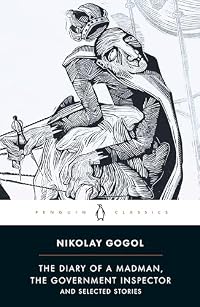
The Diary of a Madman, The Government Inspector, and Selected Stories (Penguin Classics)
by Nikolai Gogol
On This Page
Description
"Author, dramatist and satirist, Nikolay Gogol (1809-52) deeply influenced later Russian literature with his powerful depictions of a society dominated by petty bureaucracy and base corruption. This volume includes both his most admired short fiction and his most famous drama. A biting and frequently hilarious political satire, The Government Inspector has been popular since its first performance and was regarded by Nabokov as the greatest Russian play ever written. The stories gathered here show more range from comic to tragic and describe the isolated lives of low-ranking clerks, lunatics and swindlers. They include 'The Diary of a Madman,' an amusing but disturbing exploration of insanity; 'Nevsky Prospekt,' a depiction of an artist besotted with a young woman; and 'The Overcoat', a moving consideration of poverty that powerfully inspired Dostoyevsky and later Russian writers."--BOOK JACKET. show lessTags
Recommendations



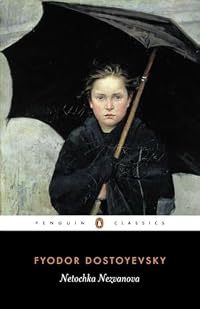
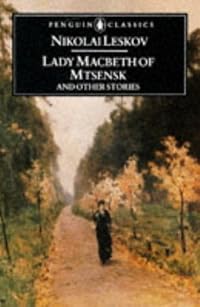

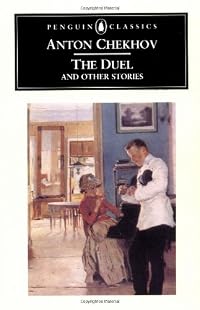

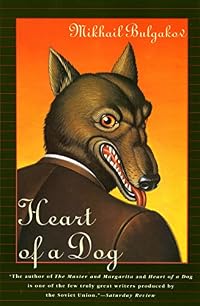



Member Reviews
If you’re one of those folks who asks the question “can this really happen?” while you read, then I don’t recommend this book...
But if you like “weird” and “unconventional”, like a nose that one day decides to detach itself from the face and decides to live its own life, or a madman who can hear dogs talking and can read their letters to each other, than this might be the book for you.
If you can let go of the idea that these stories aren’t meant to be read as “possible things which may occur in real life,” and just enjoy the literature, then you’re in for an adventure because Gogol’s stories are anything but boring...
But if you like “weird” and “unconventional”, like a nose that one day decides to detach itself from the face and decides to live its own life, or a madman who can hear dogs talking and can read their letters to each other, than this might be the book for you.
If you can let go of the idea that these stories aren’t meant to be read as “possible things which may occur in real life,” and just enjoy the literature, then you’re in for an adventure because Gogol’s stories are anything but boring...
With Gogol, to say nothing of his friend Pushkin, is the birth of Russia's modern literature containing Dostoevsky, Tolstoy, et. al.
His mouth curling satirical fictions give the reader full view to the goings on of civil servants and common folk in nineteenth century Russian society. His realistic narratives are airtight templates for the medium of short fiction, and one can do well to study their composition. From the the outlandish interactions of the titular characters in "How Ivan Ivanovich Quarreled with Ivan Nikiforovich" and the stunning and beautiful realism of romance gone awry in "Nevsky Prospekt", to the grand political jab that is the writer's most famous play "The Government Inspector".
It is curious to note that "Diary of a show more Madman", maybe Gogol's most revered short story, seemed lackluster when compared to the other works found here. What does that matter though, when all the rest is so brilliant? Anyone interested in Russian Literature, or fiction in general, will appreciate the skill of this influential and skilled scribe.
I also must note that I prefer these translations of Gogol to those by Pevear and Volokhonsky, who seemed to give his words a dry treatment rather than allow them a certain liveliness that is present here. show less
His mouth curling satirical fictions give the reader full view to the goings on of civil servants and common folk in nineteenth century Russian society. His realistic narratives are airtight templates for the medium of short fiction, and one can do well to study their composition. From the the outlandish interactions of the titular characters in "How Ivan Ivanovich Quarreled with Ivan Nikiforovich" and the stunning and beautiful realism of romance gone awry in "Nevsky Prospekt", to the grand political jab that is the writer's most famous play "The Government Inspector".
It is curious to note that "Diary of a show more Madman", maybe Gogol's most revered short story, seemed lackluster when compared to the other works found here. What does that matter though, when all the rest is so brilliant? Anyone interested in Russian Literature, or fiction in general, will appreciate the skill of this influential and skilled scribe.
I also must note that I prefer these translations of Gogol to those by Pevear and Volokhonsky, who seemed to give his words a dry treatment rather than allow them a certain liveliness that is present here. show less
16 Oct 2024- Read "Ivan Fyodorovich Shponka and his Aunt"
Timidity. There exist people who are just so "settled" in their routine, that they need a kind, strong, Aunt to tell them what to do.
15 Oct 2024- Read "The Nose".
Gogol seems like the humorous version Kafka. I can see how Kafka was influenced by him. Both have their unique versions of the absurd. Kafka employs the helplessness of man, while Gogol employs the dark and weird humor.
Timidity. There exist people who are just so "settled" in their routine, that they need a kind, strong, Aunt to tell them what to do.
15 Oct 2024- Read "The Nose".
Gogol seems like the humorous version Kafka. I can see how Kafka was influenced by him. Both have their unique versions of the absurd. Kafka employs the helplessness of man, while Gogol employs the dark and weird humor.
Gogol is the best place to start for Russian literature. He's brilliant, incisive, and funny. An excellent collection.
Brilliant short story told from the point of view of a man who is slowly going insane.
As the diary entries progress, so does the man's insanity. He imagines conversations between dogs (in letter form) and declares himself the new king of Spain. What starts off as amusing, peculiar and a bit hilarious segues into a lonely sadness.
Can't wait to see Geoffrey Rush at BAM interpret this role!
As the diary entries progress, so does the man's insanity. He imagines conversations between dogs (in letter form) and declares himself the new king of Spain. What starts off as amusing, peculiar and a bit hilarious segues into a lonely sadness.
Can't wait to see Geoffrey Rush at BAM interpret this role!
A complete delight to read. I thoroughly enjoyed the dark humour, the bumbling Russian departments, the surreal circumstances, and the portrait of the poor in this short story collection. I would have to say my favorite story is "Diary of a Madman." I will be recommending this to my friends.
I'm really beginning to like these Russians. This little jewel by Gogol dances on the thin line between sanity and insanity. Brilliant.
Jul 25, 2025 (Edited)English (UK)
Members
- Recently Added By
Author Information

584+ Works 28,856 Members
Nikolai Vasilevich Gogol was born in 1809 in the Ukraine. His father was an amateur playwright who had a small estate with a number of serfs. From the ages of 12 to 19, young Gogol attended a boarding school where he became known for his sharp wit and ability to amuse his classmates. After school he worked as a government clerk. He soon began show more writing memories of his childhood. His quaint depictions of the Ukrainian countryside marked his style and helped to make him famous. Gogol quickly gained fame and formed a friendship with the influential poet, Aleksandr Pushkin. Gogol is largely remembered for his realistic characterizations, his rich imagination, and his humorous style. His works include Mirgorod, a collection of short stories including Taras Bulba. Gogol's wit is evident in his short story, The Nose, where a man's nose wanders off around town in a carriage. Gogol's masterpiece is the novel Dead Souls. In this work, a swindler plots to buy from landowners their dead serfs. Towards the end of Gogol's life, his creative powers faded and he fled to Moscow. Here, he came under the power of a fanatical priest. Ten days before his death he burned some manuscripts of the second part of Dead Souls. He died of starvation in 1852, on the cusp of madness. (Bowker Author Biography) show less
Some Editions
Work Relationships
Contains
Common Knowledge
- Disambiguation notice
- This is the Penguin Classics selection. Do not combine with other editions which contain different selections of stories.
Classifications
- Genres
- Fiction and Literature, General Fiction
- DDC/MDS
- 891.733 — Literature & rhetoric Asian Literature East Indo-European and Celtic literatures Russian and East Slavic languages Russian fiction 1800–1917
- LCC
- PG3333 .A6 — Language and Literature Slavic languages and literatures. Baltic languages. Albanian language Slavic. Baltic. Albanian Russian literature Individual authors and works 1800-1870 Gogol'
- BISAC
Statistics
- Members
- 669
- Popularity
- 42,798
- Reviews
- 7
- Rating
- (4.18)
- Languages
- English, Swedish
- Media
- Paper, Ebook
- ISBNs
- 4
- ASINs
- 1