On This Page
Description
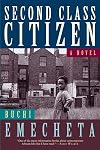
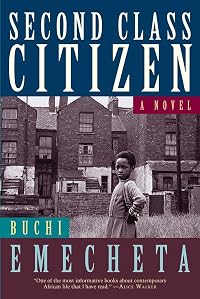
In the late 1960's, Adah, a spirited and resourceful woman manages to move her family to London. Seeking an independent life for herself and her children she encounters racism and hard truths about being a new citizen. "Second Class Citizen pales a lot of academic feminist writing into insignificance." -The Guardian"Emecheta's prose has a shimmer of originality, of English being reinvented....Issues of survival lie inherent in her material and give her tales weight." --John UpdikeTags
Recommendations

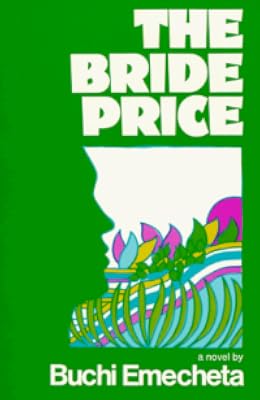
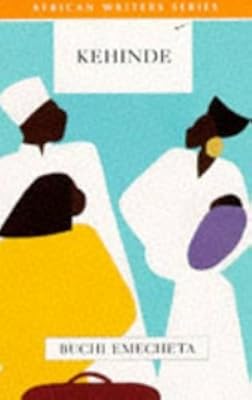











Member Reviews
Second-Class Citizen is one of two semi-autobiographical novels telling the story of Adah, a young Nigerian woman in 1970s north London. Although it was her second published novel in 1974, chronologically this story comes before that told in Buchi Emecheta's first book, In the Ditch. Penguin have brought out new editions of Second-Class Citizen, In the Ditch and a third novel, The Joys of Motherhood, set in Nigeria, but I think Emecheta's work deserves to be better known.
Adah's life has been a challenge from the beginning, fighting to stay at school and enter for scholarship exams. She comes to England with two very young children, joining her husband who is studying law there and soon finds herself struggling to work, study and find show more childcare for herself, 5 children and her husband.
This book is sometimes sad and upsetting but also has some wonderful wit and humour, as Adah finds her own way of battling through sexism and racism as a black African girl and woman in Nigeria and then in 1970s London. Landlords often don't want black tenants with lots of children. But eventually she gets help from social workers to find childcare, and lands a library job with a colleague who recommends black writers, male and female, and also studies part time. Her reading eventually inspires her to start writing herself, but she also faces jealousy from her husband. I loved Adah as a character and I appreciated the social history in this novel and In the Ditch. I also liked the setting in an an area of London I know a little bit (in/near Kentish Town, I think).
I read and enjoyed the two books in publication order but wonder whether they would have been even better the other way round. show less
Adah's life has been a challenge from the beginning, fighting to stay at school and enter for scholarship exams. She comes to England with two very young children, joining her husband who is studying law there and soon finds herself struggling to work, study and find show more childcare for herself, 5 children and her husband.
This book is sometimes sad and upsetting but also has some wonderful wit and humour, as Adah finds her own way of battling through sexism and racism as a black African girl and woman in Nigeria and then in 1970s London. Landlords often don't want black tenants with lots of children. But eventually she gets help from social workers to find childcare, and lands a library job with a colleague who recommends black writers, male and female, and also studies part time. Her reading eventually inspires her to start writing herself, but she also faces jealousy from her husband. I loved Adah as a character and I appreciated the social history in this novel and In the Ditch. I also liked the setting in an an area of London I know a little bit (in/near Kentish Town, I think).
I read and enjoyed the two books in publication order but wonder whether they would have been even better the other way round. show less
This is a very engaging, semiautobiographical novel about a young woman who moves from Nigeria to London in pursuit of a dream of a better life, where she experiences racism, an abusive husband, and the limitations of her own culture, but also develops a desire to become a writer and to live life on her own terms. Her resolve and deepening sense of self are inspirational. However, the abrupt ending left me with questions and lack of a sense of resolution. I suspect the other volume in the series, which was written earlier but actually takes place chronologically after this one, might answer some of those questions.
The experiences of Nigerian families moving to London can be sadly compared to worst of Dickens. The author seems to have based her novel on her own terrible experiences with a racist city and a completely unsympathetic and abusive husband. As a library lover, it is reassuring to see that Adah's employment in London libraries is one of the few bright spots in her life. The impact of lack of birth control is also very vivid, as Adah has four children before age 20 and her brutal husband refuses to provide support. When she completes a novel during her maternity leave, he burns it. He beats her to the point that she must have the police and courts intervene.
Just as disturbing is the treatment Adah receives from fellow Ibo immigrants. show more They think she's "getting above herself" by having a "white person's job" and do everything they can to cut her down.
The writing is strong, but some incidents that should have been described in depth are skimmed over. A very powerful book, and I will read her others as well. show less
Just as disturbing is the treatment Adah receives from fellow Ibo immigrants. show more They think she's "getting above herself" by having a "white person's job" and do everything they can to cut her down.
The writing is strong, but some incidents that should have been described in depth are skimmed over. A very powerful book, and I will read her others as well. show less
I had to bear with the first couple of chapters as they read a bit like a summary, but once she gets to chapter three things really kick into gear.
This book really made me think about my cultural assumptions and question them. The big theme here is the relationship between citizen and state. To an extent I agree with her in finding the level of the UK's involvement in private life to be bizarre. I know people who have social workers involved in the care of their children and they never question whether or not this is healthy. On the other hand, I never question that the NHS is a good thing so found the bit where she wants to pay more for her health care very thought provoking. Whether or not you agree with her really isn't important show more though; it's the outsider's view and your questioning that's important. There's a great passage where she compares Nigerian and English churches:
“London, having thus killed Adah's congregational God, created instead a personal God who looked large and really alive”
and you realise that she's also talking about the citizen and the state. In Nigeria you commonly have extended families who work together congregationally to resolve problems. In Britain it's relatively common not to have functioning extended families and so the state acts to replace that function where poverty causes it to be become a problem.
Clever stuff, and all told with a wry, dark humour.
In the Ditch was published first, but chronologically takes place after Citizen. I read them in publication order and it really wasn't a problem, though Ditch does have a spoiler of Citizen's climax. show less
This book really made me think about my cultural assumptions and question them. The big theme here is the relationship between citizen and state. To an extent I agree with her in finding the level of the UK's involvement in private life to be bizarre. I know people who have social workers involved in the care of their children and they never question whether or not this is healthy. On the other hand, I never question that the NHS is a good thing so found the bit where she wants to pay more for her health care very thought provoking. Whether or not you agree with her really isn't important show more though; it's the outsider's view and your questioning that's important. There's a great passage where she compares Nigerian and English churches:
“London, having thus killed Adah's congregational God, created instead a personal God who looked large and really alive”
and you realise that she's also talking about the citizen and the state. In Nigeria you commonly have extended families who work together congregationally to resolve problems. In Britain it's relatively common not to have functioning extended families and so the state acts to replace that function where poverty causes it to be become a problem.
Clever stuff, and all told with a wry, dark humour.
In the Ditch was published first, but chronologically takes place after Citizen. I read them in publication order and it really wasn't a problem, though Ditch does have a spoiler of Citizen's climax. show less
This was fascinating. I hesitate to say it was an enjoyable read, but only because of the frequently grim subject manner. Adah is extremely engaging and her story is written in a way that kept me constantly interested and wanting to read on. The only problem for me was that the ending went completely over my head. I just don't understand what happened there, but I know how damn hard it is to end a story/book satisfactorily so am happy to be forgiving about that (in any case, the failure to understand could well be completely my fault.)
This classic novel blends all the social economic challenges that people faced during the post-colonial rule. The racial segregation cannot be over emphasized. Adah had a hope that when she travels to England life would just be smooth....
Dublinense edit. , 2021
Members
- Recently Added By
Published Reviews
ThingScore 75
The simple, informal prose gives the story a durability: it’s still fresh even without its on-trend autofictional form or timeless subject matter of the black woman’s experience in Britain.
added by Nevov
Lists

Best Books Set in London
157 works; 42 members

500 Great Books by Women
507 works; 60 members

Writers as Characters in Fiction
120 works; 19 members
Literature About Women and Girls
394 works; 39 members

Library "dead tree" current reads, past loans/reads and TBR
25 works; 1 member

SHOULD Read Books!
354 works; 9 members

Maybe This Year? Books to Look Forward To
412 works; 9 members

Books Read in 2024
4,727 works; 128 members

Classics Book Club 2025
11 works; 1 member

Books Read in 2025
4,128 works; 98 members

Reading LIst
648 works; 1 member

Top Five Books of 2025
954 works; 303 members
Author Information

22+ Works 2,726 Members
Buchi Emecheta was born in Lagos, Nigeria on July 21, 1944. She emigrated to London, England in 1960. She received a sociology degree at the University of London. She worked as a social worker for a number of years and contributed a column to the New Statesman about black British life. She wrote 20 novels during her lifetime including The Joys of show more Motherhood, The Rape of Shavi, Second Class Citizen, Into the Ditch, The Bride Price, and The New Tribe. Her first play, A Kind of Marriage, was screened on BBC TV in 1976 and was adapted into a novel in 1986. Her autobiography was entitled Head Above Water. In 2005, she was made an OBE for services to literature. She died on January 25, 2017 at the age of 72. (Bowker Author Biography) show less
Some Editions
Awards and Honors
Series

Belongs to Publisher Series
Work Relationships
Is abridged in
Common Knowledge
Classifications
Statistics
- Members
- 480
- Popularity
- 63,530
- Reviews
- 10
- Rating
- (3.81)
- Languages
- 12 — Catalan, Danish, Dutch, English, French, German, Hungarian, Italian, Japanese, Norwegian (Bokmål), Portuguese (Portugal), Swedish
- Media
- Paper, Ebook
- ISBNs
- 37
- ASINs
- 5