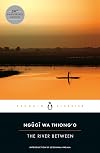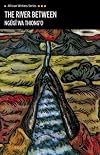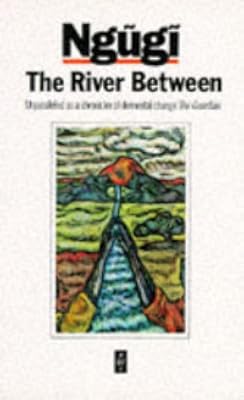
The River Between
by Ngũgĩ wa Thiong'o
On This Page
Description
"Explores life on the Makuyu and Kameno ridges of Kenya in the early days of white settlement. Faced with an alluring new religion and 'magical' customs, the Gikuyu people are torn between those who fear the unknown and those who see beyond it. Some follow Joshua and his fiery brand of Christianity. Others proudly pursue tribal independence. In the midst of this disunity stands Waiyaki, a dedicated visionary born to a line of prophets. He struggles to educate the tribe--a task he sees as the show more only unifying link between the two factions--but his plans for the future raise issue which will determine both his and the Gikuyu's survival"--back cover. show lessTags
Recommendations






Member Reviews
What a hard book to review. Almost fable-like, it describes a black savior trying to protect his people from the invading white people. It’s beautiful in its telling. Conversely, it praises female circumcision as an important rite signifying the tribe’s independence from the “evil” Christians. At once I want to love and hate this book. It was written by a Kenyan man in the early 1960s before circumcision was decried for its brutality. But the author was considered a “progressive.” Ha! I think he portrayed the gross outcome of the practice in the story but I can’t get past this statement supporting its continuation: “Circumcision of women was not important as a physical operation. It was what it did inside a person. It show more could not be stopped overnight. Patience and, above all, education, were needed.” I still give the book a pick; it’s an authentic viewpoint told well even if I find parts of it despicable. show less
Solid and urgent, this is one of those novels that seems both timeless and utterly contemporary. Toward the end, some of the more sentimental sections of the novel are somewhat overwritten, but the book as a whole is a meditation on unification, personal belief, and confidence. The characters and descriptions here bring the full work to life, in wonderful detail, and I imagine it's a rare reader who won't be moved by the story Thiong'o explores here. Absolutely recommended.
Ngũgĩ wa Thiong’o’s *The River Between* is a poignant novel that explores the cultural and ideological divide within a Gikuyu community in colonial Kenya. The story follows Waiyaki, a young leader who believes that education can bridge the gap between tradition and the influence of British colonialism. However, as tensions rise between those who embrace change and those who fiercely defend tribal customs, Waiyaki finds himself caught in an impossible struggle. The novel vividly portrays the conflict between Christianity and indigenous beliefs, as well as the impact of colonial rule on African identity and unity.
Through poetic prose and rich symbolism, Ngũgĩ captures the beauty of the Gikuyu landscape while illustrating the show more painful consequences of division. *The River Between* is more than just a historical narrative; it is a deeply philosophical exploration of leadership, sacrifice, and the cost of progress. With its timeless themes of resistance and reconciliation, the novel remains an essential read for understanding Kenya’s colonial history and the broader struggles of post-colonial Africa. show less
Through poetic prose and rich symbolism, Ngũgĩ captures the beauty of the Gikuyu landscape while illustrating the show more painful consequences of division. *The River Between* is more than just a historical narrative; it is a deeply philosophical exploration of leadership, sacrifice, and the cost of progress. With its timeless themes of resistance and reconciliation, the novel remains an essential read for understanding Kenya’s colonial history and the broader struggles of post-colonial Africa. show less
This is the story of a valley in Kenya, the ridge of Kameno on one side and the Makuyu ridge on the other. On Kamenu lived the members of Gikuyu who believed strongly in traditional practices; on Makuyu lived the members who had converted to Christianity and embraced the ways of the white settlers. And these two viewpoints were coming into increasing conflict.
Between the ridges lay the river Honia, the source of life. More figuratively, between the ridges was the young man Waiyaki, raised traditionally but educated in white schools, charismatic and a natural leader among his people, and a man who believes that only in unity can their society survive and retain its own identity in the colonial world.
I found this a story of overwhelming show more sadness for, as seems to happen so often, Waiyaki finds that there are no neutrals, that "anyone not my friend is my enemy." The forces of envy, jealousy and corruption on one side, the forces of religious bigotry on the other, all conspire to leave him no place where he can place his feet.
Perhaps the most surprising thing about this story was the moderate position Thiong'o took toward this tension in his country. I think it must be hard not to take a side—are the problems of tribal society the fault of white incursion? Or, are they the result a mindset that rejects education and growth in favor of rigid adherence to tradition? Yet, he chooses neither, having Waiyaki voice concerns about both.
On one hand, the early events of the story lead Waiyaki and the reader to question traditional practices such as female circumcision: a young girl whom we are encouraged to like dies as a result of infection. Yet, Thiong'o stops short of using common, harsher epithets such as female genital mutilation, and Waiyaki ends up neither asserting its necessity to a traditional society nor condemning it.
Similarly, white influence is viewed with moderation. The patriarchal attitude of the European invaders is seen as damaging: "If the white man's religion made you abandon a custom and then did not give you something of equal value, you became lost. An attempt at resolution of the conflict would only kill you..." Yet, the benefits of education and science are written clearly through the story.
In fact, as Waiyaki makes his own way alone through his divided community, he recognizes that rejection of all change would lead to cultural death, yet that change cannot be forced or hurried, that "Patience and, above all, education, were needed."
Highly recommended. show less
Between the ridges lay the river Honia, the source of life. More figuratively, between the ridges was the young man Waiyaki, raised traditionally but educated in white schools, charismatic and a natural leader among his people, and a man who believes that only in unity can their society survive and retain its own identity in the colonial world.
I found this a story of overwhelming show more sadness for, as seems to happen so often, Waiyaki finds that there are no neutrals, that "anyone not my friend is my enemy." The forces of envy, jealousy and corruption on one side, the forces of religious bigotry on the other, all conspire to leave him no place where he can place his feet.
Perhaps the most surprising thing about this story was the moderate position Thiong'o took toward this tension in his country. I think it must be hard not to take a side—are the problems of tribal society the fault of white incursion? Or, are they the result a mindset that rejects education and growth in favor of rigid adherence to tradition? Yet, he chooses neither, having Waiyaki voice concerns about both.
On one hand, the early events of the story lead Waiyaki and the reader to question traditional practices such as female circumcision: a young girl whom we are encouraged to like dies as a result of infection. Yet, Thiong'o stops short of using common, harsher epithets such as female genital mutilation, and Waiyaki ends up neither asserting its necessity to a traditional society nor condemning it.
Similarly, white influence is viewed with moderation. The patriarchal attitude of the European invaders is seen as damaging: "If the white man's religion made you abandon a custom and then did not give you something of equal value, you became lost. An attempt at resolution of the conflict would only kill you..." Yet, the benefits of education and science are written clearly through the story.
In fact, as Waiyaki makes his own way alone through his divided community, he recognizes that rejection of all change would lead to cultural death, yet that change cannot be forced or hurried, that "Patience and, above all, education, were needed."
Highly recommended. show less
Well, this is a book that took me right out of my comfort zone... I like to think that I am respectful of other cultures, but not when they conflict with my own deeply held liberal-democratic values about human rights.
Ngũgĩ wa Thiong'o is an author often suggested as a potential winner of the Nobel Prize, and this book, The River Between is listed in 1001 Books You Must Read Before You Die.
Well, yes, it does all that in just 152 pages, and it does so in deceptively simple language and an ordinary chronological structure. But what made me read it with a sense of seething rage was the way circumcision, and female circumcision in particular, is used to symbolise the purity of the tribe and is therefore a ritual worth protecting against change.
To read the rest of my review please visit https://anzlitlovers.com/2018/03/26/the-river-between-by-ngugi-wa-thiongo-bookre...
Joshua is a Christianised firebrand preacher who has decreed that his daughters will not be circumcised because it is a pagan ritual. Muthoni, the elder of the two, decides that she wants to be a real woman, knowing all the ways of the hills and ridges, so she defies her father and takes part in the annual initiation ceremonies. So does Waiyaki, a young man who tentatively believes his father's prophecy that he will be a leader of his people. Thiong'o describes at length the agony of the male circumcision, without a word about the agony of the female experience, nor the denial of her sexuality, nor the risks associated with not only the lack of basic surgical hygiene but also the risk of death or permanent disabling injury in childbirth. Opposition to circumcision is parcelled up with all the other wrongs that the Christianising colonising interlopers bring with them: dispossession, racism, taxes and political interference, as if the missionaries could even have known about female circumcision if not for witnessing its terrible consequences in their hospitals. Thiong'o addresses the male expectation that their wives be circumcised only obliquely, by depicting his villagers' assertion that no man would want to trade his cows for an uncircumcised wife, and he makes Muthoni complicit in her own mutilation by investing the procedure with secret female knowledge while never mentioning that female circumcision is merely a brutal technique for ensuring fidelity because intercourse is consequently so painful. Muthoni dies, and the villagers ascribe her death to the malevolent influence of the new religion. There is no mention of the infection which is obvious to any contemporary reader, only its symptoms. To read the rest of my review please visit show less
Ngũgĩ wa Thiong'o is an author often suggested as a potential winner of the Nobel Prize, and this book, The River Between is listed in 1001 Books You Must Read Before You Die.
At one level, this is a simple love story set in the mid-colonial period, an African Romeo and Juliet in which two young people from opposing Gikuyu villages fall in love and attempt to transcend the ancient rift between their communities, with tragic results. On a more complex level, the novel engages with Kenya's precolonial and colonialshow more
history. It depicts the slow but steady infiltration by the British; the alienation of local people from their land; the negative effects of Christian mission on local power structures, rituals and relationships; and the deep disunity between different African factions that preceded the anticolonial struggle of the 1950s. (1001 Books You Must Read Before You Die, Ed. Perter Boxall, ABC Books, 2006 Edition, p.574)
Well, yes, it does all that in just 152 pages, and it does so in deceptively simple language and an ordinary chronological structure. But what made me read it with a sense of seething rage was the way circumcision, and female circumcision in particular, is used to symbolise the purity of the tribe and is therefore a ritual worth protecting against change.
To read the rest of my review please visit https://anzlitlovers.com/2018/03/26/the-river-between-by-ngugi-wa-thiongo-bookre...
Joshua is a Christianised firebrand preacher who has decreed that his daughters will not be circumcised because it is a pagan ritual. Muthoni, the elder of the two, decides that she wants to be a real woman, knowing all the ways of the hills and ridges, so she defies her father and takes part in the annual initiation ceremonies. So does Waiyaki, a young man who tentatively believes his father's prophecy that he will be a leader of his people. Thiong'o describes at length the agony of the male circumcision, without a word about the agony of the female experience, nor the denial of her sexuality, nor the risks associated with not only the lack of basic surgical hygiene but also the risk of death or permanent disabling injury in childbirth. Opposition to circumcision is parcelled up with all the other wrongs that the Christianising colonising interlopers bring with them: dispossession, racism, taxes and political interference, as if the missionaries could even have known about female circumcision if not for witnessing its terrible consequences in their hospitals. Thiong'o addresses the male expectation that their wives be circumcised only obliquely, by depicting his villagers' assertion that no man would want to trade his cows for an uncircumcised wife, and he makes Muthoni complicit in her own mutilation by investing the procedure with secret female knowledge while never mentioning that female circumcision is merely a brutal technique for ensuring fidelity because intercourse is consequently so painful. Muthoni dies, and the villagers ascribe her death to the malevolent influence of the new religion. There is no mention of the infection which is obvious to any contemporary reader, only its symptoms. To read the rest of my review please visit show less
The writing’s incredibly concentrated and the more you look at it the more meanings you can find. His style is very much ‘tell, not show’. Normally that annoys me, but here it’s elevated to an art. It’s more like having someone tell you a story directly than reading a novel, but then every once in a while he surprises you with something beautifully poetic that brings things into focus. Superb ending as well, or lack of one, as you already know exactly what's going to happen.
The River Between by Ngugi wa Thiong’o is about the Gikuyu people of Kenya who lived in a remote area of ridges and valleys. The time is during the early days of white settlement, some of the people were lured by the new religion and “magical” customs and so they followed Joshua, a Gikuyu convert who preached Christianity. Others wanted to keep to the tribal customs and old ways. Battle lines over female circumcision have been drawn as the Christians try to outlaw the pagan practice while the traditionalists feel it is an important part of their culture.
Firmly in the middle stands Waiyaki a young man who has been educated by the missionaries but belongs to a family of visionaries who foresaw the coming of the white man and the show more turmoil, changes and confusion that would arise with their arrival. To make matters more complicated he falls in love with Nyambura, the Christian daughter of the fiery pastor, Joshua. Waiyaki believes that education is the answer but he also wants to honour his father’s wishes without really understanding what his father was trying to say.
[The River Between] stands as a social critique as there is, of course, no answer to the problems that the Gikuyu were facing. The two factions were both doomed as once colonialism and Christianity get a firm hold and white settlers arrive in their numbers, the rift will continue to grow and tribal independence along with their customs and culture will disappear. show less
Firmly in the middle stands Waiyaki a young man who has been educated by the missionaries but belongs to a family of visionaries who foresaw the coming of the white man and the show more turmoil, changes and confusion that would arise with their arrival. To make matters more complicated he falls in love with Nyambura, the Christian daughter of the fiery pastor, Joshua. Waiyaki believes that education is the answer but he also wants to honour his father’s wishes without really understanding what his father was trying to say.
[The River Between] stands as a social critique as there is, of course, no answer to the problems that the Gikuyu were facing. The two factions were both doomed as once colonialism and Christianity get a firm hold and white settlers arrive in their numbers, the rift will continue to grow and tribal independence along with their customs and culture will disappear. show less
Members
- Recently Added By
Lists

Best African Books
126 works; 46 members

1,001 BYMRBYD Concensus
723 works; 27 members

A Novel Cure
742 works; 23 members
Talk Discussions
Past Discussions
The River Between by Ngũgĩ wa Thiong'o in Author Theme Reads (December 2011)
Author Information

71+ Works 7,499 Members
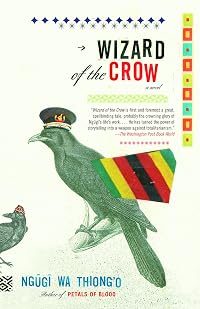
Novelist, playwright, and essayist, Ngugi wa Thiong'o was born in Kenya on January 5, 1938. He received a B.A. in English from Makerere University College in Kampala, Uganda in 1963. He is Kenya's best-known writer and one of East Africa's most outspoken social critics. His first novel, Weep Not, Child (1964), was a penetrating account of the Mau show more Mau uprising (a tribal revolt that occurred in colonial Kenya) and was the first English-language novel by an East African. Two subsequent works, The River Between (1965) and A Grain of Wheat (1967), are sensitive novels about the Kikuyu people caught between the old and the new Africa. One of his major concerns has been the lack of reading materials in native African languages. In an attempt to bring literature to African peasants and workers, he wrote and produced the play I Will Marry When I Want (1977) in his native Kikuyu language. The play, which shows the exploitation of Kikuyu workers and peasants, attracted a large audience of poor Kenyans. It also led to Ngugi's arrest and imprisonment. After his release from prison, he went into exile and is currently living in the United States. His other works include Detained (1981); Decolonising the Mind: The Politics of Language in African Literature (1986); and Matigari (1987). He received the 2001 Nonino International Prize for Literature. In 2006, Random House published his first new novel in nearly two decades, Wizard of the Crow. (Bowker Author Biography) show less
Awards and Honors
Series
Belongs to Publisher Series
Common Knowledge
- Canonical title
- The River Between
- Original publication date
- 1965
- Important places
- Africa; East Africa; Kenya
- First words
- The two ridges lay side by side. One was Kameno, the other was Makuyu. between them was a valley. It was called the valley of life. Behind Kameno and Makuyu were many more valleys and ridges, lying without any discernible... (show all) plan. They just slept, the big deep sleep of their Creator.
- Last words
- (Click to show. Warning: May contain spoilers.)The land was now silent. The two ridges lay side by side, hidden in the darkness. And Honia river went on flowing between them, down through the valley of life, its beat rising above the dark stillness, reaching into the heart of the people of Makuyu and Kameno.
Classifications
Statistics
- Members
- 831
- Popularity
- 33,292
- Reviews
- 22
- Rating
- (3.72)
- Languages
- 6 — English, French, German, Serbian, Swedish, Turkish
- Media
- Paper, Ebook
- ISBNs
- 20
- ASINs
- 13