On This Page
Description
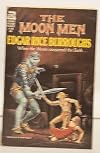
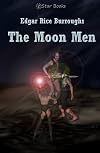
Through the treason of a handful of men, contact between Earth and the Moon had become a nightmare. The world became the tool of the Lunarians, whose plundering and cruelty reduced thieving nations to poverty-stricken wastelands.Tags
Recommendations











Member Reviews
This book, which actually contains two short novels, follows up on the events of [b:The Moon Maid|2690100|The Moon Maid|Edgar Rice Burroughs|https://d.gr-assets.com/books/1240177406s/2690100.jpg|432893]. Orthis, the villain of that novel, has rallied the monstrous Kalkar of the moon and returned to Earth, subjugating its inhabitants to their rule. However, pockets of secret resistance exist. Julian 9th, descendant of The Moon Maid's protagonist, struggles to keep his family and lover safe while fomenting rebellion after hours.
300 years later, in The Red Hawk, American resistance has been successful and the Kalkars are being gradually pushed east "into the sea." But there are still many dangers for Julian 20th, a.k.a. The Red Hawk, to show more face. Will there ever be peace?
I quite enjoyed the first, slightly longer part of this book. The second, not so much, for a few reasons. It's pretty much non-stop action, which I tend to find makes for dull reading. There aren't any significant female characters; I mention this not out of any need for equality but simply because I find a lack of female personality in any story also to be kind of dull. (At least I had the cover to look at--and I did frequently.) And the ending is a bit too neat.
Despite my slight disappointment I still look forward to exploring Burroughs' worlds further. show less
300 years later, in The Red Hawk, American resistance has been successful and the Kalkars are being gradually pushed east "into the sea." But there are still many dangers for Julian 20th, a.k.a. The Red Hawk, to show more face. Will there ever be peace?
I quite enjoyed the first, slightly longer part of this book. The second, not so much, for a few reasons. It's pretty much non-stop action, which I tend to find makes for dull reading. There aren't any significant female characters; I mention this not out of any need for equality but simply because I find a lack of female personality in any story also to be kind of dull. (At least I had the cover to look at--and I did frequently.) And the ending is a bit too neat.
Despite my slight disappointment I still look forward to exploring Burroughs' worlds further. show less
The Moon Men is a sequel of sorts to The Moon Maid, which I haven't read. Not reading The Moon Maid doesn't really detract from this book, because the two are pretty loosely linked, plus this book provides a decent summary of the events of the prior book. Basically, an expedition from Earth set out for Mars, but was forced to divert to the Moon as a result of sabotage. Once there, the explorers found the lunar inhabitants, and eventually, a human allied with them and led an invasion of the unarmed Earth (pacifism had apparently become dominant on Earth). Julian 6th, the hero of The Moon Maid, managed to defeat the mastermind of the invasion fleet, but was killed in the process.
The Moon Men is actually two linked novellas, both show more describing humanity's attempts to free themselves from the yoke of the Kalkars, the moon men from the title. In the first part, titled The Moon Men, humanity finds itself at its lowest ebb. The Kalkars are brutish and stupid, but they have all the weapons, including ancient firearms. They tax humanity into poverty, and prevent anyone from learning how to read or write. Because the Kalkars are too dimwitted to maintain a technological civilization themselves, and they prevent humans from effectively doing so, the Earth is slowly descending into barbarism.
Julian 9th, the descendant of Julian 6th, and apparently his reincarnation, lives under the yoke of the Kalkars in what was once Chicago one hundred years after the Kalkar invasion. The story details the indignities heaped upon the humans, including the outlawing of religion of any kind as well as crushing and unfair taxes. Eventually, Julian 9th comes into conflict with Ortis, the local Kalkar boss, and has to flee with his mother and wife after his father is taken prisoner and sentenced to a labor camp. Julian 9th breaks his father out of prison (along with the other prisoners) and leads a rebellion. The rebellion fails, Julian 9th is captured and killed, but not before he learns that his wife is pregnant. The first story ends with Julian 9th's death. This is somewhat unusual for a Burroughs story, as the hero accomplishes almost nothing concrete and gets killed for his pains. He sparks a revolutionary fervor, but little comes of it in this story. On the whole, this is a dark and depressing story.
The second part of the book, titled The Red Hawk, follows Julian 20th, also known as the Red Hawk as he leads the crusade against the Kalkars 400 years after the events of the first half of the book. Humanity has for the most part become nomadic tribesmen, and Julian 20th's tribe worships with religious feeling the remnants of a U.S. flag that has been passed down for generations. The Kalkars have lost their technological edge, and have been driven into enclaves along the coast. This is much more of a typical Burroughs story - the good guys are more competent than their enemies, the hero is cast through a series of adventures, finds and falls in love with a princess, has to rescue the princess, wins the battles, and wins the girl. The story is fairly well done, and completes the story of the Kalkar invasion pretty well. There is also an interesting conversation between the superstitious Red Hawk and his younger brother Rain Cloud about the nature of things - with Rain Cloud adopting a scientific view of the world to challenge the accepted supernaturally driven versions of events.
While not one of Burroughs' better works, The Moon Men is interesting and enjoyable, and provides a glimpse into what a non-swashbuckling tale by him might have looked like. If Burroughs had lived in a later era, it seems like he might have given us more reflective science fiction rather than his usual pulp adventure. I'm not sure I would have liked that better, but it is different, and makes this book more interesting.
This review has also been posted on my blog Dreaming About Other Worlds. show less
The Moon Men is actually two linked novellas, both show more describing humanity's attempts to free themselves from the yoke of the Kalkars, the moon men from the title. In the first part, titled The Moon Men, humanity finds itself at its lowest ebb. The Kalkars are brutish and stupid, but they have all the weapons, including ancient firearms. They tax humanity into poverty, and prevent anyone from learning how to read or write. Because the Kalkars are too dimwitted to maintain a technological civilization themselves, and they prevent humans from effectively doing so, the Earth is slowly descending into barbarism.
Julian 9th, the descendant of Julian 6th, and apparently his reincarnation, lives under the yoke of the Kalkars in what was once Chicago one hundred years after the Kalkar invasion. The story details the indignities heaped upon the humans, including the outlawing of religion of any kind as well as crushing and unfair taxes. Eventually, Julian 9th comes into conflict with Ortis, the local Kalkar boss, and has to flee with his mother and wife after his father is taken prisoner and sentenced to a labor camp. Julian 9th breaks his father out of prison (along with the other prisoners) and leads a rebellion. The rebellion fails, Julian 9th is captured and killed, but not before he learns that his wife is pregnant. The first story ends with Julian 9th's death. This is somewhat unusual for a Burroughs story, as the hero accomplishes almost nothing concrete and gets killed for his pains. He sparks a revolutionary fervor, but little comes of it in this story. On the whole, this is a dark and depressing story.
The second part of the book, titled The Red Hawk, follows Julian 20th, also known as the Red Hawk as he leads the crusade against the Kalkars 400 years after the events of the first half of the book. Humanity has for the most part become nomadic tribesmen, and Julian 20th's tribe worships with religious feeling the remnants of a U.S. flag that has been passed down for generations. The Kalkars have lost their technological edge, and have been driven into enclaves along the coast. This is much more of a typical Burroughs story - the good guys are more competent than their enemies, the hero is cast through a series of adventures, finds and falls in love with a princess, has to rescue the princess, wins the battles, and wins the girl. The story is fairly well done, and completes the story of the Kalkar invasion pretty well. There is also an interesting conversation between the superstitious Red Hawk and his younger brother Rain Cloud about the nature of things - with Rain Cloud adopting a scientific view of the world to challenge the accepted supernaturally driven versions of events.
While not one of Burroughs' better works, The Moon Men is interesting and enjoyable, and provides a glimpse into what a non-swashbuckling tale by him might have looked like. If Burroughs had lived in a later era, it seems like he might have given us more reflective science fiction rather than his usual pulp adventure. I'm not sure I would have liked that better, but it is different, and makes this book more interesting.
This review has also been posted on my blog Dreaming About Other Worlds. show less
Ratings
Members
- Recently Added By
Author Information

769+ Works 65,427 Members
Edgar Rice Burroughs was born on September 1, 1875, in Chicago. His father, George Tyler was a distiller and a battery manufacturer. Early in life Burroughs attempted to support his family in a variety of occupations, including railroad policeman, business partner, and miner. None of these proved successful. However, Burroughs had always enjoyed show more reading adventure fiction and decided to try his hand at writing. His first attempt, written under the pseudonym Normal Bean, sold very quickly and Burroughs' career took off. Although critics and educators have not always been supportive of Burroughs' writing, the characters in his stories have entertained readers for many years. Tarzan was the most popular, earning Burroughs enough money to start his own publishing house and a motion picture company. Another character, John Carter, is the hero of Burroughs' Mars adventure series. The continuing popularity of these characters has led some critics to reconsider the value of Burroughs' writing and to acknowledge significant themes in his stories. Burroughs died on March 19, 1950. (Bowker Author Biography) show less
Some Editions
Series

Work Relationships
Is contained in
Has as a commentary on the text
Common Knowledge
- Canonical title
- The Moon Men
- Original title
- Under the Red Flag
- Original publication date
- 1925
- People/Characters
- Julian 9th; Red Hawk; Julian 20th, the Red Hawk
- Important places
- Chicago, Illinois, USA; Joliet, Illinois, USA
- First words
- It was early in March, 1969, that I set out from my bleak camp on the desolate shore some fifty miles southeast of Herschel Island after polar bear.
- Last words
- (Click to show. Warning: May contain spoilers.)But Shoz-Dijiji, war chief of the Be-don-ko-he, did not hear.
- Disambiguation notice
- TANDEM edition also includes the story 'The Red Hawk'
Classifications
Statistics
- Members
- 456
- Popularity
- 67,262
- Reviews
- 2
- Rating
- (3.34)
- Languages
- Dutch, English, Finnish
- Media
- Paper, Ebook
- ISBNs
- 14
- ASINs
- 33