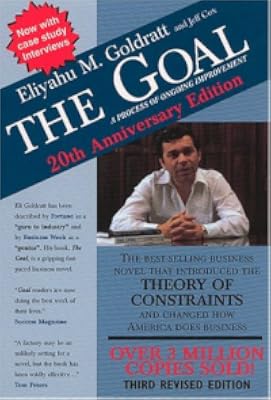
The Goal: A Process of Ongoing Improvement
by Eliyahu M. Goldratt
On This Page
Description
In celebration of thirty years since the first publication of Eliyahu Goldratt's essential business classic, HighBridge is proud to present an expanded audio edition of The Goal, featuring the original novel, plus case study reviews, and the author's highly regarded essay Standing on the Shoulders of Giants. Also included is an audio archive exclusive featuring Eliyahu Goldratt in conversation about the significance--both personal and professional--of his breakthrough work. Alex Rogo is the show more manager of a failing manufacturing plant who receives an ultimatum from corporate headquarters: Turn the situation around in three months or the plant will be scrapped. With help from a mysterious mentor, Rogo discovers a revolutionary new way to do business--a way for people in any field of endeavor to increase productivity, profitability, and personal fulfillment. The story of Alex's fight to save his plant contains a serious message for all managers in industry and explains the ideas which underline the Theory of Constraints (TOC) developed by Dr. Goldratt. First published in 1984, The Goal has changed how America does business. show lessTags
Recommendations
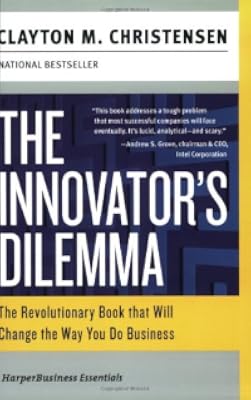
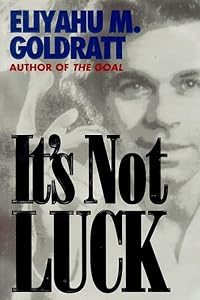
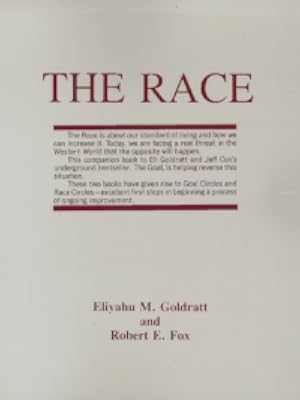
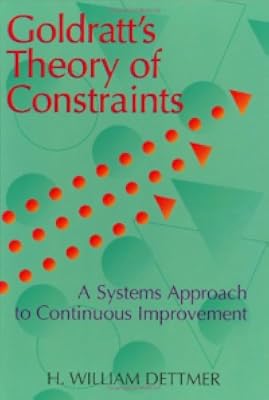
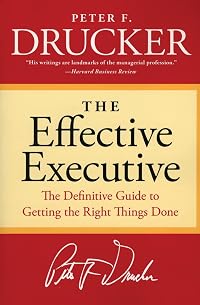
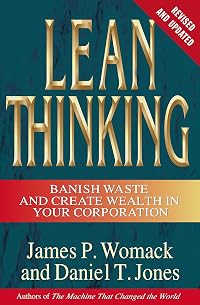
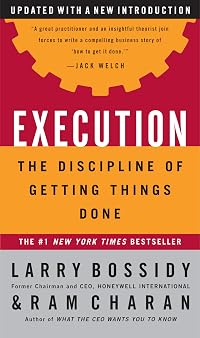
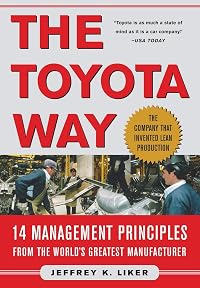
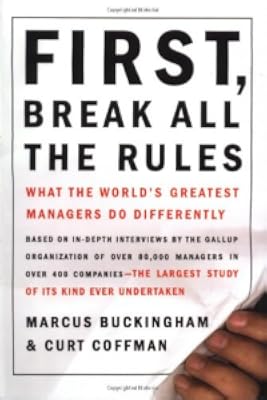
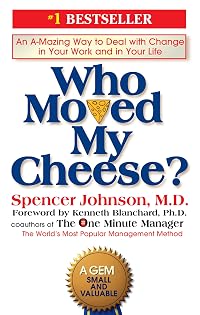
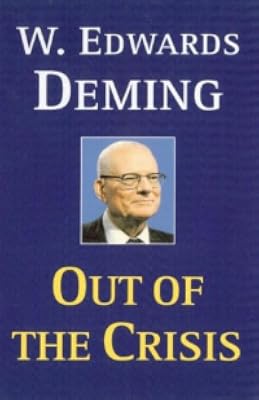
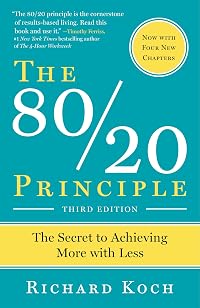
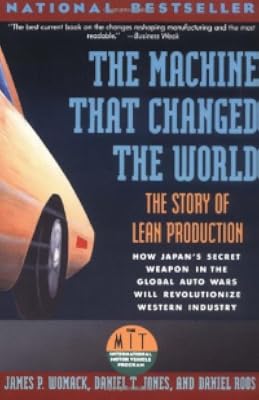
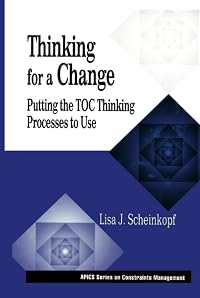
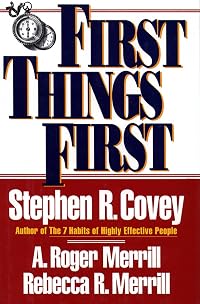
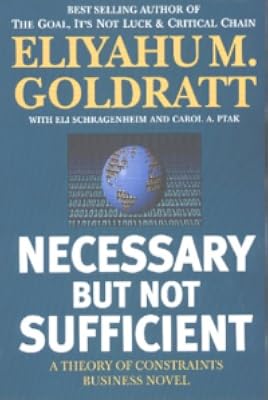


Member Recommendations
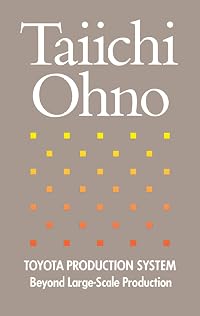
Sandydog1 Both emphasize getting back to basics and cutting waste. Both are very entertaining.
Member Reviews
This is probably one of the most interesting business books I have ever read, probably more for its style than its content. The book presents the Theory of Constraints but not with dry, repetitive, lecturing. It does it in a fictionalized, novel format. It doesn't spoon feed the process. You work along with the characters to develop an understanding. I found it incredibly interesting and motivating to read.
Just want to say it was a gripping read. A rare thing to say about a business/management book. I’m almost never interested in the facts spitted out in most books - even science books. Tell me how you arrived at that.
Of all the things I could learn from this book, I learnt for the first time in my life the *periodic* nature of the periodic table. It clicked because the author was inquisitive - “how do we find order from seemingly random things?” And the quest for “intrinsic order”.
The dialog/conversational way of delivering a concept - the Socratic way - is long and winding for some people but information sticks. Precisely because the information isn’t provided in a platter. Allegories and analogies when done right helps show more you understand a concept quite well and I think this book did it quite well. show less
Of all the things I could learn from this book, I learnt for the first time in my life the *periodic* nature of the periodic table. It clicked because the author was inquisitive - “how do we find order from seemingly random things?” And the quest for “intrinsic order”.
The dialog/conversational way of delivering a concept - the Socratic way - is long and winding for some people but information sticks. Precisely because the information isn’t provided in a platter. Allegories and analogies when done right helps show more you understand a concept quite well and I think this book did it quite well. show less
This book while written during a previous era, the '80s is still very much applicable and maybe even more so nowadays with the challenging global supply chain dynamics and on again off again tariffs debacle. Working in manufacturing for my entire career this book together with the Toyota Way is required reading about continuous improvement of the manufacturing process. The story telling manner in which the concepts are delivered is captivating and interesting. This is probably the only book that my kids also got into which tells you about the simple manner in which complex concepts are covered. For the book summary go here - https://www.tocinstitute.org/the-goal-summary.html. Looking forward to implementing these principles in my new gig.
Three word review: re-contextualizes business effectiveness
The Goal is an extraordinarily interesting book written in a novel format. It takes us on a journey of a
manufacturing plant manager, Alex, whose plant is losing money. He is given an ulitmatum to turn the plant around in 90 days "or else".
Alex runs into an old professor, Jonah, who sympathizes with his dilemma and offers some possible
courses of investigation. The running theme through the novel is Alex hitting a wall and Jonah pointing him into the right direction.
At the heart of the matter is what Goldratt calls the "Theory of Constraints". This lays out how
Alex's plant hits the roadblocks that are causing late orders, rushing, angry customers, stressed workers other show more general chaos.
In Alex's plant, and as it would turn out in many organizations, the workflows are not optimal,
or to be more accurate, they are locally optimized but globally inefficient.
Jonah explains how optimizing throughput at bottlenecks will increase overall efficiency, even if
it lowers local efficiencies elsewhere. This goes contrary to the then-dominiant theory of local optimization.
Goldratt lays this out with Alex taking his son's Boy Scout troop on a hike. There is a scout, named Herbie, who walks more slowly than the other hikers. When Herbie is in the middle of the line, no one behind him can go any faster than he can, but the hikers ahead can continue at the average pace. As a result the gap between the first and last hiker continues to grow, until the hikers at the front need to stop so everyone behind them can catch up.
This problem is resolved by moving Herbie to the front of the line, reducing the average speed but
keeping throughput consistent. When the other hikers complain about the speed, Alex goes through
Herbie's pack and quite literally lightens his load, increasing his hiking speed and thus the speed of
the entire group.
When Alex returns to the plant, he sets his team to work finding the "Herbies" or bottlenecks which are choking the workflow. Though they cannot move the bottlenecks (two particular machine processes) to the front of the line, they can optimize the throughput at those resources.
Though this is discussed in the material manufacturing context, it is applicable to any organization,
and the case studies provided in the 20th anniversary edition illustrate this in manufacturing, education, and service organizations.
As these optimizations are made, other opportunities reveal themselves. Soon new bottlenecks emerge and Alex and his team are at it again.
In the end the "goal" is to make money. The "five focusing questions" are defined broadly after they
are first implemented in Alex's plant. This is one of the key parts of the book. The five questions are:
1. Find the Bottleneck (aka Herbie)
refined: Identify the constraint
(the resource or policy that moves the oganization away from the goal)
2. Reduce the impact of the bottleneck. (Figure out how to make Herbie a better hiker)
refined: Decide how to exploit the constraint
(make sure the constraint's time is not wasted doing things that it should not do)
3. The bottleneck determines throughput, always
refined: Subordinate all other processes to above decision
(align the whole system or organization to support the decision made above)
4. Increase bandwidth (sorry, I'm a tech guy).
refined: Elevate the constraint
(if required or possible, permanently increase capacity of the constraint; "buy more")
5. Rinse and repeat.
refined: If, as a result of these steps, the constraint has moved, return to Step 1. Don't let inertia become the constraint.
I found the narrative of the story to be incredibly helpful in contextualizing these concepts.
Another plot of the story is the trouble Alex is having in his marriage. They use similar focusing
questions to determine how and why things were going wrong and what to do to fix it. The repetition of relevant themes in different contexts really drives the points home and makes them stick.
Eventually the constraints move outside of the plant, and the plant has wasted potential throughput. The constraint is now with the marketing department. Alex pushes for a bigger slice of the business as the backlog clears and turnaround becomes more predictable.
Once this constraint is removed, the constraint moves back into the plant at the non-bottlenecks.
It's an interesting illustration of how the throughput demands change as capacity increases.
I see this a lot at my own job and it really drove the point home to have that context.
Throughout the course of the novel, Alex rises from at-risk employee to division manager, while
converting those around him into his (or rather, Jonah's) way of thinking. Jonah continues with his Socratic Method style of asking pointed questions and giving Alex enough room to figure it out. As someone very familiar with Plato, I found this to be familiar, though it would be a new approach for non philosophers.
I found the book to be well written, highly readable, broadly scoped and extremely insightful. It does more than lay out a course of action, it proactively details the value in establishing such a course and furthermore provides a mindset for building such a course based on a common-sense approach (the latter of which was lacking in my reading of "Emotional Intelligence")
As Alex begins his ascent into management, he finds himself in the familiar dilemma of not knowing where to turn. Jonah pulls away at this point and tells him to come up with the specific questions he
needs answered. This leads to a discussion which ultimately bares the following three questions:
What to change
What to change to
How to cause the change
Again, Goldratt's common sense approach and plain English explanation provides valuable insight into resolving complicated business problems, simply by asking the right people the right questions and addressing root causes, not symptoms.
I highly recommend this book to anyone who has an interest in improving organization performance
or building a better understanding of these crucial concepts. They are as applicable today as they were when the book was written (the mid 80s), and written such that you dont need an MBA to decode the jargon. show less
The Goal is an extraordinarily interesting book written in a novel format. It takes us on a journey of a
manufacturing plant manager, Alex, whose plant is losing money. He is given an ulitmatum to turn the plant around in 90 days "or else".
Alex runs into an old professor, Jonah, who sympathizes with his dilemma and offers some possible
courses of investigation. The running theme through the novel is Alex hitting a wall and Jonah pointing him into the right direction.
At the heart of the matter is what Goldratt calls the "Theory of Constraints". This lays out how
Alex's plant hits the roadblocks that are causing late orders, rushing, angry customers, stressed workers other show more general chaos.
In Alex's plant, and as it would turn out in many organizations, the workflows are not optimal,
or to be more accurate, they are locally optimized but globally inefficient.
Jonah explains how optimizing throughput at bottlenecks will increase overall efficiency, even if
it lowers local efficiencies elsewhere. This goes contrary to the then-dominiant theory of local optimization.
Goldratt lays this out with Alex taking his son's Boy Scout troop on a hike. There is a scout, named Herbie, who walks more slowly than the other hikers. When Herbie is in the middle of the line, no one behind him can go any faster than he can, but the hikers ahead can continue at the average pace. As a result the gap between the first and last hiker continues to grow, until the hikers at the front need to stop so everyone behind them can catch up.
This problem is resolved by moving Herbie to the front of the line, reducing the average speed but
keeping throughput consistent. When the other hikers complain about the speed, Alex goes through
Herbie's pack and quite literally lightens his load, increasing his hiking speed and thus the speed of
the entire group.
When Alex returns to the plant, he sets his team to work finding the "Herbies" or bottlenecks which are choking the workflow. Though they cannot move the bottlenecks (two particular machine processes) to the front of the line, they can optimize the throughput at those resources.
Though this is discussed in the material manufacturing context, it is applicable to any organization,
and the case studies provided in the 20th anniversary edition illustrate this in manufacturing, education, and service organizations.
As these optimizations are made, other opportunities reveal themselves. Soon new bottlenecks emerge and Alex and his team are at it again.
In the end the "goal" is to make money. The "five focusing questions" are defined broadly after they
are first implemented in Alex's plant. This is one of the key parts of the book. The five questions are:
1. Find the Bottleneck (aka Herbie)
refined: Identify the constraint
(the resource or policy that moves the oganization away from the goal)
2. Reduce the impact of the bottleneck. (Figure out how to make Herbie a better hiker)
refined: Decide how to exploit the constraint
(make sure the constraint's time is not wasted doing things that it should not do)
3. The bottleneck determines throughput, always
refined: Subordinate all other processes to above decision
(align the whole system or organization to support the decision made above)
4. Increase bandwidth (sorry, I'm a tech guy).
refined: Elevate the constraint
(if required or possible, permanently increase capacity of the constraint; "buy more")
5. Rinse and repeat.
refined: If, as a result of these steps, the constraint has moved, return to Step 1. Don't let inertia become the constraint.
I found the narrative of the story to be incredibly helpful in contextualizing these concepts.
Another plot of the story is the trouble Alex is having in his marriage. They use similar focusing
questions to determine how and why things were going wrong and what to do to fix it. The repetition of relevant themes in different contexts really drives the points home and makes them stick.
Eventually the constraints move outside of the plant, and the plant has wasted potential throughput. The constraint is now with the marketing department. Alex pushes for a bigger slice of the business as the backlog clears and turnaround becomes more predictable.
Once this constraint is removed, the constraint moves back into the plant at the non-bottlenecks.
It's an interesting illustration of how the throughput demands change as capacity increases.
I see this a lot at my own job and it really drove the point home to have that context.
Throughout the course of the novel, Alex rises from at-risk employee to division manager, while
converting those around him into his (or rather, Jonah's) way of thinking. Jonah continues with his Socratic Method style of asking pointed questions and giving Alex enough room to figure it out. As someone very familiar with Plato, I found this to be familiar, though it would be a new approach for non philosophers.
I found the book to be well written, highly readable, broadly scoped and extremely insightful. It does more than lay out a course of action, it proactively details the value in establishing such a course and furthermore provides a mindset for building such a course based on a common-sense approach (the latter of which was lacking in my reading of "Emotional Intelligence")
As Alex begins his ascent into management, he finds himself in the familiar dilemma of not knowing where to turn. Jonah pulls away at this point and tells him to come up with the specific questions he
needs answered. This leads to a discussion which ultimately bares the following three questions:
What to change
What to change to
How to cause the change
Again, Goldratt's common sense approach and plain English explanation provides valuable insight into resolving complicated business problems, simply by asking the right people the right questions and addressing root causes, not symptoms.
I highly recommend this book to anyone who has an interest in improving organization performance
or building a better understanding of these crucial concepts. They are as applicable today as they were when the book was written (the mid 80s), and written such that you dont need an MBA to decode the jargon. show less
This book is about "Theory of Constraints" (TOC) and the Process of Ongoing Improvement. It is written like a novel, but is very insightful into how to view business system issues from a more scientific point of view (POV). I agree with other reviewers that I could have done without the marital issues, but it ends up being a page turner.
I was given this book by my boss to read and while I work in software development and release the theories were easily applied in our business model. Even the interviews at the end of the book were useful in how the theory has been applied in other situations and industries.
I was given this book by my boss to read and while I work in software development and release the theories were easily applied in our business model. Even the interviews at the end of the book were useful in how the theory has been applied in other situations and industries.
This book helped define the genre of management books told as narrative fiction. It teaches management principles while allowing the reader to see what real management looks like in practice. This particular work even introduces a love story to the mix.
This story tells the common tale of a generic manufacturing plant and a marriage in crisis. It’s in the ilk of a coming-of-age tale in which the main character Alex learns how to take the responsibility of turning around a failing plant. He gets counsel from Jonah who mentors Alex in his growth. Alex’s marriage also bounces back from separation. Alex learns how to think and how to manage. In the end, he succeeds in gaining autonomy and independence.
Books like this are a good way to show more learn. While they educate, they also entertain. The process of filtering through the conflicting signals allow growth to happen more naturally – more along the lines of real life instead of just memorizing a textbook. In the 1980s (when this book was written), Goldratt pioneered this technique which can now be found across many management books. He borrows this technique from the famed Socratic method of teaching.
Overall, this book succeeds in getting its point across with clarity and effectiveness. For those with business inclinations, it’s worth the time to observe how the genre of business fiction came about. show less
This story tells the common tale of a generic manufacturing plant and a marriage in crisis. It’s in the ilk of a coming-of-age tale in which the main character Alex learns how to take the responsibility of turning around a failing plant. He gets counsel from Jonah who mentors Alex in his growth. Alex’s marriage also bounces back from separation. Alex learns how to think and how to manage. In the end, he succeeds in gaining autonomy and independence.
Books like this are a good way to show more learn. While they educate, they also entertain. The process of filtering through the conflicting signals allow growth to happen more naturally – more along the lines of real life instead of just memorizing a textbook. In the 1980s (when this book was written), Goldratt pioneered this technique which can now be found across many management books. He borrows this technique from the famed Socratic method of teaching.
Overall, this book succeeds in getting its point across with clarity and effectiveness. For those with business inclinations, it’s worth the time to observe how the genre of business fiction came about. show less
Малко от нас са работили във фабрика или завод, или дори само са били поне веднъж в такъв. Още по-малко пък знаят как работи цялото това нещо и изобщо цялата сфера на индустрията, наречена "производство". Нека не се лъжем, голямата част от хората, които четат книги са офисни плъхове и това да си изцапат ръцете с машинно масло никога не е влизало в житейските им приоритети...
Настоящата книга е култова в сферата show more и описва един популярен метод за управление на производството.
Звучи ви скучно? А е доста интересно - едно, че книгата е всъщност роман и второ, че описаните в нея проблеми и решенията им говорят на едно бих казал подсъзнателно ниво на всеки, чийто мозък обича да се занимава с пъзели и причинно следствени връзки.
Авторът използва художественото повествование на приключенията на един директор на завод, който трябва да оправи за три месеца батакът в производството си, иначе ще бъде уволнен, заводът затворен и всички хора в него съкратени. С помощта на един професор по физика, който не разбира от производство, ама за сметка на това разбира от взаимосвързани системи, той разбива остарелите догми на управлението и, разбира се, постига неочакван успех, па дори и не се развежда с жена си.
На съвсем разбираем език книгата описва някои основни положения от управлението на производството, които са отдавна известни на хората, които се занимават с това (все пак книгата не може да се каже, че е нова), но за такива като нас, според мен е доста интересна, за да добием основна представа за материята - така, както ми беше особено интересно да добия основна представа за сферата на продажбите. show less
Настоящата книга е култова в сферата show more и описва един популярен метод за управление на производството.
Звучи ви скучно? А е доста интересно - едно, че книгата е всъщност роман и второ, че описаните в нея проблеми и решенията им говорят на едно бих казал подсъзнателно ниво на всеки, чийто мозък обича да се занимава с пъзели и причинно следствени връзки.
Авторът използва художественото повествование на приключенията на един директор на завод, който трябва да оправи за три месеца батакът в производството си, иначе ще бъде уволнен, заводът затворен и всички хора в него съкратени. С помощта на един професор по физика, който не разбира от производство, ама за сметка на това разбира от взаимосвързани системи, той разбива остарелите догми на управлението и, разбира се, постига неочакван успех, па дори и не се развежда с жена си.
На съвсем разбираем език книгата описва някои основни положения от управлението на производството, които са отдавна известни на хората, които се занимават с това (все пак книгата не може да се каже, че е нова), но за такива като нас, според мен е доста интересна, за да добием основна представа за материята - така, както ми беше особено интересно да добия основна представа за сферата на продажбите. show less
Members
- Recently Added By
Lists

The Great Courses: Mathematical Decision Making
14 works; 1 member

My List
302 works; 1 member

Mechanical Engineering
10 works; 1 member
Author Information

43+ Works 5,403 Members
All Editions
Awards and Honors
Work Relationships
Has the adaptation
Reference guide/companion to
Common Knowledge
- Canonical title
- The Goal: A Process of Ongoing Improvement
- Original publication date
- 1984
Classifications
Statistics
- Members
- 3,216
- Popularity
- 5,382
- Reviews
- 42
- Rating
- (4.01)
- Languages
- 16 — Chinese, Dutch, English, Estonian, Finnish, French, German, Italian, Japanese, Korean, Norwegian (Bokmål), Norwegian, Portuguese, Spanish, Swedish, Turkish
- Media
- Paper, Audiobook, Ebook
- ISBNs
- 75
- UPCs
- 4
- ASINs
- 23