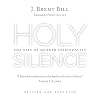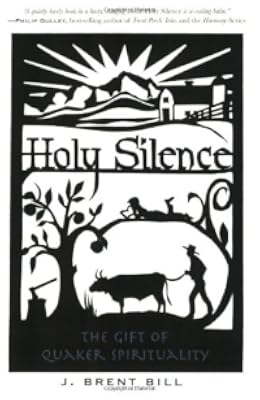
Holy Silence: The Gift Of Quaker Spirituality
by J. Brent Bill 
On This Page
Description
J. Brent Bill's Holy Silence is a contemporary classic on sacred silence. With warmth, wisdom, and gentle humor, Bill presents the Quaker practice of silence and expectant listening to a wider Christian audience. This revised and expanded edition includes new spiritual silence practices and a new section on incorporating holy silence into worship. Written by one of the most respected interpreters of the Quaker tradition, Holy Silence opens up for readers a fresh way of connecting with God. - show more back of book. show lessTags
Recommendations
































Member Reviews
Not every way of finding the Divine Source fits everyone. Having said that, I can joyously claim that Quaker spirituality resonates with me. Bill's book took me more deeply within than have most current books. He stops at appropriate times and guides the reader to experience a deeper sense of the silence. He adds a welcome glossary at the end, along with a list of quite profound queries. Finally, he gives an added gift of an annotated bibliography.
Two quotes that encapsulates the flavor of the book are:
1) "Holy silence gives us a way to be with others, helping them wrestle with the large questions of life--why this, why me, why them, why now, why God?" (51).
2) "The apostle Paul's exhortation 'not to think of yourself more highly than show more you ought to think' also carries the subtle suggestion that we should think RIGHTLY of ourselves....learning to care for ourselves" (56). show less
Two quotes that encapsulates the flavor of the book are:
1) "Holy silence gives us a way to be with others, helping them wrestle with the large questions of life--why this, why me, why them, why now, why God?" (51).
2) "The apostle Paul's exhortation 'not to think of yourself more highly than show more you ought to think' also carries the subtle suggestion that we should think RIGHTLY of ourselves....learning to care for ourselves" (56). show less
Holy Silence, The Gift of Quaker Spirituality, by J. Brent Bill (Audible audio book). Published 2005. [I’m required to note that I was given this free review copy audiobook at my request and have voluntarily left this review.] My interest in Holy Science was my attendance at a Quaker meeting over twenty-five years ago, having been invited there by a co-worker (my boss). All I recall about the experience was sitting in a folding chair for about an hour, trying to stay alert and conscious of the activity going on around me. That activity consisted of twenty or so other people also sitting in folding chairs, all of us being silent and lost in our thoughts. At least I was lost: presumably the others knew where they were going. This books show more explains the concept of non-liturgical worship as practiced by Friends, commonly known as Quakers. Their form of worship is foreign to most of the rest of us, if for no other reason than most of us put much energy into avoiding rather than embracing silence: we wake to music; immediately check our phones when we wake up, often listening to voicemail messages; we fill our mornings talking to family; we pop in ear buds on the way to work; spend our working hours talking with others; listen to music or audiobooks while exercising; and watch television or listen to N.P.R. at night when not watching videos on Facebook or YouTube. In short, we act as if we are afraid of silence beyond a minute or two, or even several seconds. In fact, in meetings, church services, conversations, and informal interactions with others we typically find silence uncomfortable. After a few moments of no one talking we look around to see what’s the problem, and maybe interject something to make sure things are moving along. Silence among the Society of Friends is time for communing with God. It is intentional, and is a form of worship that, arguably, actively engages parishioners more than most others forms of worship. With no one preaching a sermon, no songs to sing, no one reading Bible passages, and no audible prayers, each person is responsible for their own connection with God. During these silent services individuals may talk, sing, read a Bible passage, express an opinion, or otherwise communicate with the group, but each such instance is spontaneous and typically short. And each such break in silence is done if the person feels it’s necessary in the moment. Many meetings are silent from start to finish. As someone who has rejected organized religion, I find this approach refreshing. The Friends’ way is unadorned: shorn of most rituals, costumes, leaders telling us what to think, and other man made rules about how and when to connect with God. This is all explained in the first half of the book, with a focus on the how’s and why’s of silence as used by Friends, including many personal anecdotes and easily understood examples. The second half delves deeply into the overt religious beliefs of Quakers, and is almost a step by step explanation of how to use silence to worship. According to the author, there are many tried and true techniques for maximizing the potential of holy silence, including numerous spiritual questions one can consider. This book is written for fellow believers in the Christian God, but I believe the concept of holy silence is one that can apply to anyone who is searching for a better way to commune with a higher being. At a minimum it’s a peek into a sect of Christianity that few of us know much about. show less
People of all faiths and backgrounds are drawn to silence. We yearn for it in these busy and difficult times, but often, when silence becomes available, we don't know what to do with it.
For centuries, Quakers have taught that when we are silent, God grants us insights, guidance, and spiritual understanding that is different from what we might realize in our noisy, everyday lives. This book invites readers to discover this and other unique gifts of the Quaker way. It is a satisfying experience and taste of a spiritual tradition unflinching in its dedication to listening for the sounds and voice of God
For centuries, Quakers have taught that when we are silent, God grants us insights, guidance, and spiritual understanding that is different from what we might realize in our noisy, everyday lives. This book invites readers to discover this and other unique gifts of the Quaker way. It is a satisfying experience and taste of a spiritual tradition unflinching in its dedication to listening for the sounds and voice of God
Interesting review of Quaker spirituality and worship as it compares to the more traditional forms.
I have had this book on my reading list for some time. I finally found the time to finish. I will be returning to Holy Silence frequently as a resource. I have a practical guide to remember to "Be still and know that I am God".
A brief overview of the practice of silence in the quaker contemplative tradition. Six chapters, punctuated by 'quietude queries' (short questions to mull over in silence) and discussions of quiet and silence in quaker practice.
2nd ed. People of all faiths and backgrounds are drawn to silence. They yearn for it in these busy and difficult times, but often, when silence becomes available, we don't know what to do with it. For centuries, Quakers have taught that when we are silent, God grants us insights, guidance, and spiritual understanding that is different from what we might realize in our noisy, everyday lives.
Members
- Recently Added By
Author Information

29+ Works 799 Members
J. Brent Bill is recognized as one of the most important communicators of the spirituality of the Quaker tradition today
J. Brent Bill is a LibraryThing Author, an author who lists their personal library on LibraryThing.
Common Knowledge
- Original publication date
- 2005
Classifications
- Genres
- Religion & Spirituality, Nonfiction
- DDC/MDS
- 248.088 — Religion Christian practice & observance Christian experience, practice, life
- LCC
- BX7748 .S5 .B55 — Philosophy, Psychology and Religion Christian Denominations Christian Denominations Protestantism Other Protestant denominations Friends. Society of Friends. Quakers
- BISAC
Statistics
- Members
- 235
- Popularity
- 138,242
- Reviews
- 8
- Rating
- (4.26)
- Languages
- English
- Media
- Paper, Audiobook, Ebook
- ISBNs
- 5
- ASINs
- 4