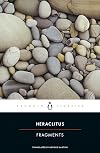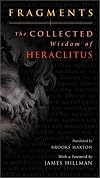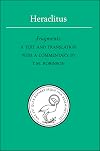
Fragments
by Heraclitus
On This Page
Description
Dive into the profound wisdom of ancient philosophy with "Fragments" by Heraclitus, now available as a captivating audiobook. Explore the enigmatic fragments left behind by this legendary Greek philosopher, whose insights continue to intrigue and inspire seekers of truth and understanding. In this audiobook, Heraclitus offers glimpses into his philosophy of change, unity, and the fundamental nature of the universe. Through concise and thought-provoking aphorisms, he challenges listeners to show more question their perceptions and contemplate the deeper mysteries of existence. Perfect for lovers of philosophy and seekers of wisdom, "Fragments" provides a fascinating glimpse into the mind of one of antiquity's most enigmatic thinkers. Whether you're a student of philosophy or simply curious about the nature of reality, this audiobook offers a stimulating and enlightening experience. So, if you're ready to explore the timeless insights of Heraclitus and expand your understanding of the universe, start listening to "Fragments" today and embark on a journey of philosophical discovery. show lessTags
Recommendations











Member Reviews
Heraclitus is one of those philosophers who is rewarding to read because he is so hard to understand. After all, Diogenes Laertius did call him “Heraclitus the Obscure.”
Heraclitus challenges the very ways in which we think and try to understand the world, not just what we think but how. If we push ourselves and resist trying to reduce his thought to something familiar, we are changed by the experience.
Central to that experience for me is trying to understand the play of change and constancy, and diversity and unity in Heraclitus’ thought.
There is one common understanding of Heraclitus as the philosopher of change or “flux” and “strife” to the point of an anti-philosophical position. If all is endless flux and strife, show more nothing is truly constant, and there is no “way that things are” to be known.
The fragments though contradict any understanding of Heraclitus as rejecting the philosophical and the rational. Fragment 1 speaks of the logos (translated here as “account”). Robinson is careful to distinguish between Heraclitus’ sense of the logos and what comes to be known among the Stoics as the “rational principle” of reality — the logos for Heraclitus seems more to be just “the way things are” (whether a generative rational principle or not), or the “account” of the way things are.
But this “way things are” is a bit closer to Parmenides than we might have thought. Parmenides, coming a bit later than Heraclitus and usually taken as his opposite pole, claimed that Being was unchanging, undivided. But see Heraclitus’ Fragment 50, in which he says, “Not after listening to me, but after listening to the account [again, the logos], one does wisely in agreeing that all things are one.”
Even the best known fragment associated with Heraclitus — Fragment 91a, attributed to him by Plutarch (also attributed to Heraclitus by Plato), stating that “it is impossible to step into the same river twice” — may not support a rejection of constancy. Look at Fragment 12 — “As they step into the same rivers, different and different waters flow upon them.” There it is not the river that loses its identity in change. The river is constant, and the waters change within it. Other fragments seem to support the latter interpretation. See, for example, Fragment 84a — “While changing it rests.”
I think the more interesting position to consider for Heraclitus is one in which change and constancy are not strictly distinguished. The “way things are” encompasses change, and if “all things are one” that one thing is changing. The river in the famous metaphor is inherently changing — its very nature is change, even though it maintains its identity through change.
Likewise with unity and diversity. Look at Fragment 10 — “Out of all things one thing, and out of one thing all things.”
That would seemingly compel the question, what is it about the river then that is constant if not the waters that make it up? Robinson, in his Commentary, suggests that “structure” is constant, as maybe the course of the river remains the same as different waters flow along it.
Maybe. There are also Heraclitus’ comments on the elements. Fragment 76a says, “Fire lives the death of earth and air lives the death of fire; water lives the death of air, earth that of water.” There is an order here — fire does not live the death of air, only of earth. And so forth for the other elements. The same ordering is repeated in Fragment 76c, from a different source. There is also evidence (e.g., Fragment 30) to give fire a priority among the elements, maybe as the agent of change itself.
I find it hard to resist, somewhat contrary to Robinson, abstracting the themes of change/constancy and diversity/unity as ones that recur and are themselves a kind of “principle” in Heraclitus’ thinking. They recur in discussions of the four elements, in his discussions of life and death, and in those more explicitly abstract-sounding fragments I quoted above.
It may be tempting to fall back to the idea that the only constant is change. Too easy. I don’t even know what that means, except a kind of illusion of insight (and one that ignores that Heraclitus claimed that change wasn’t just random change, but ordered). I think Heraclitus was after something more interesting.
You could imagine he was after something that Robinson suggests at one point — something like a “formula” that describes change, that all change follows the “formula” (akin to Robinson’s translation of “logos”).
But “formula” is too modern a notion, I think, for Heraclitus. A reminder that, in trying to understand ancient Greek thought, we need to keep in mind that ancient Greek solutions as to how to think about the world answered ancient Greek problems as to how to think about the world, not our own problems. We need to think our way to the question or the problem that Heraclitus was responding to as much (or more) as the answer.
I think maybe the most interesting way to interpret what Heraclitus says about unity/diversity and constancy/change is to start with the seemingly trivial observation that opposites have in common that they are opposites. Opposition does exclude — silent opposes loud but not green — and by doing so they work to identify. Sound is what is constant in the opposition between silent and loud, for example.
And opposition needn’t be polar opposition. Thus fire, earth, air, and water can oppose one another.
And, as above, oppositions, in Heraclitus’ thinking, have order. Fire lives the death of earth but not the death of air. Water lives the death of air, earth the death of water, and air the death of fire. Sleep follows waking, and waking follows sleep.
Oppositions, in other words, are unities. And the oppositions within unities move in an order of change.
None of this is to deny the reality of opposites, or their real distinctiveness. Fire is not the same as air, sleep is not the same as wakefulness, etc. The unity of opposites in fact resides in the play of opposition itself. A thing is its distinctive play of oppositions.
There is also good reason to believe that opposition is cyclical. Certainly the oppositions of fire, earth, air, and water describe, in Heraclitus’ account comprise a recurrent cycle.
The exercise of understanding Heraclitus is the reward for reading him, more so, I think than reaching a resolution.
All this is set aside from some basic difficulties. We shouldn’t forget, for example, that Heraclitus was Greek in the sense of being a participant, at some level, in the world of the Greek gods. See Fragment 32, where he seems to identify the “one thing, the only wise thing” with Zeus. (Actually, that fragment is a very provocative one. The full text reads, “One thing, the only wise thing, is unwilling and willing to be called by the name Zeus,” as if “being called by the name Zeus” were some sort of not-quite-right way of thinking of what we are trying to get at with “Zeus.”). Understanding Heraclitus will also mean understanding what it is to live in the world of Zeus.
The over-riding difficulty though with understanding Heraclitus is that we don’t have his original writings. We don’t have his “book” (if there even was one single treatise written by him). What we have are fragments from secondary sources. Some are undoubtedly influenced by later writers’ biases and purposes (Robinson cites the Stoics in particular, who claimed Heraclitus as a precursor).
But I still think we should try to understand Heraclitus as an original thinker to invest the exploration and interpretation required to get into the insights and elements that cohered in his own thought. Doing so promises to change the very patterns in which we ourselves think.
The book contains the original Greek fragments with Robinson’s English translations on facing pages. Robinson also provides a fragment-by-fragment commentary, primarily focused on translation issues and on the pedigrees of the fragments.
The commentary is followed by the Testamonia — discussions of Heraclitus by the various sources, including Diogenes Laertius, Plato, Aristotle, Plutarch, and others.
Finally, Robinson gives a brief overview of Heraclitus’ thought, by Robinson’s own interpretation. This is not the strength of the book. I think the book is best treated as a definitive source for interpretation rather than an interpretation itself.
The primary audience for this book is classicists. I’m not a classicist, and even though I am a once-upon-a-time academic philosopher, my focus was not on ancient philosophy. Nevertheless, for the reasons I’ve given, the experience of trying to understand Heraclitus, even for a non-expert, is worth the investment. show less
Heraclitus challenges the very ways in which we think and try to understand the world, not just what we think but how. If we push ourselves and resist trying to reduce his thought to something familiar, we are changed by the experience.
Central to that experience for me is trying to understand the play of change and constancy, and diversity and unity in Heraclitus’ thought.
There is one common understanding of Heraclitus as the philosopher of change or “flux” and “strife” to the point of an anti-philosophical position. If all is endless flux and strife, show more nothing is truly constant, and there is no “way that things are” to be known.
The fragments though contradict any understanding of Heraclitus as rejecting the philosophical and the rational. Fragment 1 speaks of the logos (translated here as “account”). Robinson is careful to distinguish between Heraclitus’ sense of the logos and what comes to be known among the Stoics as the “rational principle” of reality — the logos for Heraclitus seems more to be just “the way things are” (whether a generative rational principle or not), or the “account” of the way things are.
But this “way things are” is a bit closer to Parmenides than we might have thought. Parmenides, coming a bit later than Heraclitus and usually taken as his opposite pole, claimed that Being was unchanging, undivided. But see Heraclitus’ Fragment 50, in which he says, “Not after listening to me, but after listening to the account [again, the logos], one does wisely in agreeing that all things are one.”
Even the best known fragment associated with Heraclitus — Fragment 91a, attributed to him by Plutarch (also attributed to Heraclitus by Plato), stating that “it is impossible to step into the same river twice” — may not support a rejection of constancy. Look at Fragment 12 — “As they step into the same rivers, different and different waters flow upon them.” There it is not the river that loses its identity in change. The river is constant, and the waters change within it. Other fragments seem to support the latter interpretation. See, for example, Fragment 84a — “While changing it rests.”
I think the more interesting position to consider for Heraclitus is one in which change and constancy are not strictly distinguished. The “way things are” encompasses change, and if “all things are one” that one thing is changing. The river in the famous metaphor is inherently changing — its very nature is change, even though it maintains its identity through change.
Likewise with unity and diversity. Look at Fragment 10 — “Out of all things one thing, and out of one thing all things.”
That would seemingly compel the question, what is it about the river then that is constant if not the waters that make it up? Robinson, in his Commentary, suggests that “structure” is constant, as maybe the course of the river remains the same as different waters flow along it.
Maybe. There are also Heraclitus’ comments on the elements. Fragment 76a says, “Fire lives the death of earth and air lives the death of fire; water lives the death of air, earth that of water.” There is an order here — fire does not live the death of air, only of earth. And so forth for the other elements. The same ordering is repeated in Fragment 76c, from a different source. There is also evidence (e.g., Fragment 30) to give fire a priority among the elements, maybe as the agent of change itself.
I find it hard to resist, somewhat contrary to Robinson, abstracting the themes of change/constancy and diversity/unity as ones that recur and are themselves a kind of “principle” in Heraclitus’ thinking. They recur in discussions of the four elements, in his discussions of life and death, and in those more explicitly abstract-sounding fragments I quoted above.
It may be tempting to fall back to the idea that the only constant is change. Too easy. I don’t even know what that means, except a kind of illusion of insight (and one that ignores that Heraclitus claimed that change wasn’t just random change, but ordered). I think Heraclitus was after something more interesting.
You could imagine he was after something that Robinson suggests at one point — something like a “formula” that describes change, that all change follows the “formula” (akin to Robinson’s translation of “logos”).
But “formula” is too modern a notion, I think, for Heraclitus. A reminder that, in trying to understand ancient Greek thought, we need to keep in mind that ancient Greek solutions as to how to think about the world answered ancient Greek problems as to how to think about the world, not our own problems. We need to think our way to the question or the problem that Heraclitus was responding to as much (or more) as the answer.
I think maybe the most interesting way to interpret what Heraclitus says about unity/diversity and constancy/change is to start with the seemingly trivial observation that opposites have in common that they are opposites. Opposition does exclude — silent opposes loud but not green — and by doing so they work to identify. Sound is what is constant in the opposition between silent and loud, for example.
And opposition needn’t be polar opposition. Thus fire, earth, air, and water can oppose one another.
And, as above, oppositions, in Heraclitus’ thinking, have order. Fire lives the death of earth but not the death of air. Water lives the death of air, earth the death of water, and air the death of fire. Sleep follows waking, and waking follows sleep.
Oppositions, in other words, are unities. And the oppositions within unities move in an order of change.
None of this is to deny the reality of opposites, or their real distinctiveness. Fire is not the same as air, sleep is not the same as wakefulness, etc. The unity of opposites in fact resides in the play of opposition itself. A thing is its distinctive play of oppositions.
There is also good reason to believe that opposition is cyclical. Certainly the oppositions of fire, earth, air, and water describe, in Heraclitus’ account comprise a recurrent cycle.
The exercise of understanding Heraclitus is the reward for reading him, more so, I think than reaching a resolution.
All this is set aside from some basic difficulties. We shouldn’t forget, for example, that Heraclitus was Greek in the sense of being a participant, at some level, in the world of the Greek gods. See Fragment 32, where he seems to identify the “one thing, the only wise thing” with Zeus. (Actually, that fragment is a very provocative one. The full text reads, “One thing, the only wise thing, is unwilling and willing to be called by the name Zeus,” as if “being called by the name Zeus” were some sort of not-quite-right way of thinking of what we are trying to get at with “Zeus.”). Understanding Heraclitus will also mean understanding what it is to live in the world of Zeus.
The over-riding difficulty though with understanding Heraclitus is that we don’t have his original writings. We don’t have his “book” (if there even was one single treatise written by him). What we have are fragments from secondary sources. Some are undoubtedly influenced by later writers’ biases and purposes (Robinson cites the Stoics in particular, who claimed Heraclitus as a precursor).
But I still think we should try to understand Heraclitus as an original thinker to invest the exploration and interpretation required to get into the insights and elements that cohered in his own thought. Doing so promises to change the very patterns in which we ourselves think.
The book contains the original Greek fragments with Robinson’s English translations on facing pages. Robinson also provides a fragment-by-fragment commentary, primarily focused on translation issues and on the pedigrees of the fragments.
The commentary is followed by the Testamonia — discussions of Heraclitus by the various sources, including Diogenes Laertius, Plato, Aristotle, Plutarch, and others.
Finally, Robinson gives a brief overview of Heraclitus’ thought, by Robinson’s own interpretation. This is not the strength of the book. I think the book is best treated as a definitive source for interpretation rather than an interpretation itself.
The primary audience for this book is classicists. I’m not a classicist, and even though I am a once-upon-a-time academic philosopher, my focus was not on ancient philosophy. Nevertheless, for the reasons I’ve given, the experience of trying to understand Heraclitus, even for a non-expert, is worth the investment. show less
Hmmm, I’m not completely sure I know where I stand on Heraclitus the Obscure. On the one hand, he stresses the logos and its collective, shared nature, as the basis of knowledge (or he seems to! It should go without saying that 90% of what we think we know about Heraclitus is wrong, given that all we have is fragments), a stance with which I have much sympathy. On the other hand, he seems to approach this in a literal-minded way—in the beginning is the Word—and that I have less patience for.
At least, if we’re trying to be real. If we’re aphoristic, more can be forgiven. And Heraclitus is very aphoristic. But it’s not Nietzschean and wild—it’s mystical, but more this plodding mysticism of homespun commonplaces dressed up show more as portents—signs taken for wonders. BUT THEN, you really can’t blame Heraclitus for that, because he wrote a whole book and it was the rest of us who let it get burned when the Temple of Artemis was sacked and then combed out the quotes from Plato and whoever and numbered them and treated them like koans.
Speaking of koans, the main thing that H shares with the Buddhists is seemingly the interest in flux—you can’t step in the same river twice, change is eternal, panta rhei and all that. For me, that’s beauty, and it goes right to moral philosophy—ripeness is all, or all that is solid melts into air in the sense of its Marxist implications. But Heraclitus goes ontological instead—all that is solid melts into air, and air gives birth to fire, just as earth gives birth to water and vice versa. A pretty but inconsequential physics.
I think that might be where I would have let things rest on our guy—pretty but inconsequential; or more accurately, pretty but I am in no way even remotely capable of evaluating his consequentiality given what’s been lost and misused and appropriated in him (the internet, because he was the big name in philosophy BS,* makes him responsible for everything from dialectical materialism to the Tao to something called “process philosophy”).**
But then he still leaves me with a little additional frowny feeling I’d like to express while I’m on my soapbox. They call Heraclitus the “weeping philosopher,” in contradistinction to Democritus, the laughing, and while I’m very clear that I stand with big D (as did Montaigne),*** certainly the world is beautiful and awful and it is apposite to laugh through your tears. But weeping of any sort doesn’t seem to be Heraclitus’s MO, really, in the event: he’s more the quietly judgmental philosopher, looking down his nose at the people and their small minds and their weak wisdom and their easily led herdsheepery. But not in an extensive, magnificently misanthropic way, or like, with the sincerity to elaborate an alternative protofascistic political philosophy like Plato, or to pull out the people in the agora like Socrates, or any number of other possibilities. No, Heraclitus (who let it be noted should have been king in Ephesus, but the Persians installed a satrap and left him a figurehead and so he renounced the throne) is more the philosopher of taking his ball and going home: quitting his job (king!!) writing a big book and leaving it with the goddess so people could come and consult and see that Heraclitus thinks that they are foolish and ephemeral. No snarling hermit, but a bit of a sulk, perhaps, like how I imagine Henry James.
But aphorism sells, and (because?) you can’t say shit based on it. So I will endeavour to appreciate Heraclitus for his beauties, mull how it is that a sulk of Becoming is so much easier to take than a sulk of Being, remember that I can’t step in the same river twice (OR, ERGO, EVEN ONCE), and try to get some things done today.
*before Socrates! Not whatever you thought.
**THALES WUZ ROBBED
***definite extra credit question: is there something intrinsically comforting about a static atomism and intrinsically depressing about quantum relativity? The laughing and weeping pals say yes? show less
At least, if we’re trying to be real. If we’re aphoristic, more can be forgiven. And Heraclitus is very aphoristic. But it’s not Nietzschean and wild—it’s mystical, but more this plodding mysticism of homespun commonplaces dressed up show more as portents—signs taken for wonders. BUT THEN, you really can’t blame Heraclitus for that, because he wrote a whole book and it was the rest of us who let it get burned when the Temple of Artemis was sacked and then combed out the quotes from Plato and whoever and numbered them and treated them like koans.
Speaking of koans, the main thing that H shares with the Buddhists is seemingly the interest in flux—you can’t step in the same river twice, change is eternal, panta rhei and all that. For me, that’s beauty, and it goes right to moral philosophy—ripeness is all, or all that is solid melts into air in the sense of its Marxist implications. But Heraclitus goes ontological instead—all that is solid melts into air, and air gives birth to fire, just as earth gives birth to water and vice versa. A pretty but inconsequential physics.
I think that might be where I would have let things rest on our guy—pretty but inconsequential; or more accurately, pretty but I am in no way even remotely capable of evaluating his consequentiality given what’s been lost and misused and appropriated in him (the internet, because he was the big name in philosophy BS,* makes him responsible for everything from dialectical materialism to the Tao to something called “process philosophy”).**
But then he still leaves me with a little additional frowny feeling I’d like to express while I’m on my soapbox. They call Heraclitus the “weeping philosopher,” in contradistinction to Democritus, the laughing, and while I’m very clear that I stand with big D (as did Montaigne),*** certainly the world is beautiful and awful and it is apposite to laugh through your tears. But weeping of any sort doesn’t seem to be Heraclitus’s MO, really, in the event: he’s more the quietly judgmental philosopher, looking down his nose at the people and their small minds and their weak wisdom and their easily led herdsheepery. But not in an extensive, magnificently misanthropic way, or like, with the sincerity to elaborate an alternative protofascistic political philosophy like Plato, or to pull out the people in the agora like Socrates, or any number of other possibilities. No, Heraclitus (who let it be noted should have been king in Ephesus, but the Persians installed a satrap and left him a figurehead and so he renounced the throne) is more the philosopher of taking his ball and going home: quitting his job (king!!) writing a big book and leaving it with the goddess so people could come and consult and see that Heraclitus thinks that they are foolish and ephemeral. No snarling hermit, but a bit of a sulk, perhaps, like how I imagine Henry James.
But aphorism sells, and (because?) you can’t say shit based on it. So I will endeavour to appreciate Heraclitus for his beauties, mull how it is that a sulk of Becoming is so much easier to take than a sulk of Being, remember that I can’t step in the same river twice (OR, ERGO, EVEN ONCE), and try to get some things done today.
*before Socrates! Not whatever you thought.
**THALES WUZ ROBBED
***definite extra credit question: is there something intrinsically comforting about a static atomism and intrinsically depressing about quantum relativity? The laughing and weeping pals say yes? show less
Heraclitus, the ancient Greek philosopher, may have written a book that he might have called On Nature. If Heraclitus did write such a book, and if that’s what it was called, he did so while Pythagoras, Buddha, and Lao Tzu were all alive. But nobody really knows for sure—all that survives the intervening 2,500 years are fragments incorporated in the works of others. Personally, I’m not convinced that Heraclitus wrote a book—whatever it may have been called—at all. I think the old philosopher was a little like Ludwig Wittgenstein in that respect: mistrusting of the permanence of words on paper, never quite satisfied with the way things came out when he did write things down. Heraclitus seemed to have preferred conversation show more (when, as legend has it, he let you within a hundred feet), just like Wittgenstein, so much of whose thought was written down by his students, his listeners.
But without a doubt, Heraclitus was a master of the first, last, and only line. Heraclitus, like Wittgenstein, is unparalleled in giving us the line that stops our thought of the world in its tracks. The first line of Wittgenstein’s Tractatus Logico-Philosophicus is the breathtaking “The world is everything that is the case” (which we realize, once we catch our breath, neatly dispenses with both the supernatural and metaphysics). With Heraclitus’s “The world is flux,” these are lines that define while escaping the pedantic box of definitionism. Instead of putting an end to further discussion and closing down thought, these lines open the mind to, well, everything that is the case: the world in flux. They begin conversations (or arguments!), which is just what a first line is supposed to do.
Not that “The world is flux” is the first line of Haxton’s translation of the scattered fragments attributed to Heraclitus. Haxton goes for the line that is an inverted echo of the line that, centuries later, John would employ to kick off his gospel: “The Word proves / those first hearing it / as numb to understanding / as the ones who have not heard.” Already we have a possible subtext for (re)reading John’s first line: “In the beginning was the Word” but no one understood it. Nevertheless, as Heraclitus continues, “all things follow from the Word.”
Like Wittgenstein, and the postmodernists who (mostly unwittingly) follow him, Heraclitus was obsessed with language. This really shouldn’t surprise us: in Heraclitus’s time Greek culture was being, to use scholar Walter Ong’s word, “alphabetized.” They were learning how to write—or, more accurately, they were debating whether to write at all, and asking the question, What will writing things down do to the mind, to a person’s character? We may think, immersed as we are in a thoroughly alphabetized culture, that such questions are naïve. But consider that, up until the fifth or fourth century BC, the way things got done was mostly by word of mouth—and the mouth’s necessary ally, memory. No wonder the Odyssey beings (in the old Harvard Classics translation), “Tell me, Muse, of that man.” Mnemosyne was the mother of the Muses, and the goddess of memory: her name survives in our word mnemonic. The ancient Greeks knew, at least some of them did, that taking pen to papyrus would rob Mnemosyne of some of her power, and us of our mindfulness. Thus, when Heraclitus uses verbs like “speak” he is not, as we modern writers would be, using them metaphorically:
Since mindfulness, of all things,
is the ground of being,
to speak one’s true mind,
and to keep things known
in common, serves all being,
just as laws made clear
uphold the city,
yet with greater strength.
Of all pronouncements of the law
the one source is the Word
whereby we choose what helps
true mindfulness prevail.
Heraclitus is always provocative, clarifying and simultaneously enigmatic: his lines, in other words, are chewy. He’s the kind of thinker, like his contemporary Lao Tzu, you want to devour one phrase at a time—making every opening of his book a reading of a first line, wherever it may happen to fall in the text. Heraclitus invites us to read him the way we found him: random bits in stolen moments, as unattributed quotes in the works of scores of writers over the last 2,500 years. For all his invisible popularity, Heraclitus may be the best-kept secret in Western literature.
Haxton’s poetic translation of these ancient wisdom sayings is as spare and dense as Emily Dickinson’s poetry, and flows like water drawn from the same well as Dickinson’s. This translation is inspired, generous, and stern—because wisdom is, I think, always all of those things. The book itself is a minor masterpiece of the designer’s art (Francesca Belanger gets the nod there): elegant and without frills. Best of all, the ancient Greek is presented side by side with the translation, giving the ambitious logophile a chance to ferret out the roots of modern English words in one of their oldest written contexts.
Originally published in The First Line show less
But without a doubt, Heraclitus was a master of the first, last, and only line. Heraclitus, like Wittgenstein, is unparalleled in giving us the line that stops our thought of the world in its tracks. The first line of Wittgenstein’s Tractatus Logico-Philosophicus is the breathtaking “The world is everything that is the case” (which we realize, once we catch our breath, neatly dispenses with both the supernatural and metaphysics). With Heraclitus’s “The world is flux,” these are lines that define while escaping the pedantic box of definitionism. Instead of putting an end to further discussion and closing down thought, these lines open the mind to, well, everything that is the case: the world in flux. They begin conversations (or arguments!), which is just what a first line is supposed to do.
Not that “The world is flux” is the first line of Haxton’s translation of the scattered fragments attributed to Heraclitus. Haxton goes for the line that is an inverted echo of the line that, centuries later, John would employ to kick off his gospel: “The Word proves / those first hearing it / as numb to understanding / as the ones who have not heard.” Already we have a possible subtext for (re)reading John’s first line: “In the beginning was the Word” but no one understood it. Nevertheless, as Heraclitus continues, “all things follow from the Word.”
Like Wittgenstein, and the postmodernists who (mostly unwittingly) follow him, Heraclitus was obsessed with language. This really shouldn’t surprise us: in Heraclitus’s time Greek culture was being, to use scholar Walter Ong’s word, “alphabetized.” They were learning how to write—or, more accurately, they were debating whether to write at all, and asking the question, What will writing things down do to the mind, to a person’s character? We may think, immersed as we are in a thoroughly alphabetized culture, that such questions are naïve. But consider that, up until the fifth or fourth century BC, the way things got done was mostly by word of mouth—and the mouth’s necessary ally, memory. No wonder the Odyssey beings (in the old Harvard Classics translation), “Tell me, Muse, of that man.” Mnemosyne was the mother of the Muses, and the goddess of memory: her name survives in our word mnemonic. The ancient Greeks knew, at least some of them did, that taking pen to papyrus would rob Mnemosyne of some of her power, and us of our mindfulness. Thus, when Heraclitus uses verbs like “speak” he is not, as we modern writers would be, using them metaphorically:
Since mindfulness, of all things,
is the ground of being,
to speak one’s true mind,
and to keep things known
in common, serves all being,
just as laws made clear
uphold the city,
yet with greater strength.
Of all pronouncements of the law
the one source is the Word
whereby we choose what helps
true mindfulness prevail.
Heraclitus is always provocative, clarifying and simultaneously enigmatic: his lines, in other words, are chewy. He’s the kind of thinker, like his contemporary Lao Tzu, you want to devour one phrase at a time—making every opening of his book a reading of a first line, wherever it may happen to fall in the text. Heraclitus invites us to read him the way we found him: random bits in stolen moments, as unattributed quotes in the works of scores of writers over the last 2,500 years. For all his invisible popularity, Heraclitus may be the best-kept secret in Western literature.
Haxton’s poetic translation of these ancient wisdom sayings is as spare and dense as Emily Dickinson’s poetry, and flows like water drawn from the same well as Dickinson’s. This translation is inspired, generous, and stern—because wisdom is, I think, always all of those things. The book itself is a minor masterpiece of the designer’s art (Francesca Belanger gets the nod there): elegant and without frills. Best of all, the ancient Greek is presented side by side with the translation, giving the ambitious logophile a chance to ferret out the roots of modern English words in one of their oldest written contexts.
Originally published in The First Line show less
Easily the most interesting and important of the pre-Socratic philosophers, and among the greatest Greeks, Heraclitus was everything from pre-Nietzsche to pre-Einstein. His poetic declarations that energy in flux is the essence of the world was unique and largely ignored in favour of Plato and Aristotle, as was his inclination to highlight the importance of perspective and relativity, the strength and harmony that results from strife and conflict, the sleepwalking idiocy of most men, the illusory nature of progress and the oneness of the Earth. Whilst much of his work has been lost, historians believe Heraclitus was the first man to form a coherent philosophical treatise, and the fragments which remain are more than enough to show more justifiably place Heraclitus among the greatest of thinkers. show less
The introduction to this work is inevitably longer than the fragments themselves. What survives is a mish-mash of various interpretations and I daresay unreliable sources. What strikes me about the pre-Socratics, and Heraclitus specifically, is the melding of religion and reason in a way that the West would not mention when the modern cultural monolith seeks its origins in a part of the world where it is fine to claim mythic philosophical ancestry, yet it is despised when one's pedigree is pure. On the first page of the fragments, Heraclitus mentions the trouble with those who will not learn:
"III. - ...Those who hear and do not understand are like the deaf. Of them the proverb says: "Present, they are absent,"show more
IV. — Eyes and ears are
bad witnesses to men having rude souls.show less
V. — The majority of people have no understanding of the things with which they daily meet, nor, when instructed, do they have any right knowledge of them, although to themselves they seem to have.
VI. — They understand neither how to hear nor how to speak.
This is not entirely a Western idea, for indeed, Confucius said, “When you see that [students] do something wrong, give them sincere and friendly advice, which may guide them to the right way; if they refuse to accept your advice, then give it up”.
Reading Heraclitus leads me to Pythagoras as my next venture into pre-Socratic philosophy, and also to Hesiod's Theogony. It would seem that there is much to learn from this period of history, and how it echoes down through the ages.
I was thinking about the quotation “The only constant is change,” and how much it reflects our modern world. I wondered who said it first and was shocked to learn it was a philosopher from Ancient Greece, one I was unfamiliar with. Heraclitus. He lived around 500 B.C.E. so his ideas feeling so current is indicative of the quality of his ideas. I decided to read what else he had to say, which is not a lot because only Fragments remain.
A lot of us have probably also heard that we only step in the same river twice as well. That’s another one from Heraclitus as is the idea that life is flux, life is change. What remains are short refrains, full of impatience with ignorance and human weakness. He probably was not a fun guy at parties. show more But he had a lot to say about how we perceive the world.
If everything
were turned to smoke,
the nose would
be the seat of judgment.
I chose this because it is not famous, but it is true. We perceive the obvious. How do we discern more? Through wisdom and judgment. His ideas are a good antidote to disinformation, such as his suggestion “Let us not make rash guesses our most lucid thoughts.”
I don’t know Greek, let alone ancient Greek, so have no capacity for judging the translation by Brooks Haxton. I like how he presents it in poetic refrains, unlike another translation I looked at. The Greek is on the facing page, so scholars can check his work.
Fragments is short and sweet. You can read all of his work in thirty minutes and then you can reflect on it for a lifetime.
Fragments at Penguin Random House
Heraclitus at Ancient.eu
https://tonstantweaderreviews.wordpress.com/2019/05/06/9781440679285/ show less
A lot of us have probably also heard that we only step in the same river twice as well. That’s another one from Heraclitus as is the idea that life is flux, life is change. What remains are short refrains, full of impatience with ignorance and human weakness. He probably was not a fun guy at parties. show more But he had a lot to say about how we perceive the world.
If everything
were turned to smoke,
the nose would
be the seat of judgment.
I chose this because it is not famous, but it is true. We perceive the obvious. How do we discern more? Through wisdom and judgment. His ideas are a good antidote to disinformation, such as his suggestion “Let us not make rash guesses our most lucid thoughts.”
I don’t know Greek, let alone ancient Greek, so have no capacity for judging the translation by Brooks Haxton. I like how he presents it in poetic refrains, unlike another translation I looked at. The Greek is on the facing page, so scholars can check his work.
Fragments is short and sweet. You can read all of his work in thirty minutes and then you can reflect on it for a lifetime.
Fragments at Penguin Random House
Heraclitus at Ancient.eu
https://tonstantweaderreviews.wordpress.com/2019/05/06/9781440679285/ show less
I found this translation of the Fragments of Heraclitus to be disappointing. When comparing Brooks Haxton's translation of various fragments to other translations, I often find Haxton's to be rather off-base. Sometimes it even seems that his translations convey the opposite meanings to that of other translations. I believe the problem lies in his desire to see similarities between Heraclitus and Lao Tzu.
While there do seem to be some surface similarities with regard to Heraclitus' ideas about flux and the logos, many of the fragments attributed to Heraclitus seem pretty far from the Tao Te Ching's philosophy. (Those fragments in which Heraclitus scowls at the behaviour of his fellow men seem to be especially at odds with the show more playfulness of Taoism & Haxton's poetry.)
Of course with anything like the fragments of Heraclitus, it's impossible to tell which if any were actually written by him. More so, how can anyone know with any degree of certainty what the tone of the original manuscript (if there was one) was?
Still, my favourite thing about this edition is the abundant white space, which leaves plenty of room for marginalia. show less
While there do seem to be some surface similarities with regard to Heraclitus' ideas about flux and the logos, many of the fragments attributed to Heraclitus seem pretty far from the Tao Te Ching's philosophy. (Those fragments in which Heraclitus scowls at the behaviour of his fellow men seem to be especially at odds with the show more playfulness of Taoism & Haxton's poetry.)
Of course with anything like the fragments of Heraclitus, it's impossible to tell which if any were actually written by him. More so, how can anyone know with any degree of certainty what the tone of the original manuscript (if there was one) was?
Still, my favourite thing about this edition is the abundant white space, which leaves plenty of room for marginalia. show less
Members
- Recently Added By
Lists

100 Books to Read in a Lifetime (That Are Older Than 200 Years)
415 works; 174 members

Books and authors mentioned by Le Clézio in his Nobel Prize speech
87 works; 3 members

Ryan Holiday's Books To Base Your Life On
97 works; 2 members
Author Information

60+ Works 1,382 Members
All Editions
Some Editions
Awards and Honors
Awards
Notable Lists
Series
Belongs to Publisher Series
Work Relationships
Common Knowledge
- Canonical title
- Fragments
- Original publication date
- 500 BCE; 1901 (critical edition) (critical edition)
- First words
- The Word proves those first hearing it as numb to understanding as the ones who have not heard.
- Last words
- (Click to show. Warning: May contain spoilers.)Silence, healing.
- Original language
- Ancient Greek
Classifications
Statistics
- Members
- 958
- Popularity
- 27,629
- Reviews
- 13
- Rating
- (3.84)
- Languages
- 10 — Dutch, English, French, German, Greek (Ancient), Greek, Italian, Multiple languages, Swedish, Turkish
- Media
- Paper, Ebook
- ISBNs
- 30
- ASINs
- 3