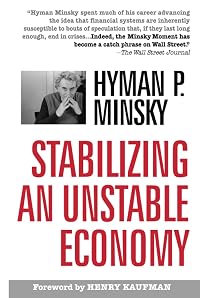
Stabilizing an Unstable Economy
by Hyman Minsky
On This Page
Description
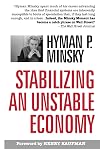
"Mr. Minsky long argued markets were crisis prone. His 'moment' has arrived." -The Wall Street Journal In his seminal work, Minsky presents his groundbreaking financial theory of investment, one that is startlingly relevant today. He explains why the American economy has experienced periods of debilitating inflation, rising unemployment, and marked slowdowns-and why the economy is now undergoing a credit crisis that he foresaw. Stabilizing an Unstable Economy covers: The natural inclination show more of complex, capitalist economies toward instability Booms and busts as unavoidable results of high-risk lending practices "Speculative finance" and its effect on investment and asset prices Government's role in bolstering consumption during times of high unemployment The need to increase Federal Reserve oversight of banks Henry Kaufman, president, Henry Kaufman & Company, Inc., places Minsky's prescient ideas in the context of today's financial markets and institutions in a fascinating new preface. Two of Minsky's colleagues, Dimitri B. Papadimitriou, Ph.D. and president, The Levy Economics Institute of Bard College, and L. Randall Wray, Ph.D. and a senior scholar at the Institute, also weigh in on Minsky's present relevance in today's economic scene in a new introduction. A surge of interest in and respect for Hyman Minsky's ideas pervades Wall Street, as top economic thinkers and financial writers have started using the phrase "Minsky moment" to describe America's turbulent economy. There has never been a more appropriate time to read this classic of economic theory. show lessTags
Recommendations








Member Reviews
A theory for the modern financial economy
The Wall Streets of the world are important; they generate destabilising forces, and from time to time the financial processes of our economy lead to serious threats of financial and economic instability.
A few years ago, used copies of this book commanded up to 1,000 dollars on the internet. The post-Keynesian economist Hyman Minsky was suddenly recognised as very relevant for understanding the growth and burst of the 2007 asset bubble. It was christened the Minsky Moment.
Minsky built his theory not on the idea that an economy, although subject to exogenous shocks, strives for an equilibrium between supply and demand, but that a capitalist economy can never maintain such an equilibrium. Although show more this idea is intuitively easy, the 370 pages of core text are a slow read and require a basic understanding of macro economics, accounting and financial markets. The long chains of causality may not please every reader of this book. Minsky moves slowly and thoughtfully and with a minimum of math, albeit with little empirical support and almost exclusively based upon American economic history. It is a rich book that merits study.
Since the 1960's financial near crises have grown progressively more severe. According to Minsky this is the result of the fragile financial system that has emerged since the Second World War. The stabilising activities of "Big Government" and the Federal Reserve (as lender of last resort) prevented deep recessions but also caused serious and accelerating inflation afterwards. It has changed the shape of the business cycle, because such instability has its effect on the decision making process. Under capitalism it tends to be amplified, because investors will try to profit from these swings. They become speculators.
Earlier neoclassical economists believed that e.g. unemployment was caused by outside forces that the market would correct. The monetary system and the government are the usual villains. But Mr. Minsky believed the economy was fundamentally unstable. He blamed this on speculative and conjectural elements in financial and capital-asset markets. A rise in price increases demand and thus breeds conditions conductive to another rise. Also, by there nature capital-asset and financing decisions involve action over time. This requires a certain gamble on future developments. An actor may also influence prices through his behaviour.
Although the behaviour of money wages and government budgets can amplify or dampen economic instability, the fundamental cyclical properties of our type of economy are determined by relations among profits, capital-asset prices, financial market conditions, and investment. Government contra-cyclical deficits may reduce downside instability. But instability emerges as a period of relative tranquil growth is transformed into a speculative boom. This occurs because the acceptable and desired liability structures of firms and financial middlemen change in response to the economy. During tranquil expansion businessmen and bankers accept larger doses of debt financing. Financial institutions invent and reinvent new forms of money. The economy will try to expand beyond any tranquil full employment rate, and a full employment equilibrium leads to an expansion of debt-financing.
Liability structures for holding any type of capital asset are always uncertain. Structures that were deemed safe may turn out highly risky as history unfolds. Beyond periods of tranquility, the financial side of investment projects is increasingly important in the value of future cash flows. Minsky sees three types of financing: hedge (operational cash flows sufficient to meet payments; debt is funded), speculative (short financing of long positions) and Ponzi (face amount of outstanding debt increases because short term incoming cash flows are lower than financing costs; investors who borrow securities use Ponzi financing; the intention is not necessarily to cheat). Investments can move from one category to another on the basis of (market) conditions. The two latter forms of financing are vulnerable to changes in interest rates (i.e. developments in financial markets) and create financial instability (i.e. instability is not only caused by increased risk appetite). On the other hand speculative finance raises asset values and may create an environment for Ponzi finance: "profit opportunities within a robust financial structure make the shift from robustness to fragility an endogenous phenomenon".
When the memory of the previous crisis recedes in time it is quite natural to believe that a new era has arrived. Doubters have no proof of the validity of their views, so authorities can ignore them. Interest rates rise if an investment boom matures. At a stage the value of capital assets falls below the supply price of investment and investors decrease investment or sell out. This can lead to a spiral of declining profits and declining asset prices, e.g. a stock market crash. An externally financed investment boom with rising interest rates will reduce the return on investment and has the same effect.
Neoclassical theory sees commercial banking as mechanical, without significant impact on the economy. The central bank can guide and control them via the money supply. Bank portfolios change however with their assessment of the economy and with innovation. Bankers operate pro-cyclical, because they "live in the same expectational climate as businessmen". Once a banking innovation is successful, it can spread rapidly, because they are mostly the application of some idea, and thus not constrained by patents.
Minsky is more certain of his description of ailments than of his proposed medicin. First political leaders and their economic advisors should accept and communicate the inherent instability of the financial economy.
Minsky proposes four reforms: big government, an employment strategy, financial reform and market power. With "big government", Minsky means a government big enough to offset swings in private investment levels. In good economic times, the government should run a budget surplus. show less
The Wall Streets of the world are important; they generate destabilising forces, and from time to time the financial processes of our economy lead to serious threats of financial and economic instability.
A few years ago, used copies of this book commanded up to 1,000 dollars on the internet. The post-Keynesian economist Hyman Minsky was suddenly recognised as very relevant for understanding the growth and burst of the 2007 asset bubble. It was christened the Minsky Moment.
Minsky built his theory not on the idea that an economy, although subject to exogenous shocks, strives for an equilibrium between supply and demand, but that a capitalist economy can never maintain such an equilibrium. Although show more this idea is intuitively easy, the 370 pages of core text are a slow read and require a basic understanding of macro economics, accounting and financial markets. The long chains of causality may not please every reader of this book. Minsky moves slowly and thoughtfully and with a minimum of math, albeit with little empirical support and almost exclusively based upon American economic history. It is a rich book that merits study.
Since the 1960's financial near crises have grown progressively more severe. According to Minsky this is the result of the fragile financial system that has emerged since the Second World War. The stabilising activities of "Big Government" and the Federal Reserve (as lender of last resort) prevented deep recessions but also caused serious and accelerating inflation afterwards. It has changed the shape of the business cycle, because such instability has its effect on the decision making process. Under capitalism it tends to be amplified, because investors will try to profit from these swings. They become speculators.
Earlier neoclassical economists believed that e.g. unemployment was caused by outside forces that the market would correct. The monetary system and the government are the usual villains. But Mr. Minsky believed the economy was fundamentally unstable. He blamed this on speculative and conjectural elements in financial and capital-asset markets. A rise in price increases demand and thus breeds conditions conductive to another rise. Also, by there nature capital-asset and financing decisions involve action over time. This requires a certain gamble on future developments. An actor may also influence prices through his behaviour.
Although the behaviour of money wages and government budgets can amplify or dampen economic instability, the fundamental cyclical properties of our type of economy are determined by relations among profits, capital-asset prices, financial market conditions, and investment. Government contra-cyclical deficits may reduce downside instability. But instability emerges as a period of relative tranquil growth is transformed into a speculative boom. This occurs because the acceptable and desired liability structures of firms and financial middlemen change in response to the economy. During tranquil expansion businessmen and bankers accept larger doses of debt financing. Financial institutions invent and reinvent new forms of money. The economy will try to expand beyond any tranquil full employment rate, and a full employment equilibrium leads to an expansion of debt-financing.
Liability structures for holding any type of capital asset are always uncertain. Structures that were deemed safe may turn out highly risky as history unfolds. Beyond periods of tranquility, the financial side of investment projects is increasingly important in the value of future cash flows. Minsky sees three types of financing: hedge (operational cash flows sufficient to meet payments; debt is funded), speculative (short financing of long positions) and Ponzi (face amount of outstanding debt increases because short term incoming cash flows are lower than financing costs; investors who borrow securities use Ponzi financing; the intention is not necessarily to cheat). Investments can move from one category to another on the basis of (market) conditions. The two latter forms of financing are vulnerable to changes in interest rates (i.e. developments in financial markets) and create financial instability (i.e. instability is not only caused by increased risk appetite). On the other hand speculative finance raises asset values and may create an environment for Ponzi finance: "profit opportunities within a robust financial structure make the shift from robustness to fragility an endogenous phenomenon".
When the memory of the previous crisis recedes in time it is quite natural to believe that a new era has arrived. Doubters have no proof of the validity of their views, so authorities can ignore them. Interest rates rise if an investment boom matures. At a stage the value of capital assets falls below the supply price of investment and investors decrease investment or sell out. This can lead to a spiral of declining profits and declining asset prices, e.g. a stock market crash. An externally financed investment boom with rising interest rates will reduce the return on investment and has the same effect.
Neoclassical theory sees commercial banking as mechanical, without significant impact on the economy. The central bank can guide and control them via the money supply. Bank portfolios change however with their assessment of the economy and with innovation. Bankers operate pro-cyclical, because they "live in the same expectational climate as businessmen". Once a banking innovation is successful, it can spread rapidly, because they are mostly the application of some idea, and thus not constrained by patents.
Minsky is more certain of his description of ailments than of his proposed medicin. First political leaders and their economic advisors should accept and communicate the inherent instability of the financial economy.
Minsky proposes four reforms: big government, an employment strategy, financial reform and market power. With "big government", Minsky means a government big enough to offset swings in private investment levels. In good economic times, the government should run a budget surplus. show less
It is difficult but eloquent. It is different and meaningful. It certainly deserves a detailed second reading
Ratings
Members
- Recently Added By
Author Information

9 Works 337 Members
Series
Belongs to Publisher Series
Common Knowledge
- Original title
- Stabilizing an Unstable Economy
- Original publication date
- 1986
Classifications
- Genres
- Economics, Nonfiction, Business, General Nonfiction, Politics and Government
- DDC/MDS
- 339.5 — Society, government, & culture Economics Macroeconomics and related topics Macroeconomic policy
- LCC
- HB3732 .M56 — Social sciences Economic theory. Demography Economic theory. Demography Business cycles. Economic fluctuations
- BISAC
Statistics
- Members
- 167
- Popularity
- 196,857
- Reviews
- 2
- Rating
- (3.90)
- Languages
- 5 — Chinese, English, French, Portuguese, Spanish
- Media
- Paper, Ebook
- ISBNs
- 11