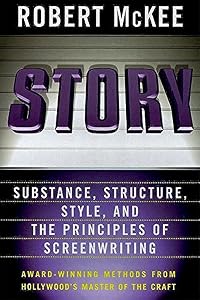
Story: Substance, Structure, Style, and the Principles of Screenwriting
by Robert McKee
On This Page
Description
For more than 15 years, Robert McKee's students have been taking Hollywood's top honors. His "Story Seminar" is the world's ultimate seminar for screenwriters, filmmakers, and novelists. Now, Robert McKee's Story: Substance, Structure, Style, and the Principles of Screenwriting reveals the award-winning methods of the man universally regarded as the world's premier teacher on screenwriting and story. With Hollywood and publishing companies paying record sums for great stories, and audiences show more clamoring for originality, McKee's Story gives you the strategies you need to win the war on clichés. Story is about form, not formula. McKee's insights cut to the hidden sources of storytelling, the decisive differences between mediocrity and excellence. This audio goes well beyond the essential mechanics of screenwriting and is packed with examples from such film classics as "Casablanca" and "Chinatown." Then, scene by sequence by act, he illuminates the principles of story design that take a writer's vision to brilliant realization. Story elevates the craft of screenwriting to an art form. Take it from the pros; if you're serious about your writing, this is the audio that will help you to get your story from page to screen. show lessTags
Recommendations
Member Reviews
Story is the insightful and thorough guide to crafting a storyline to consistently engage the intended audience. I actually learned about this book from a class about creating business slides. Though it’s primarily focused on screenwriting, which does have some nuances unique to that medium, it’s still a top choice to inform any type of storytelling. Reading this book will make you see why some movies work and some don’t. If there’s one criticism I’d have, it’s that few people will have watched so many of the films referenced as examples. McKee at least explains the plot or other important information enough that the lesson can stand on its own. This is an excellent book that I wish I’d read sooner.
I've dabbled before into articles, blogposts, youtube videos about screenwriting and wrongly believed this book would act merely as a refresher of knowledge. Boy was I wrong.
It started off on shaky grounds. It quoted too much, gave too many references and used examples where it could have left them out.
The interesting bits start out after 1/4 of the book. It becomes more about the nuances of screenwriting. It made me realize screenwriting is more intricate, with more depth than I previously thought, and I had a great deal of admiration for screenwriters to begin with. It made me want to pick up screenplays of my favorite movies and read them, which I'll probably gonna start doing this year. Great read for anybody interested in knowing show more more about screenwriting or wanting to write themselves. show less
It started off on shaky grounds. It quoted too much, gave too many references and used examples where it could have left them out.
The interesting bits start out after 1/4 of the book. It becomes more about the nuances of screenwriting. It made me realize screenwriting is more intricate, with more depth than I previously thought, and I had a great deal of admiration for screenwriters to begin with. It made me want to pick up screenplays of my favorite movies and read them, which I'll probably gonna start doing this year. Great read for anybody interested in knowing show more more about screenwriting or wanting to write themselves. show less
Fundamental para todos los interesados en la creación literaria, y concretamente en la redacción de un guion, este libro de Robert McKee es una vigorosa punta de lanza cuando el aspirante a guionista no sabe por dónde comenzar en los intrínsecos caminos para crear historias y personajes. Mckee escribe sobre los engranajes que mueven una historia, ejemplifica con guiones clásicos sus lecciones, e incluso sugiere algunos ejercicios para que el lector articule una historia en 3 actos. Además de funcionar como un manual para la creación, el texto ayuda al análisis del guion de cada película visionada, enriqueciendo la experiencia. Gurú de guionistas y artistas audiovisuales, el autor desmenuza las características de los géneros show more cinematográficos, redacta sobre la ambientación y construcción de escenas, definiendo desde las primeras páginas conceptos muy básicos del guionismo, lo que vuelve al libro digerible, placentero y de segura consulta recurrente en el futuro. show less
This book was hard going at first. Forgive me if a book aimed at helping writers loses some credibility for me if it's not well written. Nor did the in-your-face typography help. But I stuck with the book, and it taught me a lot about how to "read" a film: character (including text vs. subtext), value (or would it be clearer to call it valence?), inciting incident, turning points, challenges, crisis, climax, resolution. Perhaps I could have learned some of this from Aristotle, but he was even harder for me to read. And McKee earns one of the three points of my rating by his cameo in Adaptation.
(Original review, 1997-11-30)
Aristotle's observations of drama, is very far from the early dramaturgy as 18th century Lessing for instance. In the twenties when dramaturgy started to become a subject on its own in Central Europe (where it started) there was already in the beginning two different approaches, the Pièce bien fait approach (which mostly is today's melodrama) and an agnostic approach basically used by Brecht (not in the sense of V-effect, but his approach to story - like in "Kleines Organon für das Theater") and many others where the approach follows the what he called "Mach und Dach" - first you do something - then you analyze what you have done and then build from that. The idea is that it is artistically weak to use show more tools of analysis as tools of creation as Eisenstein teaches for instance, who emerges as a slightly more important figure in the field of drama than Mr. McKee. McKee is no fool, but really is no help unless you already has what it takes to be a scriptwriter. For a talented person alone on the ocean of creative fear he might appear as a savior, but what he teaches might lessen the possibilities that always lies hidden or dormant in a potential dramatic proposal. Not everyone can be a scriptwriter unfortunately.
That McKee finds himself "The Aristotle of Our Time" is just indicating the level of understanding of what Aristotle was. The society in which he worked and lives was so fundamentally different from ours that comparisons cannot really be made with what Aristotle thought, but rather how we believe that we understand the meaning and content of these texts, as most scholars dealing with the history of ideas will tell you. That other language-user and guru, Johnny Carson, once advised "It's funnier to say things funny than to say funny things". And I think there's an analogy to be drawn from that insight with how stories should be told.
I was in a writer's group with a very scholarly type once, and we were all sent off to write up an analysis of a script, in the format a reader would present to someone higher up the script-assessment food chain (role-playing game). What he came up with was certain proof that many of the scholarly struggle to see the wood for the trees, and worse, think they're superior beings as a result of this shortcoming. The art of movie writing is to concoct a script that will get made into a film with a multi-million dollar budget. Scripts that don't get made don't count. In the context of this contest, scholarly insight is essentially useless, but an ability to name the parts is essential. Musicologists revere the Beatles (or at least they should) and yet the Beatles' intellectual musical training consisted of living their lives while listening to and playing the kind of music they loved. I suspect that this is how films are made too. To paraphrase a nice line from a fine film - the code is more what you'd call "guidelines" than actual rules. Arguing with McKee as an intellectual is futile. He is who he is, and he's achieved what he's achieved - the thing defines itself by being whatever it is. "The Aristotle of our time" Sounds a bit silly... worse... pointless. He's Mckee, innit?
Here's my suggestion for what qualifies as true greatness - you write something that has popular appeal, meets the demand of and catches the wave of its time, and subtlety and cunningly woven into it is your personal message to the world, the credo that you wish to express. It changes the way people see things, and the world becomes a better place for it. If you have managed that, respec'. No cash could trump that achievement. Here’s another piece of advice for what’s worth: Write sober and then ruminate on it at about 9pm with alcohol and/or weed and a notepad. Write down all the crazy ideas and possible sentences that come to you (but don't touch the actual writing, obviously. You'll regret that the next day).
NB. Funny thing is, McKee's never really written anything of note. Maybe I’m just confusing two completely different skillsets, writing and teaching. I do that sometimes… show less
Aristotle's observations of drama, is very far from the early dramaturgy as 18th century Lessing for instance. In the twenties when dramaturgy started to become a subject on its own in Central Europe (where it started) there was already in the beginning two different approaches, the Pièce bien fait approach (which mostly is today's melodrama) and an agnostic approach basically used by Brecht (not in the sense of V-effect, but his approach to story - like in "Kleines Organon für das Theater") and many others where the approach follows the what he called "Mach und Dach" - first you do something - then you analyze what you have done and then build from that. The idea is that it is artistically weak to use show more tools of analysis as tools of creation as Eisenstein teaches for instance, who emerges as a slightly more important figure in the field of drama than Mr. McKee. McKee is no fool, but really is no help unless you already has what it takes to be a scriptwriter. For a talented person alone on the ocean of creative fear he might appear as a savior, but what he teaches might lessen the possibilities that always lies hidden or dormant in a potential dramatic proposal. Not everyone can be a scriptwriter unfortunately.
That McKee finds himself "The Aristotle of Our Time" is just indicating the level of understanding of what Aristotle was. The society in which he worked and lives was so fundamentally different from ours that comparisons cannot really be made with what Aristotle thought, but rather how we believe that we understand the meaning and content of these texts, as most scholars dealing with the history of ideas will tell you. That other language-user and guru, Johnny Carson, once advised "It's funnier to say things funny than to say funny things". And I think there's an analogy to be drawn from that insight with how stories should be told.
I was in a writer's group with a very scholarly type once, and we were all sent off to write up an analysis of a script, in the format a reader would present to someone higher up the script-assessment food chain (role-playing game). What he came up with was certain proof that many of the scholarly struggle to see the wood for the trees, and worse, think they're superior beings as a result of this shortcoming. The art of movie writing is to concoct a script that will get made into a film with a multi-million dollar budget. Scripts that don't get made don't count. In the context of this contest, scholarly insight is essentially useless, but an ability to name the parts is essential. Musicologists revere the Beatles (or at least they should) and yet the Beatles' intellectual musical training consisted of living their lives while listening to and playing the kind of music they loved. I suspect that this is how films are made too. To paraphrase a nice line from a fine film - the code is more what you'd call "guidelines" than actual rules. Arguing with McKee as an intellectual is futile. He is who he is, and he's achieved what he's achieved - the thing defines itself by being whatever it is. "The Aristotle of our time" Sounds a bit silly... worse... pointless. He's Mckee, innit?
Here's my suggestion for what qualifies as true greatness - you write something that has popular appeal, meets the demand of and catches the wave of its time, and subtlety and cunningly woven into it is your personal message to the world, the credo that you wish to express. It changes the way people see things, and the world becomes a better place for it. If you have managed that, respec'. No cash could trump that achievement. Here’s another piece of advice for what’s worth: Write sober and then ruminate on it at about 9pm with alcohol and/or weed and a notepad. Write down all the crazy ideas and possible sentences that come to you (but don't touch the actual writing, obviously. You'll regret that the next day).
NB. Funny thing is, McKee's never really written anything of note. Maybe I’m just confusing two completely different skillsets, writing and teaching. I do that sometimes… show less
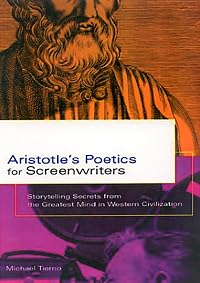
A great companion to Donald Miller’s A Million Miles, for in it McKee unknowingly demonstrates how the crafting of a good story aligns with the living of a good life. McKee’s advice on shaping character, winnowing down to core events and values, and his admonishment to “Show, don’t tell” are great pieces of advice, for anyone seeking a well-lived life, even if they’re not a writer. Also, the book succeeds on its primary level, giving writers direction in craft that is both philosophical and practical, with great screenplay analysis interspersed throughout. His analysis of story and its principles aligns well with Tierno's Aristotle's Poetics for Screenwriters.
I finished! It took me 3 months, which is actually better than I thought. Yeah, this is a textbook. Just sayin'. But it is a very good textbook. There were several 5-star parts, but the bulk of the book was more 4-starish. That said, those 5-star parts changed the way I think about writing. Particularly "the gap". I would say it was well worth all the time/money I spent on it.
BTW, this was very geared toward screenwriting (yeah, I know it says that right in the title). I hoped to apply it to novel writing, and I was not disappointed, but there were certain concepts that didn't apply to novel writing. Still, he's really good about differentiating between the story formats and how they apply, and I would suggest it for anyone who deals show more with story in any form. show less
BTW, this was very geared toward screenwriting (yeah, I know it says that right in the title). I hoped to apply it to novel writing, and I was not disappointed, but there were certain concepts that didn't apply to novel writing. Still, he's really good about differentiating between the story formats and how they apply, and I would suggest it for anyone who deals show more with story in any form. show less
Members
- Recently Added By
Lists

Craft Books
41 works; 1 member

Film
114 works; 1 member
Author Information

21+ Works 3,004 Members
Robert McKee teaches his Story Structure class regularly to sold-out auditoriums in Los Angeles, New York, London, and other European cities. A Ph.D. in cinema arts and a former Fulbright scholar, his credits include numerous television and feature films. In addition to writing and lecturing, McKee serves as a consultant to major film production show more companies such as Tri-Star and Golden Harvest Films and in 1991 was awarded the H.U.W. Weldon BAFTA Award (the British equivalent of the Emmy) for Best Arts Program for J'Accuse: Citizen Kane. He lives in Los Angeles and London. show less
Awards and Honors
Common Knowledge
- Canonical title
- Story: Substance, Structure, Style, and the Principles of Screenwriting
- Original publication date
- 1997
- Epigraph
- "Stories are equipment for living." - Kenneth Burke
- Dedication
- I dedicate this book to the happy memory of my parents who, in their very different ways, taught me the love of story.
When I was first learning to read, but not always behaving appropriately, my father introduced me ... (show all)to the fables of Aesop in the hope that these ancient cautionary tales might improve my deportment. Each evening, after working my way through the likes of "The Fox and the Grapes," he would nod and ask, "And what does this story mean to you, Robert?" As I stared at these texts and their handsome color illustrations, struggling to find my interpretations, I slowly came to realize that stories mean much more than words and pretty pictures.
Later, before entering the university, I deduced that the best possible life includes as many rounds of golf as possible, and therefore, I would become a dentist. "Dentist?!" my mother laughed. "You can't be serious. What happens when they cure all teeth problems? Where will dentists be then? No, Bobby, People will always need entertainment. I'm looking out for your future. You're going into show business." - First words
- Intro:
Story is about principles, not rules.
A rule says, "You must do it this way." A principle says, "This works ... and has through all remembered time." The difference is crucial. Your work needn't be... (show all) modeled after the "well-made" play; rather, it must be well made within the principles that shape our art. Anxious, inexperienced writers obey rules. Rebellious, unschooled writers break rules. Artists master the form.
1:
The decline of story
Imagine, in one global day, the pages of prose turned, plays performed, films screened, the unending stream of television comedy and drama, twenty-four-hour print and broadcast news, bedti... (show all)me tales told to children, barroom bragging, back-fence Internet gossip, humankind's insatiable appetite for stories... - Last words
- (Click to show. Warning: May contain spoilers.)As you follow the quest for stories told with meaning and beauty, study thoughtfully but write boldly. Then, like the hero of the fable, your dance will dazzle the world.
- Original language
- English
- Canonical DDC/MDS
- 808.2'3-dc21
- Canonical LCC
- PN1996.M465
Classifications
Statistics
- Members
- 2,542
- Popularity
- 7,493
- Reviews
- 40
- Rating
- (4.09)
- Languages
- 10 — Catalan, Chinese, English, French, German, Hungarian, Italian, Portuguese, Russian, Spanish
- Media
- Paper, Audiobook, Ebook
- ISBNs
- 27
- ASINs
- 11