Wizzil
by William Steig
On This Page
Description
A bored witch causes trouble when she decides to take revenge on an old man, but her mischief leads to a happy ending.Tags
Recommendations











Member Reviews
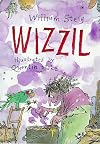
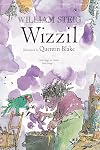
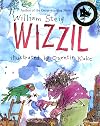
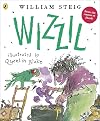
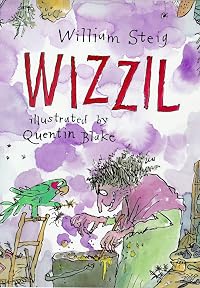
Thoroughly bored and looking for something to do one day, Wizzil the witch is influenced by her parrot companion Beatrice, and disguises herself as a fly in order to annoy local farmer DeWitt Frimp. Outraged when he attempts to squash her, Wizzil next disguises herself as a glove, causing all sorts of mayhem and misbehavior, when the farmer puts the "happy harpy on his hand." When DeWitt, finally tumbling to the sinister qualities of his new hand-wear, tosses the glove into a local stream, Wizzil is revealed. Unable to stomach the idea of any creature drowning, even if she is a nasty witch, he jumps in to save her, only to discover that the bright clear water has caused a miraculous transformation...
When I realized that this witchy show more picture-book from renowned American children's book author William Steig - author of such picture-book favorites as Sylvester and the Magic Pebble and Doctor De Soto - had been illustrated by the celebrated British artist Quentin Blake - perhaps best known for his work on Roald Dahl's books - I was quite excited! As far as I know, Wizzil is the only collaboration between the two, making it quite an interesting title for admirers of Steig and/or Blake's work. I enjoyed the story, which was told with Steig's usual sharp humor, and I thought the artwork by Blake was did an excellent job of capturing the wacky goings-on in the text. I did find myself wondering, as I was reading through, what Steig himself would have made of the characters, if he has been the illustrator as well, but that's only natural, I suppose. All in all, a solidly engaging little picture-book from these two greats - not the best from either, I would say, but still worth seeking out, particularly for those who (like me) enjoy witchy tales. show less
When I realized that this witchy show more picture-book from renowned American children's book author William Steig - author of such picture-book favorites as Sylvester and the Magic Pebble and Doctor De Soto - had been illustrated by the celebrated British artist Quentin Blake - perhaps best known for his work on Roald Dahl's books - I was quite excited! As far as I know, Wizzil is the only collaboration between the two, making it quite an interesting title for admirers of Steig and/or Blake's work. I enjoyed the story, which was told with Steig's usual sharp humor, and I thought the artwork by Blake was did an excellent job of capturing the wacky goings-on in the text. I did find myself wondering, as I was reading through, what Steig himself would have made of the characters, if he has been the illustrator as well, but that's only natural, I suppose. All in all, a solidly engaging little picture-book from these two greats - not the best from either, I would say, but still worth seeking out, particularly for those who (like me) enjoy witchy tales. show less
In this book, Wizzil the witch becomes bored so her parrot recommends she pester the family at the farm nearby. First, she poses as a fly, but gets swatted. Next, she poses as a work glove so that she can be around the family constantly. Once she is around them she starts making crazy things happen. Eventually, the farmers blame the glove for their new problems and throw it in the lake, causing Wizzil to go back to her witch form. The river washes away her evil witch-ways and she falls in love with the farmer and joins their family. This book also incorporates higher language and rhyming.
This book is a good example of fantasy because there is magic present. For example, Wizzil uses magic to turn herself into a fly and a work glove as show more well as cause the unfortunate events to happen.
Age Appropriateness: late primary (k-3) show less
This book is a good example of fantasy because there is magic present. For example, Wizzil uses magic to turn herself into a fly and a work glove as show more well as cause the unfortunate events to happen.
Age Appropriateness: late primary (k-3) show less
A silly story with a happy ending. Wizzil, a grumpy dirty witch, is especially bored one day. Wizzil turns to her pet parrot and decides she will annoy her neighbors at the Frimp Farm, DeWitt Frimp, Fred Frimp, and Florence Frimp. Wizzil turns herself into a common horsefly, flying around DeWitt's head. DeWitt barely misses Wizzil when swatting her, so Wizzil decides to get some revenge. Wizzil turns herself into a left handed glove to annoy DeWitt even more. After a little while DeWitt finally catches on and flings the glove off in the river. As soon as the glove touches the water, Wizzil's turns back into herself. The water also washes away all of Wizil's stink and dirt and she is looks beautiful. DeWitt sees Wizzil's true beauty and show more they live happily ever after! show less
Ratings
Members
- Recently Added By
Author Information

72+ Works 31,366 Members
William Steig was born in Brooklyn, New York, on November 14, 1907, and spent his childhood in the Bronx. Steig found an outlet for his talent by creating cartoons for the high school newspaper. After high school graduation, Steig spent two years at City College, three years at the National Academy, and five days at the Yale School of Fine Arts show more before dropping out. During his early days as a free-lance artist, he supplemented his income with work in advertising, although he intensely disliked it. He illustrated for the The New Yorker, beginning in 1930. During the 1940s, Steig's creativity found a more agreeable outlet when he began carving figurines in wood; his sculptures are on display as part of the collection in the historic home of Franklin D. Roosevelt in Hyde Park, New York, and in several museums in New England. In 1967, Bob Kraus, a fellow cartoonist at The New Yorker, was in the process of organizing Windmill Books, an imprint for Harper & Row. Kraus suggested that Steig try writing and illustrating a book for a young audience. The result was Steig's letter-puzzle book entitled C D B!, published in 1968. Roland the Minstrel Pig, was published the same year. With his very next title, Sylvester and the Magic Pebble, he won the Caldecott Medal. The Amazing Bone was also a Caldecott Honor Book.In 1972, Steig published his first children's novel, Dominic, which won the Christopher Award. Abel's Island followed and was a Newberry Honor Book. William Steig died in October 3, 2003 in Boston Massachusettes. (Bowker Author Biography) show less
All Editions
Awards and Honors
Awards
Common Knowledge
- Original publication date
- 2000
Classifications
Statistics
- Members
- 174
- Popularity
- 187,804
- Reviews
- 3
- Rating
- (3.42)
- Languages
- Dutch, English, French
- Media
- Paper, Audiobook, Ebook
- ISBNs
- 14
- ASINs
- 1