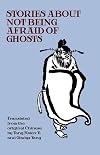
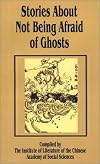
Stories About Not Being Afraid of Ghosts
by Yang Xianyi (Translator), Gladys Yang (Translator)
On This Page
Description
This book includes thirty-five stories about not being afraid of ghosts, which are taken from ancient Chinese collections of tales and anecdotes. They show the adroitness and courage of Chinese people in ancient times who dared to defy ghosts. Today, everyone knows there are no such things as ghosts. But while there are no demons like those described in these tales, there are many things which resemble them -- imperialism, reactionaries, difficulties and obstacles in work, for example. These show more stories, therefore, may be considered in the nature of allegories and satires. show lessTags
Recommendations























Member Reviews
“There are no ghosts. Belief in ghosts is a backward idea, a superstition and a sign of cowardice.”
So opens this curious little Chinese anthology. I picked it up in Oxfam partly because of the woodcut illustrations, and partly because of the delightfully prosaic title. It turns out the ancient stories were chosen, between 1959 and 1961, as fables and satires that illustrated Communist ideals of anti-imperialist rationalism. This is explained at length in the (inadvertently) funny and slightly sinister 17 page preface: a pompous and opaque flurry of political doctrine and jargon.
The Stories
The 35 stories themselves are very short, and many are more like anecdotes, than stories. The titles and endings are often as endearingly banal show more as that of the collection. For example, After 30 days being inundated with frogs of increasing number and decreasing size, the plague just stops, and “After this his family had no further trouble, and all who knew him admired him.” Such bathos.
"I do not fear you with your head on, so what's there to fear with your head off?"
Several have a man staying overnight in an allegedly haunted place to prove there is nothing to fear, and several of the ghosts are female suicides, with lolling tongues.
There’s not a great deal of excitement or mystery, but the best have a mythical charm, a visceral familiarity.
Tips for Overcoming Chinese Ghosts
• Don’t believe in ghosts, and you may not see them.
• Be brave, thus retain your wits, and find a practical solution.
• Demons respect lack of fear, and may go away if you insist.
• Black your face and the ghost may think it is seeing a ghost!
• Catch a ghost in a net or belt. It will turn into a block of wood, which you then fry or burn.
• Investigate and talk to the ghost. It may be a person trying to trick you.
• Bows and arrows can kill ghosts - but it may take three shots.
• Sometimes, just blowing or spitting on a ghost will destroy them.
• Chase ghosts away.
• Smear filthy paper on a ghost's mouth.
• Beat ghosts with peach twigs (no other trees will do).
• Ghosts have three tricks: enchantment, obstruction, and intimidation. If you can endure those, they’ve nothing left.
• A cup of water can cure the temporary madness of a woman who thought she was a ghost.
The Political Preface
“There are actually many things in this world which are like ghosts. Some are big, such as international imperialism and its henchmen… modern revisionism… serious natural calamities… Some are small, such as difficulties and setbacks in ordinary work.”
The dogma is strong, but it doesn’t quite make sense. It states that literal ghosts don’t exist, but also that “ghosts are afraid of men”. In the stories, some of the ghosts are presented as real (one man eats the meat of one he kills!), though others are people pretending. I guess it doesn’t matter.
The message is about not succumbing to superstition or fear. About needing the strength of character to think and act rationally. About bravery and protecting others. About being prudent and resourceful, to overcome the (non-existent?) ghosts. I’m no Communist, but those are good ideals.
“Thoroughgoing dialectical materialists and genuine proletarian revolutionaries are, of course, much wiser than those people who did not fear ghosts in old tales.”
(I’m not a proletarian revolutionary, genuine or otherwise, but how would I know if I was a partial or thoroughgoing dialectical materialist, and would I want to be one anyway?)
Comedy in Pragmatism
Picture: “I ain’t afraid of no ghost” - Ghostbusters, 1984
The comedy value of some of these stories is diluted by the earnest political rhetoric that precedes it. That’s not a problem with Oscar Wilde’s The Canterville Ghost, which I read just before these stories (see my review HERE). The Chinese compilers might approve: it’s about a family who initially don’t believe in ghosts, but when confronted by one, they refuse to be alarmed, and take a resolutely pragmatic approach to overcome the inconvenience. However, in Wilde’s hands, it’s comedy, with a poignant message, rather than preaching about good (Communist) character.
Research on Culture and Belief
In 2015, the respected Pew Research found that 18% of Americans claim to have seen a ghost (source here). I’m not sure if this confirms or refutes the Chinese position. ;)
Those who describe themselves as believers – but who don’t attend church regularly – are twice as likely to believe in ghosts than those at the two extremes of religious belief: nonbelievers and the deeply devout (source here).
There is also relationship between the type of ghosts people see and their belief system (source here). For example, ghosts seen by Roman Catholics were often identified as souls in Purgatory, whereas protestants were more likely to see angels and demons. And judging by this book, Chinese ghosts have bizarrely long tongues if they died by hanging (one was “sticking out several feet”). Freud might have fun with that.
It might also be worth reading The Ghost: A Cultural History (I haven't).
See also
Alberto Manguel included An Injustice Revealed in his anthology, Black Water. I reviewed that specific story, HERE. show less
So opens this curious little Chinese anthology. I picked it up in Oxfam partly because of the woodcut illustrations, and partly because of the delightfully prosaic title. It turns out the ancient stories were chosen, between 1959 and 1961, as fables and satires that illustrated Communist ideals of anti-imperialist rationalism. This is explained at length in the (inadvertently) funny and slightly sinister 17 page preface: a pompous and opaque flurry of political doctrine and jargon.
The Stories
The 35 stories themselves are very short, and many are more like anecdotes, than stories. The titles and endings are often as endearingly banal show more as that of the collection. For example, After 30 days being inundated with frogs of increasing number and decreasing size, the plague just stops, and “After this his family had no further trouble, and all who knew him admired him.” Such bathos.
"I do not fear you with your head on, so what's there to fear with your head off?"
Several have a man staying overnight in an allegedly haunted place to prove there is nothing to fear, and several of the ghosts are female suicides, with lolling tongues.
There’s not a great deal of excitement or mystery, but the best have a mythical charm, a visceral familiarity.
Tips for Overcoming Chinese Ghosts
• Don’t believe in ghosts, and you may not see them.
• Be brave, thus retain your wits, and find a practical solution.
• Demons respect lack of fear, and may go away if you insist.
• Black your face and the ghost may think it is seeing a ghost!
• Catch a ghost in a net or belt. It will turn into a block of wood, which you then fry or burn.
• Investigate and talk to the ghost. It may be a person trying to trick you.
• Bows and arrows can kill ghosts - but it may take three shots.
• Sometimes, just blowing or spitting on a ghost will destroy them.
• Chase ghosts away.
• Smear filthy paper on a ghost's mouth.
• Beat ghosts with peach twigs (no other trees will do).
• Ghosts have three tricks: enchantment, obstruction, and intimidation. If you can endure those, they’ve nothing left.
• A cup of water can cure the temporary madness of a woman who thought she was a ghost.
The Political Preface
“There are actually many things in this world which are like ghosts. Some are big, such as international imperialism and its henchmen… modern revisionism… serious natural calamities… Some are small, such as difficulties and setbacks in ordinary work.”
The dogma is strong, but it doesn’t quite make sense. It states that literal ghosts don’t exist, but also that “ghosts are afraid of men”. In the stories, some of the ghosts are presented as real (one man eats the meat of one he kills!), though others are people pretending. I guess it doesn’t matter.
The message is about not succumbing to superstition or fear. About needing the strength of character to think and act rationally. About bravery and protecting others. About being prudent and resourceful, to overcome the (non-existent?) ghosts. I’m no Communist, but those are good ideals.
“Thoroughgoing dialectical materialists and genuine proletarian revolutionaries are, of course, much wiser than those people who did not fear ghosts in old tales.”
(I’m not a proletarian revolutionary, genuine or otherwise, but how would I know if I was a partial or thoroughgoing dialectical materialist, and would I want to be one anyway?)
Comedy in Pragmatism
Picture: “I ain’t afraid of no ghost” - Ghostbusters, 1984
The comedy value of some of these stories is diluted by the earnest political rhetoric that precedes it. That’s not a problem with Oscar Wilde’s The Canterville Ghost, which I read just before these stories (see my review HERE). The Chinese compilers might approve: it’s about a family who initially don’t believe in ghosts, but when confronted by one, they refuse to be alarmed, and take a resolutely pragmatic approach to overcome the inconvenience. However, in Wilde’s hands, it’s comedy, with a poignant message, rather than preaching about good (Communist) character.
Research on Culture and Belief
In 2015, the respected Pew Research found that 18% of Americans claim to have seen a ghost (source here). I’m not sure if this confirms or refutes the Chinese position. ;)
Those who describe themselves as believers – but who don’t attend church regularly – are twice as likely to believe in ghosts than those at the two extremes of religious belief: nonbelievers and the deeply devout (source here).
There is also relationship between the type of ghosts people see and their belief system (source here). For example, ghosts seen by Roman Catholics were often identified as souls in Purgatory, whereas protestants were more likely to see angels and demons. And judging by this book, Chinese ghosts have bizarrely long tongues if they died by hanging (one was “sticking out several feet”). Freud might have fun with that.
It might also be worth reading The Ghost: A Cultural History (I haven't).
See also
Alberto Manguel included An Injustice Revealed in his anthology, Black Water. I reviewed that specific story, HERE. show less
Book Description: Foreign Languages Press Peking 1961. This is the second edition 1979 in excellent condition.
Book Description: Peking, China: Foreign Languages Press, 1979. Trade Paperback. Very Good. Paperback, Near Fine, Illustrated. Very Nice Copy, Pristine Text. Second Edition.
Ratings
Members
- Recently Added By
Lists

Books Read in 2017
4,249 works; 129 members
Author Information


All Editions
Some Editions
Common Knowledge
- Canonical title
- Stories About Not Being Afraid of Ghosts
- Original publication date
- 1961 (compilation) (compilation)
- Important places
- China
- First words
- There are no ghosts.
- Preface
Sung Ting-po of Nanyang, when a young man, meet a ghost one night as he was walking.
- Sung Ting-po Catches a Ghost
Classifications
- Genre
- Fiction and Literature
- DDC/MDS
- 895.1 — Literature & rhetoric Asian Literature Literatures of East and Southeast Asia Chinese
- LCC
- PL2629 .G5 .C57 — Language and Literature Languages and literatures of Eastern Asia, Africa, Oceania Languages of Eastern Asia, Africa, Oceania Chinese language and literature Chinese literature Collections
- BISAC
Statistics
- Members
- 28
- Popularity
- 978,253
- Reviews
- 3
- Rating
- (4.00)
- Languages
- English
- Media
- Paper
- ISBNs
- 2