Conversation Piece
by Molly Keane
On This Page
Description
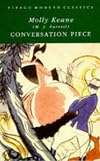
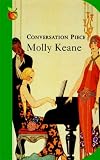
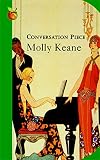
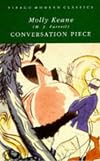
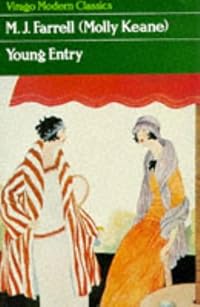
With an elegant 30s painting by Georges Barbier gracing its cover, this early Molly Keane novel delightedly observing Irish and Anglo-Irish ways, joins the new look Virago Modern Classics in 1995.Tags
Recommendations










Member Recommendations

Member Reviews
Then writing as M J Farrell, Conversation Piece was Molly Keane’s fourth novel. Like many of her novels – it’s very horsey – if you hate all things fox hunting then it is probably not for you. Oddly enough (and I think I have said this before) although I detest the very thought of fox hunting I don’t mind reading about it when it’s written by Molly Keane. I can’t help but think that the kind of eccentricity one finds among Keane’s characters can’t possibly exist anymore – although I really hope it does. It is these eccentric characters that I read Molly Keane novels for – it is all a world away from twenty first century Birmingham that’s for sure.
Conversation Piece – is perhaps not a very well-known Molly Keane show more novel, it is also not going to be my favourite – although I certainly enjoyed it. There isn’t a huge amount of plot – not something that ever bothers me – it is much more an evocation of a time, a way of life – and the people who lived it. It is the world that Molly Keane herself grew up in – the sporting calendar running to the seasons of the year with people’s lives completely tied up in it.
Set among the impoverished gentry of rural Ireland, Conversation Piece is narrated by Oliver who – throughout the unspecified time period of the novel – makes regular lengthy visits to his uncle and cousins at Pullinstown. His Uncle is Sir Richard Pulleyns, his cousins Dick and Willow, a little younger than Oliver, they are extremely close – each of them madly passionate about horses. They are also masters of trickery – loving nothing more than to completely outsmart their latest adversary. Gradually Oliver is accepted by them, and drawn into their world – their pranks, their hunts and horse races. Sir Richard is getting on – but he is no push over – quite a match for his difficult children, who generally call him (with affectionate mockery) Sir Richard or the Sir. The house is a shabby riot of confusion, containing almost as many animals as people.
“ ‘ Oh God help me!’ Sir Richard rose to his feet in a sudden helpless early morning spasm of complete and unavailing fury. ‘Put that dog down, sir; do you hear me, put it down. I’ll not have it. Do you know where your nasty ass was this morning, Willow? In the hot-air press! Yes in my own bottom shelf lying on my own bath-towel. What between dogs and donkeys, I can’t call my house my own; I can’t eat my breakfast without being disgusted by you children and your antics…”
The other – important member of the Pullinstown household is James, the butler. An old family retainer – who is very much a part of the family – the house is likely to go ‘all to blazes’ without his competent management. So when, James is laid up ill, a highly irritated Sir Richard – sends his children upstairs to minister to their butler. While James is out of action, the housemaids run amok, and all Sir Richard wants is for things to be back to normal. Willow is followed up the stairs by her baby donkey – who when not munching on James’s discarded poultices is generally found lying by the fire. In their absence one day, James has been ministered to by the slightly disreputable Pheelan, whose remedies consist of smouldering rags, and threaten to set James and the whole house alight. It is in these scenes of absurd comedy that Molly Keane so excels.
“Half-way down the long, scarcely lighted passages to James’s door, a curious and then, all in a trice, a terrifying smell assailed us – a smell of burning. Willow ran. I fell over the donkey, then, recovering myself and a measure of sense, hurried back to where I had seen a Minimax fire extinguisher (ruthlessly bracketed to an Elizabethan chest, that was why I had remembered). When I reached James’s door, the fumes of burning cloth that filled the room choked for a moment all my powers of observation. All I saw was Willow standing dangerously still, one hand on the door-knob, and with his back to her Pheelan bent over James’s bed, from which the fearful smell of burning came with sickening insistence.”
Of course, the majority of Dick and Willow’s energies and time are taken up with hunting, racing and horse buying – some of their antics incurring the grim displeasure of their father. In their company, Oliver becomes almost childlike again – as the three plot against (an appropriately named) Reverend Fox (amongst others) – who’s a bit of a trickster himself. Some of the stories of hunting and horse racing get a bit much if you’re not massively into horses (and I’m not) but there is a lovely appreciation of landscape, Molly Keane’s a very good writer – her descriptions are frequently lovely.
“The demesne walls and big fields of Pullinstown give way to farms fenced with smaller and more intricate carefulness; banks were wreathed and blind in briars or faced up tall and solid with stones; and scarcely a strand of wire did I see, even on the fences that bounded the road. We passed several coverts, gorse growing strong down the length of a wet bog, and a steep hill led us over the curving back of a wood that smelt bitter and shrill as wet woods do smell. The road ran its narrow stony shelf under the shoulder of a rock-strewn hill, darkly crowned with heather, and rich in the dead brown of bracken. Below us a fair hunting country dropped to a vale of grass and grass again, its miles across lost in the mist and shine of the day and the farther mountains were worlds away in faery.”
Sir Richard has his own adversaries among his neighbours – namely Lady Honour – who is not above siding with Oliver Willow, and Dick behind the old man’s back. The disparity between generations is a key theme of this novel, the world is changing and life for houses like Pullinstown must change too in time. Molly Keane paints a portrait of a vanished world. I like escaping into these vanished worlds, one reason I suppose I enjoy reading Molly Keane, I still have several of her novels unread – and I have been contemplating the new biography, written by her daughter. However, I need to clear some space before I buy any more books. show less
Conversation Piece – is perhaps not a very well-known Molly Keane show more novel, it is also not going to be my favourite – although I certainly enjoyed it. There isn’t a huge amount of plot – not something that ever bothers me – it is much more an evocation of a time, a way of life – and the people who lived it. It is the world that Molly Keane herself grew up in – the sporting calendar running to the seasons of the year with people’s lives completely tied up in it.
Set among the impoverished gentry of rural Ireland, Conversation Piece is narrated by Oliver who – throughout the unspecified time period of the novel – makes regular lengthy visits to his uncle and cousins at Pullinstown. His Uncle is Sir Richard Pulleyns, his cousins Dick and Willow, a little younger than Oliver, they are extremely close – each of them madly passionate about horses. They are also masters of trickery – loving nothing more than to completely outsmart their latest adversary. Gradually Oliver is accepted by them, and drawn into their world – their pranks, their hunts and horse races. Sir Richard is getting on – but he is no push over – quite a match for his difficult children, who generally call him (with affectionate mockery) Sir Richard or the Sir. The house is a shabby riot of confusion, containing almost as many animals as people.
“ ‘ Oh God help me!’ Sir Richard rose to his feet in a sudden helpless early morning spasm of complete and unavailing fury. ‘Put that dog down, sir; do you hear me, put it down. I’ll not have it. Do you know where your nasty ass was this morning, Willow? In the hot-air press! Yes in my own bottom shelf lying on my own bath-towel. What between dogs and donkeys, I can’t call my house my own; I can’t eat my breakfast without being disgusted by you children and your antics…”
The other – important member of the Pullinstown household is James, the butler. An old family retainer – who is very much a part of the family – the house is likely to go ‘all to blazes’ without his competent management. So when, James is laid up ill, a highly irritated Sir Richard – sends his children upstairs to minister to their butler. While James is out of action, the housemaids run amok, and all Sir Richard wants is for things to be back to normal. Willow is followed up the stairs by her baby donkey – who when not munching on James’s discarded poultices is generally found lying by the fire. In their absence one day, James has been ministered to by the slightly disreputable Pheelan, whose remedies consist of smouldering rags, and threaten to set James and the whole house alight. It is in these scenes of absurd comedy that Molly Keane so excels.
“Half-way down the long, scarcely lighted passages to James’s door, a curious and then, all in a trice, a terrifying smell assailed us – a smell of burning. Willow ran. I fell over the donkey, then, recovering myself and a measure of sense, hurried back to where I had seen a Minimax fire extinguisher (ruthlessly bracketed to an Elizabethan chest, that was why I had remembered). When I reached James’s door, the fumes of burning cloth that filled the room choked for a moment all my powers of observation. All I saw was Willow standing dangerously still, one hand on the door-knob, and with his back to her Pheelan bent over James’s bed, from which the fearful smell of burning came with sickening insistence.”
Of course, the majority of Dick and Willow’s energies and time are taken up with hunting, racing and horse buying – some of their antics incurring the grim displeasure of their father. In their company, Oliver becomes almost childlike again – as the three plot against (an appropriately named) Reverend Fox (amongst others) – who’s a bit of a trickster himself. Some of the stories of hunting and horse racing get a bit much if you’re not massively into horses (and I’m not) but there is a lovely appreciation of landscape, Molly Keane’s a very good writer – her descriptions are frequently lovely.
“The demesne walls and big fields of Pullinstown give way to farms fenced with smaller and more intricate carefulness; banks were wreathed and blind in briars or faced up tall and solid with stones; and scarcely a strand of wire did I see, even on the fences that bounded the road. We passed several coverts, gorse growing strong down the length of a wet bog, and a steep hill led us over the curving back of a wood that smelt bitter and shrill as wet woods do smell. The road ran its narrow stony shelf under the shoulder of a rock-strewn hill, darkly crowned with heather, and rich in the dead brown of bracken. Below us a fair hunting country dropped to a vale of grass and grass again, its miles across lost in the mist and shine of the day and the farther mountains were worlds away in faery.”
Sir Richard has his own adversaries among his neighbours – namely Lady Honour – who is not above siding with Oliver Willow, and Dick behind the old man’s back. The disparity between generations is a key theme of this novel, the world is changing and life for houses like Pullinstown must change too in time. Molly Keane paints a portrait of a vanished world. I like escaping into these vanished worlds, one reason I suppose I enjoy reading Molly Keane, I still have several of her novels unread – and I have been contemplating the new biography, written by her daughter. However, I need to clear some space before I buy any more books. show less
Although it is in print, as a Virago Modern Classic, ‘Conversation Piece’ almost seems to be Molly Keane’s forgotten novel. I can only find aa passing mention in her biographical details, searching online I found only a handful of very brief reviews, and even the author interview that takes the place of an introduction in the copy I have just read only mentions it in passing.
I can almost understand the lack of attention. This is an early work – but not so early as to be interesting on that account – and it lacks some of the qualities that made many of her thirteen novels so special. But it paints a wonderful picture of life in an Irish country house at the start of the twentieth century – the world that Molly Keane grew up show more in – and it tells a simple story well.
That story is told by Oliver, the son of a younger son, who comes to visit his uncle and his cousins at the family home, a grand if rather shabby country house, known as Pullinstown.
“To be with these Irish cousins, their kindness mine and the quick fire of their interest changes me strangely, I think, so that all safe known values are gone for me and I am theirs.”
He is enchanted by the house, and by the cousins, and he describes them simply and beautifully. I really did feel that he was telling his story, speaking or writing, and he brought a house, a family, and a way of living to life on the page.
I was as taken as he was with his cousins, Dick and Willow. They were close, they were completely caught up with life and their shared interests, but as soon as they realised he was one of them, and not quite one of the grown-ups, they warmed to him and drew him into their circle. I liked their father, Sir Richard, who knew that he was growing old but wasn’t quite ready to be bested by his offspring. And I loved James, the unflappable butler who could turn his hand to almost everything.
When James fell ill it was Dick and Willow who cared for him, while the housemaids ran riot.
Times were changing, and Pullinstown was a country house in decline …
‘Conversation Piece’ isn’t so much a story as a telling of how life was, and of particular times that would always be remembered. That’s where the story almost fall down, because the family’s lives were centred around hunting, shooting, fishing and other country pursuits. The stories were well told, but there were too many of them, and they didn’t hold my interest.
There was an underlying story, of young and old, of how they, sometimes knowingly and sometimes unknowingly affect each others lives. That was engaging, and I wish it had been developed a little more, given a little more room to breathe.
When the story ended I wished that I could have spent a little more time with Oliver, Dick and Willow, and know a little more of what their futures held.
What I found most interesting about ‘Conversation Piece’ was that, although the style was recognisably Molly Keane’, although there were so many things – the country house, the lifestyle, the period – that can be found in her other novels, this book was different. The style was straightforward, the tone was often elegiac, and it was so clearly written with love.
I’m inclined to think that it has elements of autobiography, or that maybe it was inspired by friends and family.
I think that I need to read more of her work, so that I can really put it into context. I love her writing, and I am struck by the variation in the stories she has spun around Irish country houses.
I can understand now why ‘Conversation Piece’ is nearly forgotten, but I am glad that is not completely forgotten. For its own sake, and for the sake of understanding the writing life of an intriguing author ….. show less
I can almost understand the lack of attention. This is an early work – but not so early as to be interesting on that account – and it lacks some of the qualities that made many of her thirteen novels so special. But it paints a wonderful picture of life in an Irish country house at the start of the twentieth century – the world that Molly Keane grew up show more in – and it tells a simple story well.
That story is told by Oliver, the son of a younger son, who comes to visit his uncle and his cousins at the family home, a grand if rather shabby country house, known as Pullinstown.
“To be with these Irish cousins, their kindness mine and the quick fire of their interest changes me strangely, I think, so that all safe known values are gone for me and I am theirs.”
He is enchanted by the house, and by the cousins, and he describes them simply and beautifully. I really did feel that he was telling his story, speaking or writing, and he brought a house, a family, and a way of living to life on the page.
I was as taken as he was with his cousins, Dick and Willow. They were close, they were completely caught up with life and their shared interests, but as soon as they realised he was one of them, and not quite one of the grown-ups, they warmed to him and drew him into their circle. I liked their father, Sir Richard, who knew that he was growing old but wasn’t quite ready to be bested by his offspring. And I loved James, the unflappable butler who could turn his hand to almost everything.
When James fell ill it was Dick and Willow who cared for him, while the housemaids ran riot.
Times were changing, and Pullinstown was a country house in decline …
‘Conversation Piece’ isn’t so much a story as a telling of how life was, and of particular times that would always be remembered. That’s where the story almost fall down, because the family’s lives were centred around hunting, shooting, fishing and other country pursuits. The stories were well told, but there were too many of them, and they didn’t hold my interest.
There was an underlying story, of young and old, of how they, sometimes knowingly and sometimes unknowingly affect each others lives. That was engaging, and I wish it had been developed a little more, given a little more room to breathe.
When the story ended I wished that I could have spent a little more time with Oliver, Dick and Willow, and know a little more of what their futures held.
What I found most interesting about ‘Conversation Piece’ was that, although the style was recognisably Molly Keane’, although there were so many things – the country house, the lifestyle, the period – that can be found in her other novels, this book was different. The style was straightforward, the tone was often elegiac, and it was so clearly written with love.
I’m inclined to think that it has elements of autobiography, or that maybe it was inspired by friends and family.
I think that I need to read more of her work, so that I can really put it into context. I love her writing, and I am struck by the variation in the stories she has spun around Irish country houses.
I can understand now why ‘Conversation Piece’ is nearly forgotten, but I am glad that is not completely forgotten. For its own sake, and for the sake of understanding the writing life of an intriguing author ….. show less
Ratings
Members
- Recently Added By
Author Information

19+ Works 3,408 Members
Some Editions
Series
Belongs to Publisher Series
Virago Modern Classics (368)
Common Knowledge
- Canonical title
- Conversation Piece
- Original publication date
- 1932
- First words
- It was Sir Richard who asked me to stay at Pullinstown for the Springwell Harriers' point-to-point meeting.
- Last words
- (Click to show. Warning: May contain spoilers.)"He hasn't a million to offer her," Dick answered, "and that's not the one to give a man up for a fiver. She has twice too much spirit."
Classifications
Statistics
- Members
- 64
- Popularity
- 483,438
- Reviews
- 2
- Rating
- (3.60)
- Languages
- English
- Media
- Paper, Ebook
- ISBNs
- 5
- ASINs
- 2