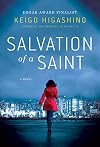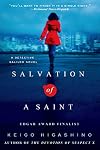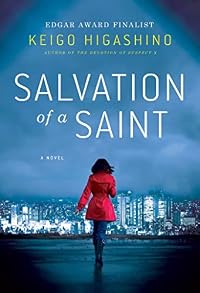
Salvation of a Saint
by Keigo Higashino
Detective Galileo - English pub order (2), Detective Galileo (5)
On This Page
Description
From the author of the internationally bestselling, award-winning The Devotion of Suspect X comes the latest novel featuring "Detective Galileo." In 2011, The Devotion of Suspect X was a hit with critics and fans alike. The first major English language publication from the most popular bestselling writer in Japan, it was acclaimed as "stunning," "brilliant," and "ingenious." Now physics professor Manabu Yukawa-Detective Galileo-returns in a new case of impossible murder, where instincts show more clash with facts and theory with reality. Yoshitaka, who was about to leave his marriage and his wife, is poisoned by arsenic-laced coffee and dies. His wife, Ayane, is the logical suspect-except that she was hundreds of miles away when he was murdered. The lead detective, Tokyo Police Detective Kusanagi, is immediately smitten with her and refuses to believe that she could have had anything to do with the crime. His assistant, Kaoru Utsumi, however, is convinced Ayane is guilty. While Utsumi's instincts tell her one thing, the facts of the case are another matter. So she does what her boss has done for years when stymied-she calls upon Professor Manabu Yukawa. But even the brilliant mind of Dr. Yukawa has trouble with this one, and he must somehow find a way to solve an impossible murder and capture a very real, very deadly murderer. Salvation of a Saint is Keigo Higashino at his mind-bending best, pitting emotion against fact in a beautifully plotted crime novel filled with twists and reverses that will astonish and surprise even the most attentive and jaded of listeners. show lessTags
Recommendations













Member Reviews
After reading The Devotion of Suspect X, I wasn’t too fussed about reading another book by Keigo Higashino. The book, although an interesting premise, felt awkward and stilted. But after reading Reading Matters’ review of Salvation of a Saint, I felt I should give Higashino another go. This book seemed more up my alley – a police procedural, an unusual form of murder and set in Japan. So with a birthday book token in hand, I bought the book. This time I certainly wasn’t disappointed.
Although the book features the same detectives as we met in The Devotion of Suspect X and honorary Detective Galileo (really a university physics professor called Yukawa), it stands alone perfectly. The backstory between Kusanagi and Galileo is show more explained briefly and there’s a new female detective, Utsumi. Utsumi brings a female perspective to this case that contrasts beautifully with that of the rest of the (male) team – highly important as the major suspects in this murder are both female. There are very few social snippets about the detectives, very different to many of the English written police procedurals. Nobody has a drinking problem or complicated marital life, yet the characters (especially Utsumi) are easy to warm to.
The book opens with a brief discussion between a married couple, the Yoshitakas. It seems that all is not well in their marriage – in fact, he wants a divorce. Ayane, his famous quilting artist wife, is upset but later goes on to host a successful dinner party before departing to Hokkaido (northernmost island of Japan). While away, Mr Yoshitaka and Hiromi (Ayane’s apprentice at her quilting school) continue to conduct their secret affair until Hiromi finds him dead. The marital strain between the Yoshitakas and the fact that Hiromi is pregnant makes Ayane the obvious suspect. However, she was definitely away from Tokyo. So how did she do it?
One of the hooks on the back cover suggested that Kusanagi was falling for Ayane, which clouded his judgement. While his colleagues are openly suspicious that this is occurring, it didn’t feel that way to me. Perhaps that’s because there’s not that much about feelings in this book – Kusanagi doesn’t have lovesick fantasies about Ayane, he’s more likely to water her plants – that it didn’t ring true.
Fortunately, this is only a minor thread and doesn’t have repercussions to the major parts of the plot. The mode of murder is incredibly intricate and relies on so many ‘what if’ factors that it would be unlikely to be possible in real life, but it was enjoyable to see how it was committed. The field of suspects narrows very quickly, so the latter stages are more about the how than who the murderer is.
For those who may be put off by not being familiar with the Japanese names or Japan, don’t be. There are not that many characters and the setting could be almost any large city. It doesn’t focus specifically on Japanese customs (the closest we get is a shrine in a tatami mat room) or anything the average Westerner may be unfamiliar of.
This book has redeemed Keigo Higashino for me – I’ll be eagerly awaiting the next translation in this series.
http://samstillreading.wordpress.com show less
Although the book features the same detectives as we met in The Devotion of Suspect X and honorary Detective Galileo (really a university physics professor called Yukawa), it stands alone perfectly. The backstory between Kusanagi and Galileo is show more explained briefly and there’s a new female detective, Utsumi. Utsumi brings a female perspective to this case that contrasts beautifully with that of the rest of the (male) team – highly important as the major suspects in this murder are both female. There are very few social snippets about the detectives, very different to many of the English written police procedurals. Nobody has a drinking problem or complicated marital life, yet the characters (especially Utsumi) are easy to warm to.
The book opens with a brief discussion between a married couple, the Yoshitakas. It seems that all is not well in their marriage – in fact, he wants a divorce. Ayane, his famous quilting artist wife, is upset but later goes on to host a successful dinner party before departing to Hokkaido (northernmost island of Japan). While away, Mr Yoshitaka and Hiromi (Ayane’s apprentice at her quilting school) continue to conduct their secret affair until Hiromi finds him dead. The marital strain between the Yoshitakas and the fact that Hiromi is pregnant makes Ayane the obvious suspect. However, she was definitely away from Tokyo. So how did she do it?
One of the hooks on the back cover suggested that Kusanagi was falling for Ayane, which clouded his judgement. While his colleagues are openly suspicious that this is occurring, it didn’t feel that way to me. Perhaps that’s because there’s not that much about feelings in this book – Kusanagi doesn’t have lovesick fantasies about Ayane, he’s more likely to water her plants – that it didn’t ring true.
Fortunately, this is only a minor thread and doesn’t have repercussions to the major parts of the plot. The mode of murder is incredibly intricate and relies on so many ‘what if’ factors that it would be unlikely to be possible in real life, but it was enjoyable to see how it was committed. The field of suspects narrows very quickly, so the latter stages are more about the how than who the murderer is.
For those who may be put off by not being familiar with the Japanese names or Japan, don’t be. There are not that many characters and the setting could be almost any large city. It doesn’t focus specifically on Japanese customs (the closest we get is a shrine in a tatami mat room) or anything the average Westerner may be unfamiliar of.
This book has redeemed Keigo Higashino for me – I’ll be eagerly awaiting the next translation in this series.
http://samstillreading.wordpress.com show less
I was very impressed with The Devotion of Suspect X|, and wanted to read more by Keigo Higashino. This book was even better, even more impressive. Every word hooked me, every sentence made me run after the next. As a mystery, the construction is smoother than in the previous book, it flows better as we jump from one hypothesis to the next.
The first scene is chilling. The dinner party that follows is exquisitely false and theatrical. This sets the tone for the rest of the book and the mystery’s solution. Ultimately, this case is about two people with something missing from their souls.
The dynamics between Kusanagi, Utsumi (a new junior detective that I want to see more of – smart and stubborn, I liked her POV chapters), Yukawa, and show more Chief Mamiya were fun to watch. There are lots of conversations, as they all work, think, discuss, disagree, get frustrated, understand. It’s very clever and tense.
Mamiya comes across as a very good boss – “There’s no rank and no gender when we’re on the case.” Excellent, considering what the Japanese society is like.
I liked the dead-pan stuff sprinkled here and there. It gives the reader some breathing room ;)
“He said your face puts them at ease.”
“Nice.” Kusanagi snorted. “He’s just saying I look like an idiot.”
The part where Yukawa starts helping the detectives almost despite himself was very nicely done (well, if he didn’t take on this case there wouldn’t be any more books, and we can’t have that…)
“...the two of you are doing such a good job at piquing my intellectual curiosity, even though I’d decided not to get involved in another police investigation.”
Kusanagi had an excellent character arc. What happens when a detective lets his emotions get the better of him? How does he come to realize what is happening? The detective part wins at last, at a cost, of course. “And increasingly he found himself longing for an end to his own confusion.”
I finished the book in about 24 hours, I guess this also tells you something. (A combination of lazy weekend with no plans, depressing weather and having a cold might have helped ;) ) show less
The first scene is chilling. The dinner party that follows is exquisitely false and theatrical. This sets the tone for the rest of the book and the mystery’s solution. Ultimately, this case is about two people with something missing from their souls.
The dynamics between Kusanagi, Utsumi (a new junior detective that I want to see more of – smart and stubborn, I liked her POV chapters), Yukawa, and show more Chief Mamiya were fun to watch. There are lots of conversations, as they all work, think, discuss, disagree, get frustrated, understand. It’s very clever and tense.
Mamiya comes across as a very good boss – “There’s no rank and no gender when we’re on the case.” Excellent, considering what the Japanese society is like.
I liked the dead-pan stuff sprinkled here and there. It gives the reader some breathing room ;)
“He said your face puts them at ease.”
“Nice.” Kusanagi snorted. “He’s just saying I look like an idiot.”
The part where Yukawa starts helping the detectives almost despite himself was very nicely done (well, if he didn’t take on this case there wouldn’t be any more books, and we can’t have that…)
“...the two of you are doing such a good job at piquing my intellectual curiosity, even though I’d decided not to get involved in another police investigation.”
Kusanagi had an excellent character arc. What happens when a detective lets his emotions get the better of him? How does he come to realize what is happening? The detective part wins at last, at a cost, of course. “And increasingly he found himself longing for an end to his own confusion.”
I finished the book in about 24 hours, I guess this also tells you something. (A combination of lazy weekend with no plans, depressing weather and having a cold might have helped ;) ) show less
An engaging whodunnit, or rather a police procedure howdunnit. A man who is about to divorce his wife is killed by poison, and the wife is the logical suspect, but she's hundreds of miles away at the time. Did she do it, and if so how? Two detectives enlist the help of a local college physicist, a boyhood friend of one of the detectives. The solution to the problem is really ingenious, and the relationships between the characters keeps you reading too.
There are some, I think, cultural, things in this novel that put me off a bit, and made it less than a 4-star book. At times the author seems to pop into characters consciousnesses a bit too much or surprisingly, it was as if the author knew the solution. Of course he did, but at times it show more felt like he was holding information back. He wasn't, but it felt that way. The way he laid out many of the clues was really clever. The penultimate chapter, after we've been told what happened, seemed a bit superfluous, and I think could have been dramatized a lot better.
Still: a very engaging police procedural, and recommended. show less
There are some, I think, cultural, things in this novel that put me off a bit, and made it less than a 4-star book. At times the author seems to pop into characters consciousnesses a bit too much or surprisingly, it was as if the author knew the solution. Of course he did, but at times it show more felt like he was holding information back. He wasn't, but it felt that way. The way he laid out many of the clues was really clever. The penultimate chapter, after we've been told what happened, seemed a bit superfluous, and I think could have been dramatized a lot better.
Still: a very engaging police procedural, and recommended. show less
Could be spoilers.
Readable, entertaining. I don't agree with the reviewer who thinks that the novel concluded that women are illogical, I think that was a sarcastic/cynical comment. The murderer is completely logical and impossibly competent. I realized that I don't know what happens next in Japan -- how does the criminal justice system work? And then, also...one of the plot components that is missing -- & again I don't know how different it might be in the Japanese legal system -- but what happens to the victim's money? Does it go to the unborn baby? Also, I think there were some plot conveniences -- like the reproductive health of the different characters. I don't think a person is expected to think too much about the story logic.
Readable, entertaining. I don't agree with the reviewer who thinks that the novel concluded that women are illogical, I think that was a sarcastic/cynical comment. The murderer is completely logical and impossibly competent. I realized that I don't know what happens next in Japan -- how does the criminal justice system work? And then, also...one of the plot components that is missing -- & again I don't know how different it might be in the Japanese legal system -- but what happens to the victim's money? Does it go to the unborn baby? Also, I think there were some plot conveniences -- like the reproductive health of the different characters. I don't think a person is expected to think too much about the story logic.
The second mystery I've read by Higashino was even better than my first ([b:The Devotion of Suspect X|8686068|The Devotion of Suspect X (Detective Galileo #1)|Keigo Higashino|https://i.gr-assets.com/images/S/compressed.photo.goodreads.com/books/1312051518l/8686068._SY75_.jpg|13558363]). There is something immensely satisfying about his approach to telling a story. Perhaps it is a difference of cultural expectations on what an author needs to accomplish. Though Higashino is a best-selling author in Japan, he seems relatively unknown in the U.S. What I do know is that when I finish, I feel a strong sense of pleasure. The mystery is resolved, yes, providing a sense of intellectual satisfaction; but there's also an artistic sense of show more pleasure, as from seeing a play performed by skilled actors.
"Kusanagi walked in through the glass doors and up to the sales counter. He had heard that the store stocked over fifty varieties of tea, and sure enough, there they were, all individually labeled and sorted into neat rows. Behind the counter was a little tea room. Even at the relatively quiet hour of four in the afternoon, he saw a few customers scattered around the cafe, sipping tea and reading newspapers. One or two were dressed in company uniforms. Male customers were definitely in the minority."
Like Agatha Christie, Higashino makes use of traditional or iconic set-pieces, but is wise enough to let the setting be the background to the story, albeit an important one. The main characters are all treated well, with hints at complexity but not in a way that overshadows the plot. There are no scenic digressions of them having a lonely beer at the local bar, or getting their hair cut at the stylist. Kusanagi is the lead detective, and now has a female member of his team, Utsumi, along with his long-term aide, Kishitani:
"Kusanagi suppressed a smile as he looked at his two subordinates. Poor Kishitani had finally got a new recruit of his own to push around--and it was a woman. He has no idea how to handle her."
They are working to solve the case of a man found dead in his locked home, a spilled coffee cup by his side. Is it natural? An accident? Suicide? Homicide? As they work to tease out the possibilities, they end up with an impossible situation. However, nothing is impossible when the physicist Yukawa is consulted:
"It's not very scientific to say things like 'absolutely' and 'zero possibility.' It's also rather unorthodox to say someone made a mistake when they've only presented a hypothesis that proved to be incorrect. But I'll forgive you on the grounds that you're not a scientist."
I love the irreverent and infallibly logical Yukawa. He is not so much the associate with the little grey cells as the analytical counterpoint to the intuition-driven doggedness of Detective Kusanagi.
The first book I read was about how the police uncovered a murder (we knew the who, what, why and how). In this, though the reader has a strong suspicion who the murderer is and why, there's enough doubt on the who to keep the reader wondering, and of course, the how is a puzzle indeed.
Satisfying is really one of the best words I can come up with for this tale. It perhaps stretches, just slightly, the boundaries of imagination, and yet Higashino makes this story plausible. I enjoyed the way the emotions of the story tugged at me without descending into the maudilin or horrific, as well as Higashino's complete failure to include car chases, ominous but missed hints from the criminals as they pack their bombs, and dire threats to end the world as the detective almost fails to catch them in time. I know, I know; I'm overusing that word, satisfying. But I can't think of a better way to describe a work that intrigued me and captured my attention without resorting to narrative or plotting tricks.
Four, five stars. Really could be either. If anything keeps it from five, it is that I do not feel the drive--not quite--to add this to my own library. Although I'd consider reading it again. Rounding up for that. show less
"Kusanagi walked in through the glass doors and up to the sales counter. He had heard that the store stocked over fifty varieties of tea, and sure enough, there they were, all individually labeled and sorted into neat rows. Behind the counter was a little tea room. Even at the relatively quiet hour of four in the afternoon, he saw a few customers scattered around the cafe, sipping tea and reading newspapers. One or two were dressed in company uniforms. Male customers were definitely in the minority."
Like Agatha Christie, Higashino makes use of traditional or iconic set-pieces, but is wise enough to let the setting be the background to the story, albeit an important one. The main characters are all treated well, with hints at complexity but not in a way that overshadows the plot. There are no scenic digressions of them having a lonely beer at the local bar, or getting their hair cut at the stylist. Kusanagi is the lead detective, and now has a female member of his team, Utsumi, along with his long-term aide, Kishitani:
"Kusanagi suppressed a smile as he looked at his two subordinates. Poor Kishitani had finally got a new recruit of his own to push around--and it was a woman. He has no idea how to handle her."
They are working to solve the case of a man found dead in his locked home, a spilled coffee cup by his side. Is it natural? An accident? Suicide? Homicide? As they work to tease out the possibilities, they end up with an impossible situation. However, nothing is impossible when the physicist Yukawa is consulted:
"It's not very scientific to say things like 'absolutely' and 'zero possibility.' It's also rather unorthodox to say someone made a mistake when they've only presented a hypothesis that proved to be incorrect. But I'll forgive you on the grounds that you're not a scientist."
I love the irreverent and infallibly logical Yukawa. He is not so much the associate with the little grey cells as the analytical counterpoint to the intuition-driven doggedness of Detective Kusanagi.
The first book I read was about how the police uncovered a murder (we knew the who, what, why and how). In this, though the reader has a strong suspicion who the murderer is and why, there's enough doubt on the who to keep the reader wondering, and of course, the how is a puzzle indeed.
Satisfying is really one of the best words I can come up with for this tale. It perhaps stretches, just slightly, the boundaries of imagination, and yet Higashino makes this story plausible. I enjoyed the way the emotions of the story tugged at me without descending into the maudilin or horrific, as well as Higashino's complete failure to include car chases, ominous but missed hints from the criminals as they pack their bombs, and dire threats to end the world as the detective almost fails to catch them in time. I know, I know; I'm overusing that word, satisfying. But I can't think of a better way to describe a work that intrigued me and captured my attention without resorting to narrative or plotting tricks.
Four, five stars. Really could be either. If anything keeps it from five, it is that I do not feel the drive--not quite--to add this to my own library. Although I'd consider reading it again. Rounding up for that. show less
When Yoshitaka married his wife, Ayane, it was on the understanding that she would at some point become pregnant. It has now been a year of trying, and still no baby. Yoshitaka sees marriage without children as pointless, so he informs Ayane that the two of them are done. Not only that, but he already has another potential mother of his children lined up. Ayane appears to quietly accept this, but in reality she has decided to put a plan into effect, something involving white powder.
A short while after Ayane and Yoshitaka's conversation, Ayane leaves to spend some time with her parents and some old friends. She provides her apprentice, Hiromi, with a spare key, just in case. As it turns out, Hiromi is Yoshitaka's secret lover. Hiromi show more makes Yoshitaka some coffee, and the two of them contemplate their future together. All appears well until Hiromi tries to contact Yoshitaka before their next planned date. When she gets to the house, she discovers him dead. The police determine that that the coffee he made himself was poisoned, and it isn't long before they start digging into Hiromi and Yoshitaka's secret relationship together.
Hiromi had access to the house and had even used Yoshitaka's coffee-making supplies and equipment shortly before Yoshitaka drank his poisoned cup. However, she had no motive, and it's unclear how and when she might have added the poison. Ayane had a motive but was nowhere near her husband when the poisoning happened, and if she'd sabotaged any of the coffee-making supplies or tools, Hiromi should have been poisoned as well when she and Yoshitaka made coffee together. It's up to police detectives Kusanagi and Utsumi to figure out what happened.
I listened to the first book in this series, The Devotion of Suspect X, not too long ago. Although I never got around to reviewing it, I enjoyed it and was looking forward to this. Unfortunately, it didn't live up to the first book for a variety of reasons.
The two books had similar structures. Readers were given several key details about the case that the police would be unaware of and would have to find out on their own. In the first book, readers knew exactly how the murder happened, who committed it, and who was involved in covering it up. The question seemed to be whether the police would figure out the truth. In this book, readers knew that Ayane had to have somehow used the white powder to poison her husband. The question was how she managed it and, later, what her intentions were for Hiromi. Both books ended with twists that revealed that readers knew less about what was going on than they thought - those "key details" at the start of the books were only part of the overall puzzle.
The mystery of how Ayane arranged for her husband's coffee to be poisoned without killing Hiromi seemed overly simplistic at first but gradually became more complex, as the police found more and more places with traces of the poison but no definitive source, and no explanation for how Hiromi and Yoshitaka managed to drink coffee together earlier without both of them winding up dead.
When Utsumi involved Yukawa in the case, I wondered if Kusanagi and Yukawa would ever talk about the events at the end of the previous book. While the events of the previous book were alluded to - I'd recommend that readers new to this series start there, if only to understand the tension between Kusanagi and Yukawa - they weren't discussed in any sort of detail.
I was impatient with Kusanagi's attraction to Ayane and, like Utsumi, thought he was ignoring obvious clues in an effort to continue to view Ayane as innocent. I was actually a bit surprised that Yukawa didn't needle him over it, since his desire to protect Ayane was a bit hypocritical considering how the previous book ended.
Anyway, I had fun thinking through the problem of how Ayane managed to poison her husband, but the actual solution turned out to be a bit much. It would have taken a ridiculous amount of dedication - once the plan was begun, there was no going back and no telling anyone, and the slightest slip-up could have resulted in an unintentional death. The possibility for failure was huge and, in real life, no one would have gone through with such a plan. And the backstory for it all was kind of gross. I mean, I was somewhat sympathetic towards Ayane for a good chunk of the book - yes, she likely killed her husband, but he'd used both her and Hiromi, viewing them as nothing more than his future baby incubators. Once additional details were revealed, though, I found myself disliking most of the book's cast.
The very end of the book further soured it for me. While discussing the murder and everything that led up to it, Yukawa basically concluded that women are illogical. I would have liked nothing more than for Utsumi (a woman) to smack him at that point, but unfortunately that didn't happen. And honestly, I'm not any more pleased with Keigo Higashino if he thought "women are illogical" would make all the difficult-to-believe aspects of the murder mystery solution easier to swallow.
All in all, this was disappointing. I haven't decided yet whether I'll continue on with the series.
(Original review posted on A Library Girl's Familiar Diversions.) show less
A short while after Ayane and Yoshitaka's conversation, Ayane leaves to spend some time with her parents and some old friends. She provides her apprentice, Hiromi, with a spare key, just in case. As it turns out, Hiromi is Yoshitaka's secret lover. Hiromi show more makes Yoshitaka some coffee, and the two of them contemplate their future together. All appears well until Hiromi tries to contact Yoshitaka before their next planned date. When she gets to the house, she discovers him dead. The police determine that that the coffee he made himself was poisoned, and it isn't long before they start digging into Hiromi and Yoshitaka's secret relationship together.
Hiromi had access to the house and had even used Yoshitaka's coffee-making supplies and equipment shortly before Yoshitaka drank his poisoned cup. However, she had no motive, and it's unclear how and when she might have added the poison. Ayane had a motive but was nowhere near her husband when the poisoning happened, and if she'd sabotaged any of the coffee-making supplies or tools, Hiromi should have been poisoned as well when she and Yoshitaka made coffee together. It's up to police detectives Kusanagi and Utsumi to figure out what happened.
I listened to the first book in this series, The Devotion of Suspect X, not too long ago. Although I never got around to reviewing it, I enjoyed it and was looking forward to this. Unfortunately, it didn't live up to the first book for a variety of reasons.
The two books had similar structures. Readers were given several key details about the case that the police would be unaware of and would have to find out on their own. In the first book, readers knew exactly how the murder happened, who committed it, and who was involved in covering it up. The question seemed to be whether the police would figure out the truth. In this book, readers knew that Ayane had to have somehow used the white powder to poison her husband. The question was how she managed it and, later, what her intentions were for Hiromi. Both books ended with twists that revealed that readers knew less about what was going on than they thought - those "key details" at the start of the books were only part of the overall puzzle.
The mystery of how Ayane arranged for her husband's coffee to be poisoned without killing Hiromi seemed overly simplistic at first but gradually became more complex, as the police found more and more places with traces of the poison but no definitive source, and no explanation for how Hiromi and Yoshitaka managed to drink coffee together earlier without both of them winding up dead.
When Utsumi involved Yukawa in the case, I wondered if Kusanagi and Yukawa would ever talk about the events at the end of the previous book. While the events of the previous book were alluded to - I'd recommend that readers new to this series start there, if only to understand the tension between Kusanagi and Yukawa - they weren't discussed in any sort of detail.
I was impatient with Kusanagi's attraction to Ayane and, like Utsumi, thought he was ignoring obvious clues in an effort to continue to view Ayane as innocent. I was actually a bit surprised that Yukawa didn't needle him over it, since his desire to protect Ayane was a bit hypocritical considering how the previous book ended.
Anyway, I had fun thinking through the problem of how Ayane managed to poison her husband, but the actual solution turned out to be a bit much. It would have taken a ridiculous amount of dedication - once the plan was begun, there was no going back and no telling anyone, and the slightest slip-up could have resulted in an unintentional death. The possibility for failure was huge and, in real life, no one would have gone through with such a plan. And the backstory for it all was kind of gross. I mean, I was somewhat sympathetic towards Ayane for a good chunk of the book - yes, she likely killed her husband, but he'd used both her and Hiromi, viewing them as nothing more than his future baby incubators. Once additional details were revealed, though, I found myself disliking most of the book's cast.
The very end of the book further soured it for me. While discussing the murder and everything that led up to it, Yukawa basically concluded that women are illogical. I would have liked nothing more than for Utsumi (a woman) to smack him at that point, but unfortunately that didn't happen. And honestly, I'm not any more pleased with Keigo Higashino if he thought "women are illogical" would make all the difficult-to-believe aspects of the murder mystery solution easier to swallow.
All in all, this was disappointing. I haven't decided yet whether I'll continue on with the series.
(Original review posted on A Library Girl's Familiar Diversions.) show less
My second Japanese mystery novel and once more a great success. How to solve the "perfect crime"? Not sure if really perfect but certainly extremely difficult - the investigators knew the murder was poisoning but couldn't figure out how. A great journey as to how they solved the case. Common to my other Japanese novel the women seemed to be somewhat subservient to the (again) nasty hubby - perhaps an issue in Japan?
Members
- Recently Added By
Lists

My TBR list
38 works; 1 member

Top Five Books of 2017
757 works; 231 members
Author Information

264 Works 7,504 Members
Some Editions
Series


Common Knowledge
- Canonical title
- Salvation of a Saint
- Original title
- 聖女の救済; Seijo no Kyūsai
- Original publication date
- 2008
- People/Characters
- Ayane Mashiba; Hiromi Wakayama; Yoshitaka Mashiba; Detective Kusanagi; Manabu 'Detective Galileo' Yukawa; Kaoru Utsumi
- Important places
- Tokyo, Japan
- First words
- The pansies in the planter had flowered—a few small, bright blooms.
Der var mange små blomster på stedmoderplanterne i urtepotterne. - Last words
- (Click to show. Warning: May contain spoilers.)He raised his glass.
(Click to show. Warning: May contain spoilers.)"Vi har optrevlet den perfekte forbrydelse, men samtidig har vi knust hans hjerte. Det er kun naturligt, at han er udmattet. Lad ham bare sove," sagde Yukawa og løftede sit glas. - Original language
- Japanese
Classifications
- Genres
- Fiction and Literature, Mystery
- DDC/MDS
- 895.6 — Literature & rhetoric Asian Literature Literatures of East and Southeast Asia Japanese
- LCC
- PL852 .I3625 .S4513 — Language and Literature Languages and literatures of Eastern Asia, Africa, Oceania Languages of Eastern Asia, Africa, Oceania Japanese language and literature Japanese literature Individual authors and works
- BISAC
Statistics
- Members
- 715
- Popularity
- 39,656
- Reviews
- 53
- Rating
- (3.67)
- Languages
- 10 — Chinese, Danish, Dutch, English, Finnish, French, German, Italian, Japanese, Spanish
- Media
- Paper, Audiobook, Ebook
- ISBNs
- 32
- ASINs
- 9