On This Page
Description
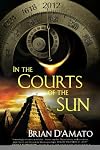
December 21, 2012. The day time stops. Jed DeLanda, a descendant of the Maya living in the year 2012, is a math prodigy who spends his time playing Go against his computer and raking in profits from online trading. His secret weapon? A Mayan divination game-once used for predicting corn-harvest cycles, now proving very useful in predicting corn futures-that his mother taught him. But Jed's life is thrown into chaos when his former mentor, the game theorist Taro, and a mysterious woman named show more Marena Park invite him to give his opinion on a newly discovered Mayan codex.Marena and Taro are looking for a volunteer to travel back to 664 AD to learn more about a "sacrifice game" described in the codex. Jed leaps at the chance, and soon scientists are replicating his brain waves and sending them through a wormhole, straight into the mind of a Mayan king.Only something goes wrong. Instead of becoming a king, Jed arrives inside a ballplayer named Chacal who is seconds away from throwing himself down the temple steps as a human sacrifice. If Jed can live through the next few minutes, he might just save the world.Bringing to mind Neal Stephenson's Cryptonomicon and Gary Jennings's Aztec, yet entirely unique, In the Courts of the Sun takes you from the distant past to the near future in a brilliant kaleidoscope of ideas. show lessTags
Recommendations








Member Reviews
Time-travel is impossible... too many problems with paradoxes, and besides, if it was possible, where's the evidence of people visiting various periods of time? However, with modern technology, in the very near future (2012), they find that they can copy a particular consciousness and send it back in time to take over a dying person's brain (dying, because they must get effectively blank the other person's brain in order to inhabit it, effectively killing the personality, and because it's less likely to cause any paradoxes that could change the course of events). So, when a wealthy organization decides that it’s in their interest to look into the direful predictions in a recently discovered Mayan Codex, they attempt to send a copy of show more Jed DeLanda's consciousness back to 664 and the courts of the ancient Maya in an attempt to discover more about what they knew.
Jed is a quirky and strange protagonist, to be sure. He's a brilliant mathematician with admitted personality problems. He doesn't empathize well, perhaps because he was ethnically Maya and orphaned at a young age when his parents were killed by one of the many campaigns against his people, and brought up via various Mormon agencies seeking to aid native people. So PTSD could account for some of his wildly irreverent behavior. But one of the things he brings to the table is his ability with a Mayan Sacrifice Game that he was taught as a child. It is thought that the game, all but extinct in the present, was critical to determining the prophecies of the Codex.
Jed had been having success applying the Game to the commodities markets, but the desire to reconnect to the lost past of his roots drives him to contact the scientist/researcher Taro Mora who has been studying the Game and who is being bankrolled by the aforementioned corporation. On a practice run using the Game , Jed and the others on the project determine that one of the events noted in the Codex would likely occur nearby them in Florida, and indeed, a horrific terrorist attack happens, from which Jed and noted game designer Marena Park, who is in charge of the project, and her young son barely escape. This event pushes them all on to actually sending a part of Jed back in time.
Back in the past, Jed's time inhabiting one of the Maya is a total roller-coaster (as if escaping from a terrorist attack wasn't bad enough). The description of the people and the cities was convincingly alien and fantastical. His adventures, grueling and action-filled.
This book is LONG and at times rambling, but there is suspense and excitement and adventure to spare, whether back in time, trying to save himself from sacrifice and death, and hoping to find some clues that may avert the major disaster that may occur in 2012, or back in the future, dealing with mysterious corporations and government entities and crazies out to end the world. It's also a smart story, with a mix of science and math and theory, as well as history, which suits the quirky genius of Jed and the other scientists and their attempt to save the world. And it's a smart-ass story, with Jed's bizarrely unsocialized personality and wise-cracks and multiple references to everything in pop culture (and literature, the sciences and history), as well as games--those electronic ones popular with kids today and those used to make ancient prophecies. I was completely fascinated with it all and am curious about what happens next. The story arc is concluded in a major way in this book, but the author clearly means for there to be a sequel, with a little twist added at the end. show less
Jed is a quirky and strange protagonist, to be sure. He's a brilliant mathematician with admitted personality problems. He doesn't empathize well, perhaps because he was ethnically Maya and orphaned at a young age when his parents were killed by one of the many campaigns against his people, and brought up via various Mormon agencies seeking to aid native people. So PTSD could account for some of his wildly irreverent behavior. But one of the things he brings to the table is his ability with a Mayan Sacrifice Game that he was taught as a child. It is thought that the game, all but extinct in the present, was critical to determining the prophecies of the Codex.
Jed had been having success applying the Game to the commodities markets, but the desire to reconnect to the lost past of his roots drives him to contact the scientist/researcher Taro Mora who has been studying the Game and who is being bankrolled by the aforementioned corporation. On a practice run using the Game , Jed and the others on the project determine that one of the events noted in the Codex would likely occur nearby them in Florida, and indeed, a horrific terrorist attack happens, from which Jed and noted game designer Marena Park, who is in charge of the project, and her young son barely escape. This event pushes them all on to actually sending a part of Jed back in time.
Back in the past, Jed's time inhabiting one of the Maya is a total roller-coaster (as if escaping from a terrorist attack wasn't bad enough). The description of the people and the cities was convincingly alien and fantastical. His adventures, grueling and action-filled.
This book is LONG and at times rambling, but there is suspense and excitement and adventure to spare, whether back in time, trying to save himself from sacrifice and death, and hoping to find some clues that may avert the major disaster that may occur in 2012, or back in the future, dealing with mysterious corporations and government entities and crazies out to end the world. It's also a smart story, with a mix of science and math and theory, as well as history, which suits the quirky genius of Jed and the other scientists and their attempt to save the world. And it's a smart-ass story, with Jed's bizarrely unsocialized personality and wise-cracks and multiple references to everything in pop culture (and literature, the sciences and history), as well as games--those electronic ones popular with kids today and those used to make ancient prophecies. I was completely fascinated with it all and am curious about what happens next. The story arc is concluded in a major way in this book, but the author clearly means for there to be a sequel, with a little twist added at the end. show less
"In the Courts of the Sun" is an interesting novel, built Frankenstein-like from the elements of a Michael Crichton techno-thriller, Gary Jennings' "Aztec" series, and one of Stephen Baxter's novel spins on time travel. I enjoyed the book, but it's uneven. The book was written by artist Brian D'Amato and is being publicized as the first of three books in a Sacrifice Game trilogy.
The story is heavily character-driven, led by Jed DeLanda, a supremely intelligent, anti-social, hard-core gamer...of Mayan descent. DeLanda is one of the few people in the world who can play an ancient Mayan game used to help see into the future. Capitalizing on the real-world 2012 doomsday popularity, D'Amato's story places Jed in position to help decipher a show more recently discovered Mayan codex, and play his game to help unravel mysterious clues about the end of the world as predicted to take place on December 21, 2012.
Jed, connected through an insanely rich man and organization, is given a chance to go back in time to find the author of the codex which predicts this 2012 doomsday. He's not actually going back in time himself, but his consciousness is transferred to an individual in 664 AD. The original target for Jed's consciousness is the ruler of the Mayan city of Ix. Instead, Jed2 (as the consciousness part of Jed is referred to) misses the target and is placed in Chacal, a champion Mayan ball player who's been selected as a sacrifice in place of the Mayan ruler.
About one-third of the story takes place in 664 AD in Central America and Mexico with Jed2 narrating his search for the author of the codex and how he might be able to play the game and determine the details surrounding the foretold 12/21/12 holocaust. Jed2's narration is sandwiched between Jed's narration leading up to the consciousness time travel and its aftermath.
The story is carried by a heavy amount of Jed's inner monologue, which at times is quite good and insightful. I was particularly appreciative of his well-stated rants of self actualization, and his introverts' perspective on other personality types. Jed's very snarky, which at times was wonderful at lightening the mood but at other times a little grating and rambling. He spends a good amount of time detailing the Game.
The conclusion is disappointing. I don't know how else to put it. Part two is due later in 2010 and I'm finding myself only moderately interested in finding out what happens next. As a big fan of Gary Jenning's "Aztec", I'd like to see a return to the world of ancient America, and perhaps D'Amato will keep to a crisper storyline. show less
The story is heavily character-driven, led by Jed DeLanda, a supremely intelligent, anti-social, hard-core gamer...of Mayan descent. DeLanda is one of the few people in the world who can play an ancient Mayan game used to help see into the future. Capitalizing on the real-world 2012 doomsday popularity, D'Amato's story places Jed in position to help decipher a show more recently discovered Mayan codex, and play his game to help unravel mysterious clues about the end of the world as predicted to take place on December 21, 2012.
Jed, connected through an insanely rich man and organization, is given a chance to go back in time to find the author of the codex which predicts this 2012 doomsday. He's not actually going back in time himself, but his consciousness is transferred to an individual in 664 AD. The original target for Jed's consciousness is the ruler of the Mayan city of Ix. Instead, Jed2 (as the consciousness part of Jed is referred to) misses the target and is placed in Chacal, a champion Mayan ball player who's been selected as a sacrifice in place of the Mayan ruler.
About one-third of the story takes place in 664 AD in Central America and Mexico with Jed2 narrating his search for the author of the codex and how he might be able to play the game and determine the details surrounding the foretold 12/21/12 holocaust. Jed2's narration is sandwiched between Jed's narration leading up to the consciousness time travel and its aftermath.
The story is carried by a heavy amount of Jed's inner monologue, which at times is quite good and insightful. I was particularly appreciative of his well-stated rants of self actualization, and his introverts' perspective on other personality types. Jed's very snarky, which at times was wonderful at lightening the mood but at other times a little grating and rambling. He spends a good amount of time detailing the Game.
The conclusion is disappointing. I don't know how else to put it. Part two is due later in 2010 and I'm finding myself only moderately interested in finding out what happens next. As a big fan of Gary Jenning's "Aztec", I'd like to see a return to the world of ancient America, and perhaps D'Amato will keep to a crisper storyline. show less
To use an old expression, this book is gonna blow your mind! Take an uber hip polymath, whose probably best at playing games (Go, Chess, Video).Combine with corporate greed and an ancient Mayan game that predicts the end of the world. Solution, get more information from people who have been dead for near two millennia. Written as if the author was a columnist for a pub in Neuromancer, this is mostly compelling stuff. Only problem is he gets too overwehelmed by detail and the narrative slows. Cutting from past to present to past doesn't help sustain flow either. Huge book at 684 pages, first in a trilogy. I skimmed last two hundred pages. But you've never read a book so hip, so erutdite in Mayan ethnography that it's worth the time.
A Mayan prophecy predicts disaster, and to find out more about it, Jed, a descendant of the Maya, must go back in time (kind of) to learn how to better play a prediction game and prevent catastophe. Interesting idea, but it didn't make for a good book. The narrator is annoying, the game he plays is basically incomprehensible, and the writing is so repetitive at times I skipped over pages. I may check out the sequel to see if the writing has improved, but I could not honestly recommend this book to anyone.
The story of stopping the end of the world sounds incredibly exciting...and at times, this book really was. There were parts of the book that had me so sucked in I couldn't put the book down. At one point I was scared of ever going to Disney World again. But then there were parts that just dragged on and on. It took me about 4 months to get through this book, and I think that I will probably read the whole trilogy, it just may take me to the end of the world to finish it.
According to the Mayan calendar, the world is going to end on December 12, 2012. The Warren Group is trying to use technology to figure out a way to stop the world from ending. In the end, will their work pay off or is hope beyond reach?
This is an exciting book that truthfully scared me out of my wits. I can handle horror novels and scary movies but this book shook me to my core. Not because of monsters or serial killers but because this is a true prediction, it struck a nerve. The writing is superb and I'm going to have to add Brian to my list of favorite authors.
This is an exciting book that truthfully scared me out of my wits. I can handle horror novels and scary movies but this book shook me to my core. Not because of monsters or serial killers but because this is a true prediction, it struck a nerve. The writing is superb and I'm going to have to add Brian to my list of favorite authors.
By now we all know the story of December 21, 2012. It's the last day of the Mayan calendar and the day the world will end. But not if the Sacrifice Game player, Jed DeLanda, has anything to say about it.
When Jed learns about the ability to send consciousness back in time through a wormhole he immediately volunteers for the trip. His goal will be to learn the Game from the top Mayan players in 664 AD to better predict events in 2012 to eventually stop the end of the world.
As he wakes up in the mind of a Maya in 664 AD he quickly realizes two things have gone wrong. First, instead of taking over a Mayan king, he is in the mind and body of a ballplayer who is about to throw himself off a temple as a sacrifice. Secondly instead of the show more ballplayer's mind being wiped clean with Jed's conscious taking its place, the ball player is fully aware that Jed is trying to take over his body and is fully intent on following through with his death.
First off I have to congratulate myself on finishing this one. At 679 pages its one of the longest books I've read in a long time and I have to say sometimes the pages were slow going.
Even though I got through the whole book I just couldn't get a handle on the Sacrifice Game. As a consequence anytime anything relating to the Game was discussed I felt totally lost. What makes up for that disappointment was the incredible descriptions of the Mayan people and their cities. It's really amazing how I could easily visualize the settings.
Overall there is a good story lying in between the confusion of the Game components but I probably won't be reading the next two books in the trilogy. show less
When Jed learns about the ability to send consciousness back in time through a wormhole he immediately volunteers for the trip. His goal will be to learn the Game from the top Mayan players in 664 AD to better predict events in 2012 to eventually stop the end of the world.
As he wakes up in the mind of a Maya in 664 AD he quickly realizes two things have gone wrong. First, instead of taking over a Mayan king, he is in the mind and body of a ballplayer who is about to throw himself off a temple as a sacrifice. Secondly instead of the show more ballplayer's mind being wiped clean with Jed's conscious taking its place, the ball player is fully aware that Jed is trying to take over his body and is fully intent on following through with his death.
First off I have to congratulate myself on finishing this one. At 679 pages its one of the longest books I've read in a long time and I have to say sometimes the pages were slow going.
Even though I got through the whole book I just couldn't get a handle on the Sacrifice Game. As a consequence anytime anything relating to the Game was discussed I felt totally lost. What makes up for that disappointment was the incredible descriptions of the Mayan people and their cities. It's really amazing how I could easily visualize the settings.
Overall there is a good story lying in between the confusion of the Game components but I probably won't be reading the next two books in the trilogy. show less
Members
- Recently Added By
Author Information

8+ Works 573 Members
Some Editions
Series

Common Knowledge
- Canonical title
- In the courts of the sun
- Original title
- In the courts of the sun
- Original publication date
- 2009-03-26
- People/Characters
- Jed DeLanda
- Important places
- Ix, Belize; Teotihuacán Site, San Juan Teotihuacán, Mexico
- Dedication
- Dedicated to Anthony D'Amato,
author of Jurisprudence: A Descriptive and Normative Analysis of Law
and many other writings in law and philosophy
and composer of RSVP Broadway
and many other music... (show all)al works - First words
- The first thing I saw was a red dot on a turquoise field.
- Last words
- (Click to show. Warning: May contain spoilers.)Finally and unequivocally, I knew what I had to do.
Classifications
Statistics
- Members
- 387
- Popularity
- 80,397
- Reviews
- 16
- Rating
- (3.24)
- Languages
- 5 — English, German, Korean, Portuguese, Spanish
- Media
- Paper, Audiobook, Ebook
- ISBNs
- 18
- ASINs
- 7