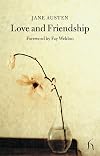
Love and Friendship
by Jane Austen
On This Page
Description
This audiobook is narrated by a digital voice.In this delightfully satirical tale, a young Jane Austen lets her wit run wild. Love and Friendship follows the outrageous misadventures of Laura, a self-dramatizing heroine whose romantic escapades defy all logic and decorum. Written in a series of spirited letters, this early work parodies the sentimental novels of Austen's time, offering a hilarious glimpse into the absurdities of love, friendship, and youthful folly. A must-read for Austen show more fans, this novella reveals the sharp humor and clever social commentary that would define her later masterpieces.
. Classic Literature. Fiction. show less
Tags
Recommendations




















Member Reviews
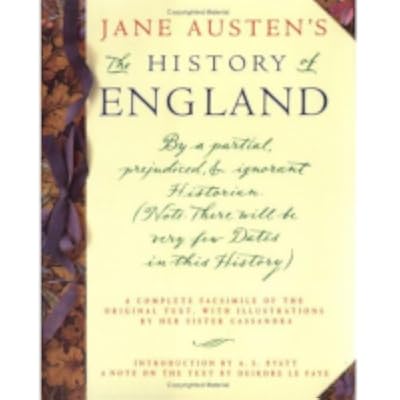
Love and Freindship by Jane Austen was written when she was 14 and 15 (mine has her History of England in it, too). Mainly in the form of letters, outrageous spoofs of the romance genre abound. There is some presaging of what is to come with this author, with discussions of the importance of marriage and wealth, obsessions with appearance, inflated pomposity, and more. The writing is impressive - she has a remarkable sense of flow and timing even at such a young age. The spelling disarmingly needs work, particularly on the "i before e" rule.
And large swatches are really funny. The young, love-obsessed duo of Laura and Sophia regularly faint at unexpected romantic developments:
"She (Sophia) was all Sensibility and Feeling. We flew into show more each other's arms and after having exchanged vows of mutual Freindship for the rest of our Lives, instantly unfolded to each other the most inward secrets of our Hearts. -- We were interrupted in the delightfull Employment by the entrance of Augustus (Edward's freind), who was just returned from a solitary ramble. Never did I see such an affecting Scene as was the meeting of Edward and Augustus.
"My Life! my Soul!" (exclaimed the former) "My Adorable Angel!" (replied the latter), as they flew into each other's arms. It was too pathetic for the feelings of Sophia and myself -- We fainted alternately on a sofa".
Perhaps as a sign of maturity, Laura begins instead to regularly "shriek and run mad" at dramatic moments in her life. Soon they are comparing the health benefits of the two, with frenzied fits having the benefit of warmth in the blood and exercise. During a quiet moment, an unplanned entry into a dark carriage one night turns out to be a coincidental reunion with most of Laura's relatives (the carriage somehow having tardis-like proportions), two of whom had stolen money from her during one of her fainting fits.
It's believed that Austen would read installments of Love and Freindship aloud at night to entertain her family. One can easily imagine the family's laughter at the wit of this young teen writer, and the exhilaration of her emerging talent.
This would not be the place to start reading Jane Austen (too juvenile in the end), and it's hard to imagine someone choosing to read it who is not already a fan of the author via her novels. But for those who are fans, it's a lucky chance to share in the humorous tales of a hugely talented young girl who became one of the world's most famous authors. show less
And large swatches are really funny. The young, love-obsessed duo of Laura and Sophia regularly faint at unexpected romantic developments:
"She (Sophia) was all Sensibility and Feeling. We flew into show more each other's arms and after having exchanged vows of mutual Freindship for the rest of our Lives, instantly unfolded to each other the most inward secrets of our Hearts. -- We were interrupted in the delightfull Employment by the entrance of Augustus (Edward's freind), who was just returned from a solitary ramble. Never did I see such an affecting Scene as was the meeting of Edward and Augustus.
"My Life! my Soul!" (exclaimed the former) "My Adorable Angel!" (replied the latter), as they flew into each other's arms. It was too pathetic for the feelings of Sophia and myself -- We fainted alternately on a sofa".
Perhaps as a sign of maturity, Laura begins instead to regularly "shriek and run mad" at dramatic moments in her life. Soon they are comparing the health benefits of the two, with frenzied fits having the benefit of warmth in the blood and exercise. During a quiet moment, an unplanned entry into a dark carriage one night turns out to be a coincidental reunion with most of Laura's relatives (the carriage somehow having tardis-like proportions), two of whom had stolen money from her during one of her fainting fits.
It's believed that Austen would read installments of Love and Freindship aloud at night to entertain her family. One can easily imagine the family's laughter at the wit of this young teen writer, and the exhilaration of her emerging talent.
This would not be the place to start reading Jane Austen (too juvenile in the end), and it's hard to imagine someone choosing to read it who is not already a fan of the author via her novels. But for those who are fans, it's a lucky chance to share in the humorous tales of a hugely talented young girl who became one of the world's most famous authors. show less
Tegnapi Austen-értékelésemet Gilmore girls-szel kezdtem, ma meg a közgazdász Pikettyvel nyitok, hisz így szimmetrikus. Hogy jön ide ez az úr? Hát úgy, hogy amikor a XVIII-XIX. század Angliájának gazdaságáról beszél, Piketty egyik legfőbb hivatkozási pontja Austen kisasszony, mert a regényeiben található összegek alapján elképesztően pontosan le lehet képezni a mikrovilág gazdasági viszonyait – tökéletesen ábrázolja, hogy él a tanító évi 20 fontból, és mennyit jelent évi 3000 font évjáradék. Ami kiválóan illusztrálja, milyen mindent látó szemmel elemezte környezetét Austen, és milyen pontosan jelenítette meg azokat regényeiben. Persze ez a „mindent látás” azért viszonylagos, show more hiszen csak az úriemberek és úriasszonyok világára terjedt ki, az inast már nem látta olyan élesen, a parasztot pedig szinte egyáltalán nem – de így is elmondhatjuk róla, hogy a maga rendkívül széles, sokszínű osztályskáláján (ami a segédlelkésztől a Lordig terjedt) szinte mindent megfigyelt, ami megfigyelésre érdemes. Látta az eladó lányok szinte rezervátumi elzártságát, amiből csak egy jó házassággal lehetett kiszökni, a kérők szimpátiájáért vívott selymes háborúkat, és látta az urakat is, akik bizonytalanul tévelyegnek a romantikus szobabelsőkben, és fejben számolgatják, hogy a szív szerelme megér-e 500 fontnyi hozományt. Látta a szertartásosság komikumát, a hazugságba merevedett formákat, és úgy írta le őket, ahogy talán senki. Ebben a kötetben mindaz, amit észrevett, a groteszk humor görbe tükrében van megtörve: mondhatnánk, a korai Jane Austen a késői Jane Austen paródiája – de nem erről van szó. Inkább arról, ahogy az évek során a kritika eszközei hogyan lesznek körmönfontabbak, mélyebbek, kifinomultabbak – a szem ugyanolyan éles, de az író közben még jobb lett. De ez a kötet is jószerével hibátlan – ha a Catharine közben elismerően bólogattam, a Szerelem és barátság kifejezetten lelkesített, megvett kilóra. Ó, ha Jane kisasszony nem szűk negyven évet töltött volna itt e földön, mily csodásan bölcs regényekkel lennénk gazdagabbak. show less
A fascinating read, it feels very different from other Austen novels. More sharply, openly satirical, but I got the feeling that Austen herself wasn't sure how she felt about her protagonist. Is she really evil, or simply making the best of the poor hand life has dealt her? I think ultimately, the scales tip toward "evil", but then, she does all right for herself in the end, so what's the message there?
Exhilarating! It made me smile a lot this tale in which the "sensitivity" is the master, where the Faintings are always lurking and the characters are stereotypical and absurd. Relatives sprouting on every corner and every behavior is justified by the above-mentioned too much sensitivity. Definitely enjoyable, and recommended to all lovers of Jane Austen!
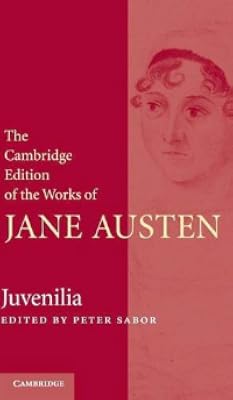
This collection of Jane Austen's juvenilia incudes the titular story, "Lesley Castle" (both of which are experiments in the epistolary novel form), "The History of England", "First Act of a Comedy" and various fictional letters.
All of the works in the collection are worth reading. "Love and Freindship", with its multiple deaths, illegitimacy and fainting fits, is a very silly satire on the sensibility evident in novels of the period. "Lesley Castle" is rather more confusing because of its multiple writers and recipients of letters, but is also evidence of Austen's gift for poking fun at the ridiculous. "The History of England" is a wonderfully exuberant race through a number of the kings and queens of England ostensibly told to praise show more Mary, Queen of Scots and to criticise Elizabeth I. I found it laugh-out-loud funny and in some respects it reminded me of the equally silly but very entertaining [b:1066 and All That: A Memorable History of England|825889|1066 and All That A Memorable History of England|W.C. Sellar|http://photo.goodreads.com/books/1178724006s/825889.jpg|1411213]). In the various letters, characters appear who have names or characteristics which are recognisably those of characters who figure in Austen's mature works. There is a Lady Greville, for example, who is a clear precursor to Lady Catherine de Burgh. A Willoughby, a Crawford and a Musgrove also make appearances.
Overall, this a quick, undemanding and very entertaining read. For readers who appreciate Jane Austen's novels, it is fascinating to see her gift for wit and satire, her lively mind and her sense of the ridiculous so evident in her teenage writings. It is said that Austen used to read her works aloud to her family and it is easy to imagine how much laughter there must have been in the Austen household when Jane shared some of these very silly, but very funny works with her parents and siblings. show less
Jane Austen wrote this very funny, relatively short, epistolary tale at the tender age of fourteen or so. The foreword of my edition gives a thorough explanation of the word sensibility as it was understood in Jane Austen's time and that helped my reading of the story immensely. I love Austen's sense of humour and there is plenty on show in Love and Friendship.
Love and Freindship and Other Early Works by Jane Austen, published posthumously , Harmony Books 118 pages
??
This is an example of something written by an otherwise good to great author that was published posthumously, perhaps just to make money. While there are some delightful gems interspersed, some of this was written before Jane was even fifteen. While they show many of her stellar qualities, they are still at a more undeveloped stage. Some of these she called “novels” but nothing in this is longer than a short story length, and they are all comprised solely of letters. They are fictional, and do show how Jane’s insights were already sharp and developing even at such a young age. I picked this up for a challenge because I show more didn’t see this the year I read every Jane Austen book in my library where I was living at the time and it was long enough, but not long, so that I could squeeze it in for a challenge. show less
??
This is an example of something written by an otherwise good to great author that was published posthumously, perhaps just to make money. While there are some delightful gems interspersed, some of this was written before Jane was even fifteen. While they show many of her stellar qualities, they are still at a more undeveloped stage. Some of these she called “novels” but nothing in this is longer than a short story length, and they are all comprised solely of letters. They are fictional, and do show how Jane’s insights were already sharp and developing even at such a young age. I picked this up for a challenge because I show more didn’t see this the year I read every Jane Austen book in my library where I was living at the time and it was long enough, but not long, so that I could squeeze it in for a challenge. show less
Members
- Recently Added By
Lists

1920s
141 works; 6 members

Books Read in 2016
4,666 works; 199 members
Author Information

713+ Works 317,693 Members
Jane Austen's life is striking for the contrast between the great works she wrote in secret and the outward appearance of being quite dull and ordinary. Austen was born in the small English town of Steventon in Hampshire, and educated at home by her clergyman father. She was deeply devoted to her family. For a short time, the Austens lived in the show more resort city of Bath, but when her father died, they returned to Steventon, where Austen lived until her death at the age of 41. Austen was drawn to literature early, she began writing novels that satirized both the writers and the manners of the 1790's. Her sharp sense of humor and keen eye for the ridiculous in human behavior gave her works lasting appeal. She is at her best in such books as Pride and Prejudice (1813), Mansfield Park (1814), and Emma (1816), in which she examines and often ridicules the behavior of small groups of middle-class characters. Austen relies heavily on conversations among her characters to reveal their personalities, and at times her novels read almost like plays. Several of them have, in fact, been made into films. She is considered to be one of the most beloved British authors. (Bowker Author Biography) show less
Series
Belongs to Publisher Series
Work Relationships
Is contained in
Common Knowledge
- Canonical title
- Love and Friendship
- Original title
- Love and Friendship
- Disambiguation notice
- Please don't combine with "Love and Friendship" proper.
Contains: Love and friendship -- The three sisters -- A collection of letters
Classifications
Statistics
- Members
- 421
- Popularity
- 73,638
- Reviews
- 9
- Rating
- (3.49)
- Languages
- 9 — English, Finnish, French, German, Greek, Hungarian, Italian, Norwegian, Spanish
- Media
- Paper, Audiobook, Ebook
- ISBNs
- 50
- ASINs
- 18