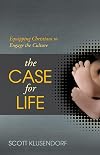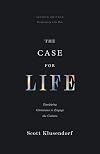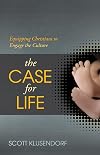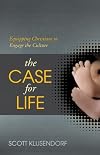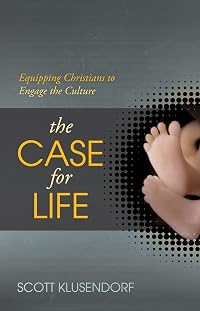
The Case for Life: Equipping Christians to Engage the Culture
by Scott Klusendorf
On This Page
Description
Pro-life Christians, take heart: the pro-life message can compete in the marketplace of ideas-provided Christians properly understand and articulate that message. Too many Christians do not understand the essential truths of the pro-life position, making it difficult for them to articulate a biblical worldview on issues like abortion, cloning, and embryo research. The Case for Life provides intellectual grounding for the pro-life convictions that most evangelicals hold. Author Scott show more Klusendorf first simplifies the debate: the sanctity of life is not a morally complex issue. It's not about choice, privacy, or scientific progress. To the contrary, the debate turns on one key question: What is the unborn? From there readers learn how to engage the great bio-tech debate of the twenty-first century, how to answer objections persuasively, and what the role of the pro-life pastor should be. Scott Klusendorf is the president of Life Training Institute, where he trains pro-life advocates to persuasively defend their views. A passionate and engaging platform speaker, Scott's pro-life presentations have been featured by Focus on the Family, Truths That Transform, and American Family Radio. Scott is a graduate of UCLA and the author of Pro-Life 101. President, Life Training Institute; author, The Case for Life: Equipping Christians to Engage the Culture. show lessTags
Recommendations










Member Reviews
In Rhetoric We Trust
Let me begin by saying that generally speaking the arguments presented in the book are not bad. Almost all of them seemed reasonable and were generally well articulated. My major issues with the book fall into two categories: 1) tone and presentation and 2) explanation of arguments.
First, I found the tone of the book to be overwhelmingly triumphalist. While I realize that Christians are the target audience, there was a pervasive portrayal of pro-abortion advocates as the enemy. It seemed a concerted effort to draw lines between them and us in a way that I found unloving. Obviously, there are differences and I agree that abortion is murder so I understand the impulse. However, it seemed the author was more focused on show more teaching the reader how to win an argument rather than how to win a heart. I was reminded of the film Expelled where uncharitable pot shots were taken at Richard Dawkins apparently to the revelry of Christians. Multiple times the author makes random derogatory statements about feminists, political liberals, and pretty much anyone he has a bone to pick with. I find such things unconscionable, and the blanket dismissal of the motivations behind pro-choice advocates was simply wrong. I was especially disturbed by his discussion of those who bring up rape. He is brash and dismissive, arguing that there is simply no way the person might have a legitimate concern for the well-being of a rape victim. Instead, he says it is merely an attempt to use rape victims. The logical individual wonders why trotting out the rape victim is disingenuous while "trotting out the toddler" is not. While I agree that the only logical conclusion is to view the unborn as human beings deserving of rights, it pains me to see the arguments laid out in a framework that encourages the creation of enemies.
Second, the book contains extremely truncated versions of more detailed philosophical arguments. I suspect that most of these arguments are presented in a better fashion in their original sources. Regardless, some of these chapters were extraneous and distracted from the point. His random defense of the feasibility of Christianity was totally unnecessary and a bit of a rush job. The author also displayed considerable philosophical ignorance when he suggests that if one believes in God they must also be a platonic dualist. In fact, there are a number of Christians who fall into the categories of non-reductive physicalist, constitutionist, or biblical monist. Additionally, the author perpetuates the mistaken notion that post-modernism is relativism. This is simply incorrect, relativism is one (errant) expression of post-modern philosophy. A recurrent issue in the book is the wholesale borrowing of examples or citations of other authors. While Klusendorf does properly cite these lifted quotations, it is simply inappropriate in my opinion to regurgitate other people's hard work in this manner. What results is more compilation than original research. By my count, 42 quotes, examples, or citation were lifted from authors who did the hard work of wading through the original sources, and there was often little indication that Klusendorf went back and read the original context.
The book is not terrible, I don't want to give that impression, but it is seriously flawed. I suggest that instead of buying this book, the hopeful reader chooses one of the Beckwith or Plantinga books on the matter. show less
Let me begin by saying that generally speaking the arguments presented in the book are not bad. Almost all of them seemed reasonable and were generally well articulated. My major issues with the book fall into two categories: 1) tone and presentation and 2) explanation of arguments.
First, I found the tone of the book to be overwhelmingly triumphalist. While I realize that Christians are the target audience, there was a pervasive portrayal of pro-abortion advocates as the enemy. It seemed a concerted effort to draw lines between them and us in a way that I found unloving. Obviously, there are differences and I agree that abortion is murder so I understand the impulse. However, it seemed the author was more focused on show more teaching the reader how to win an argument rather than how to win a heart. I was reminded of the film Expelled where uncharitable pot shots were taken at Richard Dawkins apparently to the revelry of Christians. Multiple times the author makes random derogatory statements about feminists, political liberals, and pretty much anyone he has a bone to pick with. I find such things unconscionable, and the blanket dismissal of the motivations behind pro-choice advocates was simply wrong. I was especially disturbed by his discussion of those who bring up rape. He is brash and dismissive, arguing that there is simply no way the person might have a legitimate concern for the well-being of a rape victim. Instead, he says it is merely an attempt to use rape victims. The logical individual wonders why trotting out the rape victim is disingenuous while "trotting out the toddler" is not. While I agree that the only logical conclusion is to view the unborn as human beings deserving of rights, it pains me to see the arguments laid out in a framework that encourages the creation of enemies.
Second, the book contains extremely truncated versions of more detailed philosophical arguments. I suspect that most of these arguments are presented in a better fashion in their original sources. Regardless, some of these chapters were extraneous and distracted from the point. His random defense of the feasibility of Christianity was totally unnecessary and a bit of a rush job. The author also displayed considerable philosophical ignorance when he suggests that if one believes in God they must also be a platonic dualist. In fact, there are a number of Christians who fall into the categories of non-reductive physicalist, constitutionist, or biblical monist. Additionally, the author perpetuates the mistaken notion that post-modernism is relativism. This is simply incorrect, relativism is one (errant) expression of post-modern philosophy. A recurrent issue in the book is the wholesale borrowing of examples or citations of other authors. While Klusendorf does properly cite these lifted quotations, it is simply inappropriate in my opinion to regurgitate other people's hard work in this manner. What results is more compilation than original research. By my count, 42 quotes, examples, or citation were lifted from authors who did the hard work of wading through the original sources, and there was often little indication that Klusendorf went back and read the original context.
The book is not terrible, I don't want to give that impression, but it is seriously flawed. I suggest that instead of buying this book, the hopeful reader chooses one of the Beckwith or Plantinga books on the matter. show less
 This review was written for LibraryThing Early Reviewers.
Have you ever had a conversation with a fellow Believer and the topic of abortion comes up? Have you then been shocked by their assertion that while they personally believe that abortion is wrong, they dare not question someone else’s choice to have an abortion?
Well Scott Klusendorf begins his book by introducing just this dialogue between two Christians…and the inability of the firmly pro-life Believer to respond adequately to the other. And just as the subtitle proclaims, this is the main thrust of this excellent book: to equip Believers not only to engage the culture but the confused and even false converts among us who still look at abortion as one of many options in family planning.
I have had many experiences in discussing show more this topic at work, where the majority are not Christians and among those who do profess Christ the majority even of them believe abortion is a constitutional right so sacrosanct we dare not tamper with it. Klusendorf, through this very valuable book, does indeed provide the rest of us with the information we need to combat this error.
One of the things I like most about this book is that the main theme keeps coming back to whether the baby in the womb is human or not…a question many (but not all) of those who are pro-abortion try to avoid. As Klusendorf insists, if the baby in the womb is not human, why do so many abortion rights supporters insist we need to focus on educating people on proper birth control so that we have less abortions rather than making the procedure illegal? If it is just tissue devoid of human value then who cares? Chapter 3 of his book focuses on the inherent value of humans…read it!
Throughout his book, Klusendorf combats many of the common arguments that the pro-abortionists use, including the most silly one of asserting that the Bible is silent on the issue of abortion and, even more foolishly, that the Bible condones abortion! As he responds in his book, this begs the question once again of whether the baby is human or not, because the Bible happens to frown upon the act of murder, and if the baby in the womb is human then guess what? That’s right…abortion is the act of murdering the baby! As for the Bible condoning abortion, such a misunderstanding of Scripture is common among those who use it for their own ends without actually believing it to be the Word of God!
Since this is a review I will share only one quote from the book and this from chapter 13 of the book, where Klusendorf takes on the argument that abortion should be permitted in the case of rape. He relates how he is commonly asked whether women who are impregnated during rape should be “forced” to carry the baby of their attacker to term. He says that the abortion crusader uses this particular argument only to score points:
“…He appeals to the hard case of rape, but his appeal is flawed because it is not entirely truthful.
Here’s why: The abortion-choice position he defends is not that abortion should be legal only when a woman is raped but that abortion is a fundamental right she can exercise for any reason she wants during all nine months of pregnancy. Instead of defending this position with facts and arguments, he disguises it with an emotional appeal to rape. But this will not make his case. The argument from rape, if successful at all, would only justify abortion in cases of sexual assault, not for any reason the woman deems fit. In fact, arguing for abortion-on-demand from the hard case of rape is like trying to argue for the elimination of all traffic laws because a person might have to break one rushing a loved one to the hospital. Proving an exception does not prove a rule.
To expose his smoke screen, I ask a question: “Okay, I’m going to grant for the sake of discussion that we keep abortion legal in case of rape. Will you join me in supporting legal restrictions on abortions done for socioeconomic reasons that, as studies on your side of the issue show, make up the overwhelming percentage of abortions?”
The answer is almost always no, to which I reply, “Then why did you bring up rape except to mislead us into thinking that you support abortion only in the hard cases?” (page 175)
Ultimately the response to the issue of rape takes us back to whether the child is human or not…because if the baby is human then why would we say it is ok to kill him or her because s/he reminds us of a painful event? Would it be okay to murder a 1 yr old child for the same reason? See how it all takes us back to the humanity of the child and what being human means?
Once again, this book is very valuable…and it keeps its promise! I say this because it truly serves as an excellent resource for equipping Believers to engage the culture and stand firmly against the murder of so many children. Interestingly enough, just this morning I read about a homeless woman in New Mexico who killed her 3 yr old child and buried him in a playground. Her reason for murdering her child is that “she did not want him to grow up with no one caring about him the same way that she had grown up…” (Read the whole story here: http://www.foxnews.com/story/0,2933,520985,00.html)
As for the response from the authorities, an officer said that “[f]or a mother to kill her own child is unfathomable. Most people can't even imagine how you could even think about doing something like that.”
Interesting isn’t it? Kill your child in the womb and you are legally protected…kill him or her outside the womb and people are shocked.
So get your hands on this book…buy it or borrow it, but you have to read it because it will truly provide you with the information you need to defend your pro-life convictions. Hopefully it will also lead you to be more proactive in ending this wholesale slaughter of our children.
God bless! show less
Well Scott Klusendorf begins his book by introducing just this dialogue between two Christians…and the inability of the firmly pro-life Believer to respond adequately to the other. And just as the subtitle proclaims, this is the main thrust of this excellent book: to equip Believers not only to engage the culture but the confused and even false converts among us who still look at abortion as one of many options in family planning.
I have had many experiences in discussing show more this topic at work, where the majority are not Christians and among those who do profess Christ the majority even of them believe abortion is a constitutional right so sacrosanct we dare not tamper with it. Klusendorf, through this very valuable book, does indeed provide the rest of us with the information we need to combat this error.
One of the things I like most about this book is that the main theme keeps coming back to whether the baby in the womb is human or not…a question many (but not all) of those who are pro-abortion try to avoid. As Klusendorf insists, if the baby in the womb is not human, why do so many abortion rights supporters insist we need to focus on educating people on proper birth control so that we have less abortions rather than making the procedure illegal? If it is just tissue devoid of human value then who cares? Chapter 3 of his book focuses on the inherent value of humans…read it!
Throughout his book, Klusendorf combats many of the common arguments that the pro-abortionists use, including the most silly one of asserting that the Bible is silent on the issue of abortion and, even more foolishly, that the Bible condones abortion! As he responds in his book, this begs the question once again of whether the baby is human or not, because the Bible happens to frown upon the act of murder, and if the baby in the womb is human then guess what? That’s right…abortion is the act of murdering the baby! As for the Bible condoning abortion, such a misunderstanding of Scripture is common among those who use it for their own ends without actually believing it to be the Word of God!
Since this is a review I will share only one quote from the book and this from chapter 13 of the book, where Klusendorf takes on the argument that abortion should be permitted in the case of rape. He relates how he is commonly asked whether women who are impregnated during rape should be “forced” to carry the baby of their attacker to term. He says that the abortion crusader uses this particular argument only to score points:
“…He appeals to the hard case of rape, but his appeal is flawed because it is not entirely truthful.
Here’s why: The abortion-choice position he defends is not that abortion should be legal only when a woman is raped but that abortion is a fundamental right she can exercise for any reason she wants during all nine months of pregnancy. Instead of defending this position with facts and arguments, he disguises it with an emotional appeal to rape. But this will not make his case. The argument from rape, if successful at all, would only justify abortion in cases of sexual assault, not for any reason the woman deems fit. In fact, arguing for abortion-on-demand from the hard case of rape is like trying to argue for the elimination of all traffic laws because a person might have to break one rushing a loved one to the hospital. Proving an exception does not prove a rule.
To expose his smoke screen, I ask a question: “Okay, I’m going to grant for the sake of discussion that we keep abortion legal in case of rape. Will you join me in supporting legal restrictions on abortions done for socioeconomic reasons that, as studies on your side of the issue show, make up the overwhelming percentage of abortions?”
The answer is almost always no, to which I reply, “Then why did you bring up rape except to mislead us into thinking that you support abortion only in the hard cases?” (page 175)
Ultimately the response to the issue of rape takes us back to whether the child is human or not…because if the baby is human then why would we say it is ok to kill him or her because s/he reminds us of a painful event? Would it be okay to murder a 1 yr old child for the same reason? See how it all takes us back to the humanity of the child and what being human means?
Once again, this book is very valuable…and it keeps its promise! I say this because it truly serves as an excellent resource for equipping Believers to engage the culture and stand firmly against the murder of so many children. Interestingly enough, just this morning I read about a homeless woman in New Mexico who killed her 3 yr old child and buried him in a playground. Her reason for murdering her child is that “she did not want him to grow up with no one caring about him the same way that she had grown up…” (Read the whole story here: http://www.foxnews.com/story/0,2933,520985,00.html)
As for the response from the authorities, an officer said that “[f]or a mother to kill her own child is unfathomable. Most people can't even imagine how you could even think about doing something like that.”
Interesting isn’t it? Kill your child in the womb and you are legally protected…kill him or her outside the womb and people are shocked.
So get your hands on this book…buy it or borrow it, but you have to read it because it will truly provide you with the information you need to defend your pro-life convictions. Hopefully it will also lead you to be more proactive in ending this wholesale slaughter of our children.
God bless! show less
This review was written for LibraryThing Early Reviewers.Klusendorf writes from an unabashedly pro-life point of view. His purpose is explicitly stated in the book's subtitle: "equipping Christians to engage the culture." In the introduction, he is just as forthright in laying out his thesis: "My own thesis is that a biblically informed pro-life view explains human equality, human rights, and moral obligations better than its secular rivals and that rank-and-file pro-life Christians can make an immediate impact provided they're equipped to engage the culture with a robust but graciously communicated case for life."
In this reviewer's opinion, he succeeds in making the case for the humanity of an unborn fetus. He proceeds to show that the unborn, as human persons, possess the same right to life show more as all other humans. Logical consistency demands that one who agrees that a born child has a natural right to live should extend the same support to the right of an unborn child to live. This book is "preaching to the choir" in the sense that it is addressed to readers who already support the pro-life position. It aims to provide them with material to bolster their discussions with abortion-rights supporters. It accomplishes that aim and might even challenge the thinking of any pro-choice readers who happen to give it a fair-minded examination. show less
In this reviewer's opinion, he succeeds in making the case for the humanity of an unborn fetus. He proceeds to show that the unborn, as human persons, possess the same right to life show more as all other humans. Logical consistency demands that one who agrees that a born child has a natural right to live should extend the same support to the right of an unborn child to live. This book is "preaching to the choir" in the sense that it is addressed to readers who already support the pro-life position. It aims to provide them with material to bolster their discussions with abortion-rights supporters. It accomplishes that aim and might even challenge the thinking of any pro-choice readers who happen to give it a fair-minded examination. show less
This review was written for LibraryThing Early Reviewers.Scott Klusendorf. Case for Life: Equipping Christians to Engage the Culture. Wheaton, IL: Crossway, 2009. 254 pp. $15.99.
Scott Klusendorf is president of Life Training Institute where he equips pro-life advocates to defend their views. His mission is no different with this volume as the subtitle of the book suggests. In the introduction the author states his purpose in writing is to equip and inspire lay Christians to engage others in the debate over abortion.
Case for Life opens with a contrived conversation concerning abortion between two women. Here Klusendorf encourages pro-life advocates to simplify the debate by focusing on answering a single question: What is the unborn? Next, one must establish the unborn are human. This can be show more done both scientifically and philosophically. Embryology textbooks affirm the former while the SLED test establishes the latter.
A strength of the book is in how Klusendorf points out the weaknesses in presentation of both sides of the debate. The author acknowledges pro-life advocates often express anger instead of sadness over the issue of abortion. Likewise, they are often guilty of ‘shouting conclusions rather than establishing facts’ (27). Similarly, abortion-choice advocates often attack straw men by asserting their opponents are inconsistent for supporting the death penalty and/or war. In fact, the pro-life position maintains it is ‘always wrong to take human life without proper justification’ (29). For example, with a case of ectopic pregnancy many pro-life advocates would rather save the mother’s life than allow both mother and child to die. Thus, in cases such as this and concerning convicted felons one is not dealing with situations where justification is uninvolved.
The amount of footnotes is yet another strength. Klusendorf gives credit where credit is due. He often gives acknowledgment for his insights to men like Greg Koukl and Francis Beckwith. When he holds opposing opinions accountable to reason and consistency he provides the source in order for the reader to fact check if they so desire. Furthermore, he is not mean-spirited, but gracious at every turn.
Klusendorf’s book corrects many misunderstandings. For example, it is not uncommon to hear people say science should inform us on the moral concerns of abortion. However, science cannot inform us on such decisions as the rightness or wrongness of the matter is beyond the scope of science. Likewise, science cannot inform as to whether or not humans are inherently valuable. Values and morality are metaphysical issues, not scientific ones. Pro-life Christians have a consistent message when they establish their case for the right to life.
The volume tackles such issues as embryonic stem cell research (ESCR) and includes short chapters on answering objections such as, “If abortion is made illegal women will die from illegal abortions!” (a.k.a. the coat hanger objection); “You shouldn’t force your views on others!” (the tolerance objection); “What about women who have been raped?” (appeal to hard cases); “It is my body!” (the bodily autonomy objection) and more.
Important clarification is given when Klusendorf points out pro-life advocates are making an objective truth claim: elective abortion is wrong! Case for Life ably explains why many have come to this conclusion. The book is a well reasoned and written volume. Illustrations and examples abound which help the reader grasp the material. The chapters are on average only ten pages in length and each end with review questions and a list of other helpful resources. In short, the book is a persuasive must read. I currently own six books on the abortion debate. If I could only have one, this would be it! Buy it today!
P.S. Although the target audience is pro-life Christians I would suggest it is excellent reading for pro-life advocates who are not Christians. Likewise, the opposing side of this debate should read this book in order to understand the views of those who are pro-life.
A grateful reader,
A. Ramey show less
Scott Klusendorf is president of Life Training Institute where he equips pro-life advocates to defend their views. His mission is no different with this volume as the subtitle of the book suggests. In the introduction the author states his purpose in writing is to equip and inspire lay Christians to engage others in the debate over abortion.
Case for Life opens with a contrived conversation concerning abortion between two women. Here Klusendorf encourages pro-life advocates to simplify the debate by focusing on answering a single question: What is the unborn? Next, one must establish the unborn are human. This can be show more done both scientifically and philosophically. Embryology textbooks affirm the former while the SLED test establishes the latter.
A strength of the book is in how Klusendorf points out the weaknesses in presentation of both sides of the debate. The author acknowledges pro-life advocates often express anger instead of sadness over the issue of abortion. Likewise, they are often guilty of ‘shouting conclusions rather than establishing facts’ (27). Similarly, abortion-choice advocates often attack straw men by asserting their opponents are inconsistent for supporting the death penalty and/or war. In fact, the pro-life position maintains it is ‘always wrong to take human life without proper justification’ (29). For example, with a case of ectopic pregnancy many pro-life advocates would rather save the mother’s life than allow both mother and child to die. Thus, in cases such as this and concerning convicted felons one is not dealing with situations where justification is uninvolved.
The amount of footnotes is yet another strength. Klusendorf gives credit where credit is due. He often gives acknowledgment for his insights to men like Greg Koukl and Francis Beckwith. When he holds opposing opinions accountable to reason and consistency he provides the source in order for the reader to fact check if they so desire. Furthermore, he is not mean-spirited, but gracious at every turn.
Klusendorf’s book corrects many misunderstandings. For example, it is not uncommon to hear people say science should inform us on the moral concerns of abortion. However, science cannot inform us on such decisions as the rightness or wrongness of the matter is beyond the scope of science. Likewise, science cannot inform as to whether or not humans are inherently valuable. Values and morality are metaphysical issues, not scientific ones. Pro-life Christians have a consistent message when they establish their case for the right to life.
The volume tackles such issues as embryonic stem cell research (ESCR) and includes short chapters on answering objections such as, “If abortion is made illegal women will die from illegal abortions!” (a.k.a. the coat hanger objection); “You shouldn’t force your views on others!” (the tolerance objection); “What about women who have been raped?” (appeal to hard cases); “It is my body!” (the bodily autonomy objection) and more.
Important clarification is given when Klusendorf points out pro-life advocates are making an objective truth claim: elective abortion is wrong! Case for Life ably explains why many have come to this conclusion. The book is a well reasoned and written volume. Illustrations and examples abound which help the reader grasp the material. The chapters are on average only ten pages in length and each end with review questions and a list of other helpful resources. In short, the book is a persuasive must read. I currently own six books on the abortion debate. If I could only have one, this would be it! Buy it today!
P.S. Although the target audience is pro-life Christians I would suggest it is excellent reading for pro-life advocates who are not Christians. Likewise, the opposing side of this debate should read this book in order to understand the views of those who are pro-life.
A grateful reader,
A. Ramey show less
This review was written for LibraryThing Early Reviewers.The Case for Life by Scott Klusendorf is subtitled, Equipping Christians to Engage the Culture, and it is essentially that.
The book is divided into four parts:
1. Pro-Life Christians Clarify the Debate
2. Pro-Life Christians Establish a Foundation for the Debate
3. Pro-Life Christians Answer Objections Persuasively
4. Pro-Life Christians Teach and Equip
Far from showing all the complexity of these issues, The Case for Life strips away appeals to complexity from claims of choice, privacy or scientific research. The fundamental appeal rests on the question of what’s the issue: in considering who are the unborn? That human beings of every stage of development are made in the image of God, puts everything into perspective.
For too long, show more non-Christians have been allowed to frame this debate. Klusendor advocates that Christians step up to define the ground rules in establishing a foundation for the debate. Metaphysics, the myth of “moral neutrality” the person of God and Scripture must be referenced in this debate. Yet, if I would see any lack in this work it would be in the content of scriptural examination. Since there is an obvious apologetic aim of this work, the limit in this mater is understood. Its brief highlight however endangers this book in being too tied to the immediate and not transcendent enough. That the material is presented in a well-researched, well-written, logical and clear manner, its usefulness should prove itself.
Arguments cannot be won without dealing with the issues and presuppositions of the opponent, thus Klusendor covers the most frequently argued objections in real dialogue formats. From illegal abortions, tolerance, focus, rape, personal attacks to personal freedom, The Case for Life helps those who would argue for life to both understand and counter what is presented against those who would stand for life.
Finally, hope for this battle is secured with accounts of how pro-life Christian are making an extraordinary impact. The training resources outlined in the Appendix give the motivated reader direction for further action. Each chapter includes review questions and helpful resources for further study and consideration.
In terms of complexity of writing, Klusendor’s work here could be considered to be written at the intermediate level. The detail supplied provides a helpful context without coming to the point of losing the novice. Copious links are provided for further detail when needed.
The Case for Life can have an immediate impact for someone to speak on fundamental issues of bioethics like abortion, cloning and embryo research. The challenge with a work on this subject is its natural dating of material to contemporary science. The obvious challenge is to continue to use this source in light of undoubted forthcoming medical changes. The transcendent usefulness of this work will be in the philosophical approach demonstrated. Defining the transcendent issue, ground rules and arguing against common objections, these frame this debate regardless of future medical changes.
The Case for Life by Scott Klusendorf should be considered an essential tool in the present battle for life. For everyone who stands idly by while millions are slaughtered, “I don’t know what to say” can no longer be an answer. show less
The book is divided into four parts:
1. Pro-Life Christians Clarify the Debate
2. Pro-Life Christians Establish a Foundation for the Debate
3. Pro-Life Christians Answer Objections Persuasively
4. Pro-Life Christians Teach and Equip
Far from showing all the complexity of these issues, The Case for Life strips away appeals to complexity from claims of choice, privacy or scientific research. The fundamental appeal rests on the question of what’s the issue: in considering who are the unborn? That human beings of every stage of development are made in the image of God, puts everything into perspective.
For too long, show more non-Christians have been allowed to frame this debate. Klusendor advocates that Christians step up to define the ground rules in establishing a foundation for the debate. Metaphysics, the myth of “moral neutrality” the person of God and Scripture must be referenced in this debate. Yet, if I would see any lack in this work it would be in the content of scriptural examination. Since there is an obvious apologetic aim of this work, the limit in this mater is understood. Its brief highlight however endangers this book in being too tied to the immediate and not transcendent enough. That the material is presented in a well-researched, well-written, logical and clear manner, its usefulness should prove itself.
Arguments cannot be won without dealing with the issues and presuppositions of the opponent, thus Klusendor covers the most frequently argued objections in real dialogue formats. From illegal abortions, tolerance, focus, rape, personal attacks to personal freedom, The Case for Life helps those who would argue for life to both understand and counter what is presented against those who would stand for life.
Finally, hope for this battle is secured with accounts of how pro-life Christian are making an extraordinary impact. The training resources outlined in the Appendix give the motivated reader direction for further action. Each chapter includes review questions and helpful resources for further study and consideration.
In terms of complexity of writing, Klusendor’s work here could be considered to be written at the intermediate level. The detail supplied provides a helpful context without coming to the point of losing the novice. Copious links are provided for further detail when needed.
The Case for Life can have an immediate impact for someone to speak on fundamental issues of bioethics like abortion, cloning and embryo research. The challenge with a work on this subject is its natural dating of material to contemporary science. The obvious challenge is to continue to use this source in light of undoubted forthcoming medical changes. The transcendent usefulness of this work will be in the philosophical approach demonstrated. Defining the transcendent issue, ground rules and arguing against common objections, these frame this debate regardless of future medical changes.
The Case for Life by Scott Klusendorf should be considered an essential tool in the present battle for life. For everyone who stands idly by while millions are slaughtered, “I don’t know what to say” can no longer be an answer. show less
This review was written for LibraryThing Early Reviewers.An excellent book - very clear and readable. I have only small quibbles with it.
First, he is so ruthlessly logical that at times it is a bit off-putting. I don't mean he should be less logical, but that he should turn up the charm some.
Second, his section on stem cells was weaker than his others.
Third, while I was glad to see that he addressed the issue of allowing abortion up until brain wave activity begins in the baby (in other words, defining life parallel to how we define death), I think his treatment of that issue needs more work.
Fourth, I wish he had dealt with the theological ramifications of early miscarriages (also called chemical pregnancies or self-abortions).
Fifth, I really wish he hadn't self-identified as an show more Intelligent Design theorist. It wasn't central to his argument and will be off-putting to some people. Abortion is divisive enough without bringing in other polarizing subjects.
These quibbles aside, I will gladly recommend this book to others. It's well-written, engaging and persuasive. It's the finest thing I've ever read in the abortion debate. show less
First, he is so ruthlessly logical that at times it is a bit off-putting. I don't mean he should be less logical, but that he should turn up the charm some.
Second, his section on stem cells was weaker than his others.
Third, while I was glad to see that he addressed the issue of allowing abortion up until brain wave activity begins in the baby (in other words, defining life parallel to how we define death), I think his treatment of that issue needs more work.
Fourth, I wish he had dealt with the theological ramifications of early miscarriages (also called chemical pregnancies or self-abortions).
Fifth, I really wish he hadn't self-identified as an show more Intelligent Design theorist. It wasn't central to his argument and will be off-putting to some people. Abortion is divisive enough without bringing in other polarizing subjects.
These quibbles aside, I will gladly recommend this book to others. It's well-written, engaging and persuasive. It's the finest thing I've ever read in the abortion debate. show less
This review was written for LibraryThing Early Reviewers.An excellent and logical presentation of the pro-life position in the abortion debate plus information on ways presenting that information in a winsome way designed to persuade rather than to offend. Mr. Klusendorf has obviously done a great deal of study on the matter, and this book is an excellent tool for people engaged in the public debate over abortion.
This review was written for LibraryThing Early Reviewers.Members
- Recently Added By
Lists

STR's Recommended Reading List
34 works; 2 members
Recommendations by Stand To Reason
34 works; 1 member
Author Information
8 Works 501 Members
Classifications
- Genres
- Religion & Spirituality, Nonfiction, Sexuality and Gender Studies, General Nonfiction
- DDC/MDS
- 261.836 — Religion Christian organization, social work & worship Social theology and interreligious relations and attitudes Christianity and socioeconomic problems Social Teaching
- LCC
- HQ767.25 .K58 — Social sciences The family. Marriage, Women and Sexuality The Family. Marriage. Women The family. Marriage. Home
- BISAC
Statistics
- Members
- 415
- Popularity
- 74,640
- Reviews
- 14
- Rating
- (4.19)
- Languages
- English
- Media
- Paper, Audiobook, Ebook
- ISBNs
- 8
- ASINs
- 2