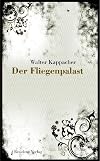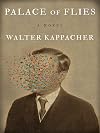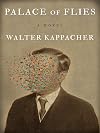
Palace of Flies
by Walter Kappacher
On This Page
Description
"One of those rare biographical novels that bring a whole world to life in a way that lingers in memory." --Jay Parini, author of Borges and Me This absorbing, sensitive novel portrays a famed author in a moment of crisis: an aging Hugo von Hofmannsthal returns to a summer resort outside of Salzburg that he visited as a child. But in the spa town where he once thrilled to the joys of youth, he now feels unproductive and uninspired, adrift in the modern world born after World War One. Over show more ten days in 1924 in a ramshackle inn that has been renamed the Grand Hotel, Hofmannsthal fruitlessly attempts to complete a play he's long been wrestling with. The writer is plagued by feelings of loneliness and failure that echo in a buzz of inner monologues, imaginary conversations and nostalgic memories of relationships with glittering cultural figures. Palace of Flies conjures up an individual state of distress and disruption at a time of fundamental societal transformation that speaks eloquently to our own age. show lessTags
Recommendations










































Member Reviews
This novella won Kappacher the Georg-Büchner prize in 2009. It's a glimpse of the ageing and depressed Hugo von Hofmannsthal as he spends part of the summer of 1924 in the obscure mountain resort, Bad Fusch, where he had often been as a child. He feels out of place in the post-war world, he's stuck in the middle of two theatre projects (Der Turm and Timon der Redner), unable to find the will to write, and he's troubled by what seems to be a mixture of real and imaginary health problems, as well as by real and imaginary conversations and exchanges of letters with people from his past. There's the tantalising prospect of a new friendship with a young physician, Sebastian Krakauer, but he is tied to the whims of his employer, a capricious show more elderly baroness, and is whisked away before Hofmannsthal can have the literary discussion with him that he's been looking forward to. We get to spend most of this time inside Hofmannsthal's head, and the experience is very like being in the overheated, fly-buzzing winter garden of the spa hotel that gives the book its title.
I found this a little frustrating as a piece of fiction, because of the way we are educated to expect that a story about a particular moment in the life of an artist will take us through some important pivotal moment — the inspiration for a new book, the start of a new love affair, or even their death. None of those things seems to be going on here, at least not in an obvious way, but it is a fascinating and quite moving little study of the process of getting old and finding that the world has moved on in directions that no longer make sense to you. Kappacher has Hofmannsthal compare himself to the figure of the dying painter Titian who was at the centre of one of his early works: the imagined Titian was discontented with everything he had already painted and eagerly planning a new work that would show the world what painting was all about, whilst the real Hofmannsthal seems to feel he will never create anything else that matches the works of his teenage years. show less
I found this a little frustrating as a piece of fiction, because of the way we are educated to expect that a story about a particular moment in the life of an artist will take us through some important pivotal moment — the inspiration for a new book, the start of a new love affair, or even their death. None of those things seems to be going on here, at least not in an obvious way, but it is a fascinating and quite moving little study of the process of getting old and finding that the world has moved on in directions that no longer make sense to you. Kappacher has Hofmannsthal compare himself to the figure of the dying painter Titian who was at the centre of one of his early works: the imagined Titian was discontented with everything he had already painted and eagerly planning a new work that would show the world what painting was all about, whilst the real Hofmannsthal seems to feel he will never create anything else that matches the works of his teenage years. show less
This fictional account of Hugo von Hofmannsthal's later life is one that I found moving both as a story and as a catalyst for personal reflection.
Though most of us haven't experienced the events that plagued him, we have all had moments of sadness over things lost, or opportunities not so much missed as never even having been presented. These moments can be debilitating to the strongest of us, especially when we feel the loss goes beyond personal to communal or societal. These are the feelings this book taps into.
Recommended for readers who enjoy using a novel as a springboard into some of their own concerns, fears, or feelings of life having passed by. I would stop short of calling this melancholic, but it can certainly elicit that show more feeling.
Reviewed from a copy made available by the publisher via Edelweiss. show less
Though most of us haven't experienced the events that plagued him, we have all had moments of sadness over things lost, or opportunities not so much missed as never even having been presented. These moments can be debilitating to the strongest of us, especially when we feel the loss goes beyond personal to communal or societal. These are the feelings this book taps into.
Recommended for readers who enjoy using a novel as a springboard into some of their own concerns, fears, or feelings of life having passed by. I would stop short of calling this melancholic, but it can certainly elicit that show more feeling.
Reviewed from a copy made available by the publisher via Edelweiss. show less
In den zehn Tagen im Leben des Schriftstellers Hugo von Hofmannsthal, die Walter Kappacher in diesem Roman beschreibt, wird der berühmte Dichter mitten in einer veritablen Schaffenskrise (zumindest nach eigenem Empfinden) mit der eigenen Vergangenheit konfrontiert, als er nach Bad Fusch, den Ort der Sommerfrischen seiner Jugend, zurückkehrt. In knappen, eindringlichen Sätzen, in denen kein Wort zuviel stehengeblieben ist, schreibt Kappacher eine große Künstlerbiographie anhand eines fotografisch kurzen Lebensausschnitts. Hofmannsthal will und will nicht erkannt und belästigt werden, er will und will nicht angesprochen werden auf sein Werk, und der einzige Mensch, den er in Bad Fusch sehen will, der Arzt Dr. Krakauer, wird ihm show more abspenstig gemacht. Zurecht hat dieses Buch, ein großer Roman über die Ungeduld des Alters und die Einsamkeit des erfolgreichen Künstlers, seinem Autor 2009 den Georg-Büchner-Preis eingebracht. Denn es ist Literatur, die es in dieser Form heute nicht mehr gibt. show less
Ratings
Members
- Recently Added By
Lists

Lives of the Poets (and Philosophers)
110 works; 5 members
Author Information

19+ Works 145 Members
Common Knowledge
- Canonical title
- Palace of Flies
- Original publication date
- 2009
- People/Characters*
- Hugo von Hofmannsthal
*Some information comes from Common Knowledge in other languages. Click "Edit" for more information.
Classifications
- Genres
- General Fiction, Fiction and Literature, Historical Fiction
- DDC/MDS
- 833.914 — Literature & rhetoric German & related literatures German fiction 1900- 1900-1990 1945-1990
- LCC
- PT2671 .A59 .F59 — Language and Literature German, Dutch and Scandinavian literatures German literature Individual authors or works 1961-2000
- BISAC
Statistics
- Members
- 54
- Popularity
- 565,968
- Reviews
- 3
- Rating
- (4.00)
- Languages
- English, German, Spanish
- Media
- Paper, Ebook
- ISBNs
- 5
- ASINs
- 2