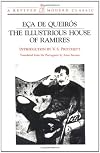
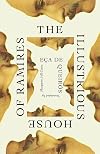
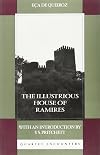
The Illustrious House of Ramires
by Eça de Queirós
On This Page
Description
Eça de Queiros's superlative novel The Illustrious House of Ramires (originally published in 1900) is presented here in a sparkling new translation by Margaret Jull Costa. The favorite novel of many Eça de Queiros aficionados, this late masterpiece, wickedly funny and yet profoundly tender, centers on Gonçalo Ramires, heir to a family so aristocratic that it predates even the kings of Portugal. Gonçalo--charming but disastrously effete, idealistic but hopelessly weak--muddles through his show more pampered life, burdened by a grand ambition. He is determined to write a great historical novel based on the heroic deeds of his fierce medieval ancestors. But "the record of their valor," as The London Spectator remarked, "is ironically counterpointed by his own chicanery. A combination of Don Quixote and Walter Mitty, he is continually humiliated [but he] is at the same time kind hearted. Ironic comedy is the keynote of the novel .... Eça de Queiros has justly been compared with Flaubert and Stendhal" -- Verso title page. show lessTags
Recommendations

























Member Reviews
Magnífico. Eça de Queirós, em "A Ilustre Casa de Ramires", faz um delicioso retrato do Portugal novecentista, decadente e submisso, ao descrever a vida, os sonhos, desejos e frustrações do último herdeiro - Gonçalo Mendes Ramires - duma das mais antigas, senão a mais antiga, Casas do Reíno - a Casa dos Ramires.
Eça desenvolve a narrativa tomando como mote, como fio condutor, o processo de amadurecimento do Fidalgo da Torre que, de jovem vaidoso, fútil, covarde e tremendamente inconstante nas suas deliberações, transforma-se, pouco a pouco, em pessoa respeitável, firme, consciente da tradição multimilenar que carrega em seu sangue e à qual deve prestar o devido tributo da honra.
A história desenvolve-se em dois planos, o show more plano da vida, pequena e desimportante, de Gonçalo Ramires, decadente representante duma fidalguia, duma nobreza da terra igualmente decadente, sem qualquer influência política e econômica, e, de outro lado, o plano da tradição, da rica história dos Ramires, bravos e altivos senhores feudais que, com sua bravura e inquebrantável senso de honra, edificaram o Reino em meio a batalhas e confrontos militares de todo o tipo.
O lance capital se dá quando Gonçalo, esmagado pelas constantes humilhações, pela fraqueza sua, física, moral e política, sonha com seus antepassados ilustres, recebendo destes, num gesto de amor e carinho pelo distante descendente, as armas com que conquistaram a imorredoura fama. Gonçalo, num momento de luminosa autoconsciência, se dá conta de que o grande mal de sua vida, a raiz de seus problemas é a vontade, a vontade fraca e inconstante, que faz com que seja, a todo o momento, arrastado pelas circunstâncias em torno. Logo no dia seguinte, no violento entrevero com o valentão de Nacejas, Ernesto de Nacejos, Gonçalo redescobre a força, o ímpeto, a bravura indômita, tanto tempo represada, de seus avós ilustres - e, meditando sobre ocorrido, pôde dizer, com indisfarçada satisfação, que "enfim era um homem!".
Romance de transformação, de conquista da maturidade que, em larga medida, se realiza na tomada de consciência duma antiquíssima tradição familiar de honra viril - Gonçalo transforma-se no que verdadeiramente é - senhor de terras sobranceiro, altivo e bondoso - quando aceita, de uma vez por todas, o legado heróico de seus antepassados ilustres que construíram "Torre mais velha que o reino, Torre de Santa Irenéia!". show less
Eça desenvolve a narrativa tomando como mote, como fio condutor, o processo de amadurecimento do Fidalgo da Torre que, de jovem vaidoso, fútil, covarde e tremendamente inconstante nas suas deliberações, transforma-se, pouco a pouco, em pessoa respeitável, firme, consciente da tradição multimilenar que carrega em seu sangue e à qual deve prestar o devido tributo da honra.
A história desenvolve-se em dois planos, o show more plano da vida, pequena e desimportante, de Gonçalo Ramires, decadente representante duma fidalguia, duma nobreza da terra igualmente decadente, sem qualquer influência política e econômica, e, de outro lado, o plano da tradição, da rica história dos Ramires, bravos e altivos senhores feudais que, com sua bravura e inquebrantável senso de honra, edificaram o Reino em meio a batalhas e confrontos militares de todo o tipo.
O lance capital se dá quando Gonçalo, esmagado pelas constantes humilhações, pela fraqueza sua, física, moral e política, sonha com seus antepassados ilustres, recebendo destes, num gesto de amor e carinho pelo distante descendente, as armas com que conquistaram a imorredoura fama. Gonçalo, num momento de luminosa autoconsciência, se dá conta de que o grande mal de sua vida, a raiz de seus problemas é a vontade, a vontade fraca e inconstante, que faz com que seja, a todo o momento, arrastado pelas circunstâncias em torno. Logo no dia seguinte, no violento entrevero com o valentão de Nacejas, Ernesto de Nacejos, Gonçalo redescobre a força, o ímpeto, a bravura indômita, tanto tempo represada, de seus avós ilustres - e, meditando sobre ocorrido, pôde dizer, com indisfarçada satisfação, que "enfim era um homem!".
Romance de transformação, de conquista da maturidade que, em larga medida, se realiza na tomada de consciência duma antiquíssima tradição familiar de honra viril - Gonçalo transforma-se no que verdadeiramente é - senhor de terras sobranceiro, altivo e bondoso - quando aceita, de uma vez por todas, o legado heróico de seus antepassados ilustres que construíram "Torre mais velha que o reino, Torre de Santa Irenéia!". show less
My third read by this author; I preferred the other two, though this has quite a beguiling storyline.
Goncalo Ramires is a nobleman- of somewhat limited means. He lives in a tower and is writing a book on the chivalrous and heroic deeds of his illustrious forebears.
Yet even as he narrates tales of derring-do, his own life seems to fall somewhat short- as he gazumps a tenant in favour of a more monied one, runs away from a challenger...and ditches his principles to take up a broken friendship with a chum of loose norals in ordere to advance his political career...
The story is good, but for me the lengthy exerpts of his historic story just represented tedium...well, until the final scene in a pool of leeches!
de Queiros' books are all good, show more but try the fabulous "The Crime of Father Amaro" or "Cousin Bazilio" first.. show less
Goncalo Ramires is a nobleman- of somewhat limited means. He lives in a tower and is writing a book on the chivalrous and heroic deeds of his illustrious forebears.
Yet even as he narrates tales of derring-do, his own life seems to fall somewhat short- as he gazumps a tenant in favour of a more monied one, runs away from a challenger...and ditches his principles to take up a broken friendship with a chum of loose norals in ordere to advance his political career...
The story is good, but for me the lengthy exerpts of his historic story just represented tedium...well, until the final scene in a pool of leeches!
de Queiros' books are all good, show more but try the fabulous "The Crime of Father Amaro" or "Cousin Bazilio" first.. show less
Before picking up this book this author was totally unknown to me despite his renown (in Portugal at least)where he is seen as one of their greatest authors.
Written in the very late 19th century the book centres around Goncalo Mendes Ramires the last descendant of perhaps the oldest and most noble family in Portugal living in and off the last relics of this once great family estates. Goncalo clings to many of the chivalric norms of the past but in reality is effete and his life aimless lacking any real influence. He is encouraged by an old university acquaintance to write a book describing his ancient forefathers bravery in an effort to be noticed in a country where patronage is still seen as important.However, when an untimely death show more occurs, Goncalo is given an opening into politics and perhaps real authority he abandons many of his previous scruples to grasp this opportunity culminating in a outbreak of violence with a local bully and piece of self-realisation. He is actually popular and well liked by his neighbours. Thus Goncalo comes to represent Portugal itself. A country which in many ways is living off its past with its colonies in Africa etc but although generally well liked has little real influence on the world stage. Personally I have no real experience of life in Portugal but feel that this analogy could also count for many of the old world empires, Britain, France, Spain, Italy etc.
I initially found the book rather dull and slow and some of the names a little difficult to get a handle on but it is worth persevering with. The prose is beautiful and there is a very subtle touch of irony running throughout. This is an author of real quality and I feel that he should be much more well read than he is. I will certainly keep an eye out for some of his other works. show less
Written in the very late 19th century the book centres around Goncalo Mendes Ramires the last descendant of perhaps the oldest and most noble family in Portugal living in and off the last relics of this once great family estates. Goncalo clings to many of the chivalric norms of the past but in reality is effete and his life aimless lacking any real influence. He is encouraged by an old university acquaintance to write a book describing his ancient forefathers bravery in an effort to be noticed in a country where patronage is still seen as important.However, when an untimely death show more occurs, Goncalo is given an opening into politics and perhaps real authority he abandons many of his previous scruples to grasp this opportunity culminating in a outbreak of violence with a local bully and piece of self-realisation. He is actually popular and well liked by his neighbours. Thus Goncalo comes to represent Portugal itself. A country which in many ways is living off its past with its colonies in Africa etc but although generally well liked has little real influence on the world stage. Personally I have no real experience of life in Portugal but feel that this analogy could also count for many of the old world empires, Britain, France, Spain, Italy etc.
I initially found the book rather dull and slow and some of the names a little difficult to get a handle on but it is worth persevering with. The prose is beautiful and there is a very subtle touch of irony running throughout. This is an author of real quality and I feel that he should be much more well read than he is. I will certainly keep an eye out for some of his other works. show less
Gonçalo Ramires can be infuriating but also so charming & unintentionally funny that I fell in love with this book. A wonderful "classic" story that will appeal to many. Highly recommended when you're in the mood for a piece of classic literature.
IDIOMA: PORTUGUÊS
8474612470
8474612470
Members
- Recently Added By
Author Information

312+ Works 6,843 Members
Some Editions
Series
Belongs to Publisher Series
Common Knowledge
- Canonical title
- The Illustrious House of Ramires
- Original title
- A ilustre casa de Ramires
- Original publication date
- 1900; 1897
- People/Characters
- Gonçalo Ramires; Gonçalo Mendes Ramires
- Important places
- Lisbon, Portugal
- First words
- Desde as quatro horas da tarde, no calor e silêncio do domingo de Junho, o fidalgo da Torre, em chinelos, com uma quinzena de linho envergada sobre a camisa de chita cor-de-rosa, trabalhava.
Desde as quatro horas da tarde, no calor e no silêncio do domingo de junho, o Fidalgo da Torre, em chinelos, com uma quinzena de linho envergada sobre a camisa de chite cor-de-rosa, trabalhava. - Last words
- (Click to show. Warning: May contain spoilers.)E padre Soeiro, com o seu guarda-sol sob o braço, recolheu à Torre vagarosamente, no silencio e doçura da tarde, rezando as suas ave-marias, e pedindo a paz de Deus para Gonçalo, e para todos os homens, para campos e casais adormecidos, e para a terra formosa de Portugal, tão cheia de graça amorável, que sempre bendita fosse entre as terras.
(Click to show. Warning: May contain spoilers.)E Padre Soeiro, com o seu guarda-sol sob o braço, recolheu à Torre vagarosamente, no silêncio e doçura da tarde, rezando as suas ave-marias, e pedindo a paz de Deus a Gonçalo, para todos os homens, para campos e casais adormecidos, e para a terra formosa de Portugal, tão cheia de graça amorável, que sempre bendita fosse entre as terras.
Classifications
- Genres
- Fiction and Literature, General Fiction, Romance
- DDC/MDS
- 869.3 — Literature & rhetoric Spanish Literature Literatures of Portuguese and Galician languages Portuguese fiction
- LCC
- PQ9261 .E3 .I613 — Language and Literature French, Italian, Spanish and Portuguese literatures Portuguese literature Individual authors, 1701-1960
- BISAC
Statistics
- Members
- 457
- Popularity
- 67,084
- Reviews
- 8
- Rating
- (3.77)
- Languages
- 6 — Catalan, English, German, Italian, Portuguese (Portugal), Spanish
- Media
- Paper, Ebook
- ISBNs
- 50
- ASINs
- 18