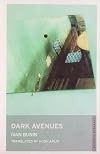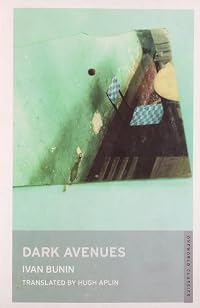
Dark Avenues
by Ivan Bunin
On This Page
Description
The audiobook includes 19 stories by Ivan Alekseevich Bunin from the series "Dark Alleys", which embodied the author's longstanding reflections on love. Criticism defined the cycle of stories "Dark alleys" as "encyclopedia of love" or "encyclopedia of love dramas". Each of the collection's works shows the moment of the highest triumph of love, unique in its uniqueness. True love, the author is convinced, happens only once in a life and if it to miss - it will not return. Stories conquer with show more their charm, liveliness and melodic language, accuracy and accuracy of phrases, sad philosophical depth. "I think that this is the best and most beautiful thing that I wrote in my life," - this is how the writer appreciated this book. show lessTags
Recommendations
















Member Reviews
With this sturdy collection of short stories, it is easy to get the feel for the darker side of Bunin’s work. In it are a slew of great short-short pieces of sexual epiphany so startling and real that they each seem like gems of experience, encapsulated in brief encounters.
Bunin is a master of description like his predecessors, but he does it in his own way. He does not shy away from showing people as they are. One gets a sense of place from his work that makes all of his characters feel real. His mastery lies in the details he builds up around these miserable and joyous people. Many of the characters bleed into one another – one gets a sense of an aristocratic man, engaging in many many fateful encounters with prostitutes and other show more women of good faith, falling in and out of love over and over again, and carrying away a tremendous burden of having betrayed them all.
Bunin, it seems was a man overburdened with love. He must have loved women and loved the world, to depict them both with so much devotion and splendor. Of course there are real women characters in his fiction too, I think, and not just the stock of the genre trade. They breathe and live their own lives and enact their form of revenge on the male characters, and entice and speak their minds. All in all a lot of them are more engaging than the male counterparts. But in the end the perspective is old-fashioned and male.
The whole collection is infused with energy – even though there is very little explicitness in its pages, it steams and is steeped in this tension throughout. It goes to show that Ivan Bunin uses these scenarios as a canvas for his immaculate skill as a painter of words, that he cooks up these shallow schemes and semi-plots as a mere ploy to get to the beauty and the livid imagery he has stored up in his head. One cannot help but admire the way he has transcended the confines of Chekhov’s strict guidelines of short story writing. The starkness of Chekhov’s descriptions becomes all too evident. But you cannot really emulate Bunin successfully. His resemblance to Chekhov is like a Melville’s to Hemingway. show less
Bunin is a master of description like his predecessors, but he does it in his own way. He does not shy away from showing people as they are. One gets a sense of place from his work that makes all of his characters feel real. His mastery lies in the details he builds up around these miserable and joyous people. Many of the characters bleed into one another – one gets a sense of an aristocratic man, engaging in many many fateful encounters with prostitutes and other show more women of good faith, falling in and out of love over and over again, and carrying away a tremendous burden of having betrayed them all.
Bunin, it seems was a man overburdened with love. He must have loved women and loved the world, to depict them both with so much devotion and splendor. Of course there are real women characters in his fiction too, I think, and not just the stock of the genre trade. They breathe and live their own lives and enact their form of revenge on the male characters, and entice and speak their minds. All in all a lot of them are more engaging than the male counterparts. But in the end the perspective is old-fashioned and male.
The whole collection is infused with energy – even though there is very little explicitness in its pages, it steams and is steeped in this tension throughout. It goes to show that Ivan Bunin uses these scenarios as a canvas for his immaculate skill as a painter of words, that he cooks up these shallow schemes and semi-plots as a mere ploy to get to the beauty and the livid imagery he has stored up in his head. One cannot help but admire the way he has transcended the confines of Chekhov’s strict guidelines of short story writing. The starkness of Chekhov’s descriptions becomes all too evident. But you cannot really emulate Bunin successfully. His resemblance to Chekhov is like a Melville’s to Hemingway. show less
Энциклопедия очень жестокой, беспощадной, изломанной и трагичной любви...
После прочтения этой книги возникает лишь один вопрос: "Есть ли на свете счастливая любовь?". Та, про которую можно сказать "Жили они долги и счастливо, и умерли в один день."?
Для себя могу выделить четыре рассказа, после которых я откладывала книгу и размышляла о том, что же именно я сейчас прочитала: "Кавказ", "Галя Ганская", "Генрих", show more "Часовня". show less
После прочтения этой книги возникает лишь один вопрос: "Есть ли на свете счастливая любовь?". Та, про которую можно сказать "Жили они долги и счастливо, и умерли в один день."?
Для себя могу выделить четыре рассказа, после которых я откладывала книгу и размышляла о том, что же именно я сейчас прочитала: "Кавказ", "Галя Ганская", "Генрих", show more "Часовня". show less
Good but repetitive. Maybe I'd have been better spacing the stories out once a year for the next twenty to get more enjoyment out of it.
I gave up about 3/4 of the way through this collection of short stories, because they were just getting to be too much the same. Bunin, a Russian writer who fled after the revolution, wrote this collection in the south of France during the Nazi era "to escape to a different world" as the interesting biographical and critical notes at the end of this edition say. The stories, which mostly take place in the prerevolutionary era (although some take place post-revolution, in French exile), all focus on love, mostly the loss of love, some purely "romantic," others more physical; some trite, some moving, some irritatingly sexist. But what kept me going was Bunin's wonderful depictions of the varied beauties of the Russian countryside, and the show more often decaying houses and estates within it. Apparently he first set out to be a poet, and these sections are the highlights, for me, of the stories. show less
Interesting individually, these stories, and some will stay with me but many will be forgotten. Quite atmospheric.
Ratings
Members
- Recently Added By
Author Information

249+ Works 1,980 Members
Ivan A. Bunin was little known in the United States until he received the Nobel Prize for literature, the first Russian writer to do so. By then he had decades of extensive literary activity behind him. In the intensely group-oriented literary milieu of turn-of-the-century Russia, Bunin largely remained a loner, working within the realist show more tradition in prose but enriching it with a powerful lyric element. He traveled abroad a great deal and used exotic locales as settings for many of his works. An outspoken opponent of the Bolsheviks, he emigrated to Paris and ironically, years after his death, he became celebrated in the Soviet Union as a major writer. Bunin's themes are diverse, ranging from a changing Russia to the universal human experience. Born into an impoverished rural-gentry family, he often wrote about the decline and passing of a way of life. Sometimes his depiction of provincial Russia is elegiac; at other times it is violent and tragic, as in the novella Dry Valley (1911]). A number of his works, such as the remarkable short story "The Gentleman from San Francisco" (1915), may be read as allegories of human encounter with the transcendent. In later years, Bunin grew increasingly preoccupied with problems of sexual attraction and death, evidenced in his last collection of stories, Dark Avenues (1930). In 1933 he was awarded the Nobel Prize for Literature. Bunin died in 1953. (Bowker Author Biography) show less
Some Editions
Awards and Honors
Distinctions
Notable Lists
Series
Belongs to Publisher Series
Nobelpreisträger Coron-Verlag (weiß) (1933 (Russland))
Oneworld Classics (40)
Common Knowledge
- Canonical title
- Dark Avenues
- Original title
- Тёмные аллеи
- Original publication date
- 1943
Classifications
- Genres
- Fiction and Literature, General Fiction
- DDC/MDS
- 891.733 — Literature & rhetoric Asian Literature East Indo-European and Celtic literatures Russian and East Slavic languages Russian fiction 1800–1917
- LCC
- PG3453 .B9 — Language and Literature Slavic languages and literatures. Baltic languages. Albanian language Slavic. Baltic. Albanian Russian literature Individual authors and works 1870-1917
- BISAC
Statistics
- Members
- 235
- Popularity
- 137,982
- Reviews
- 5
- Rating
- (3.97)
- Languages
- 9 — English, Estonian, French, German, Hebrew, Italian, Portuguese, Russian, Swedish
- Media
- Paper, Audiobook, Ebook
- ISBNs
- 55
- ASINs
- 7