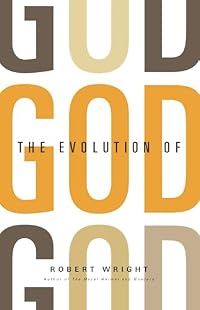
The Evolution of God
by Robert Wright
On This Page
Description
In this sweeping narrative that takes us from the Stone Age to the Information Age, Robert Wright unveils a hidden pattern that the great monotheistic faiths have followed as they have evolved. Through the prisms of archaeology, theology, and evolutionary psychology, Wright's findings overturn basic assumptions about Judaism, Christianity, and Islam, and are sure to cause controversy. He explains why spirituality has a role today, and why science, contrary to conventional wisdom, affirms the show more validity of the religious quest. And this previously unrecognized evolutionary logic points not toward continued religious extremism, but future harmony.--From publisher description. show lessTags
Recommendations




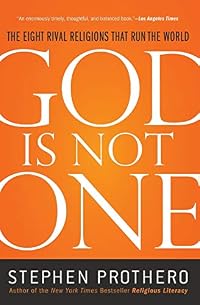

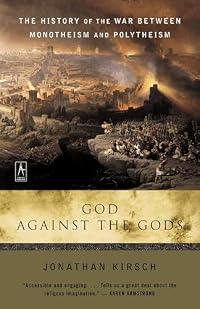
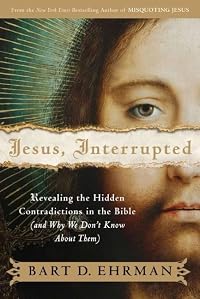
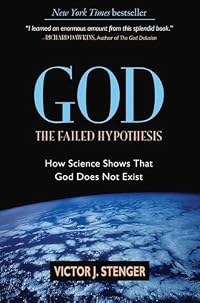


















Member Reviews
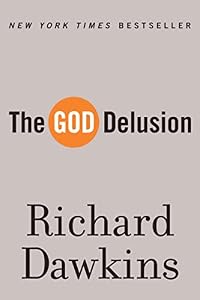
Despite the fact that I find the book's thesis highly flawed (a strange variation of the anthropic principle - that because western religion’s moral sphere has been increasing over time, this must in some sense signify a God), The Evolution of God is an engaging and thoughtful read. Robert Wright is evenhanded and self-critical, showing the ambiguities and limits of his framework, all the while dazzling the reader with fascinating insights into Abrahamic religious history. Thankfully devoid of bellicose saber-rattling ( I am looking at you Richard Dawkins, Sam Harris, Christopher Hitchens, et all. ), this is a very good starting point in opening up reasonable discussion about the boundaries of materialism.
I enjoyed reading this book. At times, it made me laugh. Wright can be sarcastic. But he knows his subject matter. His comparison between the Koran and the Bible was fascinating, particularly his comments about texts dealing with punishment for the living and the dead. I think the author validates one of my conclusions in observing believers, that one can read the same text and come to different conclusions, one of hope and mercy or one of vilification and destruction, something that tells me more about the reader than about the text.
We're not in the Middle Ages anymore. These days, there are a significant number of people who believe both that the Bible is the word of God and admit that it had a number of human authors and that Biblical scholarship must contend with modern archeological findings. Even so, Wright's book is a surprisingly blunt reminder that the Bible is, in many ways, the work of numerous imperfect human hands. He attacks the contention that monotheism was a great idea – or revelation, if you will – that changed the world, arguing instead that the Jewish, Christian and Muslim faiths were slow-developing products of their environments whose contents and interpretation changed as politics and interests demanded. Wright is, in many ways, show more convincing. He's obviously researched his subject thoroughly and is an excellent close reader, adept at ferreting out the different ways a single word or concept can be used to mean different things at different points in the text and pointing out how much information the Bible implies or leaves out. I am not sure how many people of faith will want to read a book with a title like "The Evolution of God," but those that do will may have their assumptions challenged in a number of different ways.
Wright is somewhat less successful when he tries to use his careful reading of Biblical history to suggest that this slow evolution of Abrahamic religion suggests the work of a grand designer-style deity. In many ways, he runs into the same problem that many writers on evolution itself face: how do you discuss the concept of evolutionary design without admitting to the existence of a conscious designer? Wright's focus here is clearly spiritual, but the arguments he presents here could also be used to prove that the steady expansion of global trade has helped us see our trading partners as fellow humans, or that we are conditioned by evolutionary design to seek peaceful mutually beneficial solutions to intercultural disagreements. Of course, I'm not exactly convinced that the author set out to provide an ontological proof for God when he began this book. In a sense, Wright is imagining what sort of God a person who is fully aware of the Bible's turbulent history and the questions posed by modern science and game theory could potentially believe in. The actual believing is, as always, up to the individual. show less
Wright is somewhat less successful when he tries to use his careful reading of Biblical history to suggest that this slow evolution of Abrahamic religion suggests the work of a grand designer-style deity. In many ways, he runs into the same problem that many writers on evolution itself face: how do you discuss the concept of evolutionary design without admitting to the existence of a conscious designer? Wright's focus here is clearly spiritual, but the arguments he presents here could also be used to prove that the steady expansion of global trade has helped us see our trading partners as fellow humans, or that we are conditioned by evolutionary design to seek peaceful mutually beneficial solutions to intercultural disagreements. Of course, I'm not exactly convinced that the author set out to provide an ontological proof for God when he began this book. In a sense, Wright is imagining what sort of God a person who is fully aware of the Bible's turbulent history and the questions posed by modern science and game theory could potentially believe in. The actual believing is, as always, up to the individual. show less
This is one of those books that shifted my perspective in a way that will last. The basic premise of the book is that religions -- especially the major monotheistic religions of Judaism, Christianity, and Islam -- have grown in universality over the years. Although the growth has not been monotonic, it has been persistent.
The underlying reason, in Wright's view, is that as human society becomes more complex, there is a need for the definition of "us" to broaden and include people who were formerly "them". Increasing complexity makes society increasingly non-zero sum. The positive consequences of cooperation multiple, and even more importantly, the negative consequences of animosity multiply. (One of the side comments I really show more appreciated was that lose-lose is just as much a non-zero sum state as win-win.) Before society operated by the acknowledged rule of law, religion was a primary source of the bond that expanded "us" beyond kin groups. As that need increased, religion continued to take on that role.
The cornerstone of Wright's case for that view is his analysis of the Bible. He shows that how in both Judaism and Christianity, the biblical text reaches out beyond the current conception of "us" when Jews and later Christians were in a non-zero sum relationship with those around them. Just as predictably, when the situation was seen as more zero sum -- often when the group was in power or was being exploited -- the biblical text reflects that by become more critical of those in the out-group.
The chapters on Islam were weaker, but still insightful. I would appreciate the same framework applied to non-monotheist religions (although I don't think it would make sense as a part of the same book). But all-in-all, this was an excellent book. show less
The underlying reason, in Wright's view, is that as human society becomes more complex, there is a need for the definition of "us" to broaden and include people who were formerly "them". Increasing complexity makes society increasingly non-zero sum. The positive consequences of cooperation multiple, and even more importantly, the negative consequences of animosity multiply. (One of the side comments I really show more appreciated was that lose-lose is just as much a non-zero sum state as win-win.) Before society operated by the acknowledged rule of law, religion was a primary source of the bond that expanded "us" beyond kin groups. As that need increased, religion continued to take on that role.
The cornerstone of Wright's case for that view is his analysis of the Bible. He shows that how in both Judaism and Christianity, the biblical text reaches out beyond the current conception of "us" when Jews and later Christians were in a non-zero sum relationship with those around them. Just as predictably, when the situation was seen as more zero sum -- often when the group was in power or was being exploited -- the biblical text reflects that by become more critical of those in the out-group.
The chapters on Islam were weaker, but still insightful. I would appreciate the same framework applied to non-monotheist religions (although I don't think it would make sense as a part of the same book). But all-in-all, this was an excellent book. show less
Despite the fact that I find the book's thesis highly flawed (a strange variation of the anthropic principle - that because western religion’s moral sphere has been increasing over time, this must in some sense signify a God), The Evolution of God is an engaging and thoughtful read. Robert Wright is evenhanded and self-critical, showing the ambiguities and limits of his framework, all the while dazzling the reader with fascinating insights into Abrahamic religious history. Thankfully devoid of bellicose saber-rattling ( I am looking at you Richard Dawkins, Sam Harris, Christopher Hitchens, et all. ), this is a very good starting point in opening up reasonable discussion about the boundaries of materialism.
Interesting take on how Judaism, Christianity and Islam might have evolved assuming no divine power was behind it. Taking into account history, human nature, and rational self-interest. I found it to be fascinating, if a trifle padded in places. The history of how our idea of God has evolved over time, expanding and growing as morality grows the tent to include all humans instead of just a single tribe, is well-reasoned and interesting. Now, if we can just grow the tent a little farther...
Now that I have a good e-book reader, I find that I've only purchased some 3 paper books in the last 4 months, compared to some 20+ ebooks. I thought I'd miss having a hard copy of books to display and to flip through and I was surprised to find I did not. Until now.
The Evolution of God is simply brilliant. Robert Wright explores (and largely discredits) traditional conceptions of the shared God of the Jews, Christians and Muslims, but he does so with an almost astounding amount of respect and care for these religions and all they stand for. This sort of thoughtful, and careful, study of religion and its relationship to science, has been largely missing in the screaming, fever pitch "Eff them all!" world of Richard Dawkins and his show more opposition in the "Intelligent" Design crowd.
This book is a breath of fresh air, is captivating and brilliantly written, and is so damn good, I have just ordered a second copy of it. A hard-back paper copy of it. Because I want to hold a book this good in my hands. show less
The Evolution of God is simply brilliant. Robert Wright explores (and largely discredits) traditional conceptions of the shared God of the Jews, Christians and Muslims, but he does so with an almost astounding amount of respect and care for these religions and all they stand for. This sort of thoughtful, and careful, study of religion and its relationship to science, has been largely missing in the screaming, fever pitch "Eff them all!" world of Richard Dawkins and his show more opposition in the "Intelligent" Design crowd.
This book is a breath of fresh air, is captivating and brilliantly written, and is so damn good, I have just ordered a second copy of it. A hard-back paper copy of it. Because I want to hold a book this good in my hands. show less
Members
- Recently Added By
Published Reviews
ThingScore 75
According to Wright's theory, although religion may seem otherworldly—a realm of revelation and spirituality—its history has, like that of much else, been driven by mundane "facts on the ground." ... Like organisms, religions respond adaptively to the world.
In a climate in which discussions of religion, and especially of the intersection of religion and science, often seem superficial or show more rushed, Wright is to be commended for his close study. He is also to be commended for his refreshingly dispassionate tone. show less
In a climate in which discussions of religion, and especially of the intersection of religion and science, often seem superficial or show more rushed, Wright is to be commended for his close study. He is also to be commended for his refreshingly dispassionate tone. show less
added by tim.taylor
The possibility of a reasonable engagement between faith and reason, between doctrine and biblical scholarship, between a mature theology and a golden age of scientific research — all this seems very distant right now.
And that’s why a new book gives me hope.
And that’s why a new book gives me hope.
added by jlelliott
added by Shortride
Author Information

6+ Works 6,488 Members
Robert Wright is the bestselling author of The Evolution of God, The Moral Animal, and Nonzero. He has taught in the psychology department at the University of Pennsylvania and the religion department at Princeton University. He is currently Visiting Professor of Science and Religion at Union Theological Seminary in New York.
Some Editions
Awards and Honors
Awards
Common Knowledge
- Original title
- The Evolution of God
- Original publication date
- 2009
- Epigraph
- The partner in the dialogue with God is not the individual man but the human species as a whole. - Gordon Kaufman
- Dedication
- For John, my odometer monitor
- First words
- Introduction
I was once denounced from the pulpit of my mother's church.
The Chukchee, a people indigenous to Siberia, had their own special way of dealing with unruly winds. - Quotations
- Any religion whose prerequisites for individual salvation don't conduce to the salvation of the whole world is a religion whose time has passed.
- Last words
- (Click to show. Warning: May contain spoilers.)But first things first.
(Click to show. Warning: May contain spoilers.)Afterword
The point is just that you wouldn't have to be crazy to say it. - Original language
- English
Classifications
- Genres
- Religion & Spirituality, Nonfiction, General Nonfiction, History, Philosophy
- DDC/MDS
- 200.9 — Religion The Bible & Christianity Religion History, geographic treatment, biography
- LCC
- BL473 .W75 — Philosophy, Psychology and Religion Religions. Mythology. Rationalism Religions. Mythology. Rationalism Religious doctrines (General) Other
- BISAC
Statistics
- Members
- 1,478
- Popularity
- 15,658
- Reviews
- 40
- Rating
- (3.99)
- Languages
- 6 — Chinese, English, Italian, Polish, Portuguese, Swedish
- Media
- Paper, Audiobook, Ebook
- ISBNs
- 23
- ASINs
- 7