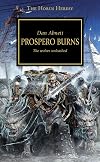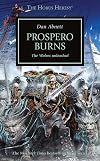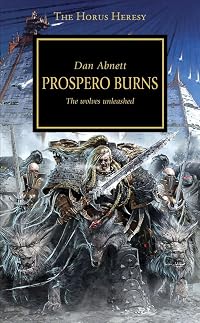
Prospero Burns
by Dan Abnett
The Horus Heresy Novels (15), The Horus Heresy (XV), Warhammer 40,000 (fiction) (Horus Heresy #15)
On This Page
Description
Book fifteen in the New York Times bestselling series The Emperor is enraged. Primarch Magnus the Red, of the Thousand Sons Legion, has made a catastrophic mistake and endangered the safety of Terra. With no other choice, the Emperor charges Leman Russ, Primarch of the Space Wolves, with the apprehension of his brother from the Thousand Sons' home world of Prospero. This planet of sorcerers will not be easy to overcome, but Russ and his Space Wolves are not easily deterred. With wrath in his show more heart, Russ is determined to bring Magnus to justice and the events that decide the fate of Prospero are set in motion. show lessTags
Recommendations







Member Reviews
Without doubt the best of the Horus Heresy novels thus far, and perhaps the best overall. This is a novel that would stand up outside the Warhammer-sphere, well written, good characters, great plot that doesn't rely solely on big men punching each other. Great stuff.
Re-Read Review February 2024 as part of the Horus Heresy Omnibus Project reading guide Omnibus III: The Burning of Prospero
(https://www.heresyomnibus.com/omnibus/iii-the-burning-of-prospero) as part of my Oath of Moment to complete the series.
I remembered this was one of the best, but that was about it.
I was not prepared for as close to perfect novel and entry into the Horus Heresy series as this is.
The story of Kasper Hawser and the Vlka Fenryka is one with so much heart, intrigue, and emotion that I took a few minute to compose myself after the end had me crying again, and now reflecting on it I can't help weeping.
(I was always a big crier at stories that touched me and estrogen is a hell of a drug)
Maybe I'll come back and write a show more more in depth review, but I can't see any way that doesn't end with days of my life and millions of words no-one will read, so this initial re-read reaction will likely be my account.
The VI Legion are done dirty in everything proceeding this book, which is appropriate with their reputation, role, and the way they bear these. I'm actually glad I came into this with such a compromised view of the Wolves of Fenris because it made the journey all the more impactful. I only wish I had read Chris Wraight's Leman Russ: The Great Wolf after this, so my emotions would have been even more destroyed than they were by the end of that book.
Honesty, I understand that having a pain flare up makes me extra vulnerable and the hormones and everything, but I'm just an emotional mess after reading this, which, quite frankly, is often how in love great art to make me feel.
For me, this is the Platonic Ideal of a Horus Heresy novel. From the Pre-Heresy worldbuilding, glorious insight into the heart and soul of a Legion, and revelations of the machinations of the Darker Powers, through being perfectly embedded in, contextualised by, and contextualising the grand narrative of the Horus Heresy and aspects of the Dark Millennium, through gloriously flowing prose and exalted storytelling, including making the often difficult to pull off story about stories and accounts within stories and accounts where there is a magic and vital importance, not to mention masterful manipulations of the way narratives, timelines, and story structure are all integral parts of the whole--playing with the warp and weft of truth, reality, meaning, and time and space to create a surreality with such aplomb to make Kairos Fateweaver start simultaneously molting and malding--to full realised characters put through fascinating, exciting, and tragic situations with enough emotional weight to crush a Lord of Skulls into a Khornate pancake (pankhake?), so as the perfect needlepoint line bursts the tension and I start crying.
(No spoilers: I cried twice during the book. Once reading 12 minutes and then again at the exquisite and heartbreaking end...and then a while bunch of times afterwards and while writing this)
Kasper Hawser is a truly phenomenal character and his story and the stories he collects and tells are brilliant. His namesake and partial inspiration is a fascinating historical reference: https://en.m.wikipedia.org/wiki/Kaspar_Hauser.
The way the Vlka Fenryka are brought to life and given a fair and detailed account is a long time coming. The rough housing, wizard hating, ignorantly honourable and brutal archetypes previously seen aren't exactly not true, but only show a fragment of the VI's mien as to tender them as caricature. I feel like I don't even know the Luna Wolves/ Sons of Horus anywhere near as well after three books (I understand that is an aspect of the opening trilogy being more about Loken and the changing soul of the Legion).
My heart will always belong to Chaos and especially the sadbois who were always destined, manipulated, and thrust on their paths by the conscious or purely ignorant actions of their farther, but, much like the World Eaters they are the ice cold executioners, a reflection of the Red Angel's sons' burning butchery (and, as particularly demonstrated in Leman Russ: The Great Wolf, the Rout is an annihilating warrior pack, a reflection of the chivalrous Dark Angels' knightly order), but Leman Russ and his sons' role, perception, and ostracisition were equally ordained and ordered. It's impossible for me to read this book without falling in love with the Wolves of Fenris, feeling their exaltations and pain, regardless of the bloody, brutal role they play for a bitter, broken, and unthankful Imperium.
The only things I can really say to criticise this book are the same complaints I so often have of the Horus Heresy authors and Abnett, time and time again - the absolute lack of women and those that are included merely being plot devices, described their appearance, and in the case of the Silent Siterhood, on screen for barely a chapter, being referred to as "females" twelve times. These warriors, described with their precision and wargear, are never referred to as such or any other description the men are constantly referred to, whether it be on relationship to the role, rank, physical or character description, are only described as "females". It's weird, creepy, misogynistic, and makes Abnett sound like an incel during his mastercrafted tale. To put this in perspective, it feels like Abnett is constantly referring to the Space Wolves 'wet leopard growl' in some form or other, to the point where it starts to feel comical and lazy. "Leopard" appears nineteen times across the whole book, compared to the Sisters of Silence being referred to as "females" twelve times over barely a chapter.
The above criticism taken into consideration, this is genuinely one of the greatest books I have read and almost certainly hold equal top billing with my other most loved books, like The Dream of Doctor Bantam by Jeanne Thornton, The Southern Reach Trilogy by Jeff Vandermeer, and Quarantine by Greg Egan. I challenge another book to come close to the magnificence of this one. So far The First Heretic and the opening quadrilogy taken as a whole are the closest, but this is in another league Also, a respectable shoutout to The Unburdened (Betrayal at Calth Novella), and the Primarchs novels, Magnus the Red: Master of Prospero and Leman Russ: The Great Wolf for being hot on the heels of those regular Horus Heresy novels.
It has to be noted that Gareth Armstrong gives the performance of a lifetime in this and deserves a huge amount of recognition for absolutely stepping up to meet the quality of this novel. I'm a long time Toby Longworth fangirl who has recently really been digging Jonathan Keeble, especially for his impassioned action oratory, but this might be the pinnacle of a Black Library performance.
Obviously, this is all my subjective personal opinion and your mileage may vary.
I know have a few stories to read to finish this omnibus and I might make my first jump to Warhammer 40K between this and the next omnibus with The Battle of the Fang, The Hunt for Magnus, and Ashes of Prospero, as I don't want this saga within a saga to end! show less
(https://www.heresyomnibus.com/omnibus/iii-the-burning-of-prospero) as part of my Oath of Moment to complete the series.
I remembered this was one of the best, but that was about it.
I was not prepared for as close to perfect novel and entry into the Horus Heresy series as this is.
The story of Kasper Hawser and the Vlka Fenryka is one with so much heart, intrigue, and emotion that I took a few minute to compose myself after the end had me crying again, and now reflecting on it I can't help weeping.
(I was always a big crier at stories that touched me and estrogen is a hell of a drug)
Maybe I'll come back and write a show more more in depth review, but I can't see any way that doesn't end with days of my life and millions of words no-one will read, so this initial re-read reaction will likely be my account.
The VI Legion are done dirty in everything proceeding this book, which is appropriate with their reputation, role, and the way they bear these. I'm actually glad I came into this with such a compromised view of the Wolves of Fenris because it made the journey all the more impactful. I only wish I had read Chris Wraight's Leman Russ: The Great Wolf after this, so my emotions would have been even more destroyed than they were by the end of that book.
Honesty, I understand that having a pain flare up makes me extra vulnerable and the hormones and everything, but I'm just an emotional mess after reading this, which, quite frankly, is often how in love great art to make me feel.
For me, this is the Platonic Ideal of a Horus Heresy novel. From the Pre-Heresy worldbuilding, glorious insight into the heart and soul of a Legion, and revelations of the machinations of the Darker Powers, through being perfectly embedded in, contextualised by, and contextualising the grand narrative of the Horus Heresy and aspects of the Dark Millennium, through gloriously flowing prose and exalted storytelling, including making the often difficult to pull off story about stories and accounts within stories and accounts where there is a magic and vital importance, not to mention masterful manipulations of the way narratives, timelines, and story structure are all integral parts of the whole--playing with the warp and weft of truth, reality, meaning, and time and space to create a surreality with such aplomb to make Kairos Fateweaver start simultaneously molting and malding--to full realised characters put through fascinating, exciting, and tragic situations with enough emotional weight to crush a Lord of Skulls into a Khornate pancake (pankhake?), so as the perfect needlepoint line bursts the tension and I start crying.
(No spoilers: I cried twice during the book. Once reading 12 minutes and then again at the exquisite and heartbreaking end...and then a while bunch of times afterwards and while writing this)
Kasper Hawser is a truly phenomenal character and his story and the stories he collects and tells are brilliant. His namesake and partial inspiration is a fascinating historical reference: https://en.m.wikipedia.org/wiki/Kaspar_Hauser.
The way the Vlka Fenryka are brought to life and given a fair and detailed account is a long time coming. The rough housing, wizard hating, ignorantly honourable and brutal archetypes previously seen aren't exactly not true, but only show a fragment of the VI's mien as to tender them as caricature. I feel like I don't even know the Luna Wolves/ Sons of Horus anywhere near as well after three books (I understand that is an aspect of the opening trilogy being more about Loken and the changing soul of the Legion).
My heart will always belong to Chaos and especially the sadbois who were always destined, manipulated, and thrust on their paths by the conscious or purely ignorant actions of their farther, but, much like the World Eaters they are the ice cold executioners, a reflection of the Red Angel's sons' burning butchery (and, as particularly demonstrated in Leman Russ: The Great Wolf, the Rout is an annihilating warrior pack, a reflection of the chivalrous Dark Angels' knightly order), but Leman Russ and his sons' role, perception, and ostracisition were equally ordained and ordered. It's impossible for me to read this book without falling in love with the Wolves of Fenris, feeling their exaltations and pain, regardless of the bloody, brutal role they play for a bitter, broken, and unthankful Imperium.
The only things I can really say to criticise this book are the same complaints I so often have of the Horus Heresy authors and Abnett, time and time again - the absolute lack of women and those that are included merely being plot devices, described their appearance, and in the case of the Silent Siterhood, on screen for barely a chapter, being referred to as "females" twelve times. These warriors, described with their precision and wargear, are never referred to as such or any other description the men are constantly referred to, whether it be on relationship to the role, rank, physical or character description, are only described as "females". It's weird, creepy, misogynistic, and makes Abnett sound like an incel during his mastercrafted tale. To put this in perspective, it feels like Abnett is constantly referring to the Space Wolves 'wet leopard growl' in some form or other, to the point where it starts to feel comical and lazy. "Leopard" appears nineteen times across the whole book, compared to the Sisters of Silence being referred to as "females" twelve times over barely a chapter.
The above criticism taken into consideration, this is genuinely one of the greatest books I have read and almost certainly hold equal top billing with my other most loved books, like The Dream of Doctor Bantam by Jeanne Thornton, The Southern Reach Trilogy by Jeff Vandermeer, and Quarantine by Greg Egan. I challenge another book to come close to the magnificence of this one. So far The First Heretic and the opening quadrilogy taken as a whole are the closest, but this is in another league Also, a respectable shoutout to The Unburdened (Betrayal at Calth Novella), and the Primarchs novels, Magnus the Red: Master of Prospero and Leman Russ: The Great Wolf for being hot on the heels of those regular Horus Heresy novels.
It has to be noted that Gareth Armstrong gives the performance of a lifetime in this and deserves a huge amount of recognition for absolutely stepping up to meet the quality of this novel. I'm a long time Toby Longworth fangirl who has recently really been digging Jonathan Keeble, especially for his impassioned action oratory, but this might be the pinnacle of a Black Library performance.
Obviously, this is all my subjective personal opinion and your mileage may vary.
I know have a few stories to read to finish this omnibus and I might make my first jump to Warhammer 40K between this and the next omnibus with The Battle of the Fang, The Hunt for Magnus, and Ashes of Prospero, as I don't want this saga within a saga to end! show less
Another Filler book in the Horus Heresy series, A book about the space wolves where you see very little space wolves. The title of the book is even misleading as (Spoiler Alert) The battle of Prospero is only at the very end of the book and is a disappointing retelling of the battle rather than an engaging story. Even a climatic battle of Primarch vs Primarch is told in passing in a single sentence. Skip this book in the Horus Heresy as it does very little to forward the overall story at all.
Most of Dan Abnett's Horus Heresy books are fantastic. I didn't feel that way about this one. The build up is far too long, in my opinion, even though the payoff is incredible. If I ranked just, say, the last one-third of the book I would give it a 4 or 5 star rating. You really have to stick with a lot of what seems to be unnecessary stuff to get to that point though.
A good book, but not at all what I expected. Need to work on tamping down what I think a book will be, but in this case this book was billed as "A Thousand Sons from the Space Wolves point of view", and I was very much looking forward to it. About a third of the way in I realized this was a very deep, very introspective book on the Sixth Legion and their motivations leading up to the last 40 pages or so where the battle of Prospero is finally revealed. Having to go back and study some of the difficult parts to read REALLY slowed my reading down. Good premise by Abnett, but fair execution. Reading the last 40 pages was great, but I was also thinking "where was THIS for the last 400 pages?". Still enjoyed the Space Wolves back story, though.
Although set in the standard Warhammer 40k wargaming world from Games Workshop, this book and the books in the Horus Heresy milieu takes us almost 10,000 years into the past where Horus rebels against the Emperor. In Prospero Burn, Abnett gives us a tale of the Space Wolves, the Executioners of the Space Marines and the Imperial Conservator Karl Hawser who travelled to their home world to investigate the strange society there. The Wolves take him in and he learns that not all that looks savage is necessarily as savage as it looks and he finds that his life had been a lie almost as far back as he could remember as he and the Marines are manipulated into creating the ultimate rift...
Another good book by Dan Abnett. I feel he does a good job with stories that don't have that much to tell.
Members
- Recently Added By
Lists

Kindle Books - To Read
63 works; 1 member
Author Information

1,194+ Works 25,441 Members
Some Editions
Awards and Honors
Series

The Horus Heresy Novels
54 works (15)

The Horus Heresy
55 works (XV)

Warhammer 40,000 (fiction)
1240 works (Horus Heresy #15)
Belongs to Publisher Series
The Horus Heresy Saga (VII)
Work Relationships
Common Knowledge
- Canonical title
- Prospero Burns
- Original title
- Prospero Burns
- Alternate titles
- Prospero Burns: The Wolves unleashed
- Original publication date
- 2011-01
- People/Characters
- Leman Russ (The Wolf King, Primarch); Magnus the Red (The Crimson King, Primarch); Gunnar Gunnhilt (Called Lord Gunn, jarl, Onn, the Rout); Ogvai Ogvai Helmschrot (Jarl, Tra, the Rout); Ulvurul Heoroth (Called Longfang, rune priest, Tra, the Rout); Bear (Tra, the Rout) (show all 32); Aeska (Called Brokenlip, Tra, the Rout); Godsmote (Tra, the Rout); Galeg (Tra, the Rout); Aun Helwintr (Tra, the Rout); Orcir (Tra, the Rout); Jormungndr (Called Two-Blade, Tra, the Rout); Ullste (Tra, the Rout); Erthung Redhand (Tra, the Rout); Oje (Tra, the Rout); Svessl (Tra, the Rout); Emrah (Tra, the Rout); Horune (Tra, the Rout); Najot Threader (Wolf priest, Tra, the Rout); Amlodhi Skarssen Skarssensson (Jarl, Fyf, the Rout); Varangr (Herald to Lord Skarssensson, Fyf, the Rout); Ohthere Wyrdmake (Rune priest, Fyf, the Rout); Trung (Fyf, the Rout); Bitur Bercaw (Fyf, the Rout); Giro Emantine (Prefect-secretary to the Unification Council, Imperial); Kasper Hawser (Conservator, also known as Ahmad Ibn Rustah, Imperial); Navid Murza (Conservator, Imperial); Fith of the Ascommani (Non-Imperial); Guthox of the Ascommani (Non-Imperial); Brom of the Ascommani (Non-Imperial); Lern of the Ascommani (Non-Imperial); Rector Uwe (In the Past)
- Important places
- Imperium of Man; Fenris; Terra; The Olamic Quietude; Nikaea; Prospero
- Important events
- Council of Nikaea; Battle of Prospero
- Epigraph
- 'If I am guilty of anything, it is the simple pursuit of knowledge.'
– The Primarch Magnus, at Nikaea
'Take but degree away, untune that string,
And, hark! what discord follows; each
thing meets
In mere oppugnancy: the bounded waters
Should lift their bosoms higher than the shores
And make a sop of all ... (show all)this solid globe:
Strength should become the lord of imbecility,
And the rude son should strike his father dead:
Force should be right; or rather
right and wrong
(Between whose endless jar justice resides)
Should lose their names, and so should
justice too.
Then every thing, includes itself in power,
Power into will, will into appetite.
And appetite, a universal wolf,
So doubly seconded with will and power,
Must make perforce a universal prey, and last eat up
himself.'
– attributed to the dramaturge Shakespire (fl. M2),
cited in the Prophecy of Amon of the Thousand Sons (chp III verse 230)
'Those who cannot remember the past are condemned to repeat it.'
– unattributable (circa M2) - Dedication
- Belatedly, for Evan McNeill.
- First words
- Mighty heroes battle for the right to rule the galaxy.
Introduction: The Horus Heresy / It is a time of legend.
Death had them surrounded. - Last words
- (Click to show. Warning: May contain spoilers.)'Until next winter,' he says.
Classifications
Statistics
- Members
- 419
- Popularity
- 73,830
- Reviews
- 9
- Rating
- (3.80)
- Languages
- 5 — English, French, German, Hungarian, Spanish
- Media
- Paper, Audiobook, Ebook
- ISBNs
- 13
- ASINs
- 10