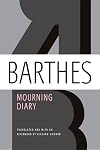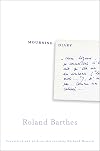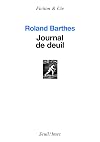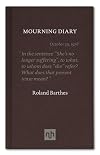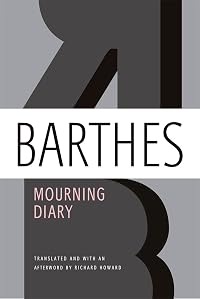
The mourning diary
by Roland Barthes
On This Page
Description
A major discovery: The lost diary of a great mind--and an intimate, deeply moving study of grief The day after his mother's death in October 1977, the influential philosopher Roland Barthes began a diary of mourning. Taking notes on index cards as was his habit, he reflected on a new solitude, on the ebb and flow of sadness, and on modern society's dismissal of grief. These 330 cards, published here for the first time, prove a skeleton key to the themes he tackled throughout his work. Behind show more the unflagging mind, "the most consistently intelligent, important, and useful literary critic tohave emerged anywhere" (Susan Sontag), lay a deeply sensitive man who cherished his mother with a devotion unknown even to his closest friends. show lessTags
Recommendations













Member Reviews
2 stars, only because it's Barthes, I think, since otherwise it might be 1, if anything at all.
What drivel.
Sensationalizing the sensation-less: how we continue to make "stars" -- or heroes? -- out of people who have nothing left to say. The only reason this piece of drivel was ever printed, is because it's Roland Barthes -- as if Barthes never had stupid moments in his life, like the rest of us. (Witness that even I am falling for it, since I otherwise would have given this book 1 star. Shame on me.)
The most ironic passage?
"I don't want to talk about it, for fear of making literature out of it -- or without being sure of not doing so -- although as a matter of fact literature originates within these truths."
There are numerous show more passages in here that remind me of "Poetry -- by Henry Gibson" -- as appeared on Rowan & Martin's Laugh-in in the late 60s/early 70s.
The book takes less than an hour to read -- if you're going slow. Might be a good pick-up for a train journey, and then toss it at the end so you don't have to carry it anywhere. Or I guess in the day of the Kindle, just delete. show less
What drivel.
Sensationalizing the sensation-less: how we continue to make "stars" -- or heroes? -- out of people who have nothing left to say. The only reason this piece of drivel was ever printed, is because it's Roland Barthes -- as if Barthes never had stupid moments in his life, like the rest of us. (Witness that even I am falling for it, since I otherwise would have given this book 1 star. Shame on me.)
The most ironic passage?
"I don't want to talk about it, for fear of making literature out of it -- or without being sure of not doing so -- although as a matter of fact literature originates within these truths."
There are numerous show more passages in here that remind me of "Poetry -- by Henry Gibson" -- as appeared on Rowan & Martin's Laugh-in in the late 60s/early 70s.
The book takes less than an hour to read -- if you're going slow. Might be a good pick-up for a train journey, and then toss it at the end so you don't have to carry it anywhere. Or I guess in the day of the Kindle, just delete. show less
I bought this book on a whim, as I've never read Roland Barthes. I knew of him, of his prolific careers and different types of writing, but not of his heft.
This book is written after Barthes’s beloved mother died. Its contents are detailed on the cover of the book: it contains details of his feelings from just after his mother died.
The book says it all. This is a collection of pain, of temporal and temporary relief, of despair, anguish, and anger. In spite of how we currently, as human beings, tend to hide our pains, Barthes displayed them and the world is a far better place for it.
The Notting Hill Editions version of this book is very well made: it show more allows the writing to breathe and make the room that it needs.
This book is needed by all. show less
This book is written after Barthes’s beloved mother died. Its contents are detailed on the cover of the book: it contains details of his feelings from just after his mother died.
Don’t say mourning. It’s too psychoanalytic. I’m not mourning. I’m suffering.
The book says it all. This is a collection of pain, of temporal and temporary relief, of despair, anguish, and anger. In spite of how we currently, as human beings, tend to hide our pains, Barthes displayed them and the world is a far better place for it.
The Notting Hill Editions version of this book is very well made: it show more allows the writing to breathe and make the room that it needs.
This book is needed by all. show less
A study in grief of the author's diary of the year following his mother's death. It came during a time of mourning for me and I found it worthwhile, sometimes profound, sometimes self-pitying but helpful.
A study in grief of the author's diary of the year following his mother's death. It came during a time of mourning for me and I found it worthwhile, sometimes profound, sometimes self-pitying but helpful.
I didn't connect with this emotionally, although there were some profound entries.
"I am either lacerated or ill at ease
and occasionally subject to gusts of life"
Devastating.
and occasionally subject to gusts of life"
Devastating.
Gay Men Write About Their Moms (and Death) – a reading list
On Earth We're Briefly Gorgeous, by Ocean Vuong
https://www.goodreads.com/book/show/41880609-on-earth-we-re-briefly-gorgeous
Bettyville, by George Hodgman
https://www.goodreads.com/book/show/22571772-bettyville
Counterpoint: A Memoir of Bach and Mourning, by Philip Kennicott
https://www.goodreads.com/book/show/45894127-counterpoint
On Earth We're Briefly Gorgeous, by Ocean Vuong
https://www.goodreads.com/book/show/41880609-on-earth-we-re-briefly-gorgeous
Bettyville, by George Hodgman
https://www.goodreads.com/book/show/22571772-bettyville
Counterpoint: A Memoir of Bach and Mourning, by Philip Kennicott
https://www.goodreads.com/book/show/45894127-counterpoint
Members
- Recently Added By
Lists

Deathreads
78 works; 2 members
Author Information

191+ Works 22,292 Members
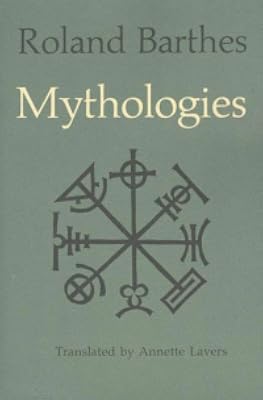
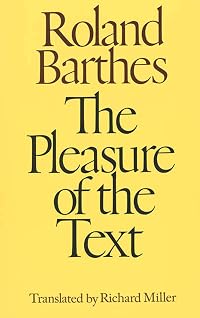
Roland Barthes (1915-1980), a French critic and intellectual, was a seminal figure in late twentieth-century literary criticism. Barthes's primary theory is that language is not simply words, but a series of indicators of a given society's assumptions. He derived his critical method from structuralism, which studies the rules behind language, and show more semiotics, which analyzes culture through signs and holds that meaning results from social conventions. Barthes believed that such techniques permit the reader to participate in the work of art under study, rather than merely react to it. Barthes's first books, Writing Degree Zero (1953), and Mythologies (1957), introduced his ideas to a European audience. During the 1960s his work began to appear in the United States in translation and became a strong influence on a generation of American literary critics and theorists. Other important works by Barthes are Elements of Semiology (1968), Critical Essays (1972), The Pleasure of the Text (1973), and The Empire of Signs (1982). The Barthes Reader (1983), edited by Susan Sontag, contains a wide selection of the critic's work in English translation. (Bowker Author Biography) show less
Some Editions
Series
Belongs to Publisher Series
Common Knowledge
- Canonical title
- The mourning diary
- Original title
- Journal de Deuil
- Original publication date
- 2009; 2010 (English translation) (English translation)
- Original language
- French
Classifications
Statistics
- Members
- 367
- Popularity
- 85,509
- Reviews
- 7
- Rating
- (3.91)
- Languages
- 15 — Chinese, Dutch, English, French, German, Greek, Hebrew, Italian, Japanese, Norwegian (Bokmål), Polish, Portuguese, Spanish, Swedish, Turkish
- Media
- Paper, Ebook
- ISBNs
- 23
- ASINs
- 7