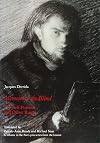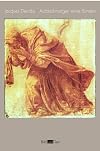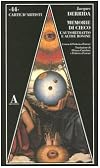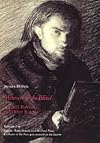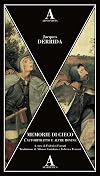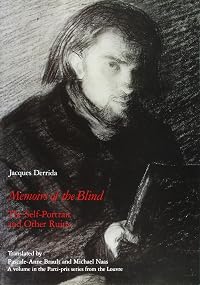
Memoirs of the Blind: The Self-Portrait and Other Ruins
by Jacques Derrida
On This Page
Description
In this brilliant essay, Jacques Derrida explores issues of vision, blindness, self-representation, and their relation to drawing, while offering detailed readings of an extraordinary collection of images. Selected by Derrida from the prints and drawings department of the Louvre, the works depict blindness—fictional, historical, and biblical. From Old and New Testament scenes to the myth of Perseus and the Gorgon and the blinding of Polyphemus, Derrida uncovers in these images rich, show more provocative layers of interpretation. For Derrida drawing is itself blind; as an act rooted in memory and anticipation, drawing necessarily replaces one kind of seeing (direct) with another (mediated). Ultimately, he explains, the very lines which compose any drawing are themselves never fully visible to the viewer since they exist only in a tenuous state of multiple identities: as marks on a page, as indicators of a contour. Lacking a "pure" identity, the lines of a drawing summon the supplement of the word, of verbal discourse, and, in doing so, obscure the visual experience. Consequently, Derrida demonstrates, the very act of depicting a blind person undertakes multiple enactments and statements of blindness and sight. Memoirs of the Blind is both a sophisticated philosophical argument and a series of detailed readings. Derrida provides compelling insights into famous and lesser known works, interweaving analyses of texts—including Diderot's Lettres sur les aveugles, the notion of mnemonic art in Baudelaire's The Painter of Modern Life, and Merleau-Ponty's The Visible and the Invisible. Along with engaging meditations on the history and philosophy of art, Derrida reveals the ways viewers approach philosophical ideas through art, and the ways art enriches philosophical reflection. An exploration of sight, representation, and art, Memoirs of the Blind extends and deepens the meditation on vision and painting presented in Truth and Painting. Readers of Derrida, both new and familiar, will profit from this powerful contribution to the study of the visual arts. show lessTags
Recommendations

Member Reviews
Never does the eye of the Other recall this desire more sovereignly to the outside and to difference, to the law of disproportion, dissymetry and expropriation.
Dazzling and disorienting, Derrida provides a strange program, one where the artist is/remains blind between his subject and object, unable to draw while gazing and vice versa. All drawing is then the ruins of a self-portrait. This thesis is extended alongside truly gorgeous images from the Louvre catalogue. This leads to a poly-myopia where the reader/viewer is gazing back and forth while consulting footnotes and editor's notes about Derrida's wordplay. There are sidelong digressions upon blind authors: Homer, Milton, Joyce and Borges. Flipping back to the illustrations, we show more "see" images of the blind, the blindfolded and the being blinded: Samson, the Cyclops and the Gorgons are addressed here. Perseus and Odysseus are approached at length and then finally Nietzsche and Augustine fashion a dialogue. The concluding poem by Andrew Marvell is simply wrenching. show less
Dazzling and disorienting, Derrida provides a strange program, one where the artist is/remains blind between his subject and object, unable to draw while gazing and vice versa. All drawing is then the ruins of a self-portrait. This thesis is extended alongside truly gorgeous images from the Louvre catalogue. This leads to a poly-myopia where the reader/viewer is gazing back and forth while consulting footnotes and editor's notes about Derrida's wordplay. There are sidelong digressions upon blind authors: Homer, Milton, Joyce and Borges. Flipping back to the illustrations, we show more "see" images of the blind, the blindfolded and the being blinded: Samson, the Cyclops and the Gorgons are addressed here. Perseus and Odysseus are approached at length and then finally Nietzsche and Augustine fashion a dialogue. The concluding poem by Andrew Marvell is simply wrenching. show less
Derrida's so poetic, I often completely forget the ideas or arguments that make up the content of his writing, while isolated phrases remain standing on their own beauty.
Absolutely riveting. Who knew I would like Derrida? :) #unconventionalfriends
Ratings
Members
- Recently Added By
Author Information

400+ Works 19,759 Members
Jacques Derrida was born in El-Biar, Algeria on July 15, 1930. He graduated from the École Normal Supérieure in 1956. He taught philosophy and logic at both the University of Paris and the École Normal Supérieure for around 30 years. His works of philosophy and linguistics form the basis of the school of criticism known as deconstruction. This show more theory states that language is an inadequate method to give an unambiguous definition of a work, as the meaning of text can differ depending on reader, time, and context. During his lifetime, he wrote more than 40 books on various aspects of deconstruction including Of Grammatology, Glas, The Postcard: From Socrates to Freud and Beyond, and Ulysses Gramophone: Hear Say Yes in Joyce. He died of pancreatic cancer on October 9, 2004 at the age of 74. (Bowker Author Biography) show less
Common Knowledge
- Original title
- Mémoires d'aveugle : l'autoportrait et autres ruines
Classifications
Statistics
- Members
- 114
- Popularity
- 286,082
- Reviews
- 3
- Rating
- (4.06)
- Languages
- English, French, German, Italian
- Media
- Paper
- ISBNs
- 6