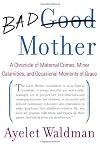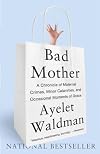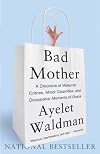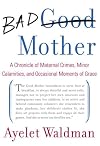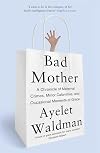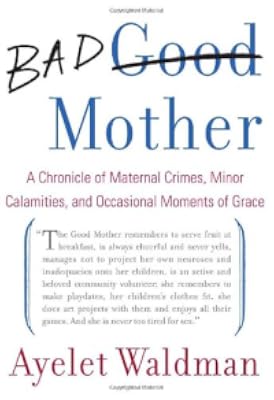
Bad Mother
by Ayelet Waldman
On This Page
Description
Covering topics as diverse as the hysteria of competitive parenting (Whose toddler can recite the planets in order from the sun?), the relentless pursuits of the Bad Mother police, balancing the work-family dynamic, and the bane of every mother's existence (homework, that is), Bad Mother illuminates the anxieties that riddle motherhood today, while providing women with the encouragement they need to give themselves a break.Tags
Recommendations




Member Reviews
To be perfectly honest, part of the reason I had an interest in this book was to see what the wife was like of author Michael Chabon. He's a brilliant writer - an Artist Extraordinaire with language, a guy who pops words into a magic hat and pulls out entire new universes of spun sugar, capturing his readers into a sweet and glorious web of wonder.
As it turns out, he’s also just a husband and dad! And he drives a minivan! And his wife loves him very much, with a devotion for which she has taken a great deal of criticism. On March 27, 2005, The New York Times published an article by Waldman in which she wrote that she could imagine a future without her children, but not without her husband. He is her bashert, or soul mate.
The mothers show more of the world were (and remain) outraged, identifying her as a bad mother. Yet even aside from her strong feelings for him, the fact is that children grow up and leave, but a spouse is (or can be) forever.
Bad Mother is Waldman’s response to her critics. And it is also about “the perils and joys of trying to be a decent mother in a world intent on making you feel like a bad one.” It is a world in which other mothers judge you for not appearing enough for storytime at school, for putting your child in front of the television instead of reading him or her from The Great Books of Literature, for not taking enough photographs or taking too many, and especially, for having a career. Waldman reveals, “As happy as I am to crown myself Queen of the Maternal Damned, part of me still believes that my children would be better off with June Cleaver.”
Waldman’s chapter-essays are in-your-face and non-apologetic. She has eighteen for a variety of reasons she explains in the beginning, but I thought she could have left a few out (which would have, however, messed up her “eighteen” trope). I admit I might not want to live with her (she does, it seems, try very hard to be a perfect mom, in spite of her protestations), but I found her honesty and earnestness refreshing. And this would make a great selection for a book club. If Waldman’s assertions about love, parenting, and sex after children don’t get a great conversation going, nothing will! show less
As it turns out, he’s also just a husband and dad! And he drives a minivan! And his wife loves him very much, with a devotion for which she has taken a great deal of criticism. On March 27, 2005, The New York Times published an article by Waldman in which she wrote that she could imagine a future without her children, but not without her husband. He is her bashert, or soul mate.
The mothers show more of the world were (and remain) outraged, identifying her as a bad mother. Yet even aside from her strong feelings for him, the fact is that children grow up and leave, but a spouse is (or can be) forever.
Bad Mother is Waldman’s response to her critics. And it is also about “the perils and joys of trying to be a decent mother in a world intent on making you feel like a bad one.” It is a world in which other mothers judge you for not appearing enough for storytime at school, for putting your child in front of the television instead of reading him or her from The Great Books of Literature, for not taking enough photographs or taking too many, and especially, for having a career. Waldman reveals, “As happy as I am to crown myself Queen of the Maternal Damned, part of me still believes that my children would be better off with June Cleaver.”
Waldman’s chapter-essays are in-your-face and non-apologetic. She has eighteen for a variety of reasons she explains in the beginning, but I thought she could have left a few out (which would have, however, messed up her “eighteen” trope). I admit I might not want to live with her (she does, it seems, try very hard to be a perfect mom, in spite of her protestations), but I found her honesty and earnestness refreshing. And this would make a great selection for a book club. If Waldman’s assertions about love, parenting, and sex after children don’t get a great conversation going, nothing will! show less
i liked this book and i enjoyed reading about her life and her children (she and michael chabon have four kids). but at times it surprised me by veering off into a too-indulgent memoir. she makes some very excellent points, however, as she argues that we are all way too hard on mothers, who expect and are expected to be perfect. i liked her call to embrace and allow for "good enough" parenting. i thought she was really right on when she mentioned the berkeley parents network and how extremist and judgmental the attachment parenting people can be. when she was bottle-feeding her baby pumped breast milk, a stranger approached her to inform her that "breast is best". she points out that it seems to be one of the only show more approaches/philosophies that is characterized by proselytizing. (in other words, parents who use cribs, strollers, bottles, playpens, disposable diapers don't tend to have that attitude of superiority and try to convince others that their way is right.) and even though we co-slept and used a sling and i am all for attachment parenting, she is so right! for some reason, certain believers can take it too far, to the point where they believe other parents are doing it wrong. and that is representative of the larger problem waldman explores. as she says, if we can't accept & respect other parents, we should at least go back to the days where we kept our opinions about the personal lives of other people to ourselves. show less
Ayelet Waldman once watched a woman struggle to style her young daughter’s hair during a bumpy ride on a train. When the train lurched and the girl stumbled, the woman yanked her hair and hissed, “Stand still!” Which prompted Waldman to judge her a “bad mother” and lean toward her to warn, “Lady, we’re all watching you.”
That was before Waldman had her own four children -- and before readers of her 2005 New York Times essay (wherein she wrote that she loved her husband more than she loved her children) judged her a Bad Mother. She writes: “In my grandmother’s day there were good mothers, neglectful mothers, and occasionally great mothers. Today we have only Bad Mothers.” And in this eminently readable show more memoir-in-essays, she relates the numerous aspects of herself that she judges bad-mother material -- among them her feminism, sexuality, jealousies, unpopularity, abortion, mood, and the imperfect genes she’s passed on to her children.
The book is not a research-quoting, sociological summary of the current status of motherhood. Rather, it is Waldman’s personal experience in marriage and family -- lessons learned as a daughter and applied as a woman, mother, wife. Though she offers few solutions other than mindfulness (when dealing with her own family) and open-mindedness (when dealing with others'), the book is a place for recognition and comfort. The pages fly -- the voice engaging and the content prompting thought and feeling. I both nodded and shook my head at her words, in approximately equal proportion ... and am still pondering some subtle contradictions that reveal Waldman -- and the topic -- to be all the more complex. show less
That was before Waldman had her own four children -- and before readers of her 2005 New York Times essay (wherein she wrote that she loved her husband more than she loved her children) judged her a Bad Mother. She writes: “In my grandmother’s day there were good mothers, neglectful mothers, and occasionally great mothers. Today we have only Bad Mothers.” And in this eminently readable show more memoir-in-essays, she relates the numerous aspects of herself that she judges bad-mother material -- among them her feminism, sexuality, jealousies, unpopularity, abortion, mood, and the imperfect genes she’s passed on to her children.
The book is not a research-quoting, sociological summary of the current status of motherhood. Rather, it is Waldman’s personal experience in marriage and family -- lessons learned as a daughter and applied as a woman, mother, wife. Though she offers few solutions other than mindfulness (when dealing with her own family) and open-mindedness (when dealing with others'), the book is a place for recognition and comfort. The pages fly -- the voice engaging and the content prompting thought and feeling. I both nodded and shook my head at her words, in approximately equal proportion ... and am still pondering some subtle contradictions that reveal Waldman -- and the topic -- to be all the more complex. show less
Searingly honest in many places, hilarious in others. I wasn't prepared for all of Waldman's intimate confessions of her "crimes", and sometimes she does cross the line and reveal what feels like way too much information. (Though some of this easily could be my own prudishness.) But she writes eloquently and clearly, and for me there were enough light, ruefully funny anecdotes to balance out the darker moments.
I wish I had had Ayelet Waldman living next door to me while I was raising my children. She is thoughtful, witty, and insightful, and I know we would have gossiped about some of those other mothers - the ones who are all self-righteous about the "proper" way to give birth and care for your baby. (Attachment parenting, man. Crazy zealotry.)
Seriously, Waldman's essays on motherhood really spotlight what every mother knows, even if we don't all articulate it: that in this culture, there is simply no way to mother a child without feeling like a "bad mother." Staying home with your child? You're a useless mouth, contributing nothing to society, and your child will suffer because your brain is rotting, you are dependent financially and you're show more not setting an example of creativity and productivity for her. Working outside of the home? What a terrible mother you are, abandoning your little one, leaving a nanny to raise him. While Waldman does not resolve every mother's dilemma, she does make a sincere plea to stop the "mommy wars." I agree.
One thing I really liked about Waldman's essays was her excellent grasp on the concept that a parent actually creates the world that the child lives in. Perhaps it is her profession that makes her see this so clearly; after all, as a writer, she is used to creating worlds using only her words. But this is a thing that all parents do, and, I think, few recognize that they're doing: they translate the world to their children and can , by words and actions, form a dangerous, insecure place, or a warm and nurturing place, or some mixture of the two.
Also, this review would not be complete without a separate mention of Waldman's terribly sad essay "Rocketship," about the baby that she aborted. For sheer poignancy, this ranks with Marjorie Williamson's essay about not living to see her daughter grow up, written two days before she died. ("The Woman at the Washington Zoo.") Waldman's heartbreaking essay is a timely reminder that, pro-life or pro-choice, motherhood is often a matter of choosing the least bad of two terrible options; and of suffering forever for whichever choice you make. show less
Seriously, Waldman's essays on motherhood really spotlight what every mother knows, even if we don't all articulate it: that in this culture, there is simply no way to mother a child without feeling like a "bad mother." Staying home with your child? You're a useless mouth, contributing nothing to society, and your child will suffer because your brain is rotting, you are dependent financially and you're show more not setting an example of creativity and productivity for her. Working outside of the home? What a terrible mother you are, abandoning your little one, leaving a nanny to raise him. While Waldman does not resolve every mother's dilemma, she does make a sincere plea to stop the "mommy wars." I agree.
One thing I really liked about Waldman's essays was her excellent grasp on the concept that a parent actually creates the world that the child lives in. Perhaps it is her profession that makes her see this so clearly; after all, as a writer, she is used to creating worlds using only her words. But this is a thing that all parents do, and, I think, few recognize that they're doing: they translate the world to their children and can , by words and actions, form a dangerous, insecure place, or a warm and nurturing place, or some mixture of the two.
Also, this review would not be complete without a separate mention of Waldman's terribly sad essay "Rocketship," about the baby that she aborted. For sheer poignancy, this ranks with Marjorie Williamson's essay about not living to see her daughter grow up, written two days before she died. ("The Woman at the Washington Zoo.") Waldman's heartbreaking essay is a timely reminder that, pro-life or pro-choice, motherhood is often a matter of choosing the least bad of two terrible options; and of suffering forever for whichever choice you make. show less
I'm not certain what exactly I thought this book was going to be when I heard the description but somehow it didn't enter my conciousness that it would be essays rather than a memoir or even fiction. Don't know why I didn't think of essays but because I didn't, it took me a bit of time to readjust my reading mindset. Even once readjusted, I didn't love this look at mothering, how we demonize or sanctify perfectly normal parenting acts, and some insight into Waldman's own life as a mother/wife/author (not necessarily in that order). It really left me feeling so-so despite me wanting to like it a whole lot.
Waldman addresses the need we seem to feel to point out the "bad mothers" who make the rest of us look like "good mothers." She uses show more examples from the media--and ironically I was reading this as it came out that Madlyn Primoff made her two bickering daughters get out of the car and then she drove off. Not only did this turn into a prime example of what Waldman was arguing about, it made me examine my own reactions to examples like this (and incidentally, I would totally have done that to my two older kids--also 10 and 12--if I'd thought of it so I'm clearly already the Bad Mother of the books' title). Now hypotheticals are not all Waldman writes about, sharing moments in her life (besides the famed loving her husband more than her kids moment) that might or might not qualify her as a bad mom, mostly not. Well, really, all it qualifies her as in my mind is a human mom. And perhaps that is my biggest trouble with this book. None of the things that Waldman has written about seem egregious to me. They seem average, the sorts of things I do on a daily basis and which, therefore, I don't really need to read about. But I suspect there are moms out there who need the reassurance that they aren't going to break their kids if life isn't one hundred percent perfect all the time.
There are some very moving essays in here, such as when Waldman discusses her decision to abort after discovering a terrible chromosomal abnormality. The pain she must have faced and the grace with which she writes about this experience is fantastic. However, this is just a glimmer of what the whole book could have been (although I do rather question including the recounting in a book called Bad Mother but I guess that's a personal choice) and wasn't. The book is also very loaded with current touchstones, which could make for a very dated book even two years down the line. In some ways that's good as it showcases how we don't even manage to retain the names of the demonized "bad mothers" for terribly long but in other ways it didn't work for me.
The writing is strong but sometimes the topics of the essays seem questionable in terms of the over-arching theme. This left me with rather mixed feelings and a vague disappointment over what could have been. show less
Waldman addresses the need we seem to feel to point out the "bad mothers" who make the rest of us look like "good mothers." She uses show more examples from the media--and ironically I was reading this as it came out that Madlyn Primoff made her two bickering daughters get out of the car and then she drove off. Not only did this turn into a prime example of what Waldman was arguing about, it made me examine my own reactions to examples like this (and incidentally, I would totally have done that to my two older kids--also 10 and 12--if I'd thought of it so I'm clearly already the Bad Mother of the books' title). Now hypotheticals are not all Waldman writes about, sharing moments in her life (besides the famed loving her husband more than her kids moment) that might or might not qualify her as a bad mom, mostly not. Well, really, all it qualifies her as in my mind is a human mom. And perhaps that is my biggest trouble with this book. None of the things that Waldman has written about seem egregious to me. They seem average, the sorts of things I do on a daily basis and which, therefore, I don't really need to read about. But I suspect there are moms out there who need the reassurance that they aren't going to break their kids if life isn't one hundred percent perfect all the time.
There are some very moving essays in here, such as when Waldman discusses her decision to abort after discovering a terrible chromosomal abnormality. The pain she must have faced and the grace with which she writes about this experience is fantastic. However, this is just a glimmer of what the whole book could have been (although I do rather question including the recounting in a book called Bad Mother but I guess that's a personal choice) and wasn't. The book is also very loaded with current touchstones, which could make for a very dated book even two years down the line. In some ways that's good as it showcases how we don't even manage to retain the names of the demonized "bad mothers" for terribly long but in other ways it didn't work for me.
The writing is strong but sometimes the topics of the essays seem questionable in terms of the over-arching theme. This left me with rather mixed feelings and a vague disappointment over what could have been. show less
Bad Mother is a book of essays written by Ayelet Waldman, an author who became (in)famous when she wrote that she loved her husband more than her children. The essays in this book are candid, honest, and well-written, and while I may not totally agree with her everything she's written here, several of the essays in this book struck a chord with me.
As a mother of 3 boys, ages 8 and under, I have often thought of myself as failing to live up to the "good mother" standard that is put forth by the media--and yes, us mothers ourselves--today. I yell at my kids more than I should, I don't make it to every school function, and I'm a working mom with a full-time job who has not once desired to be a stay-at-home mom. I have felt guilt, anger, show more sadness, despair over the choices I've made. But reading Ms. Waldman's essays have made me realize that I am not a "bad" mother - I am a normal mother, a good-enough mother, and my kids are doing just fine.
In so many of the essays in this book, I saw myself. I've been through the same things, felt the same feelings, made similar decisions. I want to thank Ms. Waldman for voicing what many of us keep hidden away, and making it OK to feel the way we do.
All mothers should read this book, whether they be working moms or stay-at-home moms, married moms or single moms. If you are raising children in today's society, please read this book! Whatever your situation, you will feel so much better after you spend time with Ms. Waldman!
Highly, highly recommended! show less
As a mother of 3 boys, ages 8 and under, I have often thought of myself as failing to live up to the "good mother" standard that is put forth by the media--and yes, us mothers ourselves--today. I yell at my kids more than I should, I don't make it to every school function, and I'm a working mom with a full-time job who has not once desired to be a stay-at-home mom. I have felt guilt, anger, show more sadness, despair over the choices I've made. But reading Ms. Waldman's essays have made me realize that I am not a "bad" mother - I am a normal mother, a good-enough mother, and my kids are doing just fine.
In so many of the essays in this book, I saw myself. I've been through the same things, felt the same feelings, made similar decisions. I want to thank Ms. Waldman for voicing what many of us keep hidden away, and making it OK to feel the way we do.
All mothers should read this book, whether they be working moms or stay-at-home moms, married moms or single moms. If you are raising children in today's society, please read this book! Whatever your situation, you will feel so much better after you spend time with Ms. Waldman!
Highly, highly recommended! show less
Members
- Recently Added By
Published Reviews
ThingScore 50
I confess that I’ve sat a few afternoons in this Volvo reading Bad Mother (my girls and I being the sort of people who sometimes enjoy pulling over to the side of the road to read), and in the end, I am disappointed. I rush to assure you, though, that it is not the author who is to blame.
added by Shortride
Lists

Books Read in 2013
1,630 works; 51 members
Author Information

23+ Works 4,362 Members
Ayelet Waldman was born on December 11, 1964. She graduated from Wesleyan University in 1986 and from Harvard Law School in 1991. Before becoming a full-time writer, she worked at a New York law firm and as a federal public defender in California. She is the author of the Mommy-Track Mysteries series, Daughter's Keeper, Love and Other Impossible show more Pursuits, and Red Hook Road. In her essay Motherlove, which was published in Because I Said So: 33 Mothers Write about Children, Sex, Men, Aging, Faith, Race and Themselves, Waldman admitted that she loves her husband more than her children. Her book Bad Mother was written as a result of the negative reaction to her essay. She and Michael Chabon are co-editors of, Kingdom of Olives and Ash: Writers Confront the Occupation. (Bowker Author Biography) show less
Some Editions
Awards and Honors
Notable Lists
Common Knowledge
- Canonical title
- Bad Mother
- Original publication date
- 2009
- People/Characters
- Ayelet Waldman; Michael Chabon
- Important places
- Berkeley, California, USA
- Dedication
- To my sweet children, Sophie, Ezekial, Ida-Rose, and Abraham
- First words
- Introduction: Or, Life in Eighteen Pieces.
The morning after my wedding, my husband, Michael, and I were lying on a vast expanse of white linen in the bridal suite of Berkeley's oldest hotel, engaging in a romantic... (show all) tradition of newlyweds the world over: counting our loot. - Last words
- (Click to show. Warning: May contain spoilers.)A mother who does her best, and for whom that is good enough, even if, in the end, her best turns out to be, simply, not bad.
- Blurbers
- Gilbert, Elizabeth; Wolitzer, Meg; Orenstein, Peggy; Paul, Pamela
Classifications
Statistics
- Members
- 394
- Popularity
- 78,961
- Reviews
- 33
- Rating
- (3.67)
- Languages
- English, German, Portuguese
- Media
- Paper, Audiobook, Ebook
- ISBNs
- 10
- ASINs
- 3