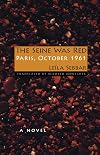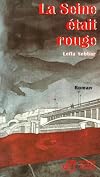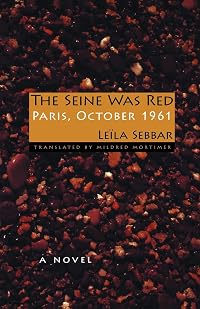
The Seine was Red: Paris, October 1961
by Leïla Sebbar
On This Page
Description
Leïla Sebbar's novel recounts an event in French history that has been hidden for many years. Toward the end of the Algerian war, the FLN, an Algerian nationalist party, organized a demonstration in Paris to oppose a curfew imposed upon Algerians in France. About 30,000 Algerians gathered peacefully, but the protest was brutally suppressed by the Paris police. Between 50 and 200 Algerians were killed and their bodies were thrown into the Seine. This incident provides the background for a show more more intimate look into the history of violence between France and Algeria. Following three young protagonists--one French, one Algerian, and one French national of Algerian descent--Sebbar takes readers on a journey of discovery and comprehension. Mildred Mortimer's impressive translation conveys the power of Sebbar's words in English and allows English-speaking readers an opportunity to understand the complex relationship between past and present, metropole and colony, immigrant and citizen, that lies at the heart of this acclaimed novel. show lessTags
Recommendations

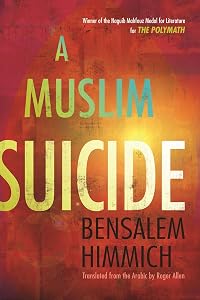
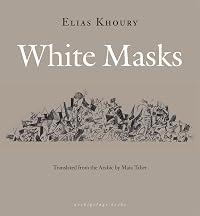
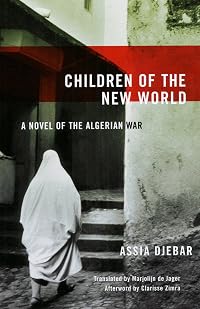

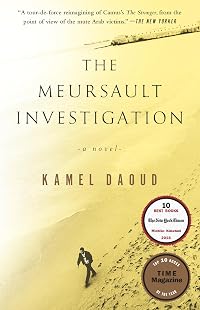















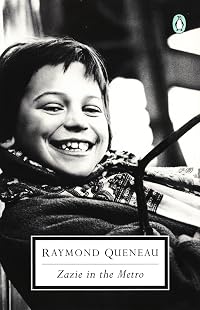


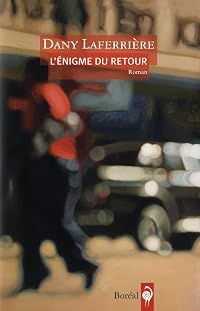

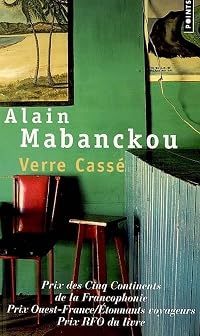
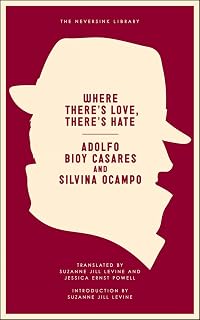





Member Recommendations
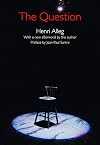
Dilara86 The Question is mentioned in The Seine was Red
Member Reviews
Mildred Mortimer's introduction to this novel calls it an anamnesis...a memory. It's a perfect term since, despite the fictional nature of the plot, the story serves to establish a communal recollection of October 17, 1961 when Parisian police killed perhaps as many as 200 peacefully-demonstrating Algerians, many of whose bodies were hurled into the Seine. Notwithstanding the enormity of the event, the government remained close-lipped about it and the press largely declined to cover it.
Amel is a young French woman of Algerian descent. She knows that her grandparents were imprisoned by the French for dissidence but they have always declined to tell her what happened. When she finally learns the truth from a documentary file produced by a show more friend, she and an Algerian acquaintance, Omer, take a tour through Paris, visiting the sites that figured both in the events of that day and the Algerian war for independence in general.
The story draws explicit parallels between the actions of Algerian citizens reacting to the de Gaulle administration’s oppressions, and French citizens reacting to those of the Nazi administration. For example, in an attempt to materialize memory, Omer uses graffiti to extend the plaques on monuments, memorializing the Algerian protestors alongside the memories of the French protestors.
Sebbar accomplishes her objective, illuminating an event that should never have been hidden. It is not an easy task to get through it, however. Sebbar’s style is deliberately opaque. People speak in fragments. Conversations are jammed together without benefit of paragraphs or any direct indication of who is speaking. One must read closely and then re-read in order to be certain who is expressing which thought. I couldn’t find any particular meaning in this choice and it struck me as unnecessary.
In the final balance, this is a book worth trying if you are interested in Algeria or the backdrop of French colonial history, but I wish she had made it slightly more accessible. show less
Amel is a young French woman of Algerian descent. She knows that her grandparents were imprisoned by the French for dissidence but they have always declined to tell her what happened. When she finally learns the truth from a documentary file produced by a show more friend, she and an Algerian acquaintance, Omer, take a tour through Paris, visiting the sites that figured both in the events of that day and the Algerian war for independence in general.
The story draws explicit parallels between the actions of Algerian citizens reacting to the de Gaulle administration’s oppressions, and French citizens reacting to those of the Nazi administration. For example, in an attempt to materialize memory, Omer uses graffiti to extend the plaques on monuments, memorializing the Algerian protestors alongside the memories of the French protestors.
Sebbar accomplishes her objective, illuminating an event that should never have been hidden. It is not an easy task to get through it, however. Sebbar’s style is deliberately opaque. People speak in fragments. Conversations are jammed together without benefit of paragraphs or any direct indication of who is speaking. One must read closely and then re-read in order to be certain who is expressing which thought. I couldn’t find any particular meaning in this choice and it struck me as unnecessary.
In the final balance, this is a book worth trying if you are interested in Algeria or the backdrop of French colonial history, but I wish she had made it slightly more accessible. show less
Paris, 17 October 1961: Tens of thousands of French Algerians descended upon Paris to engage in a peaceful protest against a curfew imposed upon them by Maurice Papon, the infamous Prefect of Police. The curfew was a response to a bombing campaign against the French police by members of the Algerian National Liberation Front (FLN) during their resistance movement near the end of the Algerian war for independence, which took place between 1954 and 1962. Papon, who would later be convicted and imprisoned for his role in the deportation of over 1600 French Jews to concentration camps during the Second World War, vowed to suppress the Algerian resistance once and for all, and planned a coordinated and brutal response against the illegal show more protest, promising his troops that they would not be prosecuted for their actions. Algerian protesters by the thousands, including women and children, were beaten unconscious or shot, and their bodies were dumped into the Seine, resulting in several hundred deaths. The massacre did not receive much coverage in the French or international press, and historical accounts of the war have suppressed or ignored what happened on that day.
My full review is in issue 10 of Belletrista: http://www.belletrista.com/2011/Issue10/reviews_15.php show less
My full review is in issue 10 of Belletrista: http://www.belletrista.com/2011/Issue10/reviews_15.php show less
Ratings
Members
- Recently Added By
Published Reviews
ThingScore 100
The official French obfuscation of the police violence against Algerians in Paris in October 1961 has inspired long-term personal and collective memory retrieval that has taken many forms, and cultural vectors have long played a fascinating role in this complex process. The work of Franco-Algerian novelist and essayist Leïla Sebbar has for many years provided an eloquent expression and show more examination of the Franco-Algerian encounter, and, in particular, of the generational factors within Algerian migration in France. This novel, initially published in 1996 as La Seine était rouge and reviewed here in Mildred Mortimer’s excellent translated version, thus constitutes a continuation of Sebbar’s earlier work.
Sebbar’s short but very dense novel constitutes probably the most eloquent example of the sub-genre of novels concerning 17 October 1961. The text addresses a number of difficult and sensitive issues. For the novel is not only about the need to cultivate memory of October 1961 as a counter-memory to the Republican versions of the past commemorated highly selectively on the walls and through the statues of the former colonial “centre”: Sebbar’s novel is also about strategic silence at personal and collective levels, and how such silence is created, and perpetuated. The difficult questions raised by the novel are therefore not only asked of the Republican state, but also addressed to the central characters, none of whom represent official French (or Algerian) viewpoints, but all of whom are struggling with the past and how it can be assessed, and indeed re-assessed, in the light of the present. show less
Sebbar’s short but very dense novel constitutes probably the most eloquent example of the sub-genre of novels concerning 17 October 1961. The text addresses a number of difficult and sensitive issues. For the novel is not only about the need to cultivate memory of October 1961 as a counter-memory to the Republican versions of the past commemorated highly selectively on the walls and through the statues of the former colonial “centre”: Sebbar’s novel is also about strategic silence at personal and collective levels, and how such silence is created, and perpetuated. The difficult questions raised by the novel are therefore not only asked of the Republican state, but also addressed to the central characters, none of whom represent official French (or Algerian) viewpoints, but all of whom are struggling with the past and how it can be assessed, and indeed re-assessed, in the light of the present. show less
added by kidzdoc
Lists

Books Read in 2017
4,249 works; 129 members

All Things France
100 works; 8 members
Author Information
43+ Works 278 Members
Common Knowledge
- Canonical title
- The Seine was Red: Paris, October 1961
- Original title
- La Seine était rouge: Paris, octobre 1961
- Original publication date
- 1999 (French) (French)
- Important places
- Paris, France; France
- Important events
- Paris massacre of 1961
- First words
- Her mother said nothing to her, nor did her mother's mother.
Classifications
- Genres
- Fiction and Literature, General Fiction, Historical Fiction
- DDC/MDS
- 843.914 — Literature & rhetoric French Literature French fiction 1900- 20th Century 1945-1999
- LCC
- PQ2679 .E244 .S4513 — Language and Literature French, Italian, Spanish and Portuguese literatures French literature Modern literature 1961-2000
- BISAC
Statistics
- Members
- 54
- Popularity
- 565,977
- Reviews
- 2
- Rating
- (3.36)
- Languages
- English, French, German
- Media
- Paper
- ISBNs
- 5
- ASINs
- 1