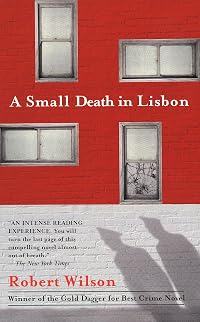
A Small Death in Lisbon
by Robert Wilson
On This Page
Description
1941. Klaus Felsen, forced out of his Berlin factory into the SS, arrives in a luminous Lisbon, where Nazis and Allies, refugees and entrepreneurs, dance to the strains of opportunism and despair. Felsen's assignment takes him to the bleak mountains of the north where a devious and brutal battle is being fought for an element vital to Hitler's bliztkrieg. There he meets the man who plants the first seed of greed and revenge that will grow into a thick vine in the landscape of post-war show more Portugal. Late 1990s. Investigating the murder of a young girl with a disturbing sexual past, Inspector Ze Coelho overturns the dark soil of history and unearths old bones from Portugal's fascist past. This small death in Lisbon is horrific compensation for an even older crime, and Coelho's stubborn pursuit of its truth reveals a tragedy that unites past and present. Robert Wilson's combination of intelligence, suspense, vivid characters, and mesmerizing storytelling richly deserves the international acclaim his novel has received. show lessTags
Recommendations




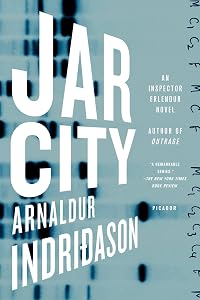
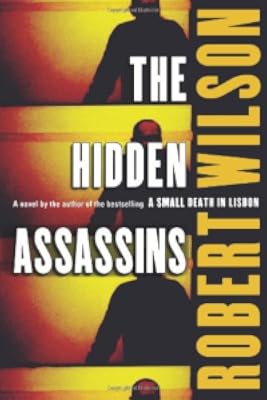
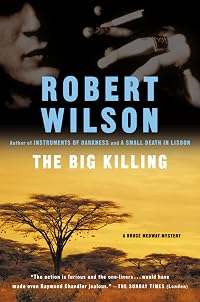
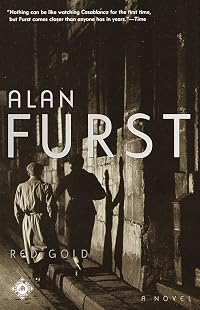

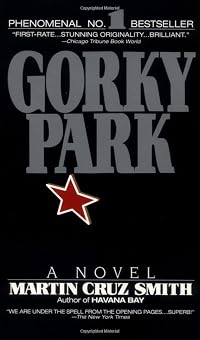
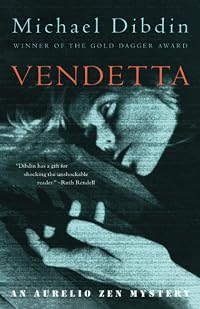
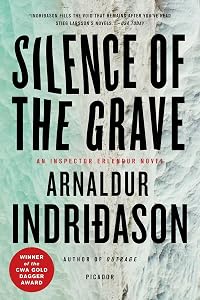
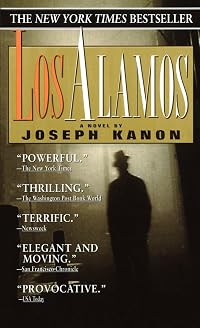


Member Recommendations
Member Reviews
This is not my thing, which is a shame, as there's a good story in here. I just found the levels of violence, especially towards women, to be unpalateable. I'm not going to be able to discuss this without spoilers, so they will follow.
There are 2 distinct story strands, one starting in WW2 and moving forward to the 1990sl, the other set over the timeframe of a few weeks in the 1990s. They meet and merge as the story progresses. The first starts in WW2 with Klaus Felsen, who works for the Nazis with a factory making railway coupllings. He's been lined up for a job for the SS and is trying to avoid it. He is involed with Eva, who runs a nighclub and has to liase with the Nazis, as she's good at providing men with what they want. They show more have a relationship that runs to the sexual and he flees intenselty betrayed when he sees her with the SS man. Whiule this relationship is mostly mutual, that doesnt; seem to be the case for other of Klaus' relationships and this is a general trend across the book. He ends up in Portugal, with a task of smuggling Wolfram, a tungsten containing mineral, out of Portugal into German terretory for making armour piercing weapons. In this he teams up with a local of the boarder lands who he intends to take advantage of (they both do - this book is populated with unpleasant characters that all seem to find each other). Klaus takes advantage of the man's mistress and fathers a child on her. As the war progresses, Klaus' activity moves from smuggling Wolfram into Germany to smuggling gold out. With the local and several SS officers, they form a bank based on the Gold, but as it is majority owned by the local, it counts as a Portuguese bank and so is protected by the local laws. There is a falling out amongst thieves (surprise surprise) and it leaves just Klaus and the local man to run the bank.
As we move on, into the post war world, the illigitimate son, Manuel, takes more prominance, and is equally as unpleasant as his father (real and supposed). He joins the secret police of the dictatorship and is involved in the rape and murder of a political prisioner. As the story moves forward, he turns his attentions to any woman he comes into contact with, not always bothering about consent.
In the 1990s, a young woman is found murdered, having been abused first. She is a teen, but sexually uninhibited. This becomes an avenue for the investigation and it turns into a very sordid world and gives the author yet more opportiunity to describe sex and sexual violence. It's all rather unedifying. The stories come together as the young woman is the daughter of the Lawyer and his wife, but turns out to, again, be illigitimate. The resolution is deeply unpleasant and vindictive.
The sole bright spot in all this unpleasantness is the policeofficer, Ze Coelho. He has a daughter of similar age to the murdered girl and how he deals with her and her growing sexual curiosity is touching. He has lost his wife and develops a tentative relationship with a womon on the periphery of the case that is a sweet spot in the murkiness that surrounds it.
There is a good story in here, but the way the violence is portrayed, particularly the unrelenting sexual violence towards the women that are nmere bit part characters in the book, was just too much for my stomach. I can't reccommend it, on that basis. show less
There are 2 distinct story strands, one starting in WW2 and moving forward to the 1990sl, the other set over the timeframe of a few weeks in the 1990s. They meet and merge as the story progresses. The first starts in WW2 with Klaus Felsen, who works for the Nazis with a factory making railway coupllings. He's been lined up for a job for the SS and is trying to avoid it. He is involed with Eva, who runs a nighclub and has to liase with the Nazis, as she's good at providing men with what they want. They show more have a relationship that runs to the sexual and he flees intenselty betrayed when he sees her with the SS man. Whiule this relationship is mostly mutual, that doesnt; seem to be the case for other of Klaus' relationships and this is a general trend across the book. He ends up in Portugal, with a task of smuggling Wolfram, a tungsten containing mineral, out of Portugal into German terretory for making armour piercing weapons. In this he teams up with a local of the boarder lands who he intends to take advantage of (they both do - this book is populated with unpleasant characters that all seem to find each other). Klaus takes advantage of the man's mistress and fathers a child on her. As the war progresses, Klaus' activity moves from smuggling Wolfram into Germany to smuggling gold out. With the local and several SS officers, they form a bank based on the Gold, but as it is majority owned by the local, it counts as a Portuguese bank and so is protected by the local laws. There is a falling out amongst thieves (surprise surprise) and it leaves just Klaus and the local man to run the bank.
As we move on, into the post war world, the illigitimate son, Manuel, takes more prominance, and is equally as unpleasant as his father (real and supposed). He joins the secret police of the dictatorship and is involved in the rape and murder of a political prisioner. As the story moves forward, he turns his attentions to any woman he comes into contact with, not always bothering about consent.
In the 1990s, a young woman is found murdered, having been abused first. She is a teen, but sexually uninhibited. This becomes an avenue for the investigation and it turns into a very sordid world and gives the author yet more opportiunity to describe sex and sexual violence. It's all rather unedifying. The stories come together as the young woman is the daughter of the Lawyer and his wife, but turns out to, again, be illigitimate. The resolution is deeply unpleasant and vindictive.
The sole bright spot in all this unpleasantness is the policeofficer, Ze Coelho. He has a daughter of similar age to the murdered girl and how he deals with her and her growing sexual curiosity is touching. He has lost his wife and develops a tentative relationship with a womon on the periphery of the case that is a sweet spot in the murkiness that surrounds it.
There is a good story in here, but the way the violence is portrayed, particularly the unrelenting sexual violence towards the women that are nmere bit part characters in the book, was just too much for my stomach. I can't reccommend it, on that basis. show less
“He was part of the cycle. We were all part of the damaging cycle.” A line spoken by Inspector Coelho and filled with such veracity and genuineness, that you are compelled to see this novel through to the final and surprising ending. Robert Wilson's "A Small Death in Lisbon," is filled with action, suspense and more drama than you can shake an escudo at. Set in Portugal before, during, after and well-after certain dynamic events of World War II, Mr. Wilson weaves an intricate web of lies compounded by deceit and reinforced with treachery and topped off with murder. And although Mr. Wilson can be wordy, he tells a great tale.
It’s not a bad read, this one, but it doesn’t feel quite as good as it wants to be. It’s a big chunky book, because it’s one of those dual timeline jobs. You know, you get one story set in the past, and another set in the present, and the two are told in alternating chapters or chunks, and they start out independent and then come together in a manner that, hopefully, illuminates and deepens the significance of both. That kind of thing.
So, back then, we have a story about an SS officer and his Portuguese pals, who start out trying to corner the market in Portuguese minerals, then end up founding a Lisbon bank with a load of Nazi gold. And around now, we have a story about a police inspector in Lisbon investigating the murder of a show more 14-year-old girl. They’re told in chunks of around 50 pages each. Our first hints at the connection come about halfway through the book, as certain names begin to appear in both stories, and then thinks turn out to be more closely tied together as the murder investigation comes to a head.
Is it worth it? Um, sort of? I was thinking for a fair while that the connection between the two storylines was going to turn out to be tenuous, and it’s not quite that, but essentially the Nazi one just ends up providing motive for crime and conspiracy in the present one, and I’m not sure we needed 200 pages to do that (200 pages that are fine, but not stellar). There is some slightly heavy-handed stuff about the cyclical nature of violence through generations, but I’m not sure that’s enough illumination to be worth the candle.
The other thing that bothers me about this book is all the sexual stuff, both consensual and not. Both storylines are replete with it. Now, look, it’s no doubt true that SS officers used sexual violence and sex workers frequently. But it’s still an authorial decision to highlight and describe those practices, so we can question it. And it’s no doubt true that some 14-year-old girls are promiscuous, possibly in part because the adult world around them is replete with various forms of sexual misbehaviour. But it’s still an authorial decision to make the promiscuity and misbehaviour central to the murder plot. It never quite feels gratuitous, but it does feel like a lot. show less
So, back then, we have a story about an SS officer and his Portuguese pals, who start out trying to corner the market in Portuguese minerals, then end up founding a Lisbon bank with a load of Nazi gold. And around now, we have a story about a police inspector in Lisbon investigating the murder of a show more 14-year-old girl. They’re told in chunks of around 50 pages each. Our first hints at the connection come about halfway through the book, as certain names begin to appear in both stories, and then thinks turn out to be more closely tied together as the murder investigation comes to a head.
Is it worth it? Um, sort of? I was thinking for a fair while that the connection between the two storylines was going to turn out to be tenuous, and it’s not quite that, but essentially the Nazi one just ends up providing motive for crime and conspiracy in the present one, and I’m not sure we needed 200 pages to do that (200 pages that are fine, but not stellar). There is some slightly heavy-handed stuff about the cyclical nature of violence through generations, but I’m not sure that’s enough illumination to be worth the candle.
The other thing that bothers me about this book is all the sexual stuff, both consensual and not. Both storylines are replete with it. Now, look, it’s no doubt true that SS officers used sexual violence and sex workers frequently. But it’s still an authorial decision to highlight and describe those practices, so we can question it. And it’s no doubt true that some 14-year-old girls are promiscuous, possibly in part because the adult world around them is replete with various forms of sexual misbehaviour. But it’s still an authorial decision to make the promiscuity and misbehaviour central to the murder plot. It never quite feels gratuitous, but it does feel like a lot. show less
Let me start by saying I didn’t really enjoy this book all that much. It tells two parallel stories, which come together by the end, as you know they must. One story is about police inspector Coelho investigating the murder of a teenage girl in modern day Lisbon (the book is written/set in the early 1990’s), the other about smuggling of commodities and gold between Portugal and Germany during World War II. Each is reasonably interesting, but I found all the characters in the WWII story so unpleasant, and their behavior so disturbing and distasteful, that I couldn’t enjoy these chapters at all. Also, both stories have quite a lot of graphic, violent sex, involving men behaving very badly towards women, as well as some graphic show more violence generally, involving men behaving very badly towards men. These were relevant to the story, but still somewhat off-putting. I am not at all a prude about sex in books, but here it felt unnecessary a lot of the time, as well as not brilliantly written.
This is the first book I have read by Robert Wilson, but I know he is highly rated by many here on LT, so the jury is very much out. I have [The Blind Man of Seville] on my shelf, which is highly regarded, so I will probably read that one before making a final decision on Wilson’s place on my long term TBR list. show less
This is the first book I have read by Robert Wilson, but I know he is highly rated by many here on LT, so the jury is very much out. I have [The Blind Man of Seville] on my shelf, which is highly regarded, so I will probably read that one before making a final decision on Wilson’s place on my long term TBR list. show less
"A Small Death in Lisbon" has all of my favorite elements -- interesting and believeable characters, a complex mystery plot, a fascinating setting, and two narratives, one in the past, World War II, and one in the present. One reviewer said that the characters were too unlikeable, but I completely disagree. On the first page, the reader meets the murder victim from the 1998 storyline, who turns out to be a promiscuous 15-year-old Portuguese girl named Caterina. As the mother of a teenage daughter, Caterina broke my heart. She lived in a wealthy but twisted household, the victim of psychological abuse and then murder. I immediately cared about her and wanted to know her story. The detective who pursues her killer, Ze Coelho, has a sad show more recent past and also a teenage daughter. The focus of the historical plot is Klaus Felsen, a Berlin factory-owner turned SS officer, sent to neutral Portugal to acquire wolfram for the Nazi war machine. Despite his often-despicable actions, I found him to be strangely sympathetic. The novel demonstrates how brutal treatment spawns brutality. There are truly evil characters in the book as well, but many of them receive their just desserts.
Usually in books that alternate narratives, I find myself intersted in one plotline more than the other. Some reviewers enjoyed the historical plot more, but I found them both to be compelling. Only once or twice was I tempted to skip ahead to continue following one plot or the other. I could not wait to learn how the two narratives would converge. Wilson placed tantalizing clues along the way. As Wilson brought the two narrative threads together, I could hardly put the book down!
Many reviewers have also commented upon the setting. I visited Portugal many years ago and this book made me want to go back. The author lives in Portugal and he vividly depicts the landscape and the culture. show less
Usually in books that alternate narratives, I find myself intersted in one plotline more than the other. Some reviewers enjoyed the historical plot more, but I found them both to be compelling. Only once or twice was I tempted to skip ahead to continue following one plot or the other. I could not wait to learn how the two narratives would converge. Wilson placed tantalizing clues along the way. As Wilson brought the two narrative threads together, I could hardly put the book down!
Many reviewers have also commented upon the setting. I visited Portugal many years ago and this book made me want to go back. The author lives in Portugal and he vividly depicts the landscape and the culture. show less
This book was recommended to me as a high-quality thriller... something that's a bit hard to find, sometimes.
When it came in the mail, I have to say, my first thought was, "why does it have to have swastikas all over it?" OK, fine, Nazis, villains, but you still don't always want to be carrying swastikas around with you on the subway... It put me off from reading it for a while.
But - I got around to it.
It's a very well-written book. I haven't visited Portugal, but I was convinced that the author effectively captured the setting and culture of Lisbon.
However, the plotting and pacing were sometimes... off. There are two stories here - one in the 1940's, about a German businessman who is recruited into the SS and set to acquiring stocks show more of the rare mineral wolfram (tungsten) from Portugal. The other is set in the 1990s, with a police investigator looking into the murder of a young girl whose body is found on the beach.
There is absolutely no connection between the two alternating narratives until page 289. That's kind of a lot of pages. The 1940s narrative develops very slowly, and, this isn't really a spoiler, but a lot of the details from that narrative NEVER become relevant to the events of the 1990s.
After this very slow buildup, the end is a crazy rush! Car chases! Murders! Betrayals! Plot twists galore! All jammed into the last 50 pages or so! It's fun and exciting, but it doesn't really fit with the flow of the rest of the book.
Also, this is not really a criticism, but a reader should know that getting into this book is signing up for spending a lot of time with some really despicable people. I mean, we are talking SS officers here, and there are war atrocities, sexually perverse murders, etc. At times I was longing for some decent human beings to show their faces...
One more note - I kind of objected to the assumption that healthy, happy teenagers would NEVER get involved in a sexual threesome... ;-)
Oh, and just ONE more note... to point out the importance of proofreading. One of the chapter headers has a typo. It says "1995" instead of "1955." Forty years makes a big difference, in this book! That was very confusing, until I figured it out...
All this said, overall, I did think the book was quite well done, and well-researched, especially for the murder-mystery genre. I would read more from this author. show less
When it came in the mail, I have to say, my first thought was, "why does it have to have swastikas all over it?" OK, fine, Nazis, villains, but you still don't always want to be carrying swastikas around with you on the subway... It put me off from reading it for a while.
But - I got around to it.
It's a very well-written book. I haven't visited Portugal, but I was convinced that the author effectively captured the setting and culture of Lisbon.
However, the plotting and pacing were sometimes... off. There are two stories here - one in the 1940's, about a German businessman who is recruited into the SS and set to acquiring stocks show more of the rare mineral wolfram (tungsten) from Portugal. The other is set in the 1990s, with a police investigator looking into the murder of a young girl whose body is found on the beach.
There is absolutely no connection between the two alternating narratives until page 289. That's kind of a lot of pages. The 1940s narrative develops very slowly, and, this isn't really a spoiler, but a lot of the details from that narrative NEVER become relevant to the events of the 1990s.
After this very slow buildup, the end is a crazy rush! Car chases! Murders! Betrayals! Plot twists galore! All jammed into the last 50 pages or so! It's fun and exciting, but it doesn't really fit with the flow of the rest of the book.
Also, this is not really a criticism, but a reader should know that getting into this book is signing up for spending a lot of time with some really despicable people. I mean, we are talking SS officers here, and there are war atrocities, sexually perverse murders, etc. At times I was longing for some decent human beings to show their faces...
One more note - I kind of objected to the assumption that healthy, happy teenagers would NEVER get involved in a sexual threesome... ;-)
Oh, and just ONE more note... to point out the importance of proofreading. One of the chapter headers has a typo. It says "1995" instead of "1955." Forty years makes a big difference, in this book! That was very confusing, until I figured it out...
All this said, overall, I did think the book was quite well done, and well-researched, especially for the murder-mystery genre. I would read more from this author. show less
I read this book while doing research on Portugal. I am a fan of historical fiction, so it was right up my alley. A fascinating story with dual timelines. The story begins with a murder of a teenage girl in Lisbon in the 1990’s. The story then jumps back in forth between the murder investigation and another storyline set during World War Two. I have never been to Portugal, but reading the book gave me a feel for the place. Some of the characters are unlikeable and they do horrible things, often spelled out in graphic detail. There are a lot of twists and turns in the plot, and enough danger to keep the reader engaged. My only complaint was that the thread connecting the two storylines was thin. Good story.
Members
- Recently Added By
Lists

Crime Writers' Association Daggers
76 works; 4 members

Books about World War II
241 works; 22 members

Global Mysteries
90 works; 6 members

Europe
205 works; 6 members

THE WAR ROOM
813 works; 24 members
Author Information

14+ Works 4,575 Members
Some Editions
Awards and Honors
Series
Belongs to Publisher Series
Common Knowledge
- Canonical title*
- Une mort à Lisbonne
- Original title
- A Small Death in Lisbon
- Original publication date
- 1999
- People/Characters
- Klaus Felsen; Ze Coelho
- Important places
- Lisbon, Portugal
- Dedication
- For Jane
and
My Mother - First words
- She was lying on a crust of pine needles, looking at the sun through the branches, beyond the splayed cones, through the nodding fronds.
- Last words
- (Click to show. Warning: May contain spoilers.)The obscure talent of wolfram
- Original language
- English
*Some information comes from Common Knowledge in other languages. Click "Edit" for more information.
Classifications
Statistics
- Members
- 1,243
- Popularity
- 19,816
- Reviews
- 27
- Rating
- (3.75)
- Languages
- 14 — Dutch, English, French, German, Hungarian, Italian, Japanese, Norwegian (Bokmål), Norwegian, Polish, Portuguese, Russian, Spanish, Swedish
- Media
- Paper, Audiobook, Ebook
- ISBNs
- 48
- ASINs
- 14