On This Page
Description
A young girl trains her blind dog to follow and trust a seeing-eye companion dog.Tags
Recommendations



Member Recommendations


Member Reviews
Even young me would have been cynical. The author's note says this is based on a true story, but I'm sure that training and setbacks were glossed over in this children's book as compared to real-life. Still, for a child reader, there are some fairly intense bits.
Now, if they'd not allowed Tuck to roam freely in the first place, which is the right thing to do, the whole problem would have been solved. And nowadays they could get an electric fence. But imo it's not the girl, nor Tuck, who is the hero; it's Lady Daisy. If she can manage to keep Tuck from getting killed, that's an HEA that I can support.
I also wish that the family had more seriously considered donating Tuck to medical research, on behalf of the eyesight of future dogs. I show more also wish that mutts were more popular than purebred (inbred) dogs.
Still, it's an engaging & quick read, and could give some children somethings to think about. show less
Now, if they'd not allowed Tuck to roam freely in the first place, which is the right thing to do, the whole problem would have been solved. And nowadays they could get an electric fence. But imo it's not the girl, nor Tuck, who is the hero; it's Lady Daisy. If she can manage to keep Tuck from getting killed, that's an HEA that I can support.
I also wish that the family had more seriously considered donating Tuck to medical research, on behalf of the eyesight of future dogs. I show more also wish that mutts were more popular than purebred (inbred) dogs.
Still, it's an engaging & quick read, and could give some children somethings to think about. show less
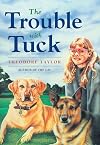
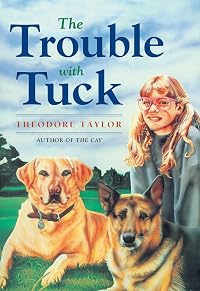
Based on a true story. Helen adored her beautiful golden Labrador from the first moment he was placed in her arms, a squirming fat sausage of creamy yellow fur. As her best friend, Friar Tuck waited daily for Helen to come home from school and play. He guarded her through the long, scary hours of the dark night. Twice he even saved her life.
Now it's Helen's turn. No one can say exactly when Tuck began to go blind. Probably the light began to fail for him long before the alarming day when he raced after some cats and crashed through the screen door, apparently never seeing it. But from that day on, Tuck's trouble--and how to cope with it--becomes the focus of Helen's life. Together they fight the chain that holds him and threatens to show more break his spirit, until Helen comes up with a solution so new, so daring, there's no way it can fail. show less
Now it's Helen's turn. No one can say exactly when Tuck began to go blind. Probably the light began to fail for him long before the alarming day when he raced after some cats and crashed through the screen door, apparently never seeing it. But from that day on, Tuck's trouble--and how to cope with it--becomes the focus of Helen's life. Together they fight the chain that holds him and threatens to show more break his spirit, until Helen comes up with a solution so new, so daring, there's no way it can fail. show less
Very nice story. The main character is a young girl, but the book is told well enough that everyone can enjoy it. Story is a great example of persistence and thinking of a novel solution to a big problem with her dog.
I liked this bit about her bonding with the dog:
'Because he'd become “civilized,” Tuck was now a permanent night resident in my room, and although I maintained to everyone that he slept strictly on my bedside rug, there wasn't a single night that I couldn't feel his weight at the end of my bed, often a cozy lump over my feet. He was my security in the darkness, my knight of the night.'
I also liked this observation that started them thinking there may be trouble with Tuck:
'I said, "he quit chasing the doves.'
It is a hard show more lesson I have learned in the past, when there is a change with your dog, best to take them in for a visit to the vet.
Although I really liked the book, a good conversation would be had about how in the past, it was less dangerous to let your dog run free. Now it is downright crazy. More room between houses, less cars, slower cars, perhaps not as common dog catchers. Not good then, much much worse now. There are few things as beautiful as a happy dog running off leash though. show less
I liked this bit about her bonding with the dog:
'Because he'd become “civilized,” Tuck was now a permanent night resident in my room, and although I maintained to everyone that he slept strictly on my bedside rug, there wasn't a single night that I couldn't feel his weight at the end of my bed, often a cozy lump over my feet. He was my security in the darkness, my knight of the night.'
I also liked this observation that started them thinking there may be trouble with Tuck:
'I said, "he quit chasing the doves.'
It is a hard show more lesson I have learned in the past, when there is a change with your dog, best to take them in for a visit to the vet.
Although I really liked the book, a good conversation would be had about how in the past, it was less dangerous to let your dog run free. Now it is downright crazy. More room between houses, less cars, slower cars, perhaps not as common dog catchers. Not good then, much much worse now. There are few things as beautiful as a happy dog running off leash though. show less
Very nice story. The main character is a young girl, but the book is told well enough that everyone can enjoy it. Story is a great example of persistence and thinking of a novel solution to a big problem with her dog.
I liked this bit about her bonding with the dog:
'Because he'd become “civilized,” Tuck was now a permanent night resident in my room, and although I maintained to everyone that he slept strictly on my bedside rug, there wasn't a single night that I couldn't feel his weight at the end of my bed, often a cozy lump over my feet. He was my security in the darkness, my knight of the night.'
I also liked this observation that started them thinking there may be trouble with Tuck:
'I said, "he quit chasing the doves.'
It is a hard show more lesson I have learned in the past, when there is a change with your dog, best to take them in for a visit to the vet.
Although I really liked the book, a good conversation would be had about how in the past, it was less dangerous to let your dog run free. Now it is downright crazy. More room between houses, less cars, slower cars, perhaps not as common dog catchers. Not good then, much much worse now. There are few things as beautiful as a happy dog running off leash though. show less
I liked this bit about her bonding with the dog:
'Because he'd become “civilized,” Tuck was now a permanent night resident in my room, and although I maintained to everyone that he slept strictly on my bedside rug, there wasn't a single night that I couldn't feel his weight at the end of my bed, often a cozy lump over my feet. He was my security in the darkness, my knight of the night.'
I also liked this observation that started them thinking there may be trouble with Tuck:
'I said, "he quit chasing the doves.'
It is a hard show more lesson I have learned in the past, when there is a change with your dog, best to take them in for a visit to the vet.
Although I really liked the book, a good conversation would be had about how in the past, it was less dangerous to let your dog run free. Now it is downright crazy. More room between houses, less cars, slower cars, perhaps not as common dog catchers. Not good then, much much worse now. There are few things as beautiful as a happy dog running off leash though. show less
The passion of this thirteen-year old girl to overcome any obstacle to help her dog who is going blind, builds confidence that her appearance and lack of abilities did not.
Her struggles in problem-solving and training her dog, to protect him from himself, show the inner turmoil and external support of her family.
A heart-warming story that will encourage and inspire.
Her struggles in problem-solving and training her dog, to protect him from himself, show the inner turmoil and external support of her family.
A heart-warming story that will encourage and inspire.
*spoilers*
If this book had been about 70 pages shorter, it would've rated a 5 star. Just condense the first 70 pages or so. Because this book started out very slow, and even after the main thing was introduced, ie Tuck started loosing his sight, it just seemed to go slowly and nothing big was really happening.
The last few chapters were great though, I was VERY surprised by Helen's creative idea on how to train Tuck to be guided, and I was really happy and excited at the end. Overall a good book, but very slow to actually get good.
If this book had been about 70 pages shorter, it would've rated a 5 star. Just condense the first 70 pages or so. Because this book started out very slow, and even after the main thing was introduced, ie Tuck started loosing his sight, it just seemed to go slowly and nothing big was really happening.
The last few chapters were great though, I was VERY surprised by Helen's creative idea on how to train Tuck to be guided, and I was really happy and excited at the end. Overall a good book, but very slow to actually get good.
Lexile: 880
Reading Recovery: 28
DRA: 44
Fountas Pinnel Guided Reading: V
Reading Recovery: 28
DRA: 44
Fountas Pinnel Guided Reading: V
Members
- Recently Added By
Lists

Dog training in children's/young adult fiction, non-fiction
71 works; 2 members

Dogs -- children's/young adult fiction
1,317 works; 9 members

Two faces on cover -- children's/young adult fiction
120 works; 2 members

Retriever dogs -- Children's/YA/adult fiction+auto/biography
267 works; 3 members

German shepherd dogs -- children's/young adult fiction
102 works; 1 member
Author Information

51+ Works 10,574 Members
Author Theodore Taylor was born in Statesville, North Carolina on June 23, 1921. At the age of seventeen, he became a copyboy at the Washington, D. C. Daily News and was writing radio network sports for NBC in New York two years later. During World War II, he joined the merchant marines and earned a commission as an ensign in the U. S. Navy. He show more was recalled to active duty during the Korean War. In 1955, he became a press agent for Paramount Pictures and later became a story editor and an associate producer. He has written over fifty fiction and non-fiction books for young adults and adults. He has received numerous awards for his works including the Lewis Carroll Shelf Award for The Cay, the 1992 Edgar Allen Poe Award for Best Young Adult Mystery for The Weirdo, and the 1996 Scott O'Dell Award for historical fiction for The Bomb. He died on October 26, 2006. (Bowker Author Biography) show less
Awards and Honors
Awards
Series

Belongs to Publisher Series
Work Relationships
Has as a teacher's guide
Common Knowledge
- Canonical title
- The Trouble with Tuck
Classifications
- Genres
- Kids, Children's Books, Fiction and Literature
- DDC/MDS
- 813.54 — Literature & rhetoric American literature in English American fiction in English 1900-1999 1945-1999
- LCC
- PZ7 .T2186 .T — Language and Literature Fiction and juvenile belles lettres Fiction and juvenile belles lettres Juvenile belles lettres
- BISAC
Statistics
- Members
- 791
- Popularity
- 35,380
- Reviews
- 7
- Rating
- (3.90)
- Languages
- English
- Media
- Paper, Audiobook, Ebook
- ISBNs
- 19
- ASINs
- 8