On This Page
Description
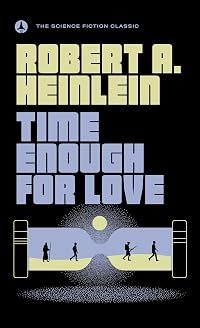
Time Enough for Love is the capstone and crowning achievement of Heinlein's famous Future History series.Lazarus Long is so in love with life that he simply refuses to die. Born in the early 1900s, he lives through multiple centuries, his love for time ultimately causing him to become his own ancestor. Time Enough for Love is his lovingly detailed account of his journey through a vast and magnificent timescape of centuries and worlds. Using the voice of Lazarus, Heinlein expounds his own show more philosophies, including his radical ideas on sexual freedom. His use of slang, technical jargon, sharp wit, and clever understatement lend this story a texture and authority that seems the very tone of things to come.
. show less
Tags
Recommendations

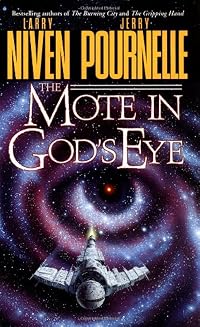
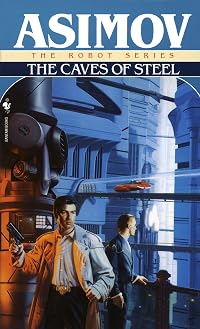
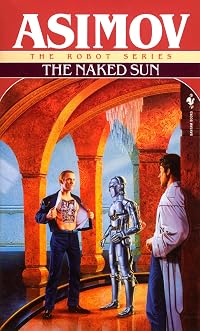
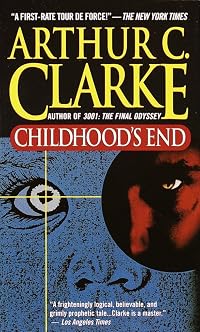
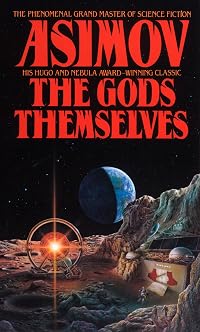
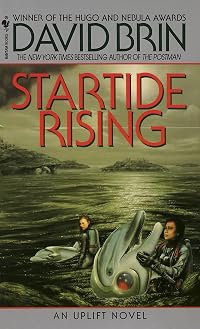
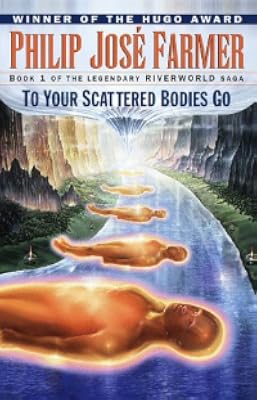

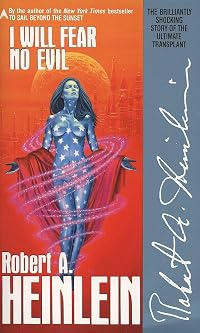














Member Recommendations
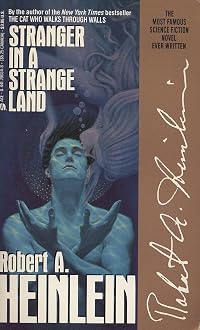
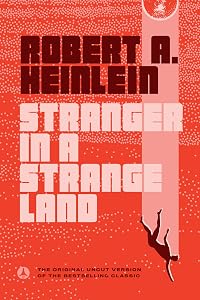
sfcat These two books are my all time favorites. Both are fictional biographies from Heinlein's Lazarus Long series and will make readers laugh gasp and cry. Fascinating stories of a slightly alternate universe. No question, if a nuclear attack was imminent, I'd sit down and re-read the chapter of Dora's Story.
80

viking2917 One of the earliest and best explorations of immortality and it's impact on humans
Member Reviews
‘Time enough for love’ is a story, or rather stories, about the life, or lives, of Lazarus Long, apparently the oldest man in the Galaxy and the head of a family now so large that it is essentially a mixture of corporation and planetary population.
Appropriately for a novel about a man with an extraordinary extended lifespan, this book takes an extraordinary amount of time to read. Or maybe like the jaded Lazarus, it’s the dullness that makes it seem longer than it is.
As an epic, it’s successful in being enormous in the scope of its frustration and being a huge let down. Anyone coming to this expecting a ray-guns n’ rockets tale of mankind expanding among the stars, seen from the perspective of a single witness to key events in show more the future history of humanity, will be disappointed. If you want dirt, wagons and pages and pages and pages of talk about sex, genetics and breeding, this is the book for you.
Ancestors can be tricky. Parents can be embarrassing and are to be rebelled against. Grandparents can smell funny and have morals from a different age, meaning they have forthright loudly-held views on foreigners. Going back further up the family tree the danger is discovering you are a direct descendant of somebody transported for badger-fisting. Ancestors are irritating.
Lazarus Long is referred to in the book as ‘Ancestor’. It’s a title. It’s well deserved. I suspect that there’s badger-fisting and worse in his past because there’s certainly firmly held opinions on offer.
The story is told mainly in a series of flashbacks, with Lazarus dictating his memoirs. He makes clear from the start that he will only dictate those parts that he cares to preserve, so we have an unreliable narrator relating the sorts of stories that, if tumbling from the mouth of a great-uncle, would have you reaching for scotch or, in the better sort of household, a tray of sedatives to stir into the old man’s coco.
There’s no linear storytelling here, instead Lazarus gives us edited lowlights from his past, interspersed with mildly interesting interactions with his present. Essentially the future is shiny and men flirt with their computers, which are female, and in love with their masters. There’s a theme here.
One long section details his life as a pioneer, on a new planet! Now, being a pioneer in space would, you think, be pretty exciting, what with humanity having developed spaceships and all, you would imagine that they had also developed the flat-pack homestead and a banquet in a pill. Not so. It’s mules, wagons, trail-dust and lots and lots of detail about how tough it is being a pioneer away from civilization. Civilization, that’s the stuff that makes life interesting. Pioneers don’t have any. So they can’t talk about it.
What they can talk about is sex. There is some sex in the book, but there’s an awful lot of talk about it. This is the far future, so everyone is having sex with one another regardless of age, gender or relationship. Yet it still seems as though the men are getting the better part of the deal. Lazarus himself was born on Earth in the early part of the twentieth century and it is there that his morals were set. He has old fashioned views about women, such as bedding as many as possible. But if they get pregnant he will stick around for a while, until they die of old age and he can abandon his family and move on to his next profession.
The question posed is how can one who has done so much and, we are told, been so important in the development of human civilization, be quite so excruciatingly dull. The answer lies in Lazarus being happiest in his own company. At the start of the book he makes it clear that all he wants to do is be left alone. He is old, tired, and very grumpy. Essentially, this is the Galaxy’s oldest pensioner moaning, at length, about how everything used to be better, how everything today is crap and how annoying his vast extended family is. Wonder where they get it from? show less
Appropriately for a novel about a man with an extraordinary extended lifespan, this book takes an extraordinary amount of time to read. Or maybe like the jaded Lazarus, it’s the dullness that makes it seem longer than it is.
As an epic, it’s successful in being enormous in the scope of its frustration and being a huge let down. Anyone coming to this expecting a ray-guns n’ rockets tale of mankind expanding among the stars, seen from the perspective of a single witness to key events in show more the future history of humanity, will be disappointed. If you want dirt, wagons and pages and pages and pages of talk about sex, genetics and breeding, this is the book for you.
Ancestors can be tricky. Parents can be embarrassing and are to be rebelled against. Grandparents can smell funny and have morals from a different age, meaning they have forthright loudly-held views on foreigners. Going back further up the family tree the danger is discovering you are a direct descendant of somebody transported for badger-fisting. Ancestors are irritating.
Lazarus Long is referred to in the book as ‘Ancestor’. It’s a title. It’s well deserved. I suspect that there’s badger-fisting and worse in his past because there’s certainly firmly held opinions on offer.
The story is told mainly in a series of flashbacks, with Lazarus dictating his memoirs. He makes clear from the start that he will only dictate those parts that he cares to preserve, so we have an unreliable narrator relating the sorts of stories that, if tumbling from the mouth of a great-uncle, would have you reaching for scotch or, in the better sort of household, a tray of sedatives to stir into the old man’s coco.
There’s no linear storytelling here, instead Lazarus gives us edited lowlights from his past, interspersed with mildly interesting interactions with his present. Essentially the future is shiny and men flirt with their computers, which are female, and in love with their masters. There’s a theme here.
One long section details his life as a pioneer, on a new planet! Now, being a pioneer in space would, you think, be pretty exciting, what with humanity having developed spaceships and all, you would imagine that they had also developed the flat-pack homestead and a banquet in a pill. Not so. It’s mules, wagons, trail-dust and lots and lots of detail about how tough it is being a pioneer away from civilization. Civilization, that’s the stuff that makes life interesting. Pioneers don’t have any. So they can’t talk about it.
What they can talk about is sex. There is some sex in the book, but there’s an awful lot of talk about it. This is the far future, so everyone is having sex with one another regardless of age, gender or relationship. Yet it still seems as though the men are getting the better part of the deal. Lazarus himself was born on Earth in the early part of the twentieth century and it is there that his morals were set. He has old fashioned views about women, such as bedding as many as possible. But if they get pregnant he will stick around for a while, until they die of old age and he can abandon his family and move on to his next profession.
The question posed is how can one who has done so much and, we are told, been so important in the development of human civilization, be quite so excruciatingly dull. The answer lies in Lazarus being happiest in his own company. At the start of the book he makes it clear that all he wants to do is be left alone. He is old, tired, and very grumpy. Essentially, this is the Galaxy’s oldest pensioner moaning, at length, about how everything used to be better, how everything today is crap and how annoying his vast extended family is. Wonder where they get it from? show less
After reading several of Heinlein's books (and enjoying a few of them), I've reached some inescapable conclusions.
In Heinlein's perfect world, no sort of incest would be frowned upon. Pregnancies resulting in genetic abnormalities would be detected before birth, terminated, and probably eaten. Anyone not passing a rigorous intelligence test (or simply being poor, indicating some inherent defect) would be found to have inferior genes, put to death, and eaten. Anyone found practicing a religion would be put to death both for wasting resources and for having the genetic inclination to do so.
As a result of all this carnage and inbreeding, Heinlein believes the human race would become smarter, stronger, and generally better in every way. It show more is no exaggeration to say he shares a great deal of his philosophy with Adolf Hitler. (The main difference I can see is that he prefers red hair to blond.) Like all eugenicists, he has no respect for humanity, let alone any higher power. As a human being, Heinlein is missing some key ingredient that the rest of us take for granted. He is a monster.
And on top of all that, this book was painfully slow and far too long. For good, weird, irreverent, prophetic sci-fi, stick to Philip K. Dick. show less
In Heinlein's perfect world, no sort of incest would be frowned upon. Pregnancies resulting in genetic abnormalities would be detected before birth, terminated, and probably eaten. Anyone not passing a rigorous intelligence test (or simply being poor, indicating some inherent defect) would be found to have inferior genes, put to death, and eaten. Anyone found practicing a religion would be put to death both for wasting resources and for having the genetic inclination to do so.
As a result of all this carnage and inbreeding, Heinlein believes the human race would become smarter, stronger, and generally better in every way. It show more is no exaggeration to say he shares a great deal of his philosophy with Adolf Hitler. (The main difference I can see is that he prefers red hair to blond.) Like all eugenicists, he has no respect for humanity, let alone any higher power. As a human being, Heinlein is missing some key ingredient that the rest of us take for granted. He is a monster.
And on top of all that, this book was painfully slow and far too long. For good, weird, irreverent, prophetic sci-fi, stick to Philip K. Dick. show less
A friend gave me this huge brick of a Heinlein, and I spent a month ploughing through it, and what do I think? My braindump follows...
- I made no effort to work out if it was a book in a series, or whether there was backstory I needed to know, I just dived in. A few minutes with the internet suggests this is not the first book Heinlein wrote in his loose Future History/World as Myth/Lazarus Long series, and if I had been making some effort to start at the beginning the lightly pencilled in ideas of the Senior and the Howard families might have been a bit more explained! But you can muddle through from where I started, or at least I did.
- Heinlein. Oh Heinlein. Is it refreshingly freeing to see a sex positive and open society where show more polyamorous families can all love one another and bring up children together? Or is it all weirdly tarnished by the way he dials it all up to 11 and attacks the incest taboo head on? By the end of the book our hero has seduced both the child he raised from a baby, and his actual literal mother at the age she was when he was originally about 6. In fact, the main motivator for the entire time travel plot is 'my mum is hot and has nice breasts, I want to bang her'. It is all quite uncomfortable. Also, basically every woman he meets falls for him, and not only that, shows her affection by desperately wanting him to impregnant him, even if they are genetic clones of each other. Awkward.
- It is broadly 6 stories all loosely tied together, in a book with dense print running at 600 pages. Sadly I cannot count it as 6 books for 'how many books did I read this year'. It was interesting to read a proper Long Book, but I did find it dragged in places, and the book felt like it rambled, the end of the book was a long way from the beginning. I guess there is a circular theme, young Lazarus is trying to be in the army as cynically and self interestedly as possible, whereas by the end he is enlisted and really fighting to make his family proud.
- It might be selling itself as science fiction, but nowadays it feels like an elegy to a very dated American dream. Freeing slaves, but in a Great White Saviour way! Pioneering in the outback! Of all of time and space, travelling back to just before WWI in America.
- Some bits are infuriating. The bit where he won't let Dora do some trivial manual labour because she is pregnant, and he would never put a pregnant woman at risk, but he will take her hundreds of miles away from the next human being and make her give birth with no-one else around for help but him... And let's not even talk about the relationship with the Mules, who have basic rudimentary language!
Still, it is an epic romp, looking at the themes of 'what is there still to do if you've lived forever', even if the conclusions are mostly just 'sleep with everyone. Sleep with yourself. Sleep with your mother.' show less
- I made no effort to work out if it was a book in a series, or whether there was backstory I needed to know, I just dived in. A few minutes with the internet suggests this is not the first book Heinlein wrote in his loose Future History/World as Myth/Lazarus Long series, and if I had been making some effort to start at the beginning the lightly pencilled in ideas of the Senior and the Howard families might have been a bit more explained! But you can muddle through from where I started, or at least I did.
- Heinlein. Oh Heinlein. Is it refreshingly freeing to see a sex positive and open society where show more polyamorous families can all love one another and bring up children together? Or is it all weirdly tarnished by the way he dials it all up to 11 and attacks the incest taboo head on? By the end of the book our hero has seduced both the child he raised from a baby, and his actual literal mother at the age she was when he was originally about 6. In fact, the main motivator for the entire time travel plot is 'my mum is hot and has nice breasts, I want to bang her'. It is all quite uncomfortable. Also, basically every woman he meets falls for him, and not only that, shows her affection by desperately wanting him to impregnant him, even if they are genetic clones of each other. Awkward.
- It is broadly 6 stories all loosely tied together, in a book with dense print running at 600 pages. Sadly I cannot count it as 6 books for 'how many books did I read this year'. It was interesting to read a proper Long Book, but I did find it dragged in places, and the book felt like it rambled, the end of the book was a long way from the beginning. I guess there is a circular theme, young Lazarus is trying to be in the army as cynically and self interestedly as possible, whereas by the end he is enlisted and really fighting to make his family proud.
- It might be selling itself as science fiction, but nowadays it feels like an elegy to a very dated American dream. Freeing slaves, but in a Great White Saviour way! Pioneering in the outback! Of all of time and space, travelling back to just before WWI in America.
- Some bits are infuriating. The bit where he won't let Dora do some trivial manual labour because she is pregnant, and he would never put a pregnant woman at risk, but he will take her hundreds of miles away from the next human being and make her give birth with no-one else around for help but him... And let's not even talk about the relationship with the Mules, who have basic rudimentary language!
Still, it is an epic romp, looking at the themes of 'what is there still to do if you've lived forever', even if the conclusions are mostly just 'sleep with everyone. Sleep with yourself. Sleep with your mother.' show less
There are two kinds of Heinlein fans. Many meet in the middle in loving works such as The Moon is a Harsh Mistress, but the divide comes between those who love his earlier books, his juveniles, the more straight-line traditional adventures, and books such as Stranger in a Strange Land and Time Enough for Love. Well, I'm the kind that's not a fan of this book. In fact, I after this book I gave up on reading the books Heinlein wrote later--so I've read all the novels published before this one, but none of the later ones such as Friday, Job, The Cat Who Walks Through Walls.
I'm just no fan of polyamory, particularly as Heinlein presents it, with this idea that monogamy is unnatural (as is the incest taboo, and oh, clothing). Well, it may show more be true the typical man doesn't want exclusivity--but the typical woman doesn't like to share and be shared either--I think if polyamory were natural, we'd see it pretty often whatever a society's mores--just as homosexuality has been widespread even when a cultural taboo. And for all the seemingly "liberated" sex in this, I don't find Heinlein's female characters believable as human beings. Somehow this bothers me more in the post-Strangers in a Strange Land books than it does in his space operas written in the fifties--maybe because there it's more forgivable he's a product of his times.
That said, this still gets three stars because there's still always things in Heinlein's books to love--even in the ones I like the least. In Stranger in a Strange Land I loved his spoof of astrology and his fish out of water hero trying to "grok" human beings. With Lazarus Long, born in 1912 and now the oldest human living, there is wisdom to be had, loads of quotable lines and quite the ride here. It's been several years since I've read this and yet I still remember parts vividly (although not necessarily the good parts. Why, oh why did Heinlein think Lazarus lusting for--and having sex with--his mother was a good idea?). Mind you, as I said there are two kinds of Heinlein fans. I may not be the right kind to love this book--but there are those who think this is the best book he ever wrote. So at least try it for yourself. show less
I'm just no fan of polyamory, particularly as Heinlein presents it, with this idea that monogamy is unnatural (as is the incest taboo, and oh, clothing). Well, it may show more be true the typical man doesn't want exclusivity--but the typical woman doesn't like to share and be shared either--I think if polyamory were natural, we'd see it pretty often whatever a society's mores--just as homosexuality has been widespread even when a cultural taboo. And for all the seemingly "liberated" sex in this, I don't find Heinlein's female characters believable as human beings. Somehow this bothers me more in the post-Strangers in a Strange Land books than it does in his space operas written in the fifties--maybe because there it's more forgivable he's a product of his times.
That said, this still gets three stars because there's still always things in Heinlein's books to love--even in the ones I like the least. In Stranger in a Strange Land I loved his spoof of astrology and his fish out of water hero trying to "grok" human beings. With Lazarus Long, born in 1912 and now the oldest human living, there is wisdom to be had, loads of quotable lines and quite the ride here. It's been several years since I've read this and yet I still remember parts vividly (although not necessarily the good parts. Why, oh why did Heinlein think Lazarus lusting for--and having sex with--his mother was a good idea?). Mind you, as I said there are two kinds of Heinlein fans. I may not be the right kind to love this book--but there are those who think this is the best book he ever wrote. So at least try it for yourself. show less
I’ve been meaning to write on a Heinlein book for a while, and I’m still delaying on my favorite one, but I think it is time for my favorite author to get some attention. Yes, I’ll admit it: I’m a Heinlein junkie. This is not, however, the book that I would recommend reading for your first Heinlein (Cat Who Walks Through Walls would be better for that). If you’ve read some Heinlein already, though, this is a good book to continue with.
Title: Time Enough for Love
Author: Robert A. Heinlein
Pages: 589 (paperback)
Premise: Lazarus Long has lived a very crazy and very long life, and one of his ancestors (yes, he’s that old) asks him to record his autobiography, and this is it.
Setting: Everywhere from the rural US in the early 20th show more century to space age adventures among the stars. It is also an alternate timeline, so some of their history isn’t the same as ours.
Strengths:
Really really awesome characters (I love you Dora!)
Crazy plots, I have no idea how the man thought of these things
Heinlein has his own fairly unique ideas about time travel and really demonstrates that, and the purpose behind the Howard Foundation in this book
This book is a great family reunion of Heinlein characters, so if you’ve read any other of his books, they’ll probably show up or be referenced in this book
It is one of those books that as I page through it to remember what the write I just want to read it all over again
Weaknesses:
The start is a bit slow, but hang in there!
I don’t know what kind of complex Heinlein had, but wow there is a lot of incest in his books (all generally in very not abusive contexts though)
On that note, there is just a lot of sex in general, so be warned
Because it is an autobiography as it is being written, all of the subplots end up making the book feel a bit jumpy
Summary: This is not an easy airplane read, but it really is a satisfying book if you like Heinlein. There is a lot of sex, incest and weird reinterpretations of marriage, but all of this is generally accompanied by so much love and honor between the characters. There are parts of this book that made me cry, and parts that made me tremendously happy. If you are okay with some fairly liberal views on a lot of societal norms, then this is really an excellent book. show less
Title: Time Enough for Love
Author: Robert A. Heinlein
Pages: 589 (paperback)
Premise: Lazarus Long has lived a very crazy and very long life, and one of his ancestors (yes, he’s that old) asks him to record his autobiography, and this is it.
Setting: Everywhere from the rural US in the early 20th show more century to space age adventures among the stars. It is also an alternate timeline, so some of their history isn’t the same as ours.
Strengths:
Really really awesome characters (I love you Dora!)
Crazy plots, I have no idea how the man thought of these things
Heinlein has his own fairly unique ideas about time travel and really demonstrates that, and the purpose behind the Howard Foundation in this book
This book is a great family reunion of Heinlein characters, so if you’ve read any other of his books, they’ll probably show up or be referenced in this book
It is one of those books that as I page through it to remember what the write I just want to read it all over again
Weaknesses:
The start is a bit slow, but hang in there!
I don’t know what kind of complex Heinlein had, but wow there is a lot of incest in his books (all generally in very not abusive contexts though)
On that note, there is just a lot of sex in general, so be warned
Because it is an autobiography as it is being written, all of the subplots end up making the book feel a bit jumpy
Summary: This is not an easy airplane read, but it really is a satisfying book if you like Heinlein. There is a lot of sex, incest and weird reinterpretations of marriage, but all of this is generally accompanied by so much love and honor between the characters. There are parts of this book that made me cry, and parts that made me tremendously happy. If you are okay with some fairly liberal views on a lot of societal norms, then this is really an excellent book. show less
I know that some people thought Heinlein was a pervert in his later years (and I agree) I still feel that his books had a solid quality to them. Aside the sex mentioned later on in this book, it was a fantastic read. The various stories and observations shared by Lazarus Long strike true (The story of Lazarus and Dora, and the story of the man who wanted to work as little as possible are the best in my opinion), and if you already enjoyed the collection of short stories titled 'Past through Tomorrow', then you should enjoy the rest of the Lazarus Long/World as Myth books.
Before you read this book however, it is VERY recommended that you get the 'Past through Tomorrow' collection, or this book may be hard to understand in parts.
Before you read this book however, it is VERY recommended that you get the 'Past through Tomorrow' collection, or this book may be hard to understand in parts.
“A human being should be able to change a diaper, plan an invasion, butcher a hog, conn a ship, design a building, write a sonnet, balance accounts, build a wall, set a bone, comfort the dying, take orders, give orders, cooperate, act alone, solve equations, analyze a new problem, pitch manure, program a computer, cook a tasty meal, fight efficiently, die gallantly. Specialization is for insects.”
In “Time Enough for Love” by Robert A. Heinlein
This my favourite Heinlein quote.
I really am the competent man; the only thing from Heinlein's Dictum that I cannot and have not done, is conn a spaceship, and butcher a hog (but I have seen it being done); I don’t know about the part of dying gallantly. I’ll tell you afterwards…I show more wasn't brought up on a farm or in the middle of nowhere. I'm from a large town, Lisbon. It's about learning and honing skills, and treating every opportunity as a chance to try them out. For example, I learned the praxis of trigonometry (not just the theoretical part) before I learned it in high-school. It's all very well just knowing it but to be a capable man you need to go further. This allowed me design a trebuchet in my 12th year in physics and make predictions on its performance, then build it and test it. Thus causing me to learn many different subjects and skills (up to and including gaining permission from the school) just to test my math. It's not location, it's the outlook that counts.
I think to view Heinlein’s list above as literal is a bit of a mistake anyway. The point is, I think, that a person should be able to assimilate and adapt to new tasks. You may not be able to build a wall right now but you should have a broad idea of what things are about and be able to acquire or intuit a lot of the details. Everyone who has ever worked in IT knows what I’m talking about.
Now I wonder if the Asimov’s character Golan Trevize, the arrogant and intuitive man whose actions shaped the future of Foundation isn’t a riff on that Competent Man. He fits all these criteria but he is arrogant and self-centered to the point where everyone kind of hates him. Still, in the end, his character arc ends up with him changing and realizing some pretty important stuff about the place of Man in the galaxy. But, I’m just saying that... who knows?
The 'Common Man' still exists though, in SF and when you run across one you know the story is going to be bad. Only now they're called 'Mary Sue' and 'Marty Stu'. Seeing the Common Man in action in Mundane Fiction is equally bad. I feel like the "Competent Man" critique isn't fair. These protagonists often start incompetent. Lazarus learned lessons the hard way over hundreds of years. Mike knows basically nothing about anything. Johnny from “Starship Troopers” joins the Mobile Infantry (considered the lowest rung of the military) because he has no qualifications for anything else.
Jubal isn't also the “The Competent Man” archetype either. Jubal is the "Old Man" archetype, which is often seen as the characters representing Heinlein himself. Jubal and the Professor (Moon) are examples (and one or more teachers/instructors in Starship). They're usually wise old characters who are dissidents/non-conformists in some way (politically, culturally), and they often spend a lot of time monologuing philosophy. Mike from Stranger isn't apparent as a "Competent Man" because by the time he becomes the Competent Man, the story is focusing on other characters' POV. Some of Heinlein's books are solely focused on a protagonist's journey into becoming the Competent Man by overcoming obstacles (often internal/mental).
Incest? FFS! Many people cite the incest in Heinlein's novel as a type of perversion but in Heinlein's view of the future genetic imperfections are eliminated that made the incest taboo necessary in the first place. In "Time Enough for Love" Lazarus and Dora had to explain to their children why incest was improper, even exaggerating the chances of birth defects in order to discourage relations between them. Don't even suggest Heinlein was an advocate of incest.
Heinlein is a shining example of the importance of zeitgeist. Much of what he wrote was very progressive or even controversial for the time. In a modern context, his social stances look occasionally offensive and often backwards or ignorant, and always flawed. But you have to keep the context of the original writing in mind. Society marches on, propelled in part by authors like Heinlein forcing people to confront the absurdities of the prevailing mindsets of the time (and highlighting those absurdities with deliberate flaws meant to show just how twisted such thinking is). You must always remember what society was like at the time of a piece's writing when you evaluate it, because that will tell you far more than any perspective you might gain from how society is at the time of review.
Heinlein is only controversial to those who are anti-liberty and anti-self-reliance. show less
In “Time Enough for Love” by Robert A. Heinlein
This my favourite Heinlein quote.
I really am the competent man; the only thing from Heinlein's Dictum that I cannot and have not done, is conn a spaceship, and butcher a hog (but I have seen it being done); I don’t know about the part of dying gallantly. I’ll tell you afterwards…I show more wasn't brought up on a farm or in the middle of nowhere. I'm from a large town, Lisbon. It's about learning and honing skills, and treating every opportunity as a chance to try them out. For example, I learned the praxis of trigonometry (not just the theoretical part) before I learned it in high-school. It's all very well just knowing it but to be a capable man you need to go further. This allowed me design a trebuchet in my 12th year in physics and make predictions on its performance, then build it and test it. Thus causing me to learn many different subjects and skills (up to and including gaining permission from the school) just to test my math. It's not location, it's the outlook that counts.
I think to view Heinlein’s list above as literal is a bit of a mistake anyway. The point is, I think, that a person should be able to assimilate and adapt to new tasks. You may not be able to build a wall right now but you should have a broad idea of what things are about and be able to acquire or intuit a lot of the details. Everyone who has ever worked in IT knows what I’m talking about.
Now I wonder if the Asimov’s character Golan Trevize, the arrogant and intuitive man whose actions shaped the future of Foundation isn’t a riff on that Competent Man. He fits all these criteria but he is arrogant and self-centered to the point where everyone kind of hates him. Still, in the end, his character arc ends up with him changing and realizing some pretty important stuff about the place of Man in the galaxy. But, I’m just saying that... who knows?
The 'Common Man' still exists though, in SF and when you run across one you know the story is going to be bad. Only now they're called 'Mary Sue' and 'Marty Stu'. Seeing the Common Man in action in Mundane Fiction is equally bad. I feel like the "Competent Man" critique isn't fair. These protagonists often start incompetent. Lazarus learned lessons the hard way over hundreds of years. Mike knows basically nothing about anything. Johnny from “Starship Troopers” joins the Mobile Infantry (considered the lowest rung of the military) because he has no qualifications for anything else.
Jubal isn't also the “The Competent Man” archetype either. Jubal is the "Old Man" archetype, which is often seen as the characters representing Heinlein himself. Jubal and the Professor (Moon) are examples (and one or more teachers/instructors in Starship). They're usually wise old characters who are dissidents/non-conformists in some way (politically, culturally), and they often spend a lot of time monologuing philosophy. Mike from Stranger isn't apparent as a "Competent Man" because by the time he becomes the Competent Man, the story is focusing on other characters' POV. Some of Heinlein's books are solely focused on a protagonist's journey into becoming the Competent Man by overcoming obstacles (often internal/mental).
Incest? FFS! Many people cite the incest in Heinlein's novel as a type of perversion but in Heinlein's view of the future genetic imperfections are eliminated that made the incest taboo necessary in the first place. In "Time Enough for Love" Lazarus and Dora had to explain to their children why incest was improper, even exaggerating the chances of birth defects in order to discourage relations between them. Don't even suggest Heinlein was an advocate of incest.
Heinlein is a shining example of the importance of zeitgeist. Much of what he wrote was very progressive or even controversial for the time. In a modern context, his social stances look occasionally offensive and often backwards or ignorant, and always flawed. But you have to keep the context of the original writing in mind. Society marches on, propelled in part by authors like Heinlein forcing people to confront the absurdities of the prevailing mindsets of the time (and highlighting those absurdities with deliberate flaws meant to show just how twisted such thinking is). You must always remember what society was like at the time of a piece's writing when you evaluate it, because that will tell you far more than any perspective you might gain from how society is at the time of review.
Heinlein is only controversial to those who are anti-liberty and anti-self-reliance. show less
Members
- Recently Added By
Lists

Best Science Fiction Novels
816 works; 426 members

Bibliography for Among Others
159 works; 15 members

Favorite Literary Love Stories
182 works; 101 members

Speculative Fiction to Read
706 works; 32 members

Favourite Books
1,819 works; 316 members

Blue Pyramid 1,276 Best Books of All Time
1,248 works; 32 members

Books Read in 2017
4,249 works; 129 members

Swinging Seventies
255 works; 18 members

Books Read in 2023
5,547 works; 145 members
Favorite Science Fiction
456 works; 218 members
Author Information

456+ Works 174,195 Members
Robert Anson Heinlein was born on July 7, 1907 in Butler, Mo. The son of Rex Ivar and Bam Lyle Heinlein, Robert Heinlein had two older brothers, one younger brother, and three younger sisters. Moving to Kansas City, Mo., at a young age, Heinlein graduated from Central High School in 1924 and attended one year of college at Kansas City Community show more College. Following in his older brother's footsteps, Heinlein entered the Navel Academy in 1925. After contracting pulmonary tuberculosis, of which he was later cured, Heinlein retired from the Navy and married Leslyn MacDonald. Heinlein was said to have held jobs in real estate and photography, before he began working as a staff writer for Upton Sinclair's EPIC News in 1938. Still needing money desperately, Heinlein entered a writing contest sponsored by the science fiction magazine Thrilling Wonder Stories. Heinlein wrote and submitted the story "Life-Line," which went on to win the contest. This guaranteed Heinlein a future in writing. Using his real name and the pen names Caleb Saunders, Anson MacDonald, Lyle Monroe, John Riverside, and Simon York, Heinlein wrote numerous novels including For Us the Living, Methuselah's Children, and Starship Troopers, which was adapted into a big-budget film for Tri-Star Pictures in 1997. The Science Fiction Writers of America named Heinlein its first Grand Master in 1974, presented 1975. Officers and past presidents of the Association select a living writer for lifetime achievement. Also, the Science Fiction and Fantasy Hall of Fame inducted Heinlein in 1998. Heinlein died in 1988 from emphysema and other related health problems. Heinlein's remains were scattered from the stern of a Navy warship off the coast of California. (Bowker Author Biography) show less
Some Editions
Awards and Honors
Awards
Distinctions
Notable Lists
Series


Belongs to Publisher Series
Work Relationships
Common Knowledge
- Canonical title
- Time Enough for Love
- Original title
- Time Enough for Love
- Original publication date
- 1973
- People/Characters
- Lazarus Long; Dora Brandon; Galahad Jones; Ira Weatheral; Lapis Lazuli Long; Lorelei Lee Long (show all 21); Buck; Minerva Long; Maureen Smith; Estrellita Long; José Long; Justin Foote 45th; Ishtar Hardy; Ira Johnson; Hamadryad Weatheral; Andrew Jackson "Slipstick" Libby; Tamara Sperling; Pallas Athene; Rhysling ("Noisy"); Brian Smith; Nancy Irene Smith
- Important places
- Boondock; Landfall; Tertius; Secundus; Kansas City, Kansas, USA
- Epigraph
- History has the relation to truth that theology has to religion-i.e., none to speak of. --L.L.
- Dedication
- For Bill and Lucy
- First words
- As the door of the suite dilated, the man seated staring glumly out the window looked around.
- Quotations
- People who go broke in a big way never miss any meals. It is the poor jerk who is shy a half slug who must tighten his belt.
A motion to adjourn is always in order.
History has the relation to truth that theology has to religion—i.e., none to speak of.
Early rising may not be a vice ... but it is certainly no virtue. The old saw about the early bird just goes to show that the worm should have stayed in bed. - Last words
- (Click to show. Warning: May contain spoilers.)He heard wild geese honking high overhead, looked up at his stars again as they blacked out.
- Original language
- English
- Canonical DDC/MDS
- 813.54
- Canonical LCC
- PS3515.E288
Classifications
Statistics
- Members
- 5,972
- Popularity
- 2,153
- Reviews
- 67
- Rating
- (3.86)
- Languages
- 9 — Bulgarian, Czech, English, German, Hebrew, Italian, Portuguese, Russian, Spanish
- Media
- Paper, Audiobook, Ebook
- ISBNs
- 48
- ASINs
- 25