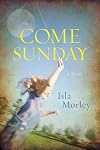
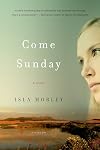
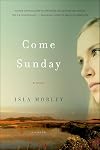
Come Sunday: A Novel
by Isla Morley
On This Page
Description
A wonderful new storyteller unleashes a soaring debut that sweeps from the hills of Hawaii to the veldt of South Africa.Come Sunday is that joyous, special thing: a saga that captivates from the very first page, breaking our hearts while making our spirits soar.Abbe Deighton is a woman who has lost her bearings. Once a child of the African plains, she is now settled in Hawaii, married to a minister, and waging her battles in a hallway of monotony. There is the leaky roof, the chafing show more expectations of her husband's congregation, and the constant demands of motherhood. But in an instant, beginning with the skid of tires, Abbe's battlefield is transformed when her three-year-old daughter is killed, triggering in Abbe a seismic grief that will cut a swath through the landscape of her life and her identity.What an enthralling debut this is What a storyteller we have here As Isla Morley's novel sweeps from the hills of Honolulu to the veldt of South Africa, we catch a hint of the spirit of Barbara Kingsolver and the mesmerizing truth of Jodi Picoult. We are reminded of how it felt, a while ago, to dive into the drama of The Thorn Birds.Come Sunday is a novel about searching for a true homeland, family bonds torn asunder, and the unearthing of decades-old secrets. It is a novel to celebrate, and Isla Morley is a writer to love. show lessTags
Recommendations
























Member Reviews
Come Sunday, Isla Morley’s doleful debut profoundly orchestrates the excruciatingly merciless emotion we call “grief.” When a tragic accident claims her precocious three-year-old daughter Cleo, we vicariously examine how a mother’s conventional daily life collapses instantaneously.
Abbe Deighton and her husband Greg, an uncharismatic pastor of a small church in one of the poorest areas of Hawaii innocently encounter one of life’s most unjustifiable catastrophes: the loss of a child. Abbe endures her cavernous grief by isolating herself, while totally contemptuous of any and all well-meaning attempts to alleviate her emotional and physical distress. Greg subconsciously tethers himself to pastoral responsibilities, unaware his show more methodical sanctuary in grieving further alienates him from his unapproachable wife. Grief is obstinate in its indeterminate passage; marriage often succumbs in its presence.
While engaged in excessive and exhaustive introspection, Abbe unintentionally regresses to her emotionally conflicted South African childhood as a disquieting conduit to assuage the painful facets grief presents. The tormented angst-ridden evolution opens doors to eventual resolution when Abbe returns to her homeland. There she unknowingly sheds her shroud of blame and guilt, and surprisingly acquires an abrupt yet mystifying strength to confront the fallacious deceptive memories long believed, and the deeply imbedded secrets left unexplored. Within the tumultuous confines of a presumably democratic, yet vastly constricted South Africa, Abbe permits forgiveness to triumph.
“Your past is always with you---be friends with it and it will help you find a good future.” –Page 269
Isla Morley depicts a realistic portrait of the all-consuming madness that often accompanies unrelenting grief. The compositional structure was appropriately consistent with the subject matter. While it was a distinctively emotional read, it provided valuable reflective components. After my nine-year-old brother’s accidental drowning, as witness to my mother’s unspeakable descent into this inviolable agony, I can attest to the brutal accuracy and painful reality that Come Sunday characterizes.
"Only people who are capable of loving strongly can also suffer great sorrow, but this same necessity of loving serves to counteract their grief and heals them". - Leo Tolstoy show less
Abbe Deighton and her husband Greg, an uncharismatic pastor of a small church in one of the poorest areas of Hawaii innocently encounter one of life’s most unjustifiable catastrophes: the loss of a child. Abbe endures her cavernous grief by isolating herself, while totally contemptuous of any and all well-meaning attempts to alleviate her emotional and physical distress. Greg subconsciously tethers himself to pastoral responsibilities, unaware his show more methodical sanctuary in grieving further alienates him from his unapproachable wife. Grief is obstinate in its indeterminate passage; marriage often succumbs in its presence.
While engaged in excessive and exhaustive introspection, Abbe unintentionally regresses to her emotionally conflicted South African childhood as a disquieting conduit to assuage the painful facets grief presents. The tormented angst-ridden evolution opens doors to eventual resolution when Abbe returns to her homeland. There she unknowingly sheds her shroud of blame and guilt, and surprisingly acquires an abrupt yet mystifying strength to confront the fallacious deceptive memories long believed, and the deeply imbedded secrets left unexplored. Within the tumultuous confines of a presumably democratic, yet vastly constricted South Africa, Abbe permits forgiveness to triumph.
“Your past is always with you---be friends with it and it will help you find a good future.” –Page 269
Isla Morley depicts a realistic portrait of the all-consuming madness that often accompanies unrelenting grief. The compositional structure was appropriately consistent with the subject matter. While it was a distinctively emotional read, it provided valuable reflective components. After my nine-year-old brother’s accidental drowning, as witness to my mother’s unspeakable descent into this inviolable agony, I can attest to the brutal accuracy and painful reality that Come Sunday characterizes.
"Only people who are capable of loving strongly can also suffer great sorrow, but this same necessity of loving serves to counteract their grief and heals them". - Leo Tolstoy show less
 This review was written for LibraryThing Early Reviewers.
The book opens with Abbe and her daughter Chloe - Chloe is demanding and Abbe feels overwhelmed. That night, while at a friends, Chloe is hit by a car while at a friend's house. I found it interesting that Morley chose to portray Chloe as a typical three year-old and that she didn't idealize the mother-child relationship. Abbe is unable to cope with her grief and she seeks to blame just about anyone who crosses her path. Morley is unstinting in her observations about the depth and breadth of this grief. Abbe alienates her friends and ultimately her husband, a good man, in her loss. She seems to assume that she is the one who suffers most and she neither comforts her husband or turns to him - I found this to be very sad. Morley reveals show more how Abbe grew up in South Africa, with a cruel father and a mother who seemed powerless to claim herself and leave the father. Her brother Rhiann left the family at a young age and caused ever more dischord when he published poems critical of the apartheid way of life in South Africa, his father's way of life. All of this is explored in flashbacks, justaposed with the current grief and strife in Abbe and Greg's life in Hawaii. The book packed an emotional whallop and stays with me. I thought that it was well written, plain language, and skillful in the handling of the time shift. show less
This has to be every mother’s nightmare… the loss of a child. I wanted to like Abbe, the young mother of Cleo, but found it difficult. As the story opens, she seems to have a comfortable life as wife to a pastor in Hawaii and mother to a 3-year-old daughter, but her dissatisfaction is palpable. When little Cleo runs in front of a car and is killed, Abbe is so centered on her own pain she can’t see anyone else’s, not even her husbands. I had the most sympathy for Mr. Nguyen, whose car was the implement of Cleo’s death but who was in no way at fault. I found myself becoming more and more impatient with Abbe and the bitterness she oozed, and at the same time I felt guilty for feeling that way because who can know what their own show more response would be to such a tragedy. Juxtaposed against Abbe’s difficult childhood in South Africa, the story moves back and forth in both place and time and becomes, in the end, a story of mothers and daughters. While there is no happy-ever-after here, the discoveries Abbe finally makes about her own mother teach her a lesson of love and forgiveness and finally redeems her for me. A remarkable first novel. I’ll be looking for more from Isla Morley. show less
This review was written for LibraryThing Early Reviewers.This book is so beautifully written that it is very easy to overlook the tiny, tiny flaw that it felt like it was a bit drawn out. This is a story about grief and the long road that healing from grief can take. The main character, Abbe, is not only suffering the grief over the death of her child, but the grief over the horror of her childhood, the loss of her mother well before her mother's death and the unravelling of her marriage. I don't think I have ever read a book that so well describes the myriad of feelings that a person goes through in the many levels that loss can take in your life. Abbe's road to healing herself involves even more loss, but eventually shows that climbing out of that abyss is possible. I highly recommend this show more book and will look forward to more from this author. show less
This review was written for LibraryThing Early Reviewers.A beautiful novel of one woman's journey of resurrection through her grief, pain, and loss over the death of her daughter. This is her first novel and all I can say is wow! It has a few stilting moments but otherwise great prose.
I received this book as an Early Review copy. I got through the first third - Cleo's accident and the immediate aftermath quite easily. The last third was great as Abbe goes back to Africa and reconnects there with family and friends from her difficult past. The middle part of the book, however, seemed to drag on forever. It took me a very long time to wade through it and I can't even tell you anything I remember of it. I am glad I persevered but came very close to giving up
This review was written for LibraryThing Early Reviewers.Abbigail (Abbe) Deighton lives with her husband, Greg, and three-year-old daughter Cloe in Hawaii. Greg, a minister, is a caring, loving, husband. Cleo is your typical toddler, keeping Abbe on her toes.
Abbe’s life is quite different than the one she had growing up in South Africa. Her father was an alcoholic, physically and abusive toward her mother. In Abbe’s eyes, her mother put up with the abuse for far too long.
Abbe’s life is ripped from her when Cleo is hit by a car and killed. She goes into a long depression, in a sense dying along with her daughter.
It isn’t until Abbe returns to South Africa that she discovers that she hasn’t been “whole” for some time. She learns more about her parents’ deaths, and her life.
COME show more SUNDAY is a heart-wrenching tale of one mother’s grief after losing her child, and ultimately herself. I literally sobbed through the first 50-60 pages. As a mother myself, I can’t bear to think of how I would react if I lost one of my children. However, this is not a tale full of dread and sadness. It is not only a story of love and loss, but also a journey of rediscovery. This path Abbe takes is uplifting and empowering, she learns more about her mother; she wasn’t the virtual punching bag Abbe grew up thinking her to be. Abbe, always the minister’s wife, becomes an individual and finally begins to lead the life she’s meant to lead.
I highly recommend COME SUNDAY, I cannot sufficiently portray how much I loved this book. Yes, the start of the journey Abbe faces is difficult, but the pain she goes through is worth it in the end.
Beauty, the servant from Abbe’s childhood, said it best:
“The death of our babies is not our punishment…We must carry our burden like the buckets of water the women carry on their heads. Most of them carry small buckets because their necks are not strong enough. But a few of the women, the strong ones, have to carry the big buckets. They have to carry more water; they have to walk a long way. Then, when the others have finished all their water and are thirsty again, the woman wit the big bucket comes home. She puts it down and doesn’t have to carry it again for a long time.” (p. 253)
Please don’t let the dreariness of this book’s premise prevent you from reading it. Just like Abbe’s journey, the reader’s initial sadness will be rewarded in the end. show less
Abbe’s life is quite different than the one she had growing up in South Africa. Her father was an alcoholic, physically and abusive toward her mother. In Abbe’s eyes, her mother put up with the abuse for far too long.
Abbe’s life is ripped from her when Cleo is hit by a car and killed. She goes into a long depression, in a sense dying along with her daughter.
It isn’t until Abbe returns to South Africa that she discovers that she hasn’t been “whole” for some time. She learns more about her parents’ deaths, and her life.
COME show more SUNDAY is a heart-wrenching tale of one mother’s grief after losing her child, and ultimately herself. I literally sobbed through the first 50-60 pages. As a mother myself, I can’t bear to think of how I would react if I lost one of my children. However, this is not a tale full of dread and sadness. It is not only a story of love and loss, but also a journey of rediscovery. This path Abbe takes is uplifting and empowering, she learns more about her mother; she wasn’t the virtual punching bag Abbe grew up thinking her to be. Abbe, always the minister’s wife, becomes an individual and finally begins to lead the life she’s meant to lead.
I highly recommend COME SUNDAY, I cannot sufficiently portray how much I loved this book. Yes, the start of the journey Abbe faces is difficult, but the pain she goes through is worth it in the end.
Beauty, the servant from Abbe’s childhood, said it best:
“The death of our babies is not our punishment…We must carry our burden like the buckets of water the women carry on their heads. Most of them carry small buckets because their necks are not strong enough. But a few of the women, the strong ones, have to carry the big buckets. They have to carry more water; they have to walk a long way. Then, when the others have finished all their water and are thirsty again, the woman wit the big bucket comes home. She puts it down and doesn’t have to carry it again for a long time.” (p. 253)
Please don’t let the dreariness of this book’s premise prevent you from reading it. Just like Abbe’s journey, the reader’s initial sadness will be rewarded in the end. show less
Members
- Recently Added By
Author Information

4 Works 400 Members
Some Editions
Awards and Honors
Common Knowledge
- Important places
- Honolulu, O'ahu, Hawai'i, USA; South Africa
- Dedication
- To Bob and Emily
- First words
- A bad sign, my grandmother would have muttered, looking heavenward.
- Last words
- (Click to show. Warning: May contain spoilers.)A hot, long summer, then.
- Blurbers
- Gruen, Sara; Rice, Luanne
Classifications
Statistics
- Members
- 135
- Popularity
- 242,082
- Reviews
- 18
- Rating
- (3.56)
- Languages
- Dutch, English, German
- Media
- Paper, Audiobook, Ebook
- ISBNs
- 17
- ASINs
- 5