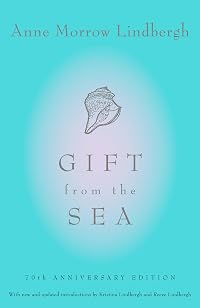
Gift from the Sea
by Anne Morrow Lindbergh
On This Page
Description
50th ANNIVERSARY EDITION • With meditations on youth and age, love and marriage, peace, solitude, and contentment, here is an inimitable classic that guides us to find a space for contemplation and creativity in our own lives."Gift from the Sea is like a shell itself in its small and perfect form ... It tells of light and life and love and the security that lies at the heart." —New York Times Book Review
Drawing inspiration from the the shells on the shore, Lindbergh's musings on the show more shape of a woman's life will bring new understanding to readers, male and family, at any stage of life. A mother of five and professional writer, she casts an unsentimental eye at the trappings of modern life that threaten to overwhelm us—the timesaving gadgets that complicate our lives, the overcommitments that take us from our families.
With great wisdom and insight she describes the shifting shapes of relationships and marriage, presenting a vision of a life lived in enduring and evolving partnership. A groundbreaking work when it was first published, this book has retained its freshness as it has been rediscovered by generations of readers and is no less current today. show less
Tags
Recommendations














Member Recommendations
Member Reviews
Meditations on life, following the popular themes of solitude, minimalism and cultivating meaningful relationships with oneself and others, with interesting side-leaps into feminism (well, privileged feminism of the upper middle class), I really enjoyed Lindbergh's writing here, and her use of the different types of shells as analogies for relationships.
What's fascinating is how what she wrote sixty years ago is still so pertinent today, such as being constantly surrounded by distractions, being connected to more information and people than ever before - we are asked today to feel compassionately for everyone in the world, to digest intellectually all the information spread out in public print; and to implement in action every ethical show more impulse aroused by our hearts and minds. The inter-relatedness of the world links us constantly with more people than our hearts can hold -, and the danger of this is that this overload ends up as an abstraction for us, as one mass, one giant entity, depriving each of the individuality/meaning/compassion they deserve.
My edition came with an afterword twenty years after the original, and it is refreshing and heartening to see Lindbergh admitting her assumptions of feminism to have been naïve and her ideas of it now to be still evolving as she observes the differences in her daughters, and her appreciation of the ongoing awareness which have brought upon positive changes. I'd be so intrigued to hear her thoughts on it now, another forty years on, especially since she recognised that her particular brand of feminism applied only to certain American women. What would she think about the state of things now?
Aside: Most of the book isn't really about feminism but it's definitely the part that leapt out at me. show less
What's fascinating is how what she wrote sixty years ago is still so pertinent today, such as being constantly surrounded by distractions, being connected to more information and people than ever before - we are asked today to feel compassionately for everyone in the world, to digest intellectually all the information spread out in public print; and to implement in action every ethical show more impulse aroused by our hearts and minds. The inter-relatedness of the world links us constantly with more people than our hearts can hold -, and the danger of this is that this overload ends up as an abstraction for us, as one mass, one giant entity, depriving each of the individuality/meaning/compassion they deserve.
My edition came with an afterword twenty years after the original, and it is refreshing and heartening to see Lindbergh admitting her assumptions of feminism to have been naïve and her ideas of it now to be still evolving as she observes the differences in her daughters, and her appreciation of the ongoing awareness which have brought upon positive changes. I'd be so intrigued to hear her thoughts on it now, another forty years on, especially since she recognised that her particular brand of feminism applied only to certain American women. What would she think about the state of things now?
Aside: Most of the book isn't really about feminism but it's definitely the part that leapt out at me. show less
I am amazed that a woman writing in 1955 could so clearly articulate my own (2022) feelings about womanhood, motherhood, creativity, spirituality, and marriage. Lindbergh's introspection into her life is like a beacon of light for the rest of us to follow as we stumble down our own murky paths. With grace, kindness and remarkable insight, she offers gentle advice on relationships, work, and parenting in a way few other authors have.
I'm so grateful a friend recommended this book to me. It was just what I needed at this -- the oyster bed -- phase of my life.
I'm so grateful a friend recommended this book to me. It was just what I needed at this -- the oyster bed -- phase of my life.
In Gift from the Sea, Anne Morrow Lindbergh concerns herself with life as it was lived in the 1950s, particularly, it seems, as lived by American women of her own social class. She finds it useful (and I won’t begrudge her the idea that it is so) to find in seashells the gift of inspirations for thinking about big and small spaces, about how life can demand too much in too little time or offer too little in much time, and about the ways one might find a success that harmonizes with one’s spirit.
She writes, “If one sets aside time for a business appointment, a trip to the hairdresser, a social engagement, or a shopping expedition, that time is accepted as inviolable. But if one says: I cannot come because that is my hour to be show more alone, one is considered rude, egotistical, or strange.”
This is key: “A room of one’s own” needs an hour of one’s own, too.
Lindbergh champions the idea of seeking out the unknown. She sees big-city life, with all its variety, motivating individuals to restrict their acquaintance to others like them, exchanging the opportunity presented by the unknown for the familiarity of the comfortable. She wants us, women and men, to seek the unknown, saying “it is the unknown with all its disappointments and surprises that is the most enriching.”
While not a book I would have thought to pick up (it arrived at the house long ago as part of a Book Club package and I’ve only now just read it), I find myself thinking Anne Morrow Lindbergh is someone I would like to have met, to have talked with for an hour or so. And not because she knew some guy named Charles. show less
She writes, “If one sets aside time for a business appointment, a trip to the hairdresser, a social engagement, or a shopping expedition, that time is accepted as inviolable. But if one says: I cannot come because that is my hour to be show more alone, one is considered rude, egotistical, or strange.”
This is key: “A room of one’s own” needs an hour of one’s own, too.
Lindbergh champions the idea of seeking out the unknown. She sees big-city life, with all its variety, motivating individuals to restrict their acquaintance to others like them, exchanging the opportunity presented by the unknown for the familiarity of the comfortable. She wants us, women and men, to seek the unknown, saying “it is the unknown with all its disappointments and surprises that is the most enriching.”
While not a book I would have thought to pick up (it arrived at the house long ago as part of a Book Club package and I’ve only now just read it), I find myself thinking Anne Morrow Lindbergh is someone I would like to have met, to have talked with for an hour or so. And not because she knew some guy named Charles. show less
Who knew that Charles Lindbergh’s wife was such a wonderful writer? I certainly didn’t. Gift From the Sea is a slim nonfiction book that she wrote on learning to enjoy life and manage the day-to-day struggles we can all relate to. The 50th anniversary edition of the book I read included an added retrospective chapter at the end.
Lindbergh compares different stages in a woman’s life to various shells she finds on the beach. The shells aren’t the point; it’s what they represent that carries the weight of the work. She touches on maintaining your individuality as a woman despite marriage and motherhood, a difficult balance to find.
Lindbergh’s writing is full of simple truths, but they’re ones we often miss in life. Her show more musings are all the more poignant when you remember that her child was kidnapped and murder. Yet somehow she was still able to maintain some perspective and attain a healthy life despite that tragedy.
I can’t think of a single woman I wouldn’t recommend this to. It’s a lovely reminder to appreciate whatever stage you’re in at the moment. I always fill my days with a million commitments and small tasks and this was a wonderful reminder to slow down and just enjoy the bliss of doing nothing sometimes.
Her words can speak for themselves, so here’s a few of the lines I loved…
“We Americans, with out terrific emphasis on youth, action, and material success, certainly tend to belittle the afternoon of life and pretend it never comes.”
“By and large, mothers and housewives are the only workers who do not have regular time off. They are the great vacationless class.”
“Perhaps both men and women in America may hunger, in our material, outward, active, masculine culture, for the supposedly feminine qualities of the heart, mind and spirit – qualities which are actually neither masculine or feminine, but simply human qualities that have been neglected.”
“I find there is a quality to being alone that is incredibly precious.” show less
Lindbergh compares different stages in a woman’s life to various shells she finds on the beach. The shells aren’t the point; it’s what they represent that carries the weight of the work. She touches on maintaining your individuality as a woman despite marriage and motherhood, a difficult balance to find.
Lindbergh’s writing is full of simple truths, but they’re ones we often miss in life. Her show more musings are all the more poignant when you remember that her child was kidnapped and murder. Yet somehow she was still able to maintain some perspective and attain a healthy life despite that tragedy.
I can’t think of a single woman I wouldn’t recommend this to. It’s a lovely reminder to appreciate whatever stage you’re in at the moment. I always fill my days with a million commitments and small tasks and this was a wonderful reminder to slow down and just enjoy the bliss of doing nothing sometimes.
Her words can speak for themselves, so here’s a few of the lines I loved…
“We Americans, with out terrific emphasis on youth, action, and material success, certainly tend to belittle the afternoon of life and pretend it never comes.”
“By and large, mothers and housewives are the only workers who do not have regular time off. They are the great vacationless class.”
“Perhaps both men and women in America may hunger, in our material, outward, active, masculine culture, for the supposedly feminine qualities of the heart, mind and spirit – qualities which are actually neither masculine or feminine, but simply human qualities that have been neglected.”
“I find there is a quality to being alone that is incredibly precious.” show less
[W]oman must come of age by herself -- she must find her true center alone. The lesson seems to need re-learning about every twenty years in a woman’s life.
A Virginia Woolf-like rumination, here on the phases of women’s adult lives to early middle age. Each is explored in a short chapter that suggests a way to stay grounded in self, each made memorable through symbolism by a different seashell. Lovely, and still relevant nearly 60 years after initial publication (in fact I see aspects of it in contemporary books). I wish she had updated it with passages about the losses that come to women in midlife and beyond.
A Virginia Woolf-like rumination, here on the phases of women’s adult lives to early middle age. Each is explored in a short chapter that suggests a way to stay grounded in self, each made memorable through symbolism by a different seashell. Lovely, and still relevant nearly 60 years after initial publication (in fact I see aspects of it in contemporary books). I wish she had updated it with passages about the losses that come to women in midlife and beyond.
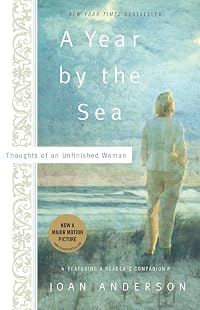
I thought, when I got this book, that it would be a book of poems or maybe prose poems. Something not too deep, but whimsical and pleasant. Why I thought that is unknown. What I got was thoughtful and lovely reflections on a life: a female life, in her middle years, a mother, a wife and a writer to boot. It anticipates such books as: "A Year by the Sea:Thoughts of an Unfinished Woman" by Joan Anderson and works by Julia Cameron. It is about writing, about finding one's center, about being human, about being whole -- and yet it is not preachy nor is it a self-help book. I really enjoyed it. An unexpected pleasure.
Your experience with this book will be like everything else in life – it depends on the attitude you bring. I think most people will find this book full of profound meditations on what it means to be an American woman, most still as true today as they were when she wrote them in 1955. This is one of those books that you can read over again at different ages and stages in your life and find totally new gems that you missed before.
I picked this up after reading The Aviator’s Wife by Melanie Benjamin, because I wanted to know more about Anne Morrow Lindbergh, who was perpetually in the shadow of her famous husband.
I picked this up after reading The Aviator’s Wife by Melanie Benjamin, because I wanted to know more about Anne Morrow Lindbergh, who was perpetually in the shadow of her famous husband.
Members
- Recently Added By
Published Reviews
ThingScore 80
There is a universality in her philosophy which is neither masculine nor feminine. A wise and beautiful book.
added by ArrowStead
A thing of beauty which "has the eternal validity of all beautiful and fleeting things." It is a sincere and eloquent plea for the ineffable rights of the individual, especially the individual as a woman.
added by ArrowStead
I would swap it for all the bestseller, do-good, inspirational books I have read. Here are some of the profoundest and most helpful observations and comments, expressed in the clearest language, in the warmest tone.
added by ArrowStead
Lists

Nature Writing
33 works; 3 members

Blue Pyramid 1,276 Best Books of All Time
1,248 works; 32 members

Books Featured on Readers' Review of the Diane Rehm Show
161 works; 8 members

Recommend the 20 best books you've read in the last five years
2,168 works; 601 members

Books Mentioned in The Wedding Planner's Daughter series
107 works; 2 members

Books With Water Words in the Title
186 works; 12 members

Youth: Marine Science
83 works; 1 member

Publisher's Weekly NON-Fiction list - 1912 - 1975
486 works; 4 members

Books We'd Want on a Desert Island
203 works; 131 members

Best Biographies of Notable Women
277 works; 101 members
Books We Love to Reread
688 works; 296 members
Author Information

41+ Works 8,506 Members
Anne Morrow Linbergh, 1906-2001 Anne Morrow Lindbergh was born Anne Spencer Morrow on June 22, 1906 in Englewood New Jersey. Her father was a multimillionaire banker with the firm J.P.Morgan and Co., who would later become a senator for New Jersey. Her mother was an educator and poet who held the position of acting president of Smith College from show more 1939-1940. Anne Morrow attended Miss Chapin's School in Manhattan and graduated Smith College in 1928. She is best known for penning over two dozen books of prose and poetry, including five diaries of her tumultuous life. Lindbergh married the famous Charles Lindbergh in 1929 and was introduced to the real world through his fame. Her childhood had been a sheltered one, yet she thrived in this new lifestyle. In 1930, she became the first woman to receive a glider pilot's license in the United States. That same year she accompanied her husband as copilot and navigator, when he broke the transatlantic speed record. In 1939 she earned the prestigious Hubbard Gold Medal of the National Geographic Society, becoming the first woman ever to do so. Ironically, Anne Lindbergh is best known not for her literary prowess, but for the kidnapping and death of her first born son, Charles Jr.. Known as the Crime of the Century, the Lindberghs gained an enormous amount of public recognition in the wake of the brutal murder. Lindbergh would never be the same for the incident. In 1935, Lindbergh published her first book, which also became her first best seller. While sometimes criticized by the literary world, Lindbergh remained popular with the public, females in particular, until her death. Perhaps her most famous book, "Gift from the Sea", a philosophical meditation on women's lives, was an inspiration to those same women. Because of her sympathy to the plight of the every day woman, and their returned sympathy for her own tragedy, Lindbergh was voted one of the 10 most admired women of 1975 by readers of Good Housekeeping. Her later works, which included the somewhat questionable "The Wave of the Future" was placed under greater criticisms, yet survived as another example of her involvement in world events, as they touch home. Anne Morrow Lindbergh died at the age of 94 at her home in Passumpsic, Vermont. (Bowker Author Biography) show less
Some Editions
Awards and Honors
Awards
Distinctions
Series
Belongs to Publisher Series
dtv (64)
Work Relationships
Is abridged in
Has as a student's study guide
Common Knowledge
- Canonical title*
- Muscheln in meiner Hand
- Original title
- Gift from the Sea
- Original publication date
- 1955-03-16
- Important places
- Captiva Island, Florida, USA
- First words
- The Beach is not a place to work; to read, write or think.
- Quotations
- I want...to live "in grace" as much of the time as possible...I believe most people are aware of periods in their lives when they seem to be "in grace" and other periods when they feel "out of grace" even though they may use ... (show all)different words to describe these states.
There are...certain roads that one may follow. Simplification of life is one of them.
Moon shell...You will remind me that I must try to be alone for part of each year, even a week or a few days; and for part of each day, even for an hour or a few minutes in order to keep my core, my center, my island-quality.
Woman must...learn to stand alone.
In middle age...one tries to cure the signs of growth...when really they might be angels of annunciation. Angels of annunciation of what? Of a new stage of living when, having shed many of the physical struggles, the worldly ... (show all)ambitions, the material encumbrances of active life, one might be free to fulfill the neglected side of one's self. One might be free for growth of mind, heart, and talent; free at last for spiritual growth...
We all wish to be loved alone.
Perhaps, middle age is or should be, a period of shedding shells; the shell of ambition, the shell of material accumulations and possessions, the shell of the ego.
Security in a relationship lies neither in looking back to what it was in nostalgia, nor forward to what it might be in dread or anticipation, but living in the present relationship and accepting it as it is now.
When you love someone you do not love them all the time, in exactly the same way, from moment to moment. It is an impossibility.
...the acquisitive instinct is incompatible with true appreciation of beauty.
Island precepts...Simplicity of living...to attain a true awareness of life. Balance of physical, intellectual, and spiritual life. Work without pressure. Space for significance and beauty. Time for solitude and sharing. Clo... (show all)seness to nature to strengthen understanding and faith in the intermittency of life: life of the spirit, creative life, and the life of human relationships. A few shells.
The most exhausting thing in life, I have discovered, is being insincere.
We walk up the beach in silence, but in harmony, as the sandpipers ahead of us move like a corps of ballet dancers keeping time to some interior rhythm inaudible to us. - Last words
- (Click to show. Warning: May contain spoilers.)This is only a beginning.
- Original language*
- Amerikanisch
*Some information comes from Common Knowledge in other languages. Click "Edit" for more information.
Classifications
Statistics
- Members
- 5,296
- Popularity
- 2,563
- Reviews
- 93
- Rating
- (4.04)
- Languages
- 9 — Chinese, Danish, English, French, German, Japanese, Spanish, Swedish, Portuguese (Portugal)
- Media
- Paper, Audiobook, Ebook
- ISBNs
- 64
- UPCs
- 2
- ASINs
- 94