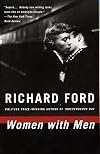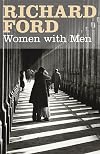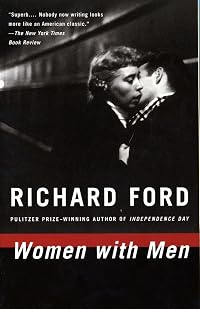
Women with Men
by Richard Ford
On This Page
Description
Richard Ford'sIndependence Day--his sequel toThe Sportswriter,and an international bestseller--is the only novel ever to have received both the Pulitzer Prize and the PEN/Faulkner Award. Now, two years later, he reaffirms his mastery of shorter fiction with his first collection since the widely acclaimed Rock Springs, published a decade ago. The landscape ofWomen with Menranges from the northern plains of Montana to the streets of Paris and the suburbs of Chicago, where Mr. Ford's various show more characters experience the consolations and complications that prevail in matters of passion, romance and love. A seventeen-year-old boy starting adulthood in the shadow of his parents' estrangement, a survivor of three marriages now struggling with cancer, an ostensibly devoted salesman in early middle age, an aspiring writer, a woman scandalously betrayed by her husband--they each of them contend with the vast distances that exist between those who are closest together. Whether alone, long married or newly met, they confront the obscure difference between privacy and intimacy, the fine distinction of pleasing another as opposed to oneself, and a need for reliance that is tempered by fearful vulnerability. In three long stories, Richard Ford captures men and women at this complex and essential moment of truth--in the course of everyday life, or during a bleak Thanksgiving journey, seismic arguments, Christmas abroad, the sudden disappearance of a child, even a barroom shooting. And with peerless emotional nuance and authority he once again demonstrates, as Elizabeth Hardwick has written, "a talent as strong and varied as American fiction has to offer." show lessTags
Recommendations





Member Reviews
The three lengthy short stories in this collection have all the hallmarks of Ford’s early brilliance as well as his middle period introspective anxiety. His writing is never less than compelling, at times thought provoking, and at others unsettling. He has a remarkable ability to turn a story on a dime, either through external events or through misplaced introspection. Yet these shifts never seem extraordinary once they have occurred. The reader just accepts them, possibly even saying to themselves, “that’s what I was expecting all along.” And then another shift takes you off in a different direction.
“Jealous” is set in Montana and feels like an extension of the stories in Ford’s first collection, Rock Springs. The bleak show more landscape, lives lived on the edge—the edge of despair, alcoholism, and violence—family disruption, and the transition to manhood. It’s all there. Here the narrator, a boy of 17, is a touchstone for the other characters—his father, his aunt, his absent mother. Both a means to highlight their stories and their sadness, and to reflect that back onto the vast emptiness of the prairie.
Depending on the Ford you prefer, “The Womanizer” may appeal more. Here is the Ford of the Frank Bascombe trilogy. In this case, the protagonist is a man in Paris for a few days. He is intelligent, in his way. He is worldly, unafraid to partake of opportunities that arise before him. And he is introspective. Incessantly. Argumentatively. And without any clear grip on reality. It is an enthralling effect. A bit like watching a train wreck in slow motion. And unsettling as well, since introspection is more typically associated (from Socrates to Descartes) with rational thought and behaviour. Here, not so much.
The final story in the collection, “Occidentals”, feels transitional. Again we are in Paris. Again we have the hyper-introspective male protagonist. Again we are on the cusp of something, some kind of transition perhaps heralded by the couple’s hotel being located on the border of a cemetery. And Paris, or at least Ford’s imagined American Paris fully mediated by his character’s encounters with it through literature (the protagonist is a novelist who recently had been a literature professor), is significant. Perhaps Paris plays the role that Canada played in Ford’s Montana stories—a far-off imaginary space (even if you are a tourist in it) where much is possible.
These stories will, I think, captivate any reader interested in how Richard Ford handles the longer short story form. Recommended. show less
“Jealous” is set in Montana and feels like an extension of the stories in Ford’s first collection, Rock Springs. The bleak show more landscape, lives lived on the edge—the edge of despair, alcoholism, and violence—family disruption, and the transition to manhood. It’s all there. Here the narrator, a boy of 17, is a touchstone for the other characters—his father, his aunt, his absent mother. Both a means to highlight their stories and their sadness, and to reflect that back onto the vast emptiness of the prairie.
Depending on the Ford you prefer, “The Womanizer” may appeal more. Here is the Ford of the Frank Bascombe trilogy. In this case, the protagonist is a man in Paris for a few days. He is intelligent, in his way. He is worldly, unafraid to partake of opportunities that arise before him. And he is introspective. Incessantly. Argumentatively. And without any clear grip on reality. It is an enthralling effect. A bit like watching a train wreck in slow motion. And unsettling as well, since introspection is more typically associated (from Socrates to Descartes) with rational thought and behaviour. Here, not so much.
The final story in the collection, “Occidentals”, feels transitional. Again we are in Paris. Again we have the hyper-introspective male protagonist. Again we are on the cusp of something, some kind of transition perhaps heralded by the couple’s hotel being located on the border of a cemetery. And Paris, or at least Ford’s imagined American Paris fully mediated by his character’s encounters with it through literature (the protagonist is a novelist who recently had been a literature professor), is significant. Perhaps Paris plays the role that Canada played in Ford’s Montana stories—a far-off imaginary space (even if you are a tourist in it) where much is possible.
These stories will, I think, captivate any reader interested in how Richard Ford handles the longer short story form. Recommended. show less
‘De mujeres con hombres’ (Women with Men, 1997), del norteamericano Richard Ford, es un libro de relatos magníficamente escrito (o traducido). Los protagonistas son hombres de mediana edad, con sus fracasos y sus éxitos, que buscan darle sentido a su existencia. Ford da particular relevancia a las difíciles relaciones de sus protagonistas con las mujeres. Con su estilo tranquilo, eficaz, y brillante, Ford nos ofrece un retrato del americano medio, en busca del triunfo profesional y personal. No son historias de amor, aunque algo hay de eso, son más bien historias de matrimonios fracasados y relaciones fallidas, y el saberse un extraño en otro país, ya que dos de los relatos transcurren en París. Los tres relatos tienen en show more común que en un determinado momento sucede algo inesperado que trastoca las vidas de sus protagonistas.
El mujeriego. Martin Austin, casado y sin hijos, está de viaje de negocios en París, donde acabará obsesionándose con una francesa, hasta el punto de pensar en dejarlo todo por ella.
Celos. Un muchacho de diecisiete años, que vive con su padre en una granja, se dispone a viajar en tren a casa de su madre por Acción de Gracias. En el viaje le acompañará su tía Doris. Este relato es el que más me ha gustado.
Occidentales. Charley y Helen viajan a París para encontrarse con un editor que desea traducir y publicar la primera novela de aquél. Pero los planes se trastocan cuando dicho editor le anuncia que no podrá estar en el país en los próximos días. Charley y Helen, pese a todo, deciden quedarse unos días en la ciudad. Más que de un relato, se trata de una novela corta magnífica. show less
El mujeriego. Martin Austin, casado y sin hijos, está de viaje de negocios en París, donde acabará obsesionándose con una francesa, hasta el punto de pensar en dejarlo todo por ella.
Celos. Un muchacho de diecisiete años, que vive con su padre en una granja, se dispone a viajar en tren a casa de su madre por Acción de Gracias. En el viaje le acompañará su tía Doris. Este relato es el que más me ha gustado.
Occidentales. Charley y Helen viajan a París para encontrarse con un editor que desea traducir y publicar la primera novela de aquél. Pero los planes se trastocan cuando dicho editor le anuncia que no podrá estar en el país en los próximos días. Charley y Helen, pese a todo, deciden quedarse unos días en la ciudad. Más que de un relato, se trata de una novela corta magnífica. show less
The author does have a way with words: the rhythms of his prose, the descriptions. But that latter is exactly why I didn't like his stories too many extraneous descriptions--especially in the second story. In the first story endless soul searching and dithering about the object of his affections from the 'womanizer' protagonist whom I cared nothing about. I was quite bored and did not bother with the third story.
I don't feel a novella should leave me as unsatisfied as two out of three of these did. The first and third of Ford's novellas contained in Women With Men are practically interchangeable, with the protagonists both dissatisfied separated men ending up at loose ends in Paris. Gee whiz, what a torture chamber. These men do not know what they want out of life and the reader, at least this one was left not particularly caring how they ended up after the story was over. The third one Occidentals did have some nice interaction though and what should have been a more wrenching and disturbing plot line.
The middle story though, that one was interesting. Jealousy explored some of the faces of jealousy, without being melodramatic or vicious. Any show more violence was 'off stage' and only alluded to in a very sideways speculative manner.
This entry made the whole thing worth while.
Recommended for the one. show less
The middle story though, that one was interesting. Jealousy explored some of the faces of jealousy, without being melodramatic or vicious. Any show more violence was 'off stage' and only alluded to in a very sideways speculative manner.
This entry made the whole thing worth while.
Recommended for the one. show less
I very much enjoyed the author's writing style. It was very expressive and involving. The characters were well-developed and very interesting. The stories within this book are not quick reads, but if you have the time, you should enjoy them.
Da rileggere
Momento sbagliato? Capita. Non era il libro adatto. Non ora. Ci riproverò...
Momento sbagliato? Capita. Non era il libro adatto. Non ora. Ci riproverò...
3 short stories
Members
- Recently Added By
Lists

A Good Read (Radio 4)
287 works; 1 member

Take Four Books
130 works; 1 member
Author Information

64+ Works 17,860 Members
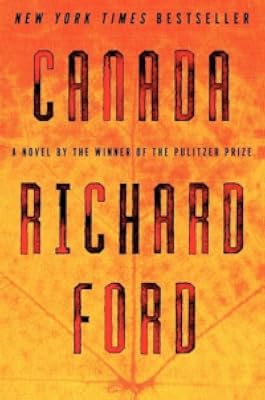
He was born in Jackson, Mississippi, in 1944 & grew up there & in Little Rock, Arkansas. He graduated from Michigan State University & received an M. F. A. in 1970 from the University of California at Irvine. He has received a Guggenheim Fellowship and grants from the National Endowment for the Arts & American Academy of Arts & Letters Award for show more Literature. He was also given the 1994 Rea Award. In 2001 he was awarded the PEN/Malamud prize. He made The New York Times Best Seller List for his title's Canada and Let Me Be Frank with You. He was also a finalist for the Pulitzer Prize for Fiction with his title, Let Me Be Frank With You. (Publisher Provided) show less
Awards and Honors
Awards
Work Relationships
Common Knowledge
- Canonical title*
- Donne e uomini
- Original title
- Women with Men : Three Stories
- Original publication date
- 1997
*Some information comes from Common Knowledge in other languages. Click "Edit" for more information.
Classifications
Statistics
- Members
- 788
- Popularity
- 35,506
- Reviews
- 8
- Rating
- (3.53)
- Languages
- 9 — Catalan, Danish, English, Finnish, French, Italian, Norwegian (Bokmål), Spanish, Swedish
- Media
- Paper, Audiobook, Ebook
- ISBNs
- 32
- ASINs
- 6