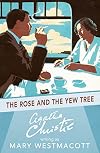
The Rose and the Yew Tree
by Agatha Christie
On This Page
Description
A captivating novel of love and intrigue. Everyone expected Isabella Charteris, beautiful, sheltered and aristocratic, to marry her cousin Rupert when he came back from the War. It would have been such a suitable marriage. How strange then that John Gabriel, an ambitious and ruthless war hero, should appear in her life. For Isabella, the price of love would mean abandoning her dreams of home and happiness forever. For Gabriel, it would destroy his chance of a career and all his ambitions... show more Famous for her ingenious crime books and plays, Agatha Christie also wrote about crimes of the heart, six bittersweet and very personal novels, as compelling and memorable as the best of her work. show lessTags
Recommendations








Member Reviews
Love is a Rose
A review of the William Morrow eBook (May 20, 2025) of the William Heinemann Ltd. hardcover (November 8, 1948).
I had been hesitant about trying the Mary Westmacott novels (the non-crime books written under Agatha Christie's pseudonym) as I had feared a letdown. However, The Rose and the Yew Tree did not disappoint at all. There was plenty of drama and suspense and mystery, even if there was no murder and sleuth involved. I jumped in at show more one of the later modest-length books, since they are all standalones. The first Westmacott [book:Giant's Bread|1949253] (1930) was too intimidating at 528 pages (but could be an LBC candidate down the road 😉).
The novel is told from the point of view of Hugh Norreys, a World War II veteran who was invalided due to a car accident rather than a war wound. Releasing his fiancee from marriage obligations, Norreys moves in with his brother and sister-in-law and wallows in depression and misery until he becomes distracted with a neighbour Isabella Charteris, and with the political machinations of war hero John Gabriel. Norreys invalid stasis makes him a stationary confessional for any visitors to the household.
Gabriel is running as a Conservative for the local MP seat in the 1945 General Elections in which Labour is expected to win over Churchill's Tories. Gabriel still expects to win as the local Labour candidate is weak. Norreys listens to all of Gabriel's cynical plans for the future where he hopes to capitalize on his war hero status. Gabriel even encourages Norreys to pretend his invalid status is from the war rather than a seemingly less-romantic car accident. Both men become captivated by Isabella with a shocking result which leaves Norreys embittered for years afterwards.
Even though there was no crime and murder involved here, there was still mystery aplenty as you read on to learn what did Gabriel do that so angered Norreys and what was the fate of Isabella. You learn at the front end that Norreys is going to the deathbed of Gabriel in order to finally learn the truth which is not revealed until the end of the book.
See full dust cover at https://www.nocloo.com/art/christie-1948-rose/Westmacott-Rose-and-the-Yew-Tree-U...
The full back and front covers and flaps from the 1948 Heinemann edition.
I should have known that Christie would not let me down even when writing under a pseudonym. You are still in the hands of a master writer of character and plot. The publisher Heinemann even slyly tried to hint that the author was a long-time veteran without revealing her true identity. Their 1948 book flap synopsis ends with: "So sure is her touch, so practiced in her ease in story telling, that the reader may well think the author has all the experience of a score of novels behind her."
This novel counts against my Complete Agatha Christie binge goal, so I have 19 novels (including the 5 remaining Westmacotts), 5 short story collections, 11.5* theatrical plays (+ several harder to find 1-act radio plays) and 1 autobiography left to go. If my count is wrong I'll adjust it as I get nearer to the end of my target.
Footnote
* I am counting Towards Zero stage play version #1 (1945) and Towards Zero stage play version #2 (1956) each as 1/2 of a play.
Soundtrack
My lede header was inspired by the Neil Young song Love is a Rose (1974) best known from its cover version by Linda Ronstadt from the album Prisoner in Disguise (1975) which you can listen to on YouTube here or on Spotify here.
Neil Young's version was on his unreleased Homegrown (1974) album which was finally released in 2020. You can listen to Neil Young's original on YouTube here or on Spotify here.
Trivia and Links
The Rose and the Yew Tree was the 4th of 6 non-crime novels published by Agatha Christie under the pseudonym of Mary Westmacott. Her regular publisher Collins was not happy with the Westmacotts, although they did publish the first 3 of them. After their rejection of The Rose and the Yew Tree, Christie took the novel to the publisher William Heinemann Ltd. who accepted it and published the final 3 Westmacotts. The identity of Agatha Christie as the actual author had been kept a secret up until 1949 when it was released in a gossip column in the Sunday Times. A cynic might suspect 🤔 that the truth was leaked by the publisher in order to increase sales.
Read the further background on the Mary Westmacott novels as the Agatha Christie website here. show less
A review of the William Morrow eBook (May 20, 2025) of the William Heinemann Ltd. hardcover (November 8, 1948).
The weather remained fine. I spent much of my time pushed out on to the sunny terrace. There were rose beds along it and a very old yew tree at one end of it. From there I could look across to the sea and the battlements of St Loo Castle, and I could see Isabella walking across the fields.
I had been hesitant about trying the Mary Westmacott novels (the non-crime books written under Agatha Christie's pseudonym) as I had feared a letdown. However, The Rose and the Yew Tree did not disappoint at all. There was plenty of drama and suspense and mystery, even if there was no murder and sleuth involved. I jumped in at show more one of the later modest-length books, since they are all standalones. The first Westmacott [book:Giant's Bread|1949253] (1930) was too intimidating at 528 pages (but could be an LBC candidate down the road 😉).
The novel is told from the point of view of Hugh Norreys, a World War II veteran who was invalided due to a car accident rather than a war wound. Releasing his fiancee from marriage obligations, Norreys moves in with his brother and sister-in-law and wallows in depression and misery until he becomes distracted with a neighbour Isabella Charteris, and with the political machinations of war hero John Gabriel. Norreys invalid stasis makes him a stationary confessional for any visitors to the household.
Gabriel is running as a Conservative for the local MP seat in the 1945 General Elections in which Labour is expected to win over Churchill's Tories. Gabriel still expects to win as the local Labour candidate is weak. Norreys listens to all of Gabriel's cynical plans for the future where he hopes to capitalize on his war hero status. Gabriel even encourages Norreys to pretend his invalid status is from the war rather than a seemingly less-romantic car accident. Both men become captivated by Isabella with a shocking result which leaves Norreys embittered for years afterwards.
Even though there was no crime and murder involved here, there was still mystery aplenty as you read on to learn what did Gabriel do that so angered Norreys and what was the fate of Isabella. You learn at the front end that Norreys is going to the deathbed of Gabriel in order to finally learn the truth which is not revealed until the end of the book.
See full dust cover at https://www.nocloo.com/art/christie-1948-rose/Westmacott-Rose-and-the-Yew-Tree-U...
The full back and front covers and flaps from the 1948 Heinemann edition.
I should have known that Christie would not let me down even when writing under a pseudonym. You are still in the hands of a master writer of character and plot. The publisher Heinemann even slyly tried to hint that the author was a long-time veteran without revealing her true identity. Their 1948 book flap synopsis ends with: "So sure is her touch, so practiced in her ease in story telling, that the reader may well think the author has all the experience of a score of novels behind her."
This novel counts against my Complete Agatha Christie binge goal, so I have 19 novels (including the 5 remaining Westmacotts), 5 short story collections, 11.5* theatrical plays (+ several harder to find 1-act radio plays) and 1 autobiography left to go. If my count is wrong I'll adjust it as I get nearer to the end of my target.
Footnote
* I am counting Towards Zero stage play version #1 (1945) and Towards Zero stage play version #2 (1956) each as 1/2 of a play.
Soundtrack
My lede header was inspired by the Neil Young song Love is a Rose (1974) best known from its cover version by Linda Ronstadt from the album Prisoner in Disguise (1975) which you can listen to on YouTube here or on Spotify here.
Neil Young's version was on his unreleased Homegrown (1974) album which was finally released in 2020. You can listen to Neil Young's original on YouTube here or on Spotify here.
Trivia and Links
The Rose and the Yew Tree was the 4th of 6 non-crime novels published by Agatha Christie under the pseudonym of Mary Westmacott. Her regular publisher Collins was not happy with the Westmacotts, although they did publish the first 3 of them. After their rejection of The Rose and the Yew Tree, Christie took the novel to the publisher William Heinemann Ltd. who accepted it and published the final 3 Westmacotts. The identity of Agatha Christie as the actual author had been kept a secret up until 1949 when it was released in a gossip column in the Sunday Times. A cynic might suspect 🤔 that the truth was leaked by the publisher in order to increase sales.
Read the further background on the Mary Westmacott novels as the Agatha Christie website here. show less
Agatha Christie writing as Mary Westmacott - but using a setting she also uses in one of the Poirot books. This is a funny mixture: character study and small town politics, framed with Ruritanian melodrama. I found it amusing, aggravating and moving in pretty much equal measure.
First of all, I was able to take the tag "romance" off of this book. I was afraid it was one by the description on the back, but I don't think it is quite. Not exactly sure the tag "suspense" works, either. It is the story of a man who has been badly injured in a car accident, and his observations of the people and events around him during the aftermath when he wasn't sure he wanted to live. It attempts to convey that the choices we make will lead us down unforeseen paths, but is a bit clunky.
The observations of county politics of post WWII England were interesting up to a point, but tended to go on. Some of the characters were well drawn, others just flat. There was much speculation on people's motivations and emotions. Too much in my show more opinion. A lot of the time it seemed like an author practicing to see what felt right for them to say or do. Still, the story itself wasn't terrible and I don't regret reading it, if only for some of the insights into post war England. show less
The observations of county politics of post WWII England were interesting up to a point, but tended to go on. Some of the characters were well drawn, others just flat. There was much speculation on people's motivations and emotions. Too much in my show more opinion. A lot of the time it seemed like an author practicing to see what felt right for them to say or do. Still, the story itself wasn't terrible and I don't regret reading it, if only for some of the insights into post war England. show less
Nothing too big and heavy for listening in the car, trying to get back into that after a period off. Radio 4 on the way to work, book in the evening seems to be working at the moment. A road trip finished the last hour or so of this off.
This is a tale of the past. A man is summoned to a death bed in Paris by someone he would not call a friend. This person wants to tell him the woman they were both linked to died. You don't get to hear this until the end, as after that introduction, you get to hear the back story. The story teller is Hugh Norries, a captain who was injured in a car crash in the war, on the harrow road. He is still trying to find his reason to live when he is transported to Cornwall by his brother and sister in law, show more Teresa. Teresa is one of life's organisers, and she set about being involved. in this case in politics - despite not really having an interest in politics. So Hugh ends up being used as a sounding board by people involved in the local election (the labour landslide on 45) on the side of the conservative candidate. He's a war hero, but no gentleman, who is attractive to women and attracted to danger and publicity - probably in equal amounts. Here they both meet Isabella, the young girl who live in the castle. She's aloof, self contained and opens up to no-one, although both of the men fall under her spell. Only one understands her and the other doesn't. This is primarily the cause of the antipathy between them. It is a sad tale, with in one sense a sad ending. In one case, he does not know what he had until it was gone, in the other, a least, he can remember the prime, not the ending.
the title comes from Teresa, who says that a rose and a yew tree do not live for the same length of time, but each lives for the same purpose and dies when that purpose is fulfilled. In that sense a short life lived to the full is not the same as a life cut short. show less
This is a tale of the past. A man is summoned to a death bed in Paris by someone he would not call a friend. This person wants to tell him the woman they were both linked to died. You don't get to hear this until the end, as after that introduction, you get to hear the back story. The story teller is Hugh Norries, a captain who was injured in a car crash in the war, on the harrow road. He is still trying to find his reason to live when he is transported to Cornwall by his brother and sister in law, show more Teresa. Teresa is one of life's organisers, and she set about being involved. in this case in politics - despite not really having an interest in politics. So Hugh ends up being used as a sounding board by people involved in the local election (the labour landslide on 45) on the side of the conservative candidate. He's a war hero, but no gentleman, who is attractive to women and attracted to danger and publicity - probably in equal amounts. Here they both meet Isabella, the young girl who live in the castle. She's aloof, self contained and opens up to no-one, although both of the men fall under her spell. Only one understands her and the other doesn't. This is primarily the cause of the antipathy between them. It is a sad tale, with in one sense a sad ending. In one case, he does not know what he had until it was gone, in the other, a least, he can remember the prime, not the ending.
the title comes from Teresa, who says that a rose and a yew tree do not live for the same length of time, but each lives for the same purpose and dies when that purpose is fulfilled. In that sense a short life lived to the full is not the same as a life cut short. show less
Agatha Christie writing as 'Mary Westmacott' in 1947. 'The moment of the rose, and the moment of the yew tree, are of equal duration' T S Eliot.
Set against a background of the small Cornish town of St. Loo and post-war politics the book is narrated by Hugh Norreys, a bedridden invalid who has lost the use of his legs as a result of a car accident and as such becomes a 'listening post' for the characters central to the plot. Isabella Charteris is the 'princess' living in the castle. She lives serenely in the present and is set on marrying her cousin Rupert after the War so they can live together in the castle she loves. John Gabriel, an ambitious and ruthless war hero who is crippled by an inferiority complex, appears as the local show more electoral candidate and only Hugh is privy to his inner workings - put powerless to do anything about them. When Gabriel wins the election, he runs off with Isabella.
My favourite character would have to be Teresa, the no-nonsense and wise sister-in-law. Interesting read. show less
Set against a background of the small Cornish town of St. Loo and post-war politics the book is narrated by Hugh Norreys, a bedridden invalid who has lost the use of his legs as a result of a car accident and as such becomes a 'listening post' for the characters central to the plot. Isabella Charteris is the 'princess' living in the castle. She lives serenely in the present and is set on marrying her cousin Rupert after the War so they can live together in the castle she loves. John Gabriel, an ambitious and ruthless war hero who is crippled by an inferiority complex, appears as the local show more electoral candidate and only Hugh is privy to his inner workings - put powerless to do anything about them. When Gabriel wins the election, he runs off with Isabella.
My favourite character would have to be Teresa, the no-nonsense and wise sister-in-law. Interesting read. show less
Everyone expected that Isabella Charteris - beautiful, aristocratic, and privileged - would marry her cousin Rupert when he returned from the War. After all, theirs would have been a most suitable marriage between the serene heiress of Castle St. Loo and her gallant knight.
That was until the enigmatic John Gabriel entered Isabella's life. He was a decorated war hero and a vulgar opportunist. That he should appear in her life at all told Isabella everything she needed to know about the final chaos of war.
For Isabella, the price of love meant abandoning a dream forever. For Gabriel, it would destroy the only chance ambition would ever offer. What drew them together was something deeper than love.
I must say - while I enjoyed reading this show more book for the most part - there was a certain implausibility to the plot that I couldn't quite understand. Even now, I can't put my finger on exactly what bothers me about the book. Perhaps the mystery was slightly more intricate than I was expecting for such a short book. Anyway, I give The Rose and the Yew Tree by Mary Westmacott a definite A! show less
That was until the enigmatic John Gabriel entered Isabella's life. He was a decorated war hero and a vulgar opportunist. That he should appear in her life at all told Isabella everything she needed to know about the final chaos of war.
For Isabella, the price of love meant abandoning a dream forever. For Gabriel, it would destroy the only chance ambition would ever offer. What drew them together was something deeper than love.
I must say - while I enjoyed reading this show more book for the most part - there was a certain implausibility to the plot that I couldn't quite understand. Even now, I can't put my finger on exactly what bothers me about the book. Perhaps the mystery was slightly more intricate than I was expecting for such a short book. Anyway, I give The Rose and the Yew Tree by Mary Westmacott a definite A! show less
According to Agatha Christie's daughter, Rosalind Hicks, "The Rose and the Yew Tree" was a favorite of Agatha Christie and also of her daughter. A beautiful woman, Isabella Charteris, has always envisioned that she will marry the man of her childhood dreams - her cousin - and Rupert, the handsome man is to marry the beautiful young girl - his cousin - that he met in childhood and always envisioned marrying when he returns "home" from the war. The story is the tell of all the circumstances leading up to the reveal if the handsome man returns "home" and the life the woman has come to live. Their story is told by Hugh Norreys, a neighbor, a man who has his own story to tell. There are many unexpected twists and turns and as always the show more reader becomes entranced by the writing.
Don't miss reading more about the novels by Christie's daughter, Rosalind Hicks...
https://www.agathachristie.com/about-christie/family-memories/the-mary-westmacot...
I am looking forward to reading the next romance titled, "A Daughter's a Daughter." show less
Don't miss reading more about the novels by Christie's daughter, Rosalind Hicks...
https://www.agathachristie.com/about-christie/family-memories/the-mary-westmacot...
I am looking forward to reading the next romance titled, "A Daughter's a Daughter." show less
Members
- Recently Added By
Lists

Agatha Christie
28 works; 3 members
Author Information

2,122+ Works 438,403 Members
One of the most successful and beloved writer of mystery stories, Agatha Mary Clarissa Christie was born in 1890 in Torquay, County Devon, England. She wrote her first novel, The Mysterious Affair at Styles, in 1920, launching a literary career that spanned decades. In her lifetime, she authored 79 crime novels and a short story collection, 19 show more plays, and six novels written under the name of Mary Westmacott. Her books have sold over a billion copies in the English language with another billion in 44 foreign languages. Some of her most famous titles include Murder on the Orient Express, Mystery of the Blue Train, And Then There Were None, 13 at Dinner and The Sittaford Mystery. Noted for clever and surprising twists of plot, many of Christie's mysteries feature two unconventional fictional detectives named Hercule Poirot and Miss Jane Marple. Poirot, in particular, plays the hero of many of her works, including the classic, The Murder of Roger Ackroyd (1926), and Curtain (1975), one of her last works in which the famed detective dies. Over the years, her travels took her to the Middle East where she met noted English archaeologist Sir Max Mallowan. They married in 1930. Christie accompanied Mallowan on annual expeditions to Iraq and Syria, which served as material for Murder in Mesopotamia (1930), Death on the Nile (1937), and Appointment with Death (1938). Christie's credits also include the plays, The Mousetrap and Witness for the Prosecution (1953; film 1957). Christie received the New York Drama Critics' Circle Award for 1954-1955 for Witness. She was also named Dame Commander of the Order of the British Empire in 1971. Christie died in 1976. (Bowker Author Biography) show less
Series
Belongs to Publisher Series
Work Relationships
Is contained in
Absent in the Spring and Other Stories: Giant's Bread + The Rose and the Yew Tree by Mary Westmacott
Agatha Christie: Six Mary Westmacott Novels (Giants' Bread / Absent in the Spring / Unfinished Portrait / The Rose and the Yew Tree / A Daughter's a Daughter / The Burden) by Agatha Christie
Common Knowledge
- Canonical title
- The Rose and the Yew Tree
- Original title
- The Rose and the Yew Tree
- Original publication date
- 1948-11
- People/Characters
- Isabella Charteris; John Gabriel; Rupert St. Loo
- Important places
- Cornwall, England, UK
- Epigraph
- The moment of the rose and the moment of the yew tree are of equal duration. -- T. S. Eliot
- First words
- I was in Paris when Parfitt, my man, came to me and said that a lady had called to see me.
- Quotations
- Yes, isn't that what politics really boil down to in the end? What people will believe, what they will stand, what they can be induced to think? Never plain fact.
- Last words
- (Click to show. Warning: May contain spoilers.)"Oh no," he said, "that's where you are wrong! It wasn't the end. It was the beginning..."
- Original language
- English
- Disambiguation notice
- Agatha Christie also used the pseudonym Mary Westmacott for her non-crime romance novels.
Classifications
Statistics
- Members
- 378
- Popularity
- 82,426
- Reviews
- 10
- Rating
- (3.46)
- Languages
- 11 — English, Finnish, French, German, Greek, Italian, Polish, Portuguese, Serbian, Spanish, Swedish
- Media
- Paper, Audiobook, Ebook
- ISBNs
- 38
- ASINs
- 19