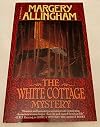
The White Cottage Mystery
by Margery Allingham
On This Page
Description
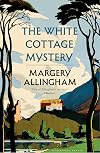
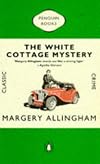
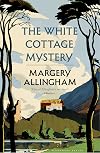
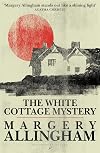
Classic Crime from the Golden Age. Margery Allingham is J.K. Rowling's favourite Golden Age author.Eric Crowther collected secrets and used them as weapons. Delighting in nothing more than torturing those around him with what he knew, there is no shortage of suspects when he is found dead in the White Cottage. Chief Inspector Challenor and his son Jerry will have to look deep into everyone's past – including the victim's – before they can be sure who has pulled the trigger. The fact show more that Jerry is in love with one of the suspects, however, might complicate things.
The White Cottage Mystery was Margery Allingham's first detective story, originally written as a serial for the Daily Express in 1927 and published as a book a year later.
With a country house, blackmail and murder, The White Cottage Mystery is a classic of the Golden Age of detective fiction. show less
Tags
Recommendations


















Member Reviews
My first Allingham, and fittingly, her first too. Definitely not my last.
DCI Challenor's son is on his way home to London one evening when he sees a young woman stepping off the bus with a heavy load and stops to offer her a ride to her home. Moments after leaving her there, he and the local constable hear the rapport of a shotgun and on returning find a man most definitely dead and a hallway full of suspects.
This is a very short read, relative to today's average mystery, coming in at just 157 pages. But it's a fast-paced 157 pages and Allingham dispenses with anything monotonous or that might smack of filler. The timeline jumps from one paragraph to another; sometimes by just a few hours, sometimes a few days, towards the end, a few show more years. This might really aggravate some readers but if you're familiar with Golden Age mysteries, you won't find it unusual.
I thoroughly enjoyed it; so much so that it was 1am when I finally shut the light off, having finished the entire book in one sitting. She had me guessing the entire way through, and not once did I come close. I found DCI Challenor's advice at the end appalling; it would never fly in our time, but in the age it was written, it would have been standard.
A very good mystery and from my first peek, I'd say Allingham is under valued as a master of mystery, but to be sure, I'll have to read a few more - as soon as possible. show less
DCI Challenor's son is on his way home to London one evening when he sees a young woman stepping off the bus with a heavy load and stops to offer her a ride to her home. Moments after leaving her there, he and the local constable hear the rapport of a shotgun and on returning find a man most definitely dead and a hallway full of suspects.
This is a very short read, relative to today's average mystery, coming in at just 157 pages. But it's a fast-paced 157 pages and Allingham dispenses with anything monotonous or that might smack of filler. The timeline jumps from one paragraph to another; sometimes by just a few hours, sometimes a few days, towards the end, a few show more years. This might really aggravate some readers but if you're familiar with Golden Age mysteries, you won't find it unusual.
I thoroughly enjoyed it; so much so that it was 1am when I finally shut the light off, having finished the entire book in one sitting. She had me guessing the entire way through, and not once did I come close. I found DCI Challenor's advice at the end appalling; it would never fly in our time, but in the age it was written, it would have been standard.
A very good mystery and from my first peek, I'd say Allingham is under valued as a master of mystery, but to be sure, I'll have to read a few more - as soon as possible. show less
Allingham writes in the Agatha Christie style of mystery: a set of characters are introduced in the beginning pages, the murder occurs shortly thereafter and the detective turns up to interview the cast of characters almost immediately.
The suspense didn't really build in this story and the merest clue is offered as a hint for the reader. Too much dithering around with the Grace Christensen character became tedious and was over-emphasized in the investigation. An unsatisfactory point appears (possibly by accident?) which distracts from really figuring out the mystery: the surname Goody applies to two different characters, (i) the parlourmaid and (ii) the name of a burglar from the valet's past misdemeanours . This point is ignored in the show more narrative, a loose end that looked very odd to have occurred.
If you enjoy old-style British crime stories like those by Dorothy Sayers, Ngaio Marsh, and other Golden Age writers, this book will probably entertain you. show less
The suspense didn't really build in this story and the merest clue is offered as a hint for the reader. Too much dithering around with the Grace Christensen character became tedious and was over-emphasized in the investigation. An unsatisfactory point appears (possibly by accident?) which distracts from really figuring out the mystery:
If you enjoy old-style British crime stories like those by Dorothy Sayers, Ngaio Marsh, and other Golden Age writers, this book will probably entertain you. show less
"One must inspire love first before one can hurt with a word or a look; or else one must know something about someone - something they are anxious not to reveal to the world. Then one can play upon the feelings of the victim as a child plays upon a guitar...."
Crowther, the murdered man was universally feared, not so much because of what he knew, but because of how he used his knowledge. Once one remembers the social tabus of the time the book was written and how week a women´s position in society was, the transfer of power is credible and the book reveals a fine notion of the locked grip a sadist, a psychological torturer gets on a person who fears being revealed.
"A crime calls the attention of the community to one point, and the show more searchlight of public interest is switched on to this particular section of the network".
Allingham both tells us how the specific murder-case-searchlight generally reveals the least attractive side of the personality in anyone it hits, and shows us how it specifically works when it rests upon Crowther´s associates and aquantenses. The mixture of longstanding fear and the new guilty relief Crowther´s victims all feel because the murdered man is dead would make even the normally stout nervous, and their response to the stress - the defensive manners in the men and the women - ridiculous, hysterical, make them all come through as suspects. Allingham warns us that this is a distortion of the picture of any normal decent person who understands the concept of responsibility. All normal decent people are susceptible to the feeling of guilt, we have all something to hide who understands the law and have a conscience, something we are not proud of that may surface as "guilty behavior under "the searchlight"; This is the mist clouding the normally "White House" the detective must see through, to find the one capable of murder, the one who has no scruples murdering a fellow being.
The hallmark of Allingham´s writing is her literary dissection of evil, as is strongly present in her best books, e.g. "Tiger in the Smoke" which is a novellistic study of the human nature only matched by Graham Greene´s "Brighton Rock". In this book, not only vulnerable women, but a former racketeer, thug and thief is being held in check by the murdered man´s knowledge of him. Crowther, the man who kept even a known felon, the former jailbird paradoxically straight was not a mobster in the eye of the Law, but he still comes across as the evil of the two. Allingham thus already in the outset of her career explores both the difference between petty crime and pure malice and effectively introduces the philosophical problem of the Law and the Justice, further explored by the fact that the suspects in "the White Cottage Mystery" are all white compared to the murdered man, in spite of their faults - the human frailty - "the searchlight" of the investigation reveals.
The psychology - and thus the plot of the book - lays in the transfer of power between the victims and the tormenter, the man who is eventually murdered.
Only the truly innocent - (or truly forgiven) - seems to stay free from the crippling effect the person who knows and derives pleasure from inflicting pain or humiliation has on the lives of those who feel guilty. (Which of course is the freeing element of being truthful and a strong argument in favor of the catholic practice of absolution). Allinghams first crime novel has most of what later becomes recognizable as her touch: Evil - innocence - guilt - fear - paralyzation - the freedom of action psychopaths exercise due to their complete lack of empathy, a freedom of action only the truly innocent and ignorant matches - it´s all there, making who-did-it less important than why. The structure of the well written crime is in place from her first book, it is the construction of the milieu that grows more sophisticated and less see-through in time, making Allingham´s deconstruction of the human nature more veiled, in later books, as her literary skills develops. show less
Crowther, the murdered man was universally feared, not so much because of what he knew, but because of how he used his knowledge. Once one remembers the social tabus of the time the book was written and how week a women´s position in society was, the transfer of power is credible and the book reveals a fine notion of the locked grip a sadist, a psychological torturer gets on a person who fears being revealed.
"A crime calls the attention of the community to one point, and the show more searchlight of public interest is switched on to this particular section of the network".
Allingham both tells us how the specific murder-case-searchlight generally reveals the least attractive side of the personality in anyone it hits, and shows us how it specifically works when it rests upon Crowther´s associates and aquantenses. The mixture of longstanding fear and the new guilty relief Crowther´s victims all feel because the murdered man is dead would make even the normally stout nervous, and their response to the stress - the defensive manners in the men and the women - ridiculous, hysterical, make them all come through as suspects. Allingham warns us that this is a distortion of the picture of any normal decent person who understands the concept of responsibility. All normal decent people are susceptible to the feeling of guilt, we have all something to hide who understands the law and have a conscience, something we are not proud of that may surface as "guilty behavior under "the searchlight"; This is the mist clouding the normally "White House" the detective must see through, to find the one capable of murder, the one who has no scruples murdering a fellow being.
The hallmark of Allingham´s writing is her literary dissection of evil, as is strongly present in her best books, e.g. "Tiger in the Smoke" which is a novellistic study of the human nature only matched by Graham Greene´s "Brighton Rock". In this book, not only vulnerable women, but a former racketeer, thug and thief is being held in check by the murdered man´s knowledge of him. Crowther, the man who kept even a known felon, the former jailbird paradoxically straight was not a mobster in the eye of the Law, but he still comes across as the evil of the two. Allingham thus already in the outset of her career explores both the difference between petty crime and pure malice and effectively introduces the philosophical problem of the Law and the Justice, further explored by the fact that the suspects in "the White Cottage Mystery" are all white compared to the murdered man, in spite of their faults - the human frailty - "the searchlight" of the investigation reveals.
The psychology - and thus the plot of the book - lays in the transfer of power between the victims and the tormenter, the man who is eventually murdered.
Only the truly innocent - (or truly forgiven) - seems to stay free from the crippling effect the person who knows and derives pleasure from inflicting pain or humiliation has on the lives of those who feel guilty. (Which of course is the freeing element of being truthful and a strong argument in favor of the catholic practice of absolution). Allinghams first crime novel has most of what later becomes recognizable as her touch: Evil - innocence - guilt - fear - paralyzation - the freedom of action psychopaths exercise due to their complete lack of empathy, a freedom of action only the truly innocent and ignorant matches - it´s all there, making who-did-it less important than why. The structure of the well written crime is in place from her first book, it is the construction of the milieu that grows more sophisticated and less see-through in time, making Allingham´s deconstruction of the human nature more veiled, in later books, as her literary skills develops. show less
I've been a great fan of Margery Allingham's Campion mysteries, classics of the Golden Age. This is an earlier work, originally serialized in 1927, and it shows a developing talent, but (like her early Campions) one burdened by social conventions and stereotypes that haven't aged well. As well, this is such a strangely plotted mystery that it really doesn't pass the credibility test. It's worth reading if you want to read a talent in the making, but it's not a recommended effort.
I have to say, this book was not very good. It was more interesting as an example of early 20th century popular writing than as a mystery. I admit, that I started reading with a negative attitude, because I have read and actively disliked several of the authors Campion series. The felt like a cheap knock-off of Peter Wimsey. I immediately felt like this book was a cheap knock-off of Agatha Christie.
Spoiler - the entire mystery would have been solved in 5 minutes if the police had used finger printing. From what google tells me, this was in use in the late 1890s or early 1900s. This murder is set in 1919 or 1920, so the lack of even a mention of fingerprint evidence is bizarre.
On top of that, the writing is stilted, the characters are show more cardboard, and the main detective is deeply sexist.
Not recommended. Two stars because it wasn't actively vile, just bad. show less
Spoiler - the entire mystery would have been solved in 5 minutes if the police had used finger printing. From what google tells me, this was in use in the late 1890s or early 1900s. This murder is set in 1919 or 1920, so the lack of even a mention of fingerprint evidence is bizarre.
On top of that, the writing is stilted, the characters are show more cardboard, and the main detective is deeply sexist.
Not recommended. Two stars because it wasn't actively vile, just bad. show less
I was provided a copy of this book by the publisher and Netgalley in exchange for an honest review.
I have always had a love for British mysteries, especially the classics. This is my first Margery Allingham novel, but it will NOT be my last. I loved the vintage feel of the book, as the novel was first published in the 20's. The language was "clean" and the murder details (gore) kept to a minimum, as was typical of novels from this time period. The detectives are actually detective, hunting down clues and interviewing witnesses as opposed to relying on the modern DNA evidence. It's definitely a refreshing change of pace from detective stories of today. I look forward to reading more of these crime classics.
I have always had a love for British mysteries, especially the classics. This is my first Margery Allingham novel, but it will NOT be my last. I loved the vintage feel of the book, as the novel was first published in the 20's. The language was "clean" and the murder details (gore) kept to a minimum, as was typical of novels from this time period. The detectives are actually detective, hunting down clues and interviewing witnesses as opposed to relying on the modern DNA evidence. It's definitely a refreshing change of pace from detective stories of today. I look forward to reading more of these crime classics.
I love Margery Allinghanm's work but this a bit less than most. It is an early work - a bit clumsy, contrived and obvious. However, I definitely wanted to finish it - always a good sign.
Members
- Recently Added By
Lists

A Rainbow of Books: Colors in the Title
570 works; 24 members
Author Information

131+ Works 20,333 Members
Margery Allingham, one of England's leading mystery writers, was born on May 20, 1904, in Ealing, a western suburb of London, but grew up in a remote village in Essex. Both of her parents were writers, and Margery carried on that tradition when she sold her first short story as an eight-year-old. At the Regent Street Polytechnic, she continued show more writing and studied drama and speech. While there, she wrote a verse play, Dido and Aeneas, in which she had a starring role during performances in London. At age 19, Allington published her first novel, Blackkerchief Dick. She wrote another novel, The White Cottage Mystery, before creating her most famous character, Albert Campion, in The Black Dudley Murder (published in England as The Crime at Black Dudley) in 1929. Allington went on to create twenty-eight more Campion mysteries, including several collections. She wrote more than 10 other novels, some under the pseudonym Maxwell March, as well as four novellas and sixty-four short stories. During World War II, Allingham served as First Aid Commandant for her district, organized the billeting and care of evacuees from London, and allowed her house to be turned into a temporary military base for eight officers and two hundred men of the Cameronians. The war greatly deepened Allingham's passion for her country, as evidenced in her later works. Allingham died of cancer on June 30, 1966. (Bowker Author Biography) show less
Some Editions
Series
Belongs to Publisher Series
Common Knowledge
- Canonical title
- The White Cottage Mystery
- Original publication date
- 1927 (serial) (serial); 1928-06 (book) (book)
- People/Characters
- Detective Chief Inspector Challenor; Jerry Challoner; Grace Christensen; Norah Bayliss; Clarry Gale (alias William Lacy)
- First words
- It was a little after four o'clock in the evening when Jerry Challoner swung his sports car smartly round the bend in the Kentish road and slid quietly through the village street.
- Last words
- (Click to show. Warning: May contain spoilers.)'I want to tell my Bill how--how good everybody is, and get it well into his mind.'
- Original language
- English
- Disambiguation notice
- This was Allingham's first detective story, originally published as a newspaper serial and then as a book in 1928. It was revised in 1974 by her sister Joyce Allingham for republication in book form.
Classifications
Statistics
- Members
- 455
- Popularity
- 67,093
- Reviews
- 20
- Rating
- (3.56)
- Languages
- Danish, English, German
- Media
- Paper, Audiobook, Ebook
- ISBNs
- 22
- UPCs
- 1
- ASINs
- 8