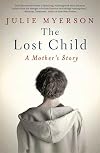
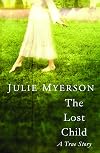
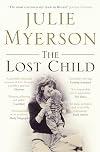
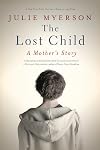
The Lost Child: A Mother's Story
by Julie Myerson
On This Page
Description
One bleak, late winter's day, Julie Myerson finds herself in a Suffolk graveyard, looking for traces of a young woman who died nearly two centuries ago. As a child in Regency England, Mary Yelloly painted an exquisite album of watercolours that uniquely reflected the world she lived in. But Mary died at the age of twenty-one, and when Julie comes across this album, she is haunted by the potential never realised, the barely-lived life cut short. And most of all, she is reminded of her own show more child. Because only days earlier, Julie and her husband locked their eldest son out of the family home. He was just seventeen. How could it have come to this? After a happy growing-up, it had taken only a matter of months for this bright, sweet, good-humoured boy to lose his way completely and propel his family into daily chaos. He had discovered cannabis and nothing they could say or do, no help they could offer, seemed to reach him. And Julie - whose emotionally fragile relationship with her own father had left her determined to love her children better - had to accept that she was, for the moment at least, powerless to bring back the boy she had known. Honest, warm and often profoundly upsetting, this is the parallel story of a girl and a boy separated by centuries. The circumstances are very different, but the questions remain terrifyingly the same. What happens when a child disappears from a family? What will survive of any of us in memory or in history? And how is a mother to cope when love - however absolute, however unconditional - is not enough to save her child? show lessTags
Recommendations







Member Recommendations
Member Reviews
This tells the story of a mother whose son stops going to school, who becomes a different person. It takes the parents months to realize that more is going on than just teenagerhood, that their previously happy, well-adjusted son has become a drug addict. Then there's the longer stretch where they discover that love and support aren't going to help him, and finally the point, after he's stolen and lied and intimidated and hit her, that he has to leave for the sake of the remaining family members. Then they let him return, because they miss him, because the thought of him sleeping in a doorway or going hungry is intolerable. This story is raw and honest and powerful. It's well worth reading, whether or not you have children, just to show more understand a little of what so many people go through.
This is, however, a relatively small part of the book. The larger portion is where Myerson researches the life of a nineteenth century family, and especially the second youngest child, who dies young. They were an ordinary upper class family, and the details are sometimes sketchy. One gets the feeling that Myerson is using this research as a way of retreating from her son's story; it's certainly how this is used in the book. As the situation at home intensifies, she pulls the reader away to the slow process of research, dusty documents and bemused decedents. It's interesting, but in a slower, subdued way. It doesn't mesh with the wrenching drama of the modern segments.
The book ends when it ends, without resolution. Myerson's son is still out there, denying his problem. Myerson includes several of her son's poems and they are exactly what one would expect from a self-pitying teenager.
This book is flawed, but it's important, being an honest and raw account of how a parent feels and adapts to losing a beloved child to addiction. It's not a misery memoir or a how-to guidebook. It doesn't preach or whine, but simply lays out a good parent's anguish at discovering that one can provide all the love and security in the world and still be unable to protect the very person one loves the most. show less
This is, however, a relatively small part of the book. The larger portion is where Myerson researches the life of a nineteenth century family, and especially the second youngest child, who dies young. They were an ordinary upper class family, and the details are sometimes sketchy. One gets the feeling that Myerson is using this research as a way of retreating from her son's story; it's certainly how this is used in the book. As the situation at home intensifies, she pulls the reader away to the slow process of research, dusty documents and bemused decedents. It's interesting, but in a slower, subdued way. It doesn't mesh with the wrenching drama of the modern segments.
The book ends when it ends, without resolution. Myerson's son is still out there, denying his problem. Myerson includes several of her son's poems and they are exactly what one would expect from a self-pitying teenager.
This book is flawed, but it's important, being an honest and raw account of how a parent feels and adapts to losing a beloved child to addiction. It's not a misery memoir or a how-to guidebook. It doesn't preach or whine, but simply lays out a good parent's anguish at discovering that one can provide all the love and security in the world and still be unable to protect the very person one loves the most. show less
 This review was written for LibraryThing Early Reviewers.
http://www.nytimes.com/2009/08/30/books/review/Browning-t.html
Any parent who has had to confront a child’s drug abuse is familiar with the drawn-out agony of despair, impotence, fear, grief and, while there is still a chance for recovery, hope. That last is perhaps the most ravaging of all. Hope means you aren’t yet numb enough, not yet at peace with the chaos into which life has spilled, not yet so defeated and angry that you’re unable to try to help. Julie Myerson, a novelist living in London and the mother of three children, was finally forced to throw her eldest son out of the house — and change the locks — when his cannabis habit so deranged him that he became physically violent. He was 17 years old.
“I am flattened, show more deadened. I have nothing in my mind except the deep black hole that is the loss of my child,” she writes in “The Lost Child: A Mother’s Story.” Myerson undergoes a crash course in drugs. Her son is smoking skunk, she learns, a strain of cannabis whose THC content is much more potent than garden-variety pot — except that it has become garden variety. I had never heard of skunk either, but a quick search online led me to a souk of seeds for the home farmer, advertising up to a toxic 22 percent tetrahydrocannabinol (THC) content in some strains. My shopping cart remained empty as I browsed in disbelief. Even as stronger varieties are being bred and marketed, medical research is linking cannabis use to behavioral and cognitive changes reminiscent of psychiatric disorders like schizophrenia, bipolar disorder, major depression and anxiety disorder. And yet we find ourselves arguing about whether pot is addictive or a gateway drug or should be legalized. We are collectively losing our minds. “The Lost Child” is a cry for help and a plea for a clear acknowledgment of the toll this drug is taking on our children.
Myerson does have something else on her mind while her son’s life shatters. She is in the midst of writing a book about a young woman, Mary Yelloly, who died of consumption in 1838, at the age of 21. Mary left behind an “extraordinary” album of more than 200 watercolors of a fantasy family’s life in Regency England. (The Yale Center for British Art owns three other sketchbooks attributed to her sisters.) Myerson sets out to bring Mary Yelloly to life, tracking down descendants of the family, visiting old houses, discovering diaries and keepsakes stashed in cardboard boxes. Interleaved are descriptions of the madness unfolding in Myerson’s own home. Her son has turned on his 13-year-old brother. He is crashing on friends’ sofas, disappearing for weeks at a time, only to turn up haggard, ill, insensible and still stoned.
Mary and the boy are a strange, difficult pair. The switching back and forth between their stories is jarring and confusing — Mary is addressed intimately as “you”; “the boy,” nameless, is always spoken of in the third person — and mostly maddening. Perhaps there’s a problem in across-the-pond translation: I couldn’t begin to understand why I should care about Mary Yelloly. Her story pales in comparison with the boy’s. There is something tepid in its effect.
I could see what Myerson might be getting at. Mothers in any century will grieve over their lost children. Mothers in any century save little tokens of their love. Every era has its plagues. But the unfolding narrative of a sick child — a sick child here and now — has such inviolable urgency that I had to force myself not to skip past Mary to keep the boy in my sights. Myerson heightens the delusional nature of her quest in a moving scene that draws on her strengths as a novelist: a conversation in a church with Mary’s ghost. “He’s very lonely,” Mary tells her. “He’ll come back.” Mothers will find comfort wherever they can.
But, of course, Myerson finds no respite in her imagination. She is brutal in describing the heartbreaking varieties of hell through which she and her family are dragged. They speak to a psychiatrist who explains that the potency of THC in skunk “can do untold and irreversible damage.” They attend meetings of Families Anonymous. They withhold money from their son, who refuses rehab, but then they relent. The cycle plays itself out several times, with horrifying consequences. Among the more harrowing moments is a struggle with the boy for the key to the house; he strikes his mother’s head so hard that her eardrum is perforated. But even more stunning is that, on her return from the hospital, the family goes out to dinner and “talked about other things. Talked and laughed. The boy didn’t tell me he was sorry and I didn’t ask him to.”
Are you kidding me? I wrote in the margin so hard that my pencil pushed through the page. I had fallen into the trap of Back-seat Parenting. Myerson had her reasons, good, compassionate ones. As she makes clear, no one is harder on the parents of a lost child than the parents themselves, who, with the hindsight bequeathed by their predicament, compulsively review every decision, second-guess every turn, pick through every shard of memory, looking for a clue: Why has this happened? Myerson describes an abusive phone call from an acquaintance whose son is the same age as hers; the mother wants Myerson to know that she’s a misguided, irresponsible parent whose tough love has pushed her son into the abyss.
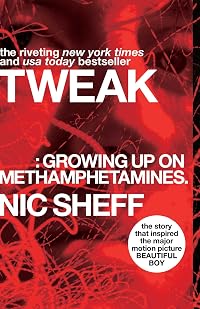
“What can we do?” The boy’s father and mother repeat this question over and over. It’s a question that booms through the (sadly) flourishing literature about children and drug abuse. Raise your hand if you’ve ever called a parent to say: “Your child is in trouble. Your child is doing drugs. Your child’s friends are worried about him.” That’s what I expected; not many hands. “The Lost Child” will appeal to readers of David Sheff’s “Beautiful Boy,” still the standard-bearer — but that’s not enough. These are books for all parents, no matter what shape they think their children are in. Indeed, these books are for anyone interested in public policy relating to drugs. Why would we choose not to see what’s happening all around us? Books like these signal the beginning of awareness. And the beginning of hope that we can do right by our children. show less
Any parent who has had to confront a child’s drug abuse is familiar with the drawn-out agony of despair, impotence, fear, grief and, while there is still a chance for recovery, hope. That last is perhaps the most ravaging of all. Hope means you aren’t yet numb enough, not yet at peace with the chaos into which life has spilled, not yet so defeated and angry that you’re unable to try to help. Julie Myerson, a novelist living in London and the mother of three children, was finally forced to throw her eldest son out of the house — and change the locks — when his cannabis habit so deranged him that he became physically violent. He was 17 years old.
“I am flattened, show more deadened. I have nothing in my mind except the deep black hole that is the loss of my child,” she writes in “The Lost Child: A Mother’s Story.” Myerson undergoes a crash course in drugs. Her son is smoking skunk, she learns, a strain of cannabis whose THC content is much more potent than garden-variety pot — except that it has become garden variety. I had never heard of skunk either, but a quick search online led me to a souk of seeds for the home farmer, advertising up to a toxic 22 percent tetrahydrocannabinol (THC) content in some strains. My shopping cart remained empty as I browsed in disbelief. Even as stronger varieties are being bred and marketed, medical research is linking cannabis use to behavioral and cognitive changes reminiscent of psychiatric disorders like schizophrenia, bipolar disorder, major depression and anxiety disorder. And yet we find ourselves arguing about whether pot is addictive or a gateway drug or should be legalized. We are collectively losing our minds. “The Lost Child” is a cry for help and a plea for a clear acknowledgment of the toll this drug is taking on our children.
Myerson does have something else on her mind while her son’s life shatters. She is in the midst of writing a book about a young woman, Mary Yelloly, who died of consumption in 1838, at the age of 21. Mary left behind an “extraordinary” album of more than 200 watercolors of a fantasy family’s life in Regency England. (The Yale Center for British Art owns three other sketchbooks attributed to her sisters.) Myerson sets out to bring Mary Yelloly to life, tracking down descendants of the family, visiting old houses, discovering diaries and keepsakes stashed in cardboard boxes. Interleaved are descriptions of the madness unfolding in Myerson’s own home. Her son has turned on his 13-year-old brother. He is crashing on friends’ sofas, disappearing for weeks at a time, only to turn up haggard, ill, insensible and still stoned.
Mary and the boy are a strange, difficult pair. The switching back and forth between their stories is jarring and confusing — Mary is addressed intimately as “you”; “the boy,” nameless, is always spoken of in the third person — and mostly maddening. Perhaps there’s a problem in across-the-pond translation: I couldn’t begin to understand why I should care about Mary Yelloly. Her story pales in comparison with the boy’s. There is something tepid in its effect.
I could see what Myerson might be getting at. Mothers in any century will grieve over their lost children. Mothers in any century save little tokens of their love. Every era has its plagues. But the unfolding narrative of a sick child — a sick child here and now — has such inviolable urgency that I had to force myself not to skip past Mary to keep the boy in my sights. Myerson heightens the delusional nature of her quest in a moving scene that draws on her strengths as a novelist: a conversation in a church with Mary’s ghost. “He’s very lonely,” Mary tells her. “He’ll come back.” Mothers will find comfort wherever they can.
But, of course, Myerson finds no respite in her imagination. She is brutal in describing the heartbreaking varieties of hell through which she and her family are dragged. They speak to a psychiatrist who explains that the potency of THC in skunk “can do untold and irreversible damage.” They attend meetings of Families Anonymous. They withhold money from their son, who refuses rehab, but then they relent. The cycle plays itself out several times, with horrifying consequences. Among the more harrowing moments is a struggle with the boy for the key to the house; he strikes his mother’s head so hard that her eardrum is perforated. But even more stunning is that, on her return from the hospital, the family goes out to dinner and “talked about other things. Talked and laughed. The boy didn’t tell me he was sorry and I didn’t ask him to.”
Are you kidding me? I wrote in the margin so hard that my pencil pushed through the page. I had fallen into the trap of Back-seat Parenting. Myerson had her reasons, good, compassionate ones. As she makes clear, no one is harder on the parents of a lost child than the parents themselves, who, with the hindsight bequeathed by their predicament, compulsively review every decision, second-guess every turn, pick through every shard of memory, looking for a clue: Why has this happened? Myerson describes an abusive phone call from an acquaintance whose son is the same age as hers; the mother wants Myerson to know that she’s a misguided, irresponsible parent whose tough love has pushed her son into the abyss.
“What can we do?” The boy’s father and mother repeat this question over and over. It’s a question that booms through the (sadly) flourishing literature about children and drug abuse. Raise your hand if you’ve ever called a parent to say: “Your child is in trouble. Your child is doing drugs. Your child’s friends are worried about him.” That’s what I expected; not many hands. “The Lost Child” will appeal to readers of David Sheff’s “Beautiful Boy,” still the standard-bearer — but that’s not enough. These are books for all parents, no matter what shape they think their children are in. Indeed, these books are for anyone interested in public policy relating to drugs. Why would we choose not to see what’s happening all around us? Books like these signal the beginning of awareness. And the beginning of hope that we can do right by our children. show less
This review was written for LibraryThing Early Reviewers.The Lost Child is a memoir by Julie Myerson. Myerson recounts the time she spent researching the short life of a young English artist, Mary Yelloly while simultaneously trying to deal with her eldest son’s descent into drug addiction. It was a time of much confusion, self-examination, and self-recrimination and one wonders how this book ended up getting written at all. It is surprising that all the sadness and turmoil surrounding her son’s addiction didn’t completely derail the project.
The Lost Child is a heartbreakingly honest account of this time in Myerson’s life. She is uncompromising in her efforts to tell this tale objectively. Before publishing the book, Myerson gave her son the manuscript to read and asked for his show more comments on it, then included those comments in the book. She also included nine of his poems. The author notes that this is a book about loss in all its forms. This is true, but I believe it is also a book about perseverance and hope and realizing that in difficult circumstances involving the people you love, you can do no more than your very best. show less
The Lost Child is a heartbreakingly honest account of this time in Myerson’s life. She is uncompromising in her efforts to tell this tale objectively. Before publishing the book, Myerson gave her son the manuscript to read and asked for his show more comments on it, then included those comments in the book. She also included nine of his poems. The author notes that this is a book about loss in all its forms. This is true, but I believe it is also a book about perseverance and hope and realizing that in difficult circumstances involving the people you love, you can do no more than your very best. show less
This review was written for LibraryThing Early Reviewers.If I could write a book this would be it. The counterpoint of Julie's research into the life of a 19th century artist who died at the age of 21 and her own 21st century struggles with a son who seemed determined to lose himself in drugs before even reaching that age was deeply poignant. The contemporary story rang true in every detail.
I hadn't realized til I read other reviewers' comments that there had been controversy over publishing this book and Myerson's personal revelations. Clearly she did not hide her son's identity but nor did she flaunt it, referring to him always as "the boy" - an affectionate coinage she and her husband used since his birth. That her son reacted with hostility is understandable in terms of both the show more embarrassment he quite naturally feels and the fact that he is an addict who hasn't faced his addiction. Myerson's problems with her husband may well have contributed to their son's behavior, but there are also chemical and genetic components to addiction. Whatever one might say to friends or relatives, this kind of situation can only be understood by one who has experienced it personally. Myerson writes from a desperate and desperately loving place - one can only hope that her son may one day be well enough for reconciliation. show less
I hadn't realized til I read other reviewers' comments that there had been controversy over publishing this book and Myerson's personal revelations. Clearly she did not hide her son's identity but nor did she flaunt it, referring to him always as "the boy" - an affectionate coinage she and her husband used since his birth. That her son reacted with hostility is understandable in terms of both the show more embarrassment he quite naturally feels and the fact that he is an addict who hasn't faced his addiction. Myerson's problems with her husband may well have contributed to their son's behavior, but there are also chemical and genetic components to addiction. Whatever one might say to friends or relatives, this kind of situation can only be understood by one who has experienced it personally. Myerson writes from a desperate and desperately loving place - one can only hope that her son may one day be well enough for reconciliation. show less
This review was written for LibraryThing Early Reviewers.The title is exactly what this book is about ---Julie Myerson's detailed, emotional and very personal description of her life through the dramatic and exhausting relationship with her teenage son. Interwoven with this are descriptions of her own painful relationship with her father as well as with her work as a biographer of a dead young artist from a century ago--which becomes a search for herself. At times it was a little confusing to see which part of the three interwoven pieces she was describing---but each time this was quickly resolved.
I wanted the book to continue----we need to hear about the next ten years the father mentions as the time it might take to get their son back---or is it maybe a lifetime? She writes so that you can show more feel her tears and completely understand her sobs. It seemed so completely real but her description of a dinner party that fell apart only made me realize how difficult it is to explain this family tragedy in a few sentences. It takes a book just to begin the story, and of course it's not ended. Will time help? One can hope Julie can write another book later---with help from her son? show less
I wanted the book to continue----we need to hear about the next ten years the father mentions as the time it might take to get their son back---or is it maybe a lifetime? She writes so that you can show more feel her tears and completely understand her sobs. It seemed so completely real but her description of a dinner party that fell apart only made me realize how difficult it is to explain this family tragedy in a few sentences. It takes a book just to begin the story, and of course it's not ended. Will time help? One can hope Julie can write another book later---with help from her son? show less
This review was written for LibraryThing Early Reviewers.This was a haunting, beautiful read, both the parts about Mary Yelloly and her family, and about the author's struggles with her son. One of the things I took from this book is the fact that you can never really know someone else--you can boil their lives down to the inarguable facts, the birth and death dates, a collection of relics, but there's always something that will elude you. There's so much that Myerson will never know about either Mary or her son, no matter how hard she tries, and that's just how life is.
This review was written for LibraryThing Early Reviewers.This poignant tale of the loss of a child, portrayed by the loss of Mary Yelloly in the 1800s and the story of the son of the author as he falls into the world of drug abuse, was far more engaging than I could have ever expected. The pain and the frustration felt by both sets of parents is portrayed beautifully and it seems almost fitting that the author identified with Mary at this time. Mary was still quite young when she succumbed to illness and left behind a tiny legacy of art and hints of love affairs never pursued. The author's son disappears into his drugs, quite literally leaving both of his parents floundering as they watch the young man they've known disappear in front of them.
This would not normally be a book I'd have been show more drawn to but I was immersed in this story before I'd read fifty pages. The book is sad but hopeful, terrifying but temperate, painful but enlightening. I am grateful that I am not going through what this family is, but realize that it takes so very little to be in that exact same circumstance. I finished this book and felt all the richer for having read it. show less
This would not normally be a book I'd have been show more drawn to but I was immersed in this story before I'd read fifty pages. The book is sad but hopeful, terrifying but temperate, painful but enlightening. I am grateful that I am not going through what this family is, but realize that it takes so very little to be in that exact same circumstance. I finished this book and felt all the richer for having read it. show less
This review was written for LibraryThing Early Reviewers.Members
- Recently Added By
Author Information
16+ Works 1,234 Members
Awards and Honors
Distinctions
Common Knowledge
- Original publication date
- 2009
- Related movies
- The Lost Child (2001 | IMDb)
- Dedication
- For him: he knows who he is and I love him.
- First words
- SSuffolk, June 1838. A day so hot the air is glass.
- Quotations
- To be absolutely honest, he says carefully, I wasn't all that interested in the stuff about the Mary Yelloly person.
- Last words
- (Click to show. Warning: May contain spoilers.)BUt that hasn't happened yet and right now this moment, so full of possibility, is all we have.
Classifications
Statistics
- Members
- 141
- Popularity
- 232,929
- Reviews
- 45
- Rating
- (3.08)
- Languages
- English
- Media
- Paper, Audiobook, Ebook
- ISBNs
- 10
- ASINs
- 2