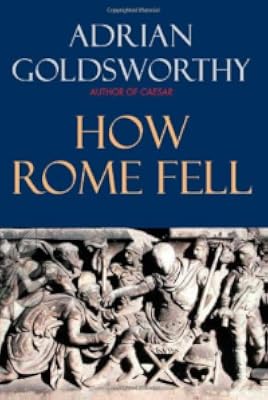
How Rome Fell: Death of a Superpower
by Adrian Goldsworthy
On This Page
Description
In AD 200, the Roman Empire seemed unassailable, its vast territory accounting for most of the known world. By the end of the fifth century, Roman rule had vanished in western Europe and much of northern Africa, and only a shrunken Eastern Empire remained.This was a period of remarkable personalities, from the philosopher-emperor Marcus Aurelius to emperors like Diocletian, who portrayed themselves as tough, even brutal, soldiers. It was a time of revolutionary ideas, especially in religion, show more as Christianity went from persecuted sect to the religion of state and emperors. Ultimately, this is the story of how an empire without a serious rival rotted from within, its rulers and institutions putting short-term ambition and personal survival over the greater good of the state. show lessTags
Recommendations


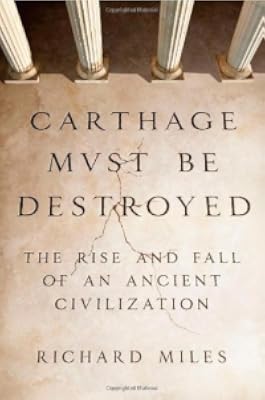
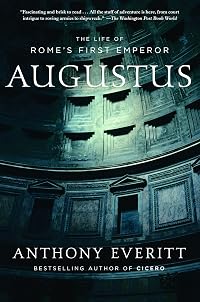
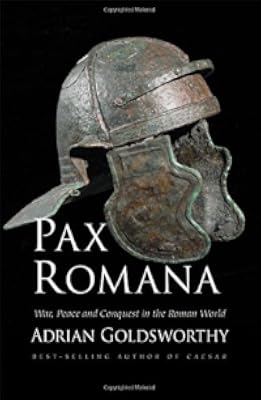
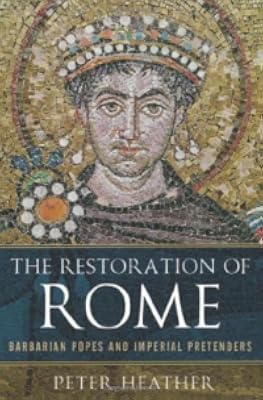



Member Recommendations
HarmlessTed Where Heather emphasizes the pressure barbarians exercised on the borders of the Roman empire, Goldsworthy`s focus is on internal Roman conflicts, as long-time consequences of the regime-change from republic to principate.
Member Reviews
How Rome Fell is a comprehensive account of the centuries-long collapse of the Roman Empire, covering the period from the death of Marcus Aurelius in 180 AD to the last expansion of Justinian in 560 AD. Goldsworthy charts a middle course, reconstructing Gibbon's "decline and fall" narrative against a more benign "transformation to Late Antiquity" theory, and being careful about using Rome as a model for contemporary Western problems, while having his cake about politics circa 2008.
The Pax Romana was one of the triumphs of government, but the Roman Empire was also improvised, growing on top of Republican traditions and without clear mechanisms of succession. Commodus, who succeeded Marcus Aurelius, was young and had numerous personal show more flaws. His assassination prompted an awareness that anyone could become Emperor, and from then on there was not a decade without usurpers and civil wars.
Death by intrigue was the most common cause of death for Roman emperors after Marcus Aurelius. Being on the wrong side of an intrigue was fatal, sometimes for entire families. This caused a series of cascading failures. Emperors afraid of a rival gaining large amounts of power divided authority, with late Roman provinces and military units much smaller than previous ones. Yet this meant that the emperor personally had to respond to extraordinary challenges, like large border raids. Provinces that did not receive attention for their problems could raise usurpers. Divided authority between military commanders and the civilians responsible for logistics prevented responses.
There were no serious external rivals to Rome. Persia could threaten border provinces, but the barbarian tribes were always disunited. Rather, endless civil war sapped resources. Whoever won, Rome lost. Goldsworthy notes the perennial insufficiency of statistics, but there appears to have been a long manpower and economic crisis from the 3rd century onwards. Barbarian tribes settled inside the empire, including Goths and Vandals, were signs of Roman internal weakness. Though non-Italians were long seen as equally Roman, these tribal kings created alternative lines of authority that further weakened the central government.
In the end Rome fell because its leaders could no longer see beyond the nice crisis, valued personal survival over institutional stability, and lost any kind of elite solidarity. Goldsworthy warns against direct parallels, but living through the past 15 years of American history... yikes. show less
The Pax Romana was one of the triumphs of government, but the Roman Empire was also improvised, growing on top of Republican traditions and without clear mechanisms of succession. Commodus, who succeeded Marcus Aurelius, was young and had numerous personal show more flaws. His assassination prompted an awareness that anyone could become Emperor, and from then on there was not a decade without usurpers and civil wars.
Death by intrigue was the most common cause of death for Roman emperors after Marcus Aurelius. Being on the wrong side of an intrigue was fatal, sometimes for entire families. This caused a series of cascading failures. Emperors afraid of a rival gaining large amounts of power divided authority, with late Roman provinces and military units much smaller than previous ones. Yet this meant that the emperor personally had to respond to extraordinary challenges, like large border raids. Provinces that did not receive attention for their problems could raise usurpers. Divided authority between military commanders and the civilians responsible for logistics prevented responses.
There were no serious external rivals to Rome. Persia could threaten border provinces, but the barbarian tribes were always disunited. Rather, endless civil war sapped resources. Whoever won, Rome lost. Goldsworthy notes the perennial insufficiency of statistics, but there appears to have been a long manpower and economic crisis from the 3rd century onwards. Barbarian tribes settled inside the empire, including Goths and Vandals, were signs of Roman internal weakness. Though non-Italians were long seen as equally Roman, these tribal kings created alternative lines of authority that further weakened the central government.
In the end Rome fell because its leaders could no longer see beyond the nice crisis, valued personal survival over institutional stability, and lost any kind of elite solidarity. Goldsworthy warns against direct parallels, but living through the past 15 years of American history... yikes. show less
Excellent. Goldsworthy states that he is not an expert in this period, which actually makes the book better for the general reader as he examines a variety of perspectives on various controversies rather than presenting the reader with a neat analysis. I am working my way through Gibbon and found this to be the most helpful overview so far of the period and the debates surrounding it. Very readable for a non-specialist. It does focus mainly on politics and military issues. If you want something about the life and times of the ordinary person, there is not much here.
What an amazing, epic history book!
I've studied and read about the earlier eras of Roman history (especially the 100 BC - 100 AD era) quite a bit. This was a different experience altogether. The author has an excellent command of the source material. I liked that he often admits the limitations of the evidence ("there is no reliable statistics" is a common refrain in multiple chapters and about multiple topics like army size, population size, economic activity etc). I was astonished at the sheer quantity of civil wars, assassination and war in this era.
Two chapters of the book stand out in particular. I loved the chapter focused on the decline of Roman power in Britain (and how this decline has been linked to the Arthurian legend) and show more the rise of the Saxons. The final chapter - the epilogue - was simply outstanding. Not only did the chapter sum up the themes of the books but it also drew fascinating social lessons from it.
I read the book in audio format and may well buy a print copy for my collection. show less
I've studied and read about the earlier eras of Roman history (especially the 100 BC - 100 AD era) quite a bit. This was a different experience altogether. The author has an excellent command of the source material. I liked that he often admits the limitations of the evidence ("there is no reliable statistics" is a common refrain in multiple chapters and about multiple topics like army size, population size, economic activity etc). I was astonished at the sheer quantity of civil wars, assassination and war in this era.
Two chapters of the book stand out in particular. I loved the chapter focused on the decline of Roman power in Britain (and how this decline has been linked to the Arthurian legend) and show more the rise of the Saxons. The final chapter - the epilogue - was simply outstanding. Not only did the chapter sum up the themes of the books but it also drew fascinating social lessons from it.
I read the book in audio format and may well buy a print copy for my collection. show less
This is a well-written treatise on the last 200 years of the Roman Empire in the west. It is by no means equal to the scope and literary quality of Edward Gibbons iconic multi volume work “Decline and Fall of the Roman Empire”. This statement does not take anything away from Adrian Goldsworthy’s How Rome Fell -Death of a Superpower.
In order to better understand the merits of this new treatise on the fall of Roman Empire, it only makes sense to contrast it with Gibbon’s piece de resistance, which arguably has remained eminent even after 250 years.
Where Gibbon’s detached, neutral style anticipated in many ways modern scientific writing, his interspersed moralism was reminiscent of the great ancient historians.
Conforming to show more contemporary practice, Goldsworthy’s work is devoid of aphorisms and moral lessons.
However, what matters most is that How Rome Fell -Death of a Superpower can be seen as an important addition to Gibbons work.
Goldsworthy’s work injects many up-to-date facts and ideas from newly gathered archeological data but never claims the data to be complete. Therefore, even though Goldsworthy has a clearly defined thesis, he is always realistic enough to point at optional interpretations of the limited data available. In the end, this reader realizes that we know much less about certain eras of history than we have been led to believe. Adrian Goldsworthy’s work, unlike others, does not veil this very important fact, and it manages to make careful and very educated extrapolations utilizing a blend of common sense, awareness of human nature and the accumulated archeological discoveries since Gibbons era. show less
In order to better understand the merits of this new treatise on the fall of Roman Empire, it only makes sense to contrast it with Gibbon’s piece de resistance, which arguably has remained eminent even after 250 years.
Where Gibbon’s detached, neutral style anticipated in many ways modern scientific writing, his interspersed moralism was reminiscent of the great ancient historians.
Conforming to show more contemporary practice, Goldsworthy’s work is devoid of aphorisms and moral lessons.
However, what matters most is that How Rome Fell -Death of a Superpower can be seen as an important addition to Gibbons work.
Goldsworthy’s work injects many up-to-date facts and ideas from newly gathered archeological data but never claims the data to be complete. Therefore, even though Goldsworthy has a clearly defined thesis, he is always realistic enough to point at optional interpretations of the limited data available. In the end, this reader realizes that we know much less about certain eras of history than we have been led to believe. Adrian Goldsworthy’s work, unlike others, does not veil this very important fact, and it manages to make careful and very educated extrapolations utilizing a blend of common sense, awareness of human nature and the accumulated archeological discoveries since Gibbons era. show less
This is the third try I've had at this big question. Gibbon was, of course the first. Goldsworthy wants to understand the past in its own context and wants to downplay the "Lessons for modern America" approach. I'm in favour of this for as Adrian points out "Historians do not make the best prophets." Still, the lessons of the big collapse should be laid out for the present student. A fact that Goldsworthy wants us desperately to remember when consulting the records left by the Romans is that they did not know they were "Falling". It always seemed to them, that though the times were a bad patch, the empire had come through before, and odds were good it would again. Goldsworthy works on defining the long view, that serious flaws in the show more Roman method accumulated to the breaking point in the mid-four fifties. This is definitely a book to at least read along with Gibbon, and Peter Heather on the classical apocalypse! show less
Why did the Western half of the Roman Empire fall? Some people say it didn't, but evolved into a new shape. Adrian Goldsworthy disagrees with this analysis pointing to the material differences shown in the archaelogical record. He then takes us through a history of the Empire, particularly focussing on the 4th and 5th centuries, and then considers what lessons we can learn from the story.
He makes a convincing case for his answer, which is the frequent civil wars between contenders to be Emperor meant a focus on internal threats rather than external ones, which then took advantage of the Empire's distracted attention to go looking for plunder, which formed something of a vicious cycle. The Eastern half of the Empire had more resources show more and the good fortune to have a series of long-lived competent emperors at the crucial time. show less
He makes a convincing case for his answer, which is the frequent civil wars between contenders to be Emperor meant a focus on internal threats rather than external ones, which then took advantage of the Empire's distracted attention to go looking for plunder, which formed something of a vicious cycle. The Eastern half of the Empire had more resources show more and the good fortune to have a series of long-lived competent emperors at the crucial time. show less
An insightful history of each stage in Rome's fall, from the catastrophes of the Third Century, through the transformation of the Fourth Century to the final dissolution of the Western Empire. An exceptional work of scholarship, yet effectively written of the informed lay. His focus on internal strife as the key explanation for Rome's fall well- argued but is subject to debate.
Members
- Recently Added By
Published Reviews
This is not a book that I could use in the classroom--too thick, too well-written, and perhaps most dangerously, too clear. Portraying history in such simplistic terms, however, fails to explain that governing the Late Roman Empire was a complex business. But since this is not what Goldsworthy set out to do, such criticism is unfair. By design, this is the sort of book that politicians, school show more teachers, and my colleagues in the Department of Physics will read, sucked in by the blurb on the dust jacket. show less
added by cinaedus
Lists

r/AskHistorians' Recommended Books
1,068 works; 18 members
Author Information

41+ Works 9,315 Members
Adrian Goldsworthy is an award-winning historian of the classical world. He is the author of numerous books about ancient Rome, including Hadrian's Wall, Caesar, How Rome Fell, Pax Romana, and Augustus. Goldsworthy lives in South Wales.
Awards and Honors
Distinctions
Common Knowledge
- Canonical title
- How Rome Fell: Death of a Superpower
- Original publication date
- 2009
- People/Characters
- Attila the Hun
- Important events
- Fall of the Roman Empire
- Blurbers
- Montefiore, Simon Sebag ; Coates, Steven ; Miller, Mark ; Kirsch, Adam
Classifications
- Genres
- History, Nonfiction, General Nonfiction
- DDC/MDS
- 937.09 — History & geography History of ancient world (to ca. 499) Italian Peninsula to 476 and adjacent territories to 476 Division of empire 395-476 A.D.
- LCC
- DG311 .G65 — History of Europe, Asia, Africa and Oceania City History of Italy Ancient Italy. Rome to 476 History By period Empire, 27 B.C. - 476 A.D. 284-476. Decline and fall
- BISAC
Statistics
- Members
- 960
- Popularity
- 27,507
- Reviews
- 21
- Rating
- (3.90)
- Languages
- 7 — Dutch, English, Finnish, Italian, Portuguese, Russian, Spanish
- Media
- Paper, Audiobook, Ebook
- ISBNs
- 20
- ASINs
- 8