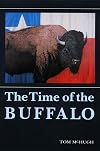
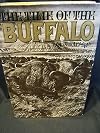
The Time of the Buffalo
by Tom McHugh
On This Page
Description
A superb study of the Bison in folklore and fact that is also an account of western expansion and a history of the Plains Indians."- The magnificent beast that once roamed from Alaska to the Carolinas "in numbers numberless" is superbly memorialized in this full-scale study, which begins with his genesis in the Ice Age, traces his evolution and natural history, observes his patterns of behavior, and records his life-and-death relationship with three cultures of man. Here are the ways in show more which the buffalo crucially affected (and was affected by) the hunters of the Pleistocene epoch and, in our era, the life of the Plains Indians and the nineteenth-century frontiersmen. Here is the creature himself, seen as an integral part of the rich ecological and cultural tapestry that includes the grasses of the plains, the Kiowa Sun Dance, hunting methods from "foot surrounds" to buffalo-running on horseback, the making of pemmican, the sacred albino bison, the politics of man, the rutting battles of bulls ... a vivid spectrum of human, natural, and animal lore. From his own research among present-day herds, zoologist-documentarian Tom McHugh offers a rare close-up view of the buffalo's habits and life cycle, detailing such aspects as mating, calving, stampedes, play and aggression. He relates this "life history" to the wilderness--and its other animal inhabitants-through time. ln equally fascinating detail he tells how the Plains Indians used the buffalo for food, clothing, and shelter, and endowed it with spirit; how the European settlers viewed it first as an object of awe and then as a source of plunder and, by nearly exterminating this single species, destroyed all the Plains cultures, driving the Indians into reservations more effectively and tragically than did all the Horse Soldiers. The book is alive with resonant detail: hunting ways, buffalo products, stories and ceremonies of the Cheyenne, Sioux, Mandan, Cree, and Assiniboine tribes, rare and pertinent Indian drawings, the use of buffalo horns as spoons, the Plains-wide revolution effected by the horse. Here, too, are reports from Coronado, Lewis and Clark, the painter George Catlin; the diaries of trappers, soldiers, travelers. And this is how luxurious hunting parties (Sir St. George Gore in 1854 and Grand Duke Alexis in 1872) found sport in a land just beginning its tragedy; and how the hidemen of 1871 to 1883, catering to Eastern markets for robes and leather, and out for fast money in lean times, completed the tragedy. The movement to save the buffalo completes a large, informative, and moving work whose lucid narrative and lavish complement of maps, drawings, paintings, and photographs give us at last, in a full sense, the life, the world, the nature, the time of the buffalo.--Adapted from book jacket. show lessTags
Recommendations





















Member Reviews
Members
- Recently Added By
Author Information
2+ Works 154 Members
At an early age in his hometown of Cleveland, Ohio, Tom McHugh started a career in biology by working at the Cleveland Museum of Natural History. His continued interest in the natural sciences led him to study zoology and wildlife management while he attended Oberlin College, Miami University, and the University of Wisconsin, from which he show more graduated with a B.A., M.A., and Ph.D. Mr. McHugh was the principal photographer for Walt Disney's The Vanishing Prairie and White Wilderness and also worked on five other Academy Award-winning films in this True-Life Adventure series. As cameraman-director for the Jack Douglas Organizations, he traveled to every continent except Antarctia while preparing over one hundred television documentaries. Mr. McHugh's photographs and articles on wildlife have appeared in Natural History, Audubon, Sports Afield, National Geographic, Time, Life, and the Encyclopaedia Britannica show less
Awards and Honors
Awards
Common Knowledge
- Canonical title
- The Time of the Buffalo
- Original publication date
- 1972
- Important places
- American West
- Dedication
- To my mother and father
- First words
- In the fall of 1907, a rolling tract of Oklahoma prairie lay still and unused under the October sun.
- Last words
- (Click to show. Warning: May contain spoilers.)If man cannot make a passionate commitment to the preservation of his fellow creatures, many more will vanish in time, and our world, ironically enough, will become a cold, inhuman place to live.
- Original language
- English
Classifications
- Genres
- Nonfiction, Science & Nature, General Nonfiction, History
- DDC/MDS
- 599.7358 — Natural sciences & mathematics Animals Mammals Carnivora; Cats, Dogs, Bears, Seals [Even-toed ungulates now 599.63–599.65] [Ruminants now within 599.63–599.65] [Bovids now at 599.64]
- LCC
- QL737 .U53 .M3 — Science Zoology Zoology Chordates. Vertebrates Mammals
- BISAC
Statistics
- Members
- 152
- Popularity
- 216,664
- Reviews
- 1
- Rating
- (4.14)
- Languages
- English
- Media
- Paper, Ebook
- ISBNs
- 4
- ASINs
- 5