On This Page
Description
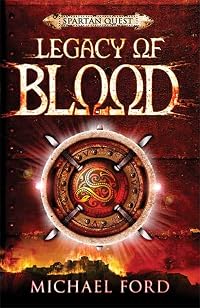
When Lysander and his barracks are sent to Taras, Italy, to protect a vital trading post threatened by a local uprising, he spies a statue of a figure wearing the Fire of Ares and sets out to discover his connection to the city, hoping to learn more of his mysterious heritage.Tags
Recommendations









































Member Reviews
After the death of his grandfather, Lysander feels lost and alone. He goes to the Delphic Oracle who prophesies this for him:
"You are a leader but not so./You are a slave, but to yourself./You must free yourself, child of two worlds./The shackles that bind you are of your own making./Fear not, your destiny is branded on your heart."
The novel, much darker and more intense than the other two in the trilogy, takes him with a band of youths from his flock to put down an insurrection in the Spartan colony of Taras--[the **only** Spartan colony, modern Taranto, Italy]. Sometimes fighting does get grisly. Through his leadership qualities and his nobility of character, he fulfills the prophecy and is entitled to again wear the Fire of Ares show more amulet, symbol of his heritage. I took this whole trilogy as the author's conception of the youth of the historical Spartan admiral Lysander and how he might have dealt with prejudice, developed his leadership qualities, and why he went into the navy, rather than the usual infantry. We know nothing about his early life, so the author is wide open to speculation. Lysander was endearing, as well as his friends and cousin. I feel
both young people or adults would enjoy this trilogy.
Very highly recommended. show less
"You are a leader but not so./You are a slave, but to yourself./You must free yourself, child of two worlds./The shackles that bind you are of your own making./Fear not, your destiny is branded on your heart."
The novel, much darker and more intense than the other two in the trilogy, takes him with a band of youths from his flock to put down an insurrection in the Spartan colony of Taras--[the **only** Spartan colony, modern Taranto, Italy]. Sometimes fighting does get grisly. Through his leadership qualities and his nobility of character, he fulfills the prophecy and is entitled to again wear the Fire of Ares show more amulet, symbol of his heritage. I took this whole trilogy as the author's conception of the youth of the historical Spartan admiral Lysander and how he might have dealt with prejudice, developed his leadership qualities, and why he went into the navy, rather than the usual infantry. We know nothing about his early life, so the author is wide open to speculation. Lysander was endearing, as well as his friends and cousin. I feel
both young people or adults would enjoy this trilogy.
Very highly recommended. show less
Judith says: The third in the series was much more intense. If you want action and losts of graphic battles, this is the book for you. Lysander and his fellow barrack mates have been sent to recapture a Spartan colony. One of Lysander's enemies on the Spartan Council is hoping that Lysander will be killed and will be out of the way.
Lysander's confusion as to where in Spartan society he belongs, leads to a deep change in how Lysander sees the world and what he is meant to do. Obviously some belief must be suspended since the kind of changes Lysander hopes to see did not happen that fast in Spartan society.
I enjoyed the interaction between the boys and how their hardships and battle changed the kind of people they were. Greek history was show more interspersed and would hopefully lead the reader in wanting to learn more about Ancient Greece.
All of the characters were interesting, the boys and the men. My interest in Greece, particularly Sparta, makes these novels very interesting to me. The battle descriptions, however, are somewhat graphic and could be a little more than some readers like. I hope that Ford writes a few more and takes us up to where one of Lysander's friends becomes one of the Spartan kings. Leonidas, the Spartan king that saves Greece from the Persians at the Battle of Thermoplyae. show less
Lysander's confusion as to where in Spartan society he belongs, leads to a deep change in how Lysander sees the world and what he is meant to do. Obviously some belief must be suspended since the kind of changes Lysander hopes to see did not happen that fast in Spartan society.
I enjoyed the interaction between the boys and how their hardships and battle changed the kind of people they were. Greek history was show more interspersed and would hopefully lead the reader in wanting to learn more about Ancient Greece.
All of the characters were interesting, the boys and the men. My interest in Greece, particularly Sparta, makes these novels very interesting to me. The battle descriptions, however, are somewhat graphic and could be a little more than some readers like. I hope that Ford writes a few more and takes us up to where one of Lysander's friends becomes one of the Spartan kings. Leonidas, the Spartan king that saves Greece from the Persians at the Battle of Thermoplyae. show less
Legacy of Blood picks up from exactly where the last book left off. Lysander returns home victorious, but grieving at the loss of his grandfather but almost immediately news comes from the Spartan colony of Taras (modern day Taranto in southern Italy). The colony has been over-run by the enslaved population and foreign insurgents. Meanwhile old prejudices and power politics are at work, and the Spartan council is convinced to send Lysander's barracks back into action as the Spartan response to the rebellion.
This series continues to live up to its promise - packed with historical details and a plot that races along, making it ideal for its intended audience, and a very good read for anyone of any age. Lysander must come to terms with show more his own identity in this book, and there are still issues of prejudice and loyalty and enmity to deal with.
A wonderful series. show less
This series continues to live up to its promise - packed with historical details and a plot that races along, making it ideal for its intended audience, and a very good read for anyone of any age. Lysander must come to terms with show more his own identity in this book, and there are still issues of prejudice and loyalty and enmity to deal with.
A wonderful series. show less
Ratings
Members
- Recently Added By
Author Information
12 Works 1,587 Members
Michael Ford is BBC journalist who reported on the aftermath of September 11th. A broadcaster specializing in religious affairs, he has recently completed a doctoral thesis in Christian spirituality.
Series

Common Knowledge
- Canonical title
- Legacy of Blood
Classifications
Statistics
- Members
- 33
- Popularity
- 838,164
- Reviews
- 3
- Rating
- (4.50)
- Languages
- English
- Media
- Paper, Ebook
- ISBNs
- 5