On This Page
Description
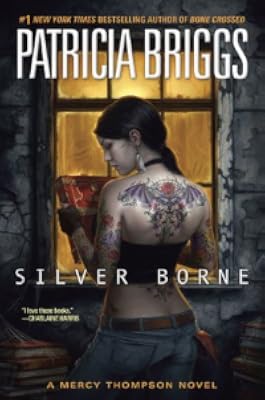
Mercy Thompson, car mechanic and shapeshifter, never knows what the day—or night—may bring. But in the fifth novel in the #1 New York Times bestselling series, she's about to learn that while some secrets are dangerous—those who seek them are just plain deadly…Mercy is smart enough to realize that when it comes to the magical Fae, the less you know, the better. But you can’t always get what you want. When she attempts to return a powerful Fae book she’d previously borrowed show more in an act of desperation, she finds the bookstore locked up and closed down.
It seems the book contains secret knowledge—and the Fae will do just about anything to keep it out of the wrong hands. And if that doesn’t take enough of Mercy’s attention, her friend Samuel is struggling with his wolf side—leaving Mercy to cover for him, lest his own father declare Sam’s life forfeit.
All in all, Mercy has had better days. And if she isn’t careful, she might not have many more to live... show less
Tags
Recommendations










Member Recommendations
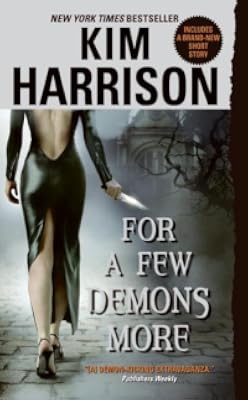
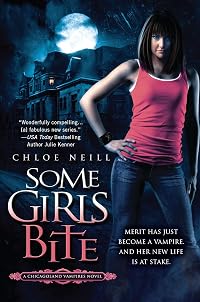
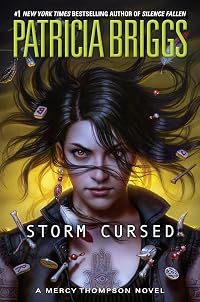
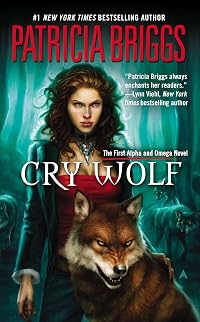
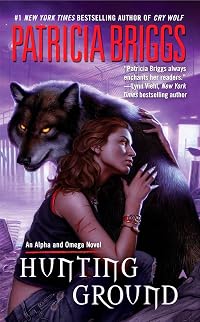
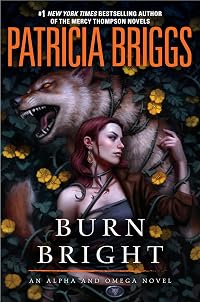
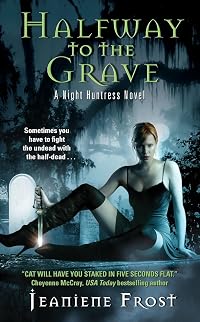
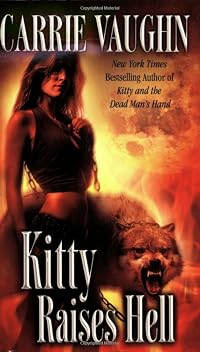
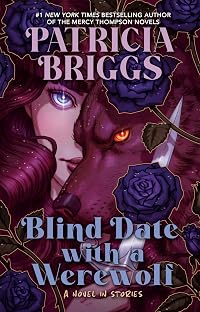
DonnerLibrary Both books involve women learning more about the werewolves they are involved with.
60
Member Reviews
I don't recommend doing what Naomi and I did, which is read through the Mercy Thompson books back to back. It becomes reasonably clear that the reader is getting roughly the same story with different covers. I've spent a lot of time considering this; the series has many ardent fans, and I used to be among them. I think it all depends on what one enjoys in a story, and how tolerant one is of repetition. I'd rate my tolerance somewhere in the middle, but only until the tipping point occurs, either through saturation or through pet peeve. I think series like this are best enjoyed exactly as they occurred: published one at a time, a year in between. Then the repeated explanations and summaries don't irritate, they only recall, taking on the show more cadence of storytelling, when the reader slips into the story world with the beginning "long, long ago and far, far away..."
Despite a reliance on folklore and fairy tales, the Mercy Thompson series is and remains a sanitized, muted version of those grim worlds. The slavering wolf can actually control themselves, if they are old and really powerful. The strange fae will probably help you if you amuse or respect them, but even the bad ones won't trap you for years until everyone you loved has died. Scary vampires exist, but a sheep necklace can protect you; there's also a vampire that wears t-shirts and watches movies. None of the wolves go crazy despite frequent assertions that it can happen. No one except bad guys are ripped apart. Even vampires can repent. Victims are saved. Misguided humans are coached. Almost everyone gets a chance to redeem themselves. There's very little true evil. No one even swears. I note it because while it is one of the things I enjoy, that sense of ultimate goodness and happy endings, I also believe it explains part of the series' popularity.
Unfortunately, familiarity also enables recognition of faults, and there are quite a few. The overall series arc lacks a sense of coherency. After reading through a number of the Briggs' family posts, its clear that the series expanded to accommodate popularity and not out of an internal sense of story progression. The first was written; Blood Bound came about because the first did well, followed by a surprise contract to buy three more books. I'd contrast this with another favorite author, Ilona Andrews, who had a clear arc for a seven-book series and a sense of where it was headed in both story and emotion. The plotting to date in Mercy has been roughly the same for each book: someone is imprisoned and with Mercy's special powers, the group will save the day. This is true in Moon Called (Adam), Blood Bound (Stefen, etc.), Iron Kissed (Zee), Bone Crossed (Mercy) and Silver Bourne (spoiler/Mercy). The emotional plotting is also startlingly similar: Mercy will have trouble trusting her affection for Adam. After mistrusting him when she should not have, he will still support her and she will vow to trust him. At the same time, one of the powerful people she loves is willing to sacrifice/suicide.
Binge-reading also draws attention to a narrative containing a lot of telling without showing. Mercy will have asides in every book telling about her history, the fae reservation, werewolves, the wolves' coming out and her relationships with Samuel and Adam. Usually she will also educated the reader on Zee and the Grey Lords, and Stefen and the seethe. I think this is generally forgivable to many readers as the familiarity echoes the storytelling tradition, and the ritual of description, but again distance makes the heart grow fonder.
But those are mostly academic issues. What I've found less personally enjoyable, and perhaps even less forgivable are the roles women have in the series. Which is very little: Mercy operates in a man's world, both figuratively and literally. Mercy herself demonstrates no particular direct agency; all of the plots start with her reacting to an event that happens to her genuine, unsuspecting little self. The reader is quickly introduced to the idea that women associated with werewolf packs 'hate' Mercy, and that becomes an ongoing theme through the series. Even human women dislike Mercy, as Gabriel's mom Sylvia does. The exception to agency is Blood Bound, where the evil and conniving Marsilia engineers an elaborate trap, although clearly she still hates Mercy. I realized that even side characters are almost universally male with the exception of a couple of inscrutable fae. The only exceptions being Mercy's mom--who is never more than a whirlwind in and out of the scene--and Adam's daughter, Jesse. I found it disappointing, particularly from a female author with girls of her own.
Silver Bourne was the gestalt for me, highlighting all the redundancies. It comes as no surprise then, that a book lent to Mercy by a bookstore owner (male) may have other properties, and that the werewolves in the pack are still trying to break Adam and Mercy up. Samuel is sick at heart and only his wolf saves him, and now Mercy must save his wolf. Mercy's home is targeted. Someone is kidnapped and Mercy must save them, and Adam endures several challenges. Samuel's depression plot was solved very easily and tritely by L-U-V, which I thought disappointing after the complicated emotional fallout of the rape back in Iron Kissed. It was the last book of the series I bought, back in the day when I was silly enough to still auto-buy authors.
Three and a half redundancies, rounding down because that's what I did last time. show less
Despite a reliance on folklore and fairy tales, the Mercy Thompson series is and remains a sanitized, muted version of those grim worlds. The slavering wolf can actually control themselves, if they are old and really powerful. The strange fae will probably help you if you amuse or respect them, but even the bad ones won't trap you for years until everyone you loved has died. Scary vampires exist, but a sheep necklace can protect you; there's also a vampire that wears t-shirts and watches movies. None of the wolves go crazy despite frequent assertions that it can happen. No one except bad guys are ripped apart. Even vampires can repent. Victims are saved. Misguided humans are coached. Almost everyone gets a chance to redeem themselves. There's very little true evil. No one even swears. I note it because while it is one of the things I enjoy, that sense of ultimate goodness and happy endings, I also believe it explains part of the series' popularity.
Unfortunately, familiarity also enables recognition of faults, and there are quite a few. The overall series arc lacks a sense of coherency. After reading through a number of the Briggs' family posts, its clear that the series expanded to accommodate popularity and not out of an internal sense of story progression. The first was written; Blood Bound came about because the first did well, followed by a surprise contract to buy three more books. I'd contrast this with another favorite author, Ilona Andrews, who had a clear arc for a seven-book series and a sense of where it was headed in both story and emotion. The plotting to date in Mercy has been roughly the same for each book: someone is imprisoned and with Mercy's special powers, the group will save the day. This is true in Moon Called (Adam), Blood Bound (Stefen, etc.), Iron Kissed (Zee), Bone Crossed (Mercy) and Silver Bourne (spoiler/Mercy). The emotional plotting is also startlingly similar: Mercy will have trouble trusting her affection for Adam. After mistrusting him when she should not have, he will still support her and she will vow to trust him. At the same time, one of the powerful people she loves is willing to sacrifice/suicide.
Binge-reading also draws attention to a narrative containing a lot of telling without showing. Mercy will have asides in every book telling about her history, the fae reservation, werewolves, the wolves' coming out and her relationships with Samuel and Adam. Usually she will also educated the reader on Zee and the Grey Lords, and Stefen and the seethe. I think this is generally forgivable to many readers as the familiarity echoes the storytelling tradition, and the ritual of description, but again distance makes the heart grow fonder.
But those are mostly academic issues. What I've found less personally enjoyable, and perhaps even less forgivable are the roles women have in the series. Which is very little: Mercy operates in a man's world, both figuratively and literally. Mercy herself demonstrates no particular direct agency; all of the plots start with her reacting to an event that happens to her genuine, unsuspecting little self. The reader is quickly introduced to the idea that women associated with werewolf packs 'hate' Mercy, and that becomes an ongoing theme through the series. Even human women dislike Mercy, as Gabriel's mom Sylvia does. The exception to agency is Blood Bound, where the evil and conniving Marsilia engineers an elaborate trap, although clearly she still hates Mercy. I realized that even side characters are almost universally male with the exception of a couple of inscrutable fae. The only exceptions being Mercy's mom--who is never more than a whirlwind in and out of the scene--and Adam's daughter, Jesse. I found it disappointing, particularly from a female author with girls of her own.
Silver Bourne was the gestalt for me, highlighting all the redundancies. It comes as no surprise then, that a book lent to Mercy by a bookstore owner (male) may have other properties, and that the werewolves in the pack are still trying to break Adam and Mercy up. Samuel is sick at heart and only his wolf saves him, and now Mercy must save his wolf. Mercy's home is targeted. Someone is kidnapped and Mercy must save them, and Adam endures several challenges. Samuel's depression plot was solved very easily and tritely by L-U-V, which I thought disappointing after the complicated emotional fallout of the rape back in Iron Kissed. It was the last book of the series I bought, back in the day when I was silly enough to still auto-buy authors.
Three and a half redundancies, rounding down because that's what I did last time. show less
The Mercy Thompson series is an absolute guilty pleasure for me. A pick me up when I need something easy, simple, quick, that makes me laugh, and yet has characters developed enough to move me. Silver Borne continues to deliver. The overall plot revolves around a book that Mercy was loaned, which has now become the forefront of a little battle between the Fae. The much better story is to be found in Mercy finally having to deal with the shifting dynamics that have been unsettling Adam's pack since the series began finally coming to a boil. Engaging, light, exactly what I wanted.
First read: August 2010
Re-read: March 2017
I remembered Silver Borne as one of my favourite books in this series before I re-read it and I can easily see why; I love Adam and Mercy, Mercy's friendship with Jesse and the other members of the pack. I really enjoy the Fae-heavy books in the series and here we get an in-depth look into Fae history and hierarchy. And Samuel - my least favourite main character - was actually not that bad here. I liked that he gets a love interest away from his creepy fixation on Mercy. We also got to see the more mystical side of the pack and how mate and pack bonds are structured, as well as a little cameo from Charles and a mention of Anna as well.
My only issues are; the constant need for characters to show more refuse help or charity. Sylvia would rather make her young children work for free cleaning Mercy's garage than accept the loan of a car while hers is being fixed, even Mercy struggles with letting Adam pay for damages to his own car after a Fae damaged it trying to get to Mercy in a previous book. I also don't like the lack of female solidarity here; all the women are pitted against one another - Mary-Jo vs Mercy and even (I think) Mercy vs Arianasuddenly when they are in front of the Fae queen and Samuel has revealed his romantic history with Ariana, Mercy suddenly realises she 'needs' to passionately kiss him in from of Ariana - for magic purposes only of course. Hmmm.
Overall rating: 4/5 stars show less
Re-read: March 2017
I remembered Silver Borne as one of my favourite books in this series before I re-read it and I can easily see why; I love Adam and Mercy, Mercy's friendship with Jesse and the other members of the pack. I really enjoy the Fae-heavy books in the series and here we get an in-depth look into Fae history and hierarchy. And Samuel - my least favourite main character - was actually not that bad here. I liked that he gets a love interest away from his creepy fixation on Mercy. We also got to see the more mystical side of the pack and how mate and pack bonds are structured, as well as a little cameo from Charles and a mention of Anna as well.
My only issues are; the constant need for characters to show more refuse help or charity. Sylvia would rather make her young children work for free cleaning Mercy's garage than accept the loan of a car while hers is being fixed, even Mercy struggles with letting Adam pay for damages to his own car after a Fae damaged it trying to get to Mercy in a previous book. I also don't like the lack of female solidarity here; all the women are pitted against one another - Mary-Jo vs Mercy and even (I think) Mercy vs Ariana
Overall rating: 4/5 stars show less
Sometimes, good urban fantasy series begin to fizzle out more quickly than you'd expect. Often because of too many unanswered questions and too much politics (eg. Del Franco's "un" series). I lose the urge to open and devour the latest book upon arrival because I know if I am lucky enough to get an answer, there'll be four new questions to take its place. Thankfully, Mercy still has that "must read NOW" quality.
I think this series continues to be strong because the author has stayed true to the character she originally created. Mercy has matured, certainly, but she has not drastically changed. She's still a top notch mechanic, she's still not the biggest bad a@@ on the street, and she still worries about those she loves. Each book ties show more into the one before, but not with drastic cliffhangers that leave readers annoyed. More like loose ends that once pulled, unravel into a new story. Here, the plot stems from a book that Phin lent Mercy previously, and the unresolved status of Samuel. Some nasty Fae want the book, and now that Mercy has chosen Adam, Samuel's character comes to the fore front. This book has a lot of development of interpersonal relationships (Mercy is still dealing with Tim's assault), and a lot more detail on werewolf society (especially now that Mercy is part of a pack, and most of them are unhappy about it).
Briggs' writing is tight. She really gets a reader invested in the characters, and the story builds upon that. Familiar characters appear, but she resists throwing in a cameo for everyone we know. If they didn't have some say in the plot, they didn't appear. So, we get Zee and Bran, but Stefan is a no show. Though the fae plot was interesting, the strongest part of the book is the werewolf material. Adam's pack is a little dysfunctional, and it puts Mercy in some tight spots where intelligence and intuition give her the edge. She's no match physically for any of the weres, but she shows her mettle never-the-less. It was very satisfying, and leaves room for more development and plot lines in future books. The "mystery" was rather simple, and quickly resolved, but I think the character relationships were the main focus here, and on that level the book succeeded brilliantly. Overall, another excellent installment. show less
I think this series continues to be strong because the author has stayed true to the character she originally created. Mercy has matured, certainly, but she has not drastically changed. She's still a top notch mechanic, she's still not the biggest bad a@@ on the street, and she still worries about those she loves. Each book ties show more into the one before, but not with drastic cliffhangers that leave readers annoyed. More like loose ends that once pulled, unravel into a new story. Here, the plot stems from a book that Phin lent Mercy previously, and the unresolved status of Samuel. Some nasty Fae want the book, and now that Mercy has chosen Adam, Samuel's character comes to the fore front. This book has a lot of development of interpersonal relationships (Mercy is still dealing with Tim's assault), and a lot more detail on werewolf society (especially now that Mercy is part of a pack, and most of them are unhappy about it).
Briggs' writing is tight. She really gets a reader invested in the characters, and the story builds upon that. Familiar characters appear, but she resists throwing in a cameo for everyone we know. If they didn't have some say in the plot, they didn't appear. So, we get Zee and Bran, but Stefan is a no show. Though the fae plot was interesting, the strongest part of the book is the werewolf material. Adam's pack is a little dysfunctional, and it puts Mercy in some tight spots where intelligence and intuition give her the edge. She's no match physically for any of the weres, but she shows her mettle never-the-less. It was very satisfying, and leaves room for more development and plot lines in future books. The "mystery" was rather simple, and quickly resolved, but I think the character relationships were the main focus here, and on that level the book succeeded brilliantly. Overall, another excellent installment. show less
This plotline delved more deeply into the interplay between wolf and man in the werewolf, which is interesting since Mercy does not have that issue with becoming a coyote. It also explored the way that being connected to a pack could either help you or hurt you. The complexities and interplays were fascinating, especially since Mercy had to learn to fight only "in the mind." It kind of validates being intelligent as a viable form of defense. What I did find annoying was when Sylvia and her brood would use Spanish to communicate, and their words were not translated. I studied French in high school, folks, not Spanish. It's poor form to put a foreign language in your book and not at least roughly translate it. Moving on.
I thought the way show more that the fairy queen operated was, put simply, stupid. She got so many basic things wrong that it did not even make sense that she was even living in the modern world. For instance, she really should have thought of the capabilities of cell phones. As "bad guys" go, she was rather pathetic, and even Bran, the Marrok agreed with me, calling her "stupid fairy queen." I loved that the fight against the fairy queen brought a past love of Samuel's to the forefront, thus giving him a reason to want to live, as well as giving me a different female character to root for. I'm also hoping that Ariana will stick around in future books.
This was not my favorite book in the series, despite centering around an actual book in the plot, as well as showing a bit more "bonding" between Adam and Mercy. The climax seemed less "climactic" than normal, thanks to a less believeable villian, but there was lots for me to like about this book despite what it lacked. show less
I thought the way show more that the fairy queen operated was, put simply, stupid. She got so many basic things wrong that it did not even make sense that she was even living in the modern world. For instance, she really should have thought of the capabilities of cell phones. As "bad guys" go, she was rather pathetic, and even Bran, the Marrok agreed with me, calling her "stupid fairy queen." I loved that the fight against the fairy queen brought a past love of Samuel's to the forefront, thus giving him a reason to want to live, as well as giving me a different female character to root for. I'm also hoping that Ariana will stick around in future books.
This was not my favorite book in the series, despite centering around an actual book in the plot, as well as showing a bit more "bonding" between Adam and Mercy. The climax seemed less "climactic" than normal, thanks to a less believeable villian, but there was lots for me to like about this book despite what it lacked. show less
And now for something completely different. No threat from any of the great powers - only from a fae more powerful than Mercy. But then everyone is. Still, no Gray Lords, no vampire queen, just a minor threat. Or two, or three - from multiple directions and for multiple reasons. Samuel loses it - and regains it. Sort of. And sort of a happy ending for him, too - though it's another one in process, like Mercy and Adam. Which, by the way, makes considerable progress - Mercy being kidnapped and held by a fairy queen (the book is being helpful, though it has its own problems) is quite a driving force. You'd think that being unable to (successfully) lie would cut down on the miscommunications, wouldn't you? And werewolf politics, in at least show more two forms, play a major role. Samuel and Adam's pack both have matters they need to work through. It's sort of being nibbled to death by ducks, instead of the grand threats of the previous books - but the threats are real, the solutions are satisfying and solve more than the immediate solution, and _not_ constantly escalating feels much more realistic than a lot of fantasy series. Love it. I can't read the next book right now - need to go do family stuff. Soon, though. show less
Fifth in the Mercy Thompson series. Mercy's life is finally settling down: her PTSD is settling down, her relationship with Adam feels more solid than ever, and no supernatural problems seem to be brewing. But then her oldest friend and first love, Samuel, tries to commit suicide. Mercy is running out of time to convince him to live, but simultaneously, powerful fae come looking for a book of legends she borrowed.
This is possibly my favorite Mercy book yet. I like the way Briggs writes the fae, as beings that are older and more alien than they look. Because of her shapeshifting ability, Mercy can smell through glamors; the difference between what she sees and what she knows is real is disturbing and fascinating. I liked that someone show more actually distanced herself from Mercy because of Mercy's dangerous lifestyle, and the tone of the book made me think she was right to do so. So often I read about humans getting caught up in these supernatural games and becoming collateral damage, and I'm glad someone finally caught on. And impressively, this book actually made me care about pack politics. The scenes in the dojo with Mary Jo had my heart in my throat.
My only caveat about this book is that Samuel's suicidal depression is solved in a fairly ridiculous manner:he finds a fae woman he loved years ago, who he has never ever mentioned, and his lurve of her makes him want to live . Sorry, but that's not how depression works. But despite this misstep, I look forward to the next book in the series. show less
This is possibly my favorite Mercy book yet. I like the way Briggs writes the fae, as beings that are older and more alien than they look. Because of her shapeshifting ability, Mercy can smell through glamors; the difference between what she sees and what she knows is real is disturbing and fascinating. I liked that someone show more actually distanced herself from Mercy because of Mercy's dangerous lifestyle, and the tone of the book made me think she was right to do so. So often I read about humans getting caught up in these supernatural games and becoming collateral damage, and I'm glad someone finally caught on. And impressively, this book actually made me care about pack politics. The scenes in the dojo with Mary Jo had my heart in my throat.
My only caveat about this book is that Samuel's suicidal depression is solved in a fairly ridiculous manner:
Members
- Recently Added By
Lists

Best Fantasy Novels
821 works; 361 members

Best Urban Fantasy
632 works; 77 members

Favorite Werewolf Novels
62 works; 30 members

Bloody Good Vampire Books
394 works; 28 members

Best Heroine in Combatant First
62 works; 1 member

Best BRUTAL of Urban Fantasy
244 works; 1 member

Saiyuki Reload Best Summer Reads
159 works; 2 members

Books Read in 2014
2,343 works; 87 members

Books Read in 2015
3,299 works; 126 members

Books Read in 2017
4,249 works; 129 members

mom
729 works; 1 member

Books Read in 2026
1,914 works; 66 members
Author Information

105+ Works 76,700 Members
Patricia Briggs was born in 1965 in Butte, Montana. She is a fantasy author who began writing in 1990. Her first novel, Masques, was published in 1993. Her other works include The Raven Duology, the Mercy Thompson Series, and the Alpha and Omega Series. She made the New York Times Best Seller List with her title's Silence Fallen and Burn Bright. show more (Bowker Author Biography) show less
Some Editions
Awards and Honors
Awards
Distinctions
Series


Work Relationships
Is contained in
Has the adaptation
Has as a supplement
Common Knowledge
- Canonical title
- Silver Borne
- Original title
- Silver Borne
- Original publication date
- 2010-03-30
- People/Characters
- Mercedes "Mercy" Thompson; Adam Hauptman; Samuel Cornick; Bran Cornick; Jessica "Jesse" Hauptman; Gabriel Sandoval (show all 22); Sylvia Sandoval; Daphne Rondo; Kelly Heart; Darryl Zao; Auriele Zao; Honey Jorgenson; Ben Shaw; Charles Cornick; Paul; Henry; Siebold "Zee" Adelbertsmiter; Mary Jo Kirby; Kyle Brooks; Warren Smith; Ariana; Phineas "Phin" Brewster
- Important places
- Tri-Cities, Washington, USA; Kennewick, Washington, USA; Richland, Washington, USA; Pasco, Washington, USA; Finley, Washington, USA; Underland
- Dedication
- To Long-Suffering Editors who never lose their cool, Husbands who feed horses, Children who drive themselves and fix their own meals, to Vets who take panicked phone calls at all hours, and to all of you who give of your time... (show all), talents and energy to help others and to be there when you are needed.
My thanks. - First words
- The starter complained as it turned over the old Buick's heavy engine.
- Last words
- (Click to show. Warning: May contain spoilers.)And he kissed the top of my ear.
- Blurbers
- Harris, Charlaine; Viehl, Lynn; de Lint, Charles; Armstrong, Kelley
- Original language
- English
- Disambiguation notice
- ISBN 0345465490 is for The Hunt Ball by Rita Mae Brown
Classifications
Statistics
- Members
- 4,206
- Popularity
- 3,620
- Reviews
- 147
- Rating
- (4.22)
- Languages
- 5 — Czech, English, French, German, Korean
- Media
- Paper, Audiobook, Ebook
- ISBNs
- 22
- ASINs
- 20