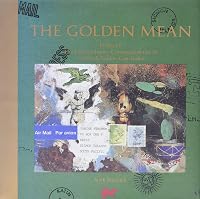
The Golden Mean: In Which the Extraordinary Correspondence of Griffin & Sabine Concludes
by Nick Bantock
Griffin & Sabine (3), Griffin & Sabine Series (3)
On This Page
Description
The Griffin & Sabine and continued in Sabine's Notebook concludes as the mystery of the two artists deepens and the content of each letter or postcard ultimately reveals the secrets behind their spirited, imaginative union.Tags
Recommendations







Member Reviews
Failing to meet up in the previous book Griffin and Sabine chalk up their inability to meet face to face to belonging to separate dimensions. Which I suppose might seem romantic to some people. To me it sounded like "woo" justification for being completely incapable of arranging a simple rendevous, despite their ostensible desire for eachother.
In any case this allows Bantock to maintain his old epistolary format, once again restricting his characters' action to the page. To balance the inevitable inertia he introduces a new correspondant, one Frolatti. He is a villain! He threatens Sabine! He coerces Griffin! He is apparently dangerously obsessed with the would be lovers! Unfortunately he's clearly a plot device hastily wrapped up in show more what's meant to be some sort of uncanny existential threat. That or Griffin and Sabine are just bonkers as they confide their belief that he is sinister flocks of birds and the like.
Conveniently at the end of the book they pull some random bit of wishful mysticism out of their butts and are suddenly convinced that it is the one and only magical doorway that will connect their worlds! Just as they believe Frolatti is closing in on them of course.
I liked this story better when the mystery was in it's openness to interpretation, not mystical wankery. show less
In any case this allows Bantock to maintain his old epistolary format, once again restricting his characters' action to the page. To balance the inevitable inertia he introduces a new correspondant, one Frolatti. He is a villain! He threatens Sabine! He coerces Griffin! He is apparently dangerously obsessed with the would be lovers! Unfortunately he's clearly a plot device hastily wrapped up in show more what's meant to be some sort of uncanny existential threat. That or Griffin and Sabine are just bonkers as they confide their belief that he is sinister flocks of birds and the like.
Conveniently at the end of the book they pull some random bit of wishful mysticism out of their butts and are suddenly convinced that it is the one and only magical doorway that will connect their worlds! Just as they believe Frolatti is closing in on them of course.
I liked this story better when the mystery was in it's openness to interpretation, not mystical wankery. show less
Summed up on the cover, The Golden Mean "in which the extraordinary correspondence of Griffin & Sabine concludes". Beautiful illustrations, a mystical relationship (or is it insanity?) and a teasing ending to the letters of Griffin and Sabine from England to the Simcom Islands. An unusual romance.
I'm reviewing these two together because I read them totally out of order. leaving me with little idea of story quality. I'd read Griffin and Sabine years ago and loved it - the artwork, the interactivity of it, and the way it ended mysteriously. A couple of years ago I acquired these two books at a sale and put them away until I could get the missing three, and read them in order.
Except last night I was in the mood for books with pieces, so I grabbed them to read anyway.
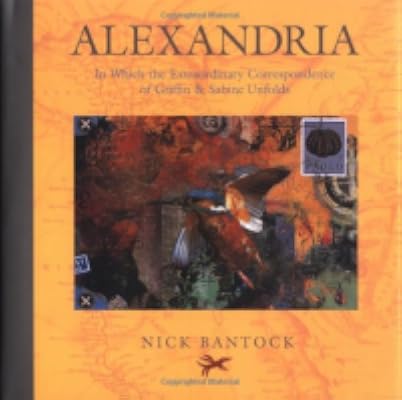
Definitely not a series to read out of order. The Golden Mean was ok - I figured out enough from having read the first book to follow along fine, but Alexandria has new characters that were somehow involved in everything and I was more than a little clueless, although show more I was left with the feeling that Bantock was reaching for plot by the end.
Regardless, the art is still stunning. I love the postcards and whenever a 'real' letter appeared on the page, the thrill of opening it, extracting the letter and reading it, never got old.
I'm still going to search out the rest of the books; if I ever find them, I'll read the whole series again - in order - and see if the plot goes as off the rails as it looks to me now. show less
Except last night I was in the mood for books with pieces, so I grabbed them to read anyway.
Definitely not a series to read out of order. The Golden Mean was ok - I figured out enough from having read the first book to follow along fine, but Alexandria has new characters that were somehow involved in everything and I was more than a little clueless, although show more I was left with the feeling that Bantock was reaching for plot by the end.
Regardless, the art is still stunning. I love the postcards and whenever a 'real' letter appeared on the page, the thrill of opening it, extracting the letter and reading it, never got old.
I'm still going to search out the rest of the books; if I ever find them, I'll read the whole series again - in order - and see if the plot goes as off the rails as it looks to me now. show less
I liked the introduction of a 3rd person to the correspondence, it added sorely needed tension to the story. But I didn't like the ending. I guess we're supposed to guess what happened because of the picture on the last postcard, but a name change would have been nice to confirm it.
I've always like writing physical letters and sending/collecting postcards, kind of sad to see them go away, but instantaneous communication around the world is kinda nice too.
I've always like writing physical letters and sending/collecting postcards, kind of sad to see them go away, but instantaneous communication around the world is kinda nice too.
Sigh. So in this one both Sabine and Griffin go back to their homes without seeing each other. There is a villain involved in this one with Sabine. The reason I took a half star off it was due to the ending. Did they ever find each other? What did the last letter mean? Arggghhh! Luckily, I see there are more books in the series. As usual, the art was spectacular.
The series ends on a creepy set of circumstances. As far as I could tell, despite trying to meet up 'on middle ground', Sabine doesn't ever connect with Griffin. The plot is somewhat derailed by the introduction of the sinister Victor Frolatti.
The fabulous conclusion of the original trilogy of the correspondence of Griffin and Sabine. Except, it isn't an ending at all.
Aside from the beautiful visuals of all of Bantock's works, the Griffin and Sabine books fulfill a voyeuristic leaning- the desire to read someone else's mail. Each page is not merely a beautiful image with text, but envelopes you can open, notes you can pull out and unfold and read, complete with scratched out typos and margin doodles. The concept, that of a pair of lovers who have met in a mindspace that seems to have crossed dimensions, though they have never met, continues to be lovely and poignant.
Aside from the beautiful visuals of all of Bantock's works, the Griffin and Sabine books fulfill a voyeuristic leaning- the desire to read someone else's mail. Each page is not merely a beautiful image with text, but envelopes you can open, notes you can pull out and unfold and read, complete with scratched out typos and margin doodles. The concept, that of a pair of lovers who have met in a mindspace that seems to have crossed dimensions, though they have never met, continues to be lovely and poignant.
Members
- Recently Added By
Lists


Author Information

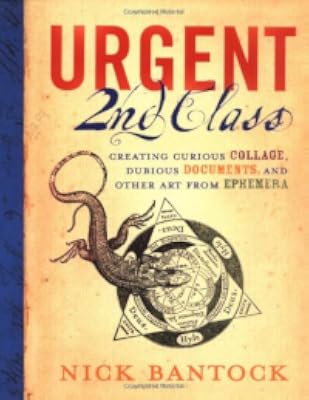
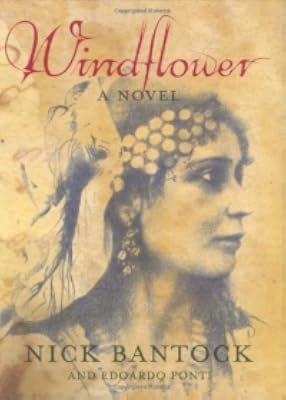
Nick Bantock was born in Stourbridge, England on the 14th of July 1949. He went to school in the suburbs of North East London, and from there moved on to an art college in the market town of Maidstone, Kent. At the age of 23, he quit his job in a gambling house and began working as a freelance illustrator. In 16 years he produced approximately 300 show more book covers, including novels by Philip Roth and John Updike. During the winter of 1988 he moved to Vancouver Canada, and two years later started work on his own books. He is most well known for his Griffin and Sabine Trilogy, an artful representation of a long distance romance. His other works include The Artful Dodger: Images and Reflections (2000) - a visual autobiography, and retrospective, Urgent 2nd Class: Creating Curious Collage, Dubious Documents, and Other Art from Ephemera (2004) and Windflower (2006) - with Edoardo Ponti. (Bowker Author Biography) Nick Bantock is the author of numerous illustrated novels, most recently "The Artful Dodger" and the tenth anniversary, limited edition of "Griffin & Sabine". Born in England, he now lives in Vancouver, British Columbia. (Publisher Provided) show less
Awards and Honors
Distinctions
Series


Work Relationships
Common Knowledge
- Canonical title
- The Golden Mean: In Which the Extraordinary Correspondence of Griffin & Sabine Concludes
- Original publication date
- 1993
- People/Characters
- Griffin Moss; Sabine Strohem
- Important places
- Sicmon Islands, South Pacific; London, England, UK
- Epigraph
- A vast image...troubles my sight
- Dedication
- To Annie Barrows
- First words
- Sabine, I was sure I understood.
- Last words
- (Click to show. Warning: May contain spoilers.)However we are not convinced you should be considering prescribing penicillin for the Atubi's youngest son. Write soon, Sabine M. Strohem
Classifications
Statistics
- Members
- 2,468
- Popularity
- 7,862
- Reviews
- 36
- Rating
- (4.07)
- Languages
- 5 — Dutch, English, French, German, Portuguese
- Media
- Paper, Audiobook
- ISBNs
- 9
- UPCs
- 1
- ASINs
- 5