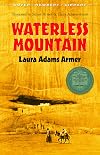
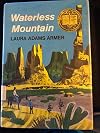
Waterless Mountain
by Laura Adams Armer, Sidney Armer (Illustrator)
On This Page
Description
Younger Brother, a Navaho Indian boy, undergoes eight years of training in the ancient religion of his people and the practical knowledge of material existence.Tags
Recommendations











Member Reviews
Younger Brother, called Little Singer by his medicine-man Uncle, was an unusual child, attuned from a young age to the deeper realities of the world around him, and observant of all its beauty, both natural and man-made. Marked out as a future medicine man himself, and tutored by Uncle in the traditional songs and beliefs of his people, the young Navajo boy came of age in the small circle of his loving family, living with them under the great Waterless Mountain. The rhythms of their daily life - Younger Brother's shepherding of the sheep, Mother's weaving, and her cooking for the family, Father's silversmithing - and the interruptions to those rhythms - Elder Brother's marriage to their neighbor's daughter, Younger Brother's epic show more journey to the far western water, in search of Turquoise Woman's house - are depicted here in a gentle, contemplative narrative that is suffused with a quiet joy.
The Newbery Medal Winner in 1932, Laura Adams Armer's Waterless Mountain was praised, at the time of its publication, for its lyrically sympathetic portrayal of Navajo religious beliefs and customs. As someone almost wholly unacquainted with those beliefs, I feel ill-equipped to judge Armer's depiction, from a factual standpoint. I found the book well written, and the narrative engaging enough, but there could be glaring errors of fact or tone here, and I would never know it. More generally, it's difficult to know whether Armer successfully captured a young Navajo boy's perspective, or whether her text is an outsider's imposition. Given the history of misrepresentation of America's indigenous peoples in vintage children's literature, it's tempting to assume that it was the latter, but it's impossible for me to judge with any certainty. I'd love to get the viewpoint of a Navajo reader on the subject! According to what little I have read of Armer, she was well-respected enough, by some Navajo elders, that she was allowed to reproduce a number of sacred sand paintings - a privilege not previously accorded to any outsider, from my understanding.
Although unable to come to any definitive conclusion, as it concerns Armer's depiction of traditional Navajo beliefs, I can say that her Euro-American characters, particularly the "Big Man," seemed unrealistically positive, giving a sense that white traders on Indian reservations were benign and benevolent forces for good, something that does not at all accord with my own understanding of the history. The inclusion of this kind of "Great White Trader" figure is problematic. I also think that, if this had been a genuine Navajo narrative, the feelings of the people, about The Long March, and their forced exile from their homelands, as well as Kit Carson's scorched earth campaign against them, would have been much more strongly expressed, and not as easily dismissed, in the brief exchange between Younger Brother and the Big Man, toward the end of the book.
I vacillated, in rating this book. It does have some good qualities, and I found some of the passages quite beautiful. But it is also, unfortunately, a little bit dated, and I'm not sure that it does what it sets out to do, in communicating a genuine Navajo worldview. The "Great White Hunter" theme, here transformed into a "Great White Trader," also gives me significant pause. In the end, I think this is one I would recommend primarily to Newbery completists like myself... show less
The Newbery Medal Winner in 1932, Laura Adams Armer's Waterless Mountain was praised, at the time of its publication, for its lyrically sympathetic portrayal of Navajo religious beliefs and customs. As someone almost wholly unacquainted with those beliefs, I feel ill-equipped to judge Armer's depiction, from a factual standpoint. I found the book well written, and the narrative engaging enough, but there could be glaring errors of fact or tone here, and I would never know it. More generally, it's difficult to know whether Armer successfully captured a young Navajo boy's perspective, or whether her text is an outsider's imposition. Given the history of misrepresentation of America's indigenous peoples in vintage children's literature, it's tempting to assume that it was the latter, but it's impossible for me to judge with any certainty. I'd love to get the viewpoint of a Navajo reader on the subject! According to what little I have read of Armer, she was well-respected enough, by some Navajo elders, that she was allowed to reproduce a number of sacred sand paintings - a privilege not previously accorded to any outsider, from my understanding.
Although unable to come to any definitive conclusion, as it concerns Armer's depiction of traditional Navajo beliefs, I can say that her Euro-American characters, particularly the "Big Man," seemed unrealistically positive, giving a sense that white traders on Indian reservations were benign and benevolent forces for good, something that does not at all accord with my own understanding of the history. The inclusion of this kind of "Great White Trader" figure is problematic. I also think that, if this had been a genuine Navajo narrative, the feelings of the people, about The Long March, and their forced exile from their homelands, as well as Kit Carson's scorched earth campaign against them, would have been much more strongly expressed, and not as easily dismissed, in the brief exchange between Younger Brother and the Big Man, toward the end of the book.
I vacillated, in rating this book. It does have some good qualities, and I found some of the passages quite beautiful. But it is also, unfortunately, a little bit dated, and I'm not sure that it does what it sets out to do, in communicating a genuine Navajo worldview. The "Great White Hunter" theme, here transformed into a "Great White Trader," also gives me significant pause. In the end, I think this is one I would recommend primarily to Newbery completists like myself... show less
Waterless Mountain follows Younger Brother, the middle of three children in a Navajo family — a boy who got to be 8 years old without ever having seen a white man or a chair — as he grows into adulthood. Younger Brother tends the sheep for his family, but he lives in a magical world — literally, in his case. He believes in the old Navajo religion and sees good fortune as a gift from the gods and nature. Laura Adams Armer’s book serves as a window into a world that existed for centuries in the American Southwest, examining the everyday life of a Navajo family of the time, as well as their cultural folkways and religion. I had trouble putting the book down!
Is the book a bit sentimental? A wee bit, but it’s never cloying; there show more is a hint of abusive Navajo boarding schools, and the book spends time on the tragic Long Walk of the Navajo. And there’s a foreshadowing of the plague that alcohol would play in the future of Native Americans of all tribes.
The book has not aged well for children; however, adults will delight in immersing themselves in the world of the Navajo people from long ago. Five stars for adults; two, for kids. show less
Is the book a bit sentimental? A wee bit, but it’s never cloying; there show more is a hint of abusive Navajo boarding schools, and the book spends time on the tragic Long Walk of the Navajo. And there’s a foreshadowing of the plague that alcohol would play in the future of Native Americans of all tribes.
The book has not aged well for children; however, adults will delight in immersing themselves in the world of the Navajo people from long ago. Five stars for adults; two, for kids. show less
A young Navajo boy is destined to be a medicine man as he has the right spirit for the job. Set in present day (that being early 1930s based on the publication date) this is reminiscent of a number of Newbery books from that era when the committee favored historical fiction and books that told about other cultures. The plot is minimal. Mainly, we move around over a period of a few years seeing what life was like in the Navajo lands of the first half of the 20th century. Since books from that era would never portray white Americans as bad, the one white character, referred to usually as "the Big Man," is a kind and generous merchant, who cares deeply about the Navajo people he trades with. I rather suspect such a benevolent merchant was show more not to be found trading with the Native Americans in the 1930s.
Not a bad book, but not good enough to recommend unless the reader has a particular interest in Native American cultures. show less
Not a bad book, but not good enough to recommend unless the reader has a particular interest in Native American cultures. show less
I read this book in the spirit of the time it was awarded the Newberry Award, 1932, but I still had issues with the racism. I stuck with finishing the book because I was interested in the Navajo culture. Reading about Laura Adams Armer, I learned that supposedly the Navajo called her "the woman who wears the turquoise" and "hard working woman". She was the first to be allowed to film the sacred Mount Chant ceremony in 1928. Did the Navajo truly name Armer? Was there pressure applied to allow the sacred ceremony to be filmed?
This is a difficult review to write because I'm torn as to whether I should be allowed to know the details of the Navajo that were provided. I can't determine what is true, what is embellished by the white author, show more and what is intrusive.
This is not a book that is full of action. I call this a quiet story that follows the journey of a young man as he learns to become a medicine man.
Armer wrote her first book, Waterless Mountain, at the age of 57. When she won the 1932 Newberry Award, Armer hadn't even heard of the award and ended her acceptance speech with "it is pleasant that you considered it the most distinguished book for children publisher in 1931." Armer worked as a photographer and artist for most of her life.
I rated this book as 3 stars because I truly enjoyed the depiction of Navajo life. My dilemma is that I continue to feel guilty about enjoying the narrative. If anything, this book has spurred me to research for Navajo writers in order to get a true perspective of Navajo beliefs. show less
This is a difficult review to write because I'm torn as to whether I should be allowed to know the details of the Navajo that were provided. I can't determine what is true, what is embellished by the white author, show more and what is intrusive.
This is not a book that is full of action. I call this a quiet story that follows the journey of a young man as he learns to become a medicine man.
Armer wrote her first book, Waterless Mountain, at the age of 57. When she won the 1932 Newberry Award, Armer hadn't even heard of the award and ended her acceptance speech with "it is pleasant that you considered it the most distinguished book for children publisher in 1931." Armer worked as a photographer and artist for most of her life.
I rated this book as 3 stars because I truly enjoyed the depiction of Navajo life. My dilemma is that I continue to feel guilty about enjoying the narrative. If anything, this book has spurred me to research for Navajo writers in order to get a true perspective of Navajo beliefs. show less
The best thing about this book is the sense of atmosphere and place that the author creates. While there's not much of a story, there is such a beautiful picture of Navajo life in the early part of the 1900's. Granted, the view is filtered through the non-Navajo writer, but it is beautiful nonetheless. Younger Brother is one of those characters who is in tune spiritually with the world around him and Ms. Armer is able to show that without the character coming across as naive, or as mystical.
it makes sense that i have loved this spiritual novel in the same season i have been daily listening to "my sweet lord." neither novel nor song is perfect, but the balance between yearning and joy in both is everything.
Although this a pleasant story about "Younger Brother" and his childhood discoveries that lead to him becoming a Medicine Man, the dark history of the Navajos and white men is glossed over with passing references to Kit Carson and the Walk of Tears, but little else. In a way, although Armer worked hard to faithfully and realistically portray the customs and beliefs of Navajo people, it seems too pretty to be truly realistic. The photographs and illustrations are beautiful, as are the end papers featuring a replica of a traditional Navajo sand painting.
Members
- Recently Added By
Lists

Newbery Medal Winners - By Year
105 works; 7 members

Books Read in 2019
4,052 works; 108 members

EGBERTINA's List of Newbery books that I hated or found unnecessary
58 works; 3 members
Author Information

8+ Works 436 Members
Some Editions
Awards and Honors
Awards
Common Knowledge
- Canonical title
- Waterless Mountain
- Original title
- Waterless mountain
- Original publication date
- 1931
- Dedication
- To Lorenzo Hubbell whose faith inspired this book.
- First words
- The month of Short Corn, when drooping clouds floated white against the blue, and fringed dust rose from the washes, Younger Brother tended the sheep.
- Original language
- English
Classifications
- Genres
- Children's Books, Fiction and Literature, Kids
- DDC/MDS
- 813.52 — Literature & rhetoric American literature in English American fiction in English 1900-1999 1900-1945
- LCC
- PZ7 .A715 .W — Language and Literature Fiction and juvenile belles lettres Fiction and juvenile belles lettres Juvenile belles lettres
- BISAC
Statistics
- Members
- 391
- Popularity
- 79,777
- Reviews
- 14
- Rating
- (3.26)
- Languages
- Chinese, Dutch, English
- Media
- Paper, Ebook
- ISBNs
- 7
- UPCs
- 2
- ASINs
- 22