
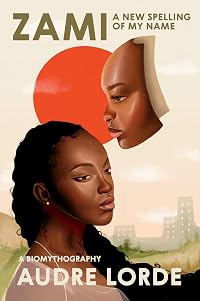
Zami: A New Spelling of My Name
by Audre Lorde
On This Page
Description
Zami: A Carriacou name for women who work together as friends and lovers “ Zami is a fast-moving chronicle. From the author’s vivid childhood memories in Harlem to her coming of age in the late 1950s, the nature of Audre Lorde’s work is cyclical. It especially relates the linkage of women who have shaped her . . . Lorde brings into play her craft of lush description and characterization. It keeps unfolding page after page.” — Off Our Backs “Among the elements that make the book show more so good are its personal honesty and lack of pretentiousness, characteristics that shine through the writing bespeaking the evolution of a strong and remarkable character.” — The New York Times show lessTags
Recommendations

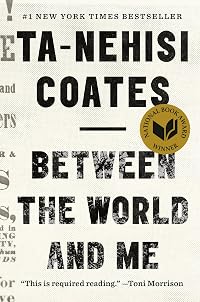
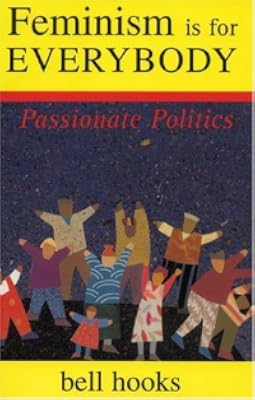
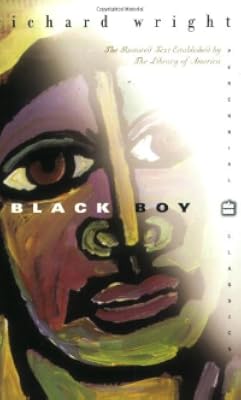
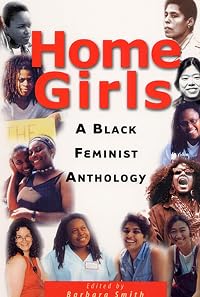


Member Recommendations

Member Reviews
In this "biomythography" Lorde explores the various women who impacted her life, starting with her mother in her childhood, her friend Gennie, and as she grows into young adulthood, the various lovers she had over the years.
This seems to be one of those books that straddle fiction and nonfiction, though it reads like a memoir and includes the emotional truths Lorde experiences as a Black lesbian woman, starting with growing up in Harlem and moving through her young adulthood. The first half of the book dealing with her childhood, her mother, and her school friends connected most with me. She kind of lost me when she started talking about her relationships, but I could appreciate the way they each helped her become more herself. It was show more sometimes harrowing to read - she has an unsafe abortion, and the FBI just casually show up at her door. Lorde explains how, despite being lesbian, she still experienced racism in the gay community and had to deal with not fitting into the molds that even the "gay girls" as she calls them had for relationship roles. Being a Black gay woman in the 1940s and 50s was no easy thing, yet Lorde also experiences joy and love. A powerful read that will stick with me for a long time. show less
This seems to be one of those books that straddle fiction and nonfiction, though it reads like a memoir and includes the emotional truths Lorde experiences as a Black lesbian woman, starting with growing up in Harlem and moving through her young adulthood. The first half of the book dealing with her childhood, her mother, and her school friends connected most with me. She kind of lost me when she started talking about her relationships, but I could appreciate the way they each helped her become more herself. It was show more sometimes harrowing to read - she has an unsafe abortion, and the FBI just casually show up at her door. Lorde explains how, despite being lesbian, she still experienced racism in the gay community and had to deal with not fitting into the molds that even the "gay girls" as she calls them had for relationship roles. Being a Black gay woman in the 1940s and 50s was no easy thing, yet Lorde also experiences joy and love. A powerful read that will stick with me for a long time. show less
A memoir of Audre Lorde, the great mid-century, Black, female, lesbian, feminist, civil rights activist poet. This book chronicles her life in New York City from her childhood in the late 1930s through her college degree in 1959.
Wow, is this a far-reaching story. I learned a lot about life as a black woman in the 30s-50s in NYC, as I expected to, but I was surprised to relate so strongly to so many aspects of Audre Lorde's life. She really spoke to me when she talked about her relationship with her mother, her many early friendships that came in and out of her life, and her difficulty with hetero-normative gender roles (which were strong even within the lesbian community). There is so much going on here that it's impossible to find show more nothing to learn nor relate to. She was always shut out of something or other, because she was black or because she was a woman or because she was gay or because she refused to label herself as either butch or femme. She doesn't relate to anyone in all aspects, but she relates to everyone in some aspect.
I'm dying to read and know more about Audre Lorde now, and I highly highly recommend this book, even if you aren't sure if it's for you. It is. show less
Wow, is this a far-reaching story. I learned a lot about life as a black woman in the 30s-50s in NYC, as I expected to, but I was surprised to relate so strongly to so many aspects of Audre Lorde's life. She really spoke to me when she talked about her relationship with her mother, her many early friendships that came in and out of her life, and her difficulty with hetero-normative gender roles (which were strong even within the lesbian community). There is so much going on here that it's impossible to find show more nothing to learn nor relate to. She was always shut out of something or other, because she was black or because she was a woman or because she was gay or because she refused to label herself as either butch or femme. She doesn't relate to anyone in all aspects, but she relates to everyone in some aspect.
I'm dying to read and know more about Audre Lorde now, and I highly highly recommend this book, even if you aren't sure if it's for you. It is. show less
Wonderful, but not quite what I was expecting: Lorde writes about the difficulties of growing up as a black lesbian in the forties and fifties with irony and a surprising amount of detachment. She avoids wallowing in the pain of oppression, but she doesn't hesitate to communicate pain when she needs to: in the abortion chapter she doesn't take any prisoners. Lorde is a poet first and a woman with a cause second: this is definitely a book that's worth reading on its own, literary, merits, not just as a document of a particular era of New York gay life.
Lorde wrote this book in the course of her long-running dispute with the "mainstream" of the women's movement about what she saw as their failure to engage with the problem of racism. show more Consequently, she makes a point here of telling us about the ways in which being black made things more difficult for her. She has a perfect right to do this, of course, but when you put her experience — as a middle-class girl who went to a good school and lived in the liberal atmosphere of the Village — side-by-side with something like Stone butch blues, you do have to start wondering if social class and geography weren't far more important than race for gay people in the fifties. show less
Lorde wrote this book in the course of her long-running dispute with the "mainstream" of the women's movement about what she saw as their failure to engage with the problem of racism. show more Consequently, she makes a point here of telling us about the ways in which being black made things more difficult for her. She has a perfect right to do this, of course, but when you put her experience — as a middle-class girl who went to a good school and lived in the liberal atmosphere of the Village — side-by-side with something like Stone butch blues, you do have to start wondering if social class and geography weren't far more important than race for gay people in the fifties. show less
I surmise that self-described “[B]lack, lesbian, mother, warrior, poet” Audre Lorde (1934-1992) intended for this fictionalized memoir (or "biomythography") to tell a story larger than just her own. Yet it starts out with her very personal story of her coming of age as a fat, bookish, profoundly nearsighted Black girl who doesn't fit into her family despite her mother's fiercely protective love. Audre drops the final letter from her given name, Audrey, thus coming up with a “new spelling of [her] name.”
Young adult Audre leaves home and establishes herself as a political progressive and open lesbian. She finds the racist, conformist atmosphere of the post-WWII US stultifying. After her daily labor at a variety of low-paying and show more often dangerous jobs, Audre, along with her friends, makes the rounds of New York City's shabby "gay-girl" bars, the only community gathering places available to them. Audre falls in and out of love with a few damaged women, most notably alcoholic Eudora and mentally unstable Muriel.
I didn't like this book as much as I thought I would. It seemed to drag on forever, and Lorde's prose turned purple as she described her various sexual encounters. There were also too many named characters whose presence didn’t add up to much.
Perhaps Lorde should have split this memoir into two books, one describing her youth and the other describing her adulthood.
I received an electronic pre-publication copy of this book via NetGalley in exchange for an honest review (a new edition of this book is scheduled for release in February 2026). I was not compensated in any way. show less
Young adult Audre leaves home and establishes herself as a political progressive and open lesbian. She finds the racist, conformist atmosphere of the post-WWII US stultifying. After her daily labor at a variety of low-paying and show more often dangerous jobs, Audre, along with her friends, makes the rounds of New York City's shabby "gay-girl" bars, the only community gathering places available to them. Audre falls in and out of love with a few damaged women, most notably alcoholic Eudora and mentally unstable Muriel.
I didn't like this book as much as I thought I would. It seemed to drag on forever, and Lorde's prose turned purple as she described her various sexual encounters. There were also too many named characters whose presence didn’t add up to much.
Perhaps Lorde should have split this memoir into two books, one describing her youth and the other describing her adulthood.
I received an electronic pre-publication copy of this book via NetGalley in exchange for an honest review (a new edition of this book is scheduled for release in February 2026). I was not compensated in any way. show less
What can I possibly say about this book that hasn't already been said? I love it. I adore it. I owe it so much.
Through it, Lorde gave voice to lesbians, women, Black women, and most importantly, Black lesbian/queer women. Not only does she sensitively yet forwardly tell us the stories of her life but challenges us to confront our own: our own stories, identities, relationships, self-awareness, honesty. Lorde writes with such clarity and dedication; this book struck me on so many levels. I am so grateful for books like this; once in a lifetime books that keep on giving as long as I keep on reading.
Through it, Lorde gave voice to lesbians, women, Black women, and most importantly, Black lesbian/queer women. Not only does she sensitively yet forwardly tell us the stories of her life but challenges us to confront our own: our own stories, identities, relationships, self-awareness, honesty. Lorde writes with such clarity and dedication; this book struck me on so many levels. I am so grateful for books like this; once in a lifetime books that keep on giving as long as I keep on reading.
I didn’t think of this book as a memoir when I read it in grad school. I was immersing myself in the work of Lorde for a possible chapter in my dissertation. Unfortunately, Lorde passed away of cancer while I was in grad school. She was 58 years old. This chapter never got finished, although my dissertation did.
Lorde wanted readers to think of this book–as a biomythography. In it she writes about her origins, as a Caribbean child growing up lesbian in Harlem, and she writes about some of the women she loved in her life. She tried to create a new literary genre, by combining a personal mythology with biographical events, but it reads to me as an experimental memoir.
Does that word experimental annoy you or turn you off? It does me. show more But this is a beautiful book.
In its play with language and boundaries, the book is representative of feminist texts of the early 90s. You won’t notice that so much as you will fall into Lorde’s world and find out what it was like to be an African-American lesbian poet of her time period. That’s what I learned from Lorde’s book. show less
Lorde wanted readers to think of this book–as a biomythography. In it she writes about her origins, as a Caribbean child growing up lesbian in Harlem, and she writes about some of the women she loved in her life. She tried to create a new literary genre, by combining a personal mythology with biographical events, but it reads to me as an experimental memoir.
Does that word experimental annoy you or turn you off? It does me. show more But this is a beautiful book.
In its play with language and boundaries, the book is representative of feminist texts of the early 90s. You won’t notice that so much as you will fall into Lorde’s world and find out what it was like to be an African-American lesbian poet of her time period. That’s what I learned from Lorde’s book. show less
besides the fact that this is a memoir of the early years of someone i have always wanted to know more about, this book also details so clearly what it was like to be black and to be a lesbian in new york and mexico during the years she talks about (mostly the mid 1940's-mid 1950's). there are parts that could use a little more editing or that felt rough, but it didn't matter - this is such an honest and true history of both lorde and that time period that it makes for an incredible read anyway.
i had never read any of lorde's prose before, and it has probably been over 20 years since i've read her poetry (mostly late high school and early college would have been when i was reading it, i think), and i loved to return to her and to her show more language and thoughts and to learn more about her. (it feels a little silly to say this, and i've never said this before about any book, but) it just felt like an honor to be able to read this.
it gave not just perspective but also depth to a number of the older lesbian fiction books we have read in book group. it made some of those make more sense.
"DeLois lived up the block on 142nd Street and never had her hair done, and all the neighborhood women sucked their teeth as she walked by. Her crispy hair twinkled in the summer sun as her big proud stomach moved her on down the block while I watched, not caring whether or not she was a poem. Even though I tied my shoes and tried to peep under her blouse as she passed by, I never spoke to DeLois, because my mother didn't. But I loved her, because she moved like she felt she was somebody special, like she was somebody I'd like to know someday. She moved like how I thought god's mother must have moved, and my mother, once upon a time, and someday maybe me.
Hot noon threw a ring of sunlight like a halo on the top of DeLois's stomach, like a spotlight, making me sorry that I was so flat and could only feel the sun on my head and shoulders. I'd have to lie down on my back before the sun could shine down like that on my belly."
"Woman forever. My body, a living representation of other life older longer wiser. The mountains and valleys, trees, rocks. Sand and flowers and water and stone. Made in earth."
"The radio, the scratching comb, the smell of petroleum jelly, the grip of her knees and my stinging scalp all fall into - the rhythms of a litany, the rituals of Black women combing their daughters' hair."
"Maybe that is all any bravery is, a stronger fear of not being brave."
"Crispus Attucks. How was that possible? I had spent four years at Hunter High School, supposedly the best public high school in New York City, with the most academically advanced and intellectually accurate education available, for 'preparing young women for college and career.' I had been taught by some of the most highly considered historians in the country. Yet, I never once heard the name mentioned of the first man to fall in the american revolution, nor ever been told that he was a Negro. What did that mean about the history I had learned?"
"Her voice was strong and pleasant, but with a crack in it that sounded like a cold, or too many cigarettes."
"There were no mothers, no sisters, no heroes. We had to do it alone, like our sister Amazons, the riders on the loneliest outpost of the kingdom of Dahomey. We, young and Black and fine and gay, sweated out our first heartbreaks with no school nor office chums to share that confidence over lunch hour. Just as there were no rings to make tangible the reason for our happy secret smiles, there were no names nor reason given or shared for the tears that messed up the lab reports or the library bills."
"Between Muriel and me, then, there was one way in which I would always be separate, and it was going to be my own secret knowledge, if it was going to be my own secret pain. I was Black and she was not, and that was a difference between us that had nothing to do with better or worse, or the outside world's craziness. Over time I came to realize that it colored our perceptions and made a difference in the ways I saw pieces of the worlds we shared, and I was going to have to deal with that difference outside of our relationship.
This was the first separation, the piece outside love. But I turned away short of the meanings of it, afraid to examine the truths difference might lead me to, afraid they might carry Muriel and me away from each other. So I tried not to think of our racial differences too often. I sometimes pretended to agree with Muriel, that the difference did not in fact exist, that she and all gay-girls were just as oppressed as any Black person, certainly as any Black woman.
But when I did think about it, it was something that set me apart, but also protected me. I knew there was nothing I could do, including wearing skirts and being straight, that would make me acceptable to the little old Ukrainian ladies who sunned themselves on the stoops of Seventh Street and pointed fingers at Muriel and me as we walked past, arm in arm. ...
Somehow, I knew that difference would be a weapon in my arsenal when the 'time' came. And the 'time' would certainly come in one way or another. The 'time' when I would have to protect myself alone, although I did not know how or when. For Flee and me, the forces of social evil were not theoretical, not long distance or solely bureaucratic. We met them every day, even in our straight clothes. Pain was always right around the corner. Difference had taught me that, out of the mouth of my mother. And knowing that, I fancied myself on guard, safe. I still had to learn that knowing was not enough."
"In the gay bars, I longed for other Black women without the need ever taking shape upon my lips. For four hundred years in this country, Black women have been taught to view each other with deep suspicion. It was no different in the gay world."
(italics all in original) show less
i had never read any of lorde's prose before, and it has probably been over 20 years since i've read her poetry (mostly late high school and early college would have been when i was reading it, i think), and i loved to return to her and to her show more language and thoughts and to learn more about her. (it feels a little silly to say this, and i've never said this before about any book, but) it just felt like an honor to be able to read this.
it gave not just perspective but also depth to a number of the older lesbian fiction books we have read in book group. it made some of those make more sense.
"DeLois lived up the block on 142nd Street and never had her hair done, and all the neighborhood women sucked their teeth as she walked by. Her crispy hair twinkled in the summer sun as her big proud stomach moved her on down the block while I watched, not caring whether or not she was a poem. Even though I tied my shoes and tried to peep under her blouse as she passed by, I never spoke to DeLois, because my mother didn't. But I loved her, because she moved like she felt she was somebody special, like she was somebody I'd like to know someday. She moved like how I thought god's mother must have moved, and my mother, once upon a time, and someday maybe me.
Hot noon threw a ring of sunlight like a halo on the top of DeLois's stomach, like a spotlight, making me sorry that I was so flat and could only feel the sun on my head and shoulders. I'd have to lie down on my back before the sun could shine down like that on my belly."
"Woman forever. My body, a living representation of other life older longer wiser. The mountains and valleys, trees, rocks. Sand and flowers and water and stone. Made in earth."
"The radio, the scratching comb, the smell of petroleum jelly, the grip of her knees and my stinging scalp all fall into - the rhythms of a litany, the rituals of Black women combing their daughters' hair."
"Maybe that is all any bravery is, a stronger fear of not being brave."
"Crispus Attucks. How was that possible? I had spent four years at Hunter High School, supposedly the best public high school in New York City, with the most academically advanced and intellectually accurate education available, for 'preparing young women for college and career.' I had been taught by some of the most highly considered historians in the country. Yet, I never once heard the name mentioned of the first man to fall in the american revolution, nor ever been told that he was a Negro. What did that mean about the history I had learned?"
"Her voice was strong and pleasant, but with a crack in it that sounded like a cold, or too many cigarettes."
"There were no mothers, no sisters, no heroes. We had to do it alone, like our sister Amazons, the riders on the loneliest outpost of the kingdom of Dahomey. We, young and Black and fine and gay, sweated out our first heartbreaks with no school nor office chums to share that confidence over lunch hour. Just as there were no rings to make tangible the reason for our happy secret smiles, there were no names nor reason given or shared for the tears that messed up the lab reports or the library bills."
"Between Muriel and me, then, there was one way in which I would always be separate, and it was going to be my own secret knowledge, if it was going to be my own secret pain. I was Black and she was not, and that was a difference between us that had nothing to do with better or worse, or the outside world's craziness. Over time I came to realize that it colored our perceptions and made a difference in the ways I saw pieces of the worlds we shared, and I was going to have to deal with that difference outside of our relationship.
This was the first separation, the piece outside love. But I turned away short of the meanings of it, afraid to examine the truths difference might lead me to, afraid they might carry Muriel and me away from each other. So I tried not to think of our racial differences too often. I sometimes pretended to agree with Muriel, that the difference did not in fact exist, that she and all gay-girls were just as oppressed as any Black person, certainly as any Black woman.
But when I did think about it, it was something that set me apart, but also protected me. I knew there was nothing I could do, including wearing skirts and being straight, that would make me acceptable to the little old Ukrainian ladies who sunned themselves on the stoops of Seventh Street and pointed fingers at Muriel and me as we walked past, arm in arm. ...
Somehow, I knew that difference would be a weapon in my arsenal when the 'time' came. And the 'time' would certainly come in one way or another. The 'time' when I would have to protect myself alone, although I did not know how or when. For Flee and me, the forces of social evil were not theoretical, not long distance or solely bureaucratic. We met them every day, even in our straight clothes. Pain was always right around the corner. Difference had taught me that, out of the mouth of my mother. And knowing that, I fancied myself on guard, safe. I still had to learn that knowing was not enough."
"In the gay bars, I longed for other Black women without the need ever taking shape upon my lips. For four hundred years in this country, Black women have been taught to view each other with deep suspicion. It was no different in the gay world."
(italics all in original) show less
Members
- Recently Added By
Lists

Best Lesbian Fiction (And Narrative Non-Fiction)
155 works; 36 members

Best Autobiographies and Memoirs
370 works; 67 members

The Guardian's 1000 Novels Everyone Must Read
1,005 works; 547 members
LGBTQ Memoir/Biography
52 works; 4 members

Black Authors
381 works; 29 members

Publishing Triangle 100 Best Lesbian and Gay Novels
97 works; 6 members

BBC's 100 Novels That Shaped Our World
100 works; 22 members

Books That Changed Our Perspective
423 works; 168 members

The Five Books That Represent Us
390 works; 147 members

Schomburg Centennial Reading List
100 works; 4 members

Books Read in 2018
4,360 works; 110 members

Sapph-Lit
78 works; 4 members

QLAP
14 works; 1 member

Literary Witches
86 works; 4 members

Classics you know you should have read but probably haven't
421 works; 407 members

The Zora Canon
98 works; 4 members

Zora Canon
100 works; 6 members

Books Read in 2017
4,249 works; 129 members
Overdue Podcast
805 works; 9 members

Blue Pyramid 1,276 Best Books of All Time
1,248 works; 32 members
50 Books by Women Authors
50 works; 10 members
The Best LGBTQ Nonfiction
125 works; 50 members
Author Information

65+ Works 10,350 Members
An African American lesbian feminist critic and writer, Lorde was born in Harlem and educated at National University of Mexico, Hunter College, and Columbia University. She married in 1962 and divorced in 1970, after having two children. Lorde first came to critical attention with her poetry. Her first poem was published in Seventeen magazine show more while she was in high school; it had been rejected by her high school newspaper because it was "too romantic" (Lorde considered her "mature" poetry, which focuses on her lesbian relationships, to be romantic also). Other early poems were published in many different journals, many of them under the pseudonym Rey Domini. Her first volume of poetry, "The First Cities," was published in 1968. Lorde then quit her job as head librarian at a school in New York City in order to devote her time to teaching and writing. She was a professor of English at Hunter College from 1980 until her untimely death from cancer in 1992. Although many of Lorde's poems are about love, many are about anger, particularly anger about racism, sexism, and homophobia in America. "The Brown Menace or Poem to the Survival of Roaches" likens African Americans to cockroaches---hated, feared, and poisoned by whites but survivors nevertheless. Other poems express a daughter's anger toward her mother; still others eschew anger for affirmation and inspiration, which are represented as coming from lesbian love and traditional African myths because, as Lorde has said, "the master's tools will not dismantle the master's house." Lorde is also well known for her prose. Her courageous account of her struggle with breast cancer and the mastectomy that she underwent is movingly chronicled in "The Cancer Journals" (1980), her first major prose publication. "Zami, a New Spelling of My Name" (1982) is, in Lorde's words, a "biomythography," combining history, biography, and myth. In "Zami," Lorde focuses on her developing lesbian identity and her response to racism in the white feminist and gay communities, and to sexism and homophobia in the African American community. Lorde's critical essays, collected in "Sister/Outsider" (1984) and "A Burst of Light "(1988), have been quite influential, particularly "Uses of the Erotic: The Erotic as Power," in which she discusses the relationship of poetry to politics and the erotic. Lorde was the recipient of several grants---from the National Endowment for the Arts in 1968 and 1981 and from the Creative Artists Public Service in 1972---as well as the Borough of Manhattan President's Award for Literary Excellence in 1987. She was also nominated for the National Book Award for poetry in 1974 for her third volume of verse, "From a Land Where Other People Live"(1973). (Bowker Author Biography) show less
Some Editions
Awards and Honors
Distinctions
Notable Lists
Series
Belongs to Publisher Series
Work Relationships
Is contained in
Is abridged in
Has as a student's study guide
Common Knowledge
- Canonical title
- Zami: A New Spelling of My Name
- Alternate titles
- Zami: A New Spelling of My Name: A Biomythography by Audre Lorde
- Original publication date
- 1982
- People/Characters
- Audre Lorde; Linda Lorde; Phyllis Lorde; Helen Lorde; Maxine; Gennie (show all 18); Louisa; Philip Thompson; Ginger; Bea; Eudora; Muriel; Rhea; Felecia; Lynn; Toni; Gerri; Afrekete
- Important places
- New York, New York, USA
- Dedication
- To Helen, who made up the best adventures
To Blanche, with whom I lived many of them
To the hands of Afrekete
In the recognition of loving lies an answer to despair. - First words
- To whom do I owe the power behind my voice, what strength I have become, yeasting up like sudden blood from under the bruised skin's blister?
- Last words
- (Click to show. Warning: May contain spoilers.)There it is said that the desire to lie with other women is a drive from the mother's blood.
Classifications
Statistics
- Members
- 2,227
- Popularity
- 9,028
- Reviews
- 29
- Rating
- (4.31)
- Languages
- 9 — Dutch, English, French, German, Italian, Norwegian, Portuguese, Slovenian, Spanish
- Media
- Paper, Audiobook, Ebook
- ISBNs
- 24
- UPCs
- 1
- ASINs
- 13