On This Page
Description
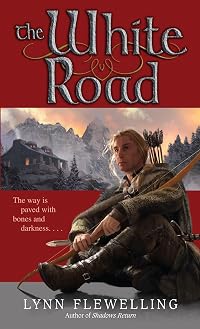
"...Having escaped death and slavery in Plenimar, Seregil and Alec want nothing more than to go back to their nightrunning life in Rhíminee. Instead they find themselves saddled with Sebrahn, a strange, alchemically created creature--the prophesied 'child of no woman.' Its moon-white skin and frightening powers make it a danger to all whom Seregil and Alec come into contact with, leaving them no choice but to learn more about Sebrahn's true nature. But what then? With the help of old show more friends and Seregil's clan, the pair sets out to discover the truth about this living homunculus..."--P.[4] of cover. show lessTags
Recommendations














Member Reviews
I found The White Road a definite step up from book four. After so much of the previous volume being shaped by captivity and the upheaval of Sebrahn entering Alec and Seregil’s lives, this one has much more momentum. The journey structure helps a lot, and it gives the characters room to feel more like themselves again.
What worked best for me was the shift in Alec and Seregil’s dynamic. There was less emphasis on jealousy, and more sense of two people trying to maturely talk through what this strange new responsibility means. That made the relationship feel easier and more settled, even while the situation itself remained unsettling. I also appreciated the way the book used that search for answers to open out more of Seregil’s past show more and Alec’s heritage, while giving a little more insight into Sebrahn and his bond with Alec, though not enough for everything to fully click into place.
The audiobook continued to be a mixed experience for me. I still found the narrator a bit difficult, particularly where mispronunciations kept pulling me out of the story, and some of the voice choices did not suggest much confidence with different accents.
I did still have some of the same reservations from book 4: I would have liked more female characters in the mix, and I wanted a stronger sense of interiority or specificity from some of the antagonists. In particular, Seregil’s ex felt a little too close to caricature on reappearance.
My main issue was with the ending, which felt as though it fizzled rather than landed. There is a lot of build-up, but the final stretch came across less as revelation than as a sequence of events, and I almost missed the point where the company parted. I am not sure whether that is because the finale is intentionally muted, or because several close calls in quick succession started to cancel each other out and reduce the impact. Either way, I was left feeling that the novel had assembled a good deal of tension without quite converting it into a memorable close.
Even so, I enjoyed this more than the previous book. The increased pace helped, Alec and Seregil felt more recognisably themselves, and the broader excavation of past and heritage gave the story something worthwhile to chew on. It is not quite up there with the first three for me, but I already have the next two and I am still happy to keep going. show less
What worked best for me was the shift in Alec and Seregil’s dynamic. There was less emphasis on jealousy, and more sense of two people trying to maturely talk through what this strange new responsibility means. That made the relationship feel easier and more settled, even while the situation itself remained unsettling. I also appreciated the way the book used that search for answers to open out more of Seregil’s past show more and Alec’s heritage, while giving a little more insight into Sebrahn and his bond with Alec, though not enough for everything to fully click into place.
The audiobook continued to be a mixed experience for me. I still found the narrator a bit difficult, particularly where mispronunciations kept pulling me out of the story, and some of the voice choices did not suggest much confidence with different accents.
I did still have some of the same reservations from book 4: I would have liked more female characters in the mix, and I wanted a stronger sense of interiority or specificity from some of the antagonists. In particular, Seregil’s ex felt a little too close to caricature on reappearance.
My main issue was with the ending, which felt as though it fizzled rather than landed. There is a lot of build-up, but the final stretch came across less as revelation than as a sequence of events, and I almost missed the point where the company parted. I am not sure whether that is because the finale is intentionally muted, or because several close calls in quick succession started to cancel each other out and reduce the impact. Either way, I was left feeling that the novel had assembled a good deal of tension without quite converting it into a memorable close.
Even so, I enjoyed this more than the previous book. The increased pace helped, Alec and Seregil felt more recognisably themselves, and the broader excavation of past and heritage gave the story something worthwhile to chew on. It is not quite up there with the first three for me, but I already have the next two and I am still happy to keep going. show less
After reading Shadows Return, in which there is slavery and torture, I was a bit hesitant about The White Road. I remember struggling to get through the chapters describing the enslavement of two characters I've come to care about; I remembered being intensely frustrated with Alec and Seregil once they won free because they seemed to be constantly bickering and misunderstanding until I wanted to shake them both like maracas. However, having received Casket of Souls through Netgalley, I needed to catch up, so I skimmed the last several chapters of Shadows Return before picking up The White Road … and … I didn't see it this time. Maybe because I was more intent on reacquainting myself with What Went Before rather than reading every show more word as a first go-round, the last part of the book seemed to move much faster, and while there were indeed classic misunderstandings and other such situations that could be easily enough resolved if the folk involved would just bloody talk to each other … they weren't as bad as I'd remembered. Overall, I was just pleased to work back into the Nightrunners' story, and that set me up nicely for this.
The White Road picks up directly after Shadows Return ends. Seregil and Alec are recovering – as the first line points out, "Dying – even for just a little while – took a lot out of a person." They're all in need of TLC, Seregil and Alec and Sebrahn – the tayan'gil, the strange little childlike being made from Alec's essence. And he (using the term loosely) is very strange indeed. He – not that he has any male or female attributes, if you know what I mean – can heal; his silver blood dropped into water forms flowers, which when applied to a wound heal it. His rare tears can heal even death – as Alec discovered firsthand.
It's a fascinating idea, the tayan'gil (also known as a white child, being colorless): part golem, part homunculus, part pure Flewelling. The method of healing is unique and beautiful; the idea that the childlike creature is both appealing and repellent, not to mention terrifying, is brilliant.
When he escaped from his imprisonment, Alec went back for Sebrahn; he had no choice, having seen how the tayan'gil's predecessor was treated, and knowing that the little creature feeds only off Alec's own blood. He was rewarded almost immediately when Sebrahn saved him and his comrades (in more ways than one) … but the tayan'gil's presence proves a challenge. They are pursued – not by the alchemist who made him, as Seregil, happily, killed him, but by others who are very personally concerned about the presence in the world of a tayan'gil, not to mention the half-Hâzadrielfaie whose blood could be used to make more. Then, of course, there is the constant concern that should Sebrahn feel threatened, or feel that Alec is threatened, he might lash out in the same way he did when he saved their lives, with a killing song. Then, it was shocking but beneficial to Our Heroes; when they are staying with Seregil's kin in Bôkthersa or in some other place filled with friends, it would be tragic. Alec feels responsible for the creature, and cares for him almost like his own child; Seregil learns affection for him, but worries over the burden and the dangers; others' reactions range from outright loathing to intrigue.
Through long thought and consultation with greater powers (and can I just say that "the Friend" was worth the price of admission all by his own big self), Alec and Seregil decide that the only thing they can do is go back to where they came from: Riga, where they were held as slaves, where Sebrahn was created. It sounded like a terrible idea to me – any sane person would stay far, far away from a place holding such pain and danger. But few have ever accused the Nightrunners of complete sanity – and it is their only real choice. It makes sense. If they can get hold of the book the alchemist used to make the tayan'gil, they can accomplish two goals: keep others from gaining the ability to create another Sebrahn, and, perhaps, gain a little insight into how he works.
Venturing across the sea into territory where Aurenfaie are seen as nothing but slaves to retrieve a book from the very household in which they were enslaved – this should be enough to keep a book going. But wait: there's more. Meanwhile, there is the abominable Ulan, a clan leader who thinks little of bringing in some extra money by allowing his own people to be sold, who is slowly dying of a lung disease and who wants the healing powers of a tayan'gil for himself: either Sebrahn or one he creates himself, he's not picky. He wants the book, the white child, and Alec, and he will do anything to get them. Also, from another direction, the Hâzadrielfaie want much the same things for different reasons: they need to contain Alec and Sebrahn and the book, or – possibly – destroy them. And they're not going to let anything get in their way, either.
This book is a pure joy, after having read a great many new-to-me writers and encountered some true stinkers, to be able to relax into the warm and reliable depths of a new(-to-me) book by a favorite writer. The reasons she's one of my favorites all make themselves known here: I enjoy the heck out of the writing, the characters, and the story, and – while it took me a little time to relax and remember it fully – Lynn Flewelling is one of those writers I feel completely safe with. I mean stand on a stump, cross my arms, close my eyes, and fall backwards safe: I know without question that I can trust her writing to catch me. Yeah, I remember now. This is why I've always spent so much time re-reading. It's wonderful to read new books and push the comfort zone and discover new favorites – but you just can't beat this feeling.
I can only sit back and admire Lynn Flewelling's skill with names, for characters and places both. Rhiminee! I love Rhiminee. I think the solitary thing I did not admire about the writing in this was the stretched-out-vowel-sounds of Sebrahn's contributions, and that was purely personal bias; I get it. It was like any dialect or speech eccentricity in a book's characters, though – a little goes a long way, and more than a little is too much.
My favorite parts of these books are always the ones that hearken back to the beginning: the Nightrunners, nightrunning and working with Thero and Micum; Alec integrating into the various places Seregil has called home. I think I was as relieved as Seregil at the outcome of this story. It was an inevitable resolution which still managed to hang in the balance and remain in question up till the end. Well done, ma'am.
Much as I want the boys to decide to take on the quest to eradicate slavery – because even for an institution which is inherently horrible the slavery in these books is bad – I'm glad to see them settling back in at the Stag and Otter.
In full knowledge that it won't last, of course.
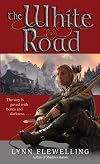
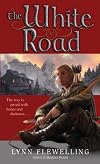
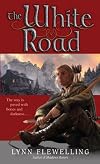
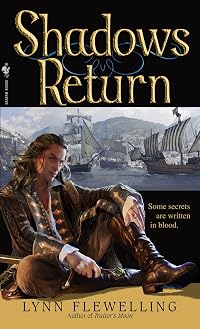
I'm still very disappointed in the cover, though, after the gorgeous one for Shadows Return. show less
The White Road picks up directly after Shadows Return ends. Seregil and Alec are recovering – as the first line points out, "Dying – even for just a little while – took a lot out of a person." They're all in need of TLC, Seregil and Alec and Sebrahn – the tayan'gil, the strange little childlike being made from Alec's essence. And he (using the term loosely) is very strange indeed. He – not that he has any male or female attributes, if you know what I mean – can heal; his silver blood dropped into water forms flowers, which when applied to a wound heal it. His rare tears can heal even death – as Alec discovered firsthand.
It's a fascinating idea, the tayan'gil (also known as a white child, being colorless): part golem, part homunculus, part pure Flewelling. The method of healing is unique and beautiful; the idea that the childlike creature is both appealing and repellent, not to mention terrifying, is brilliant.
When he escaped from his imprisonment, Alec went back for Sebrahn; he had no choice, having seen how the tayan'gil's predecessor was treated, and knowing that the little creature feeds only off Alec's own blood. He was rewarded almost immediately when Sebrahn saved him and his comrades (in more ways than one) … but the tayan'gil's presence proves a challenge. They are pursued – not by the alchemist who made him, as Seregil, happily, killed him, but by others who are very personally concerned about the presence in the world of a tayan'gil, not to mention the half-Hâzadrielfaie whose blood could be used to make more. Then, of course, there is the constant concern that should Sebrahn feel threatened, or feel that Alec is threatened, he might lash out in the same way he did when he saved their lives, with a killing song. Then, it was shocking but beneficial to Our Heroes; when they are staying with Seregil's kin in Bôkthersa or in some other place filled with friends, it would be tragic. Alec feels responsible for the creature, and cares for him almost like his own child; Seregil learns affection for him, but worries over the burden and the dangers; others' reactions range from outright loathing to intrigue.
Through long thought and consultation with greater powers (and can I just say that "the Friend" was worth the price of admission all by his own big self), Alec and Seregil decide that the only thing they can do is go back to where they came from: Riga, where they were held as slaves, where Sebrahn was created. It sounded like a terrible idea to me – any sane person would stay far, far away from a place holding such pain and danger. But few have ever accused the Nightrunners of complete sanity – and it is their only real choice. It makes sense. If they can get hold of the book the alchemist used to make the tayan'gil, they can accomplish two goals: keep others from gaining the ability to create another Sebrahn, and, perhaps, gain a little insight into how he works.
Venturing across the sea into territory where Aurenfaie are seen as nothing but slaves to retrieve a book from the very household in which they were enslaved – this should be enough to keep a book going. But wait: there's more. Meanwhile, there is the abominable Ulan, a clan leader who thinks little of bringing in some extra money by allowing his own people to be sold, who is slowly dying of a lung disease and who wants the healing powers of a tayan'gil for himself: either Sebrahn or one he creates himself, he's not picky. He wants the book, the white child, and Alec, and he will do anything to get them. Also, from another direction, the Hâzadrielfaie want much the same things for different reasons: they need to contain Alec and Sebrahn and the book, or – possibly – destroy them. And they're not going to let anything get in their way, either.
This book is a pure joy, after having read a great many new-to-me writers and encountered some true stinkers, to be able to relax into the warm and reliable depths of a new(-to-me) book by a favorite writer. The reasons she's one of my favorites all make themselves known here: I enjoy the heck out of the writing, the characters, and the story, and – while it took me a little time to relax and remember it fully – Lynn Flewelling is one of those writers I feel completely safe with. I mean stand on a stump, cross my arms, close my eyes, and fall backwards safe: I know without question that I can trust her writing to catch me. Yeah, I remember now. This is why I've always spent so much time re-reading. It's wonderful to read new books and push the comfort zone and discover new favorites – but you just can't beat this feeling.
I can only sit back and admire Lynn Flewelling's skill with names, for characters and places both. Rhiminee! I love Rhiminee. I think the solitary thing I did not admire about the writing in this was the stretched-out-vowel-sounds of Sebrahn's contributions, and that was purely personal bias; I get it. It was like any dialect or speech eccentricity in a book's characters, though – a little goes a long way, and more than a little is too much.
My favorite parts of these books are always the ones that hearken back to the beginning: the Nightrunners, nightrunning and working with Thero and Micum; Alec integrating into the various places Seregil has called home. I think I was as relieved as Seregil at the outcome of this story. It was an inevitable resolution which still managed to hang in the balance and remain in question up till the end. Well done, ma'am.
Much as I want the boys to decide to take on the quest to eradicate slavery – because even for an institution which is inherently horrible the slavery in these books is bad – I'm glad to see them settling back in at the Stag and Otter.
In full knowledge that it won't last, of course.
I'm still very disappointed in the cover, though, after the gorgeous one for Shadows Return. show less
This book is a bit like a beautiful helium balloon to me.
I loved the world and the characters, but this story line is missing something. I kept waiting for a big scene, a big fight something, but in the end it was just like a balloon, I was expecting it to explode, but it just kept loosing air and in the end, I was a bit disappointed.
I get that not all stories need to be a big epic, heroic scape from slavery, but this book felt just like a they went from A to B, got a clue went to C and so on and then back.
On the other hand we got a big chunk of Seregil's past and Alec's lineage, but they were the only characters evolving. Micum was just along for the ride, Thero barely made an appearance and Becca none at all (I missed Becca)
I loved the world and the characters, but this story line is missing something. I kept waiting for a big scene, a big fight something, but in the end it was just like a balloon, I was expecting it to explode, but it just kept loosing air and in the end, I was a bit disappointed.
I get that not all stories need to be a big epic, heroic scape from slavery, but this book felt just like a they went from A to B, got a clue went to C and so on and then back.
On the other hand we got a big chunk of Seregil's past and Alec's lineage, but they were the only characters evolving. Micum was just along for the ride, Thero barely made an appearance and Becca none at all (I missed Becca)
The White Road is a direct follow-up to the story begun in "Shadows Return". That book depressed me because our heroes spent the entire story enslaved and mistreated. Here, the chains are off (literally and figuratively) and the two men set off on a mission, once again joined by Micum, to discover the truth about Sebrahn. What follows is something of a quest, with a lot of traveling, but also a lot of action. The story is fast-paced and filled with humor and surprises. This book has a lot going for it. Seregil finally returns to his home in Bokthersa and has a heart-warming reunion with his extended family. Sebrahn becomes a catalyst for learning more about dragons and the Hazadrielfaie - who are hunting Alec and Sebrahn. Then there is show more the continued conniving of Ulan í Sathil. I was also delighted to see Thero settle into the role left by Nysander. He now heads the Watchers, and has grown to be a trusted ally and friend to Alec and Seregil. All these factors made for an engrossing read that I could not put down.
Though the ending felt a bit rushed, overall the story was more than satisfying. Our heroes made plans, took action and put their unique skills to work. I cannot wait for the next book! show less
Though the ending felt a bit rushed, overall the story was more than satisfying. Our heroes made plans, took action and put their unique skills to work. I cannot wait for the next book! show less
Plot: Alec and Seregil have escaped slavery and narrowly avoided death, again, but their troubles have just begun. Various factions are after Sebrahn, the mysterious child created from Alec’s blood, some in order to possess him and his healing gifts and others in order to remove him from the world. Alec is desperate to protect the child that he has come to love. But in order to ensure that no more creatures like Sebrahn can ever be created, Alec and Seregil must journey back into Plenimar, back to the house where they were slaves, and make the necessary information and all who know about it disappear.
This is the 5th volume in Flewelling’s long running Nightrunner series. This is a series that I have been following for a long time show more and reading a new one is always something comforting, like home cooking. Though it may not be the best or deepest writing that I have encountered (not to say that it is bad), it is fun and engaging. Each novel is an exciting adventure following a group of lovable rogues. This one is no different, though their adventuring is somewhat hampered by dragging around a small child. You could pick up the story from this volume without too much confusion but I don’t recommend it. Part of the pleasure in reading these books is meeting the characters again and seeing how they’ve grown.
One of the highlights of this series, for me at least, is the relationship between Alec and Seregil. Over the course of the series it grew from partnership to friendship to, finally, love. It was very refreshing (especially since, before I read Luck in the Shadows, I didn’t think I’d ever find romance between men portrayed prominently in a fantasy novel). I’m so tired of love at first sight; I enjoy watching people fall in love. But this is no torrid romance and that’s a good thing. Flewelling doesn’t end her romance on the “happily ever after”; they fell passionately in love, yes, but now they live that love day to day and I think that is more romantic than grand declarations. In this volume they deal with the effect Sebrahn has on their relationship. It isn’t an easy problem but I like how it was handled.
A fun read for fans of the series (though they’ve probably read it already by now). show less
This is the 5th volume in Flewelling’s long running Nightrunner series. This is a series that I have been following for a long time show more and reading a new one is always something comforting, like home cooking. Though it may not be the best or deepest writing that I have encountered (not to say that it is bad), it is fun and engaging. Each novel is an exciting adventure following a group of lovable rogues. This one is no different, though their adventuring is somewhat hampered by dragging around a small child. You could pick up the story from this volume without too much confusion but I don’t recommend it. Part of the pleasure in reading these books is meeting the characters again and seeing how they’ve grown.
One of the highlights of this series, for me at least, is the relationship between Alec and Seregil. Over the course of the series it grew from partnership to friendship to, finally, love. It was very refreshing (especially since, before I read Luck in the Shadows, I didn’t think I’d ever find romance between men portrayed prominently in a fantasy novel). I’m so tired of love at first sight; I enjoy watching people fall in love. But this is no torrid romance and that’s a good thing. Flewelling doesn’t end her romance on the “happily ever after”; they fell passionately in love, yes, but now they live that love day to day and I think that is more romantic than grand declarations. In this volume they deal with the effect Sebrahn has on their relationship. It isn’t an easy problem but I like how it was handled.
A fun read for fans of the series (though they’ve probably read it already by now). show less
Recensione sul blog: http://thereadingpal.blogspot.it/2018/05/recensione-182-white-road.html
“How do you break into a ship?"
"The same way you do a house, only wetter.”
In questo quinto volume Alec e Seregil devono fare i conti con quello che è accaduto in Shadows Return: la creazione di un rekharo a seguito delle torture subite da Alec.
Sebrahn è però un rekharo diverso dagli altri, molto più potente, e sono molti coloro che vorrebbero averlo per se. Tra questi anche gli Hazad, il popolo che ha ucciso la madre di Alec e a cui lei stessa apparteneva.
The White Road segue Seregil e Alec mentre cercano di trovare i libri che permettono di creare i rekharo. Inseguiti da Ulan e dagli Hazadrielfae, i nostri due eroi devono trovare i show more libri e distruggerli per sempre.
Questo quinto libro è molto più corto dei precedenti, ma dopo averlo letto posso capire perché: anche se si legge da più p.o.v. e più livelli, mancano quegli intrighi di corte che sono tipici degli altri volumi e il plot è molto più... non dico debole, ma comunque meno dettagliato.
Alec e Seregil sono come me li ricordavo, così diversi eppure molto legati. In questo libro, devo dire, ci sono molte incomprensioni tra i due, legate soprattutto a Sebrahn e al suo essere una creatura così particolare. Mentre Alec lo vede praticamente come un figlio, un bambino quasi come gli altri, Seregil lo vede come qualcosa di diverso, mostruoso. Idea che hanno anche gli altri personaggi. Questo divide la coppia non poco, però personalmente ho trovato interessante vedere la loro relazione affrontare una cosa di questo tipo. Mi sono sempre chiesta se alla fine avrebbero avuto dei figli o meno... E mi sa che la risposta è no. Questa cosa mi rende piuttosto triste, in verità, però in effetti sarebbe troppo pericoloso, con il loro stile di vita. Inoltre, mi è piaciuto vedere anche come l'opinione di Seregil cambia a poco a poco, e come finalmente riesce a vedere (più o meno) quello che vede anche il suo talimenios.
Personalmente, penso che i lettori possano totalmente vedere che il piccolo Sebrahn è sì un po' diverso, ma ha i comportamente di un bimbo della sua età. Odia le scarpe, piange se viene sgridato o se Alec lo lascia da solo, cerca di obbedire ad Alec se gli dice che quello che fa non va bene. L'ho adorato, e ho adorato la relazione con Alec. Ogni volta che c'è il piccolo Sebrahn vado in estati, e quando insieme a loro c'è Micum è anche meglio.
Ho visto che in giro dicono che Alec è diventato quasi una donna per colpa di Sebrahn, ma personalmente penso che anche i padri possono prendersi cura dei propri figli amorevolmente, e possono essere tristi e preoccupati se qualcosa succede loro. Certi luoghi comuni e pregiudizi dovrebbero morire ormai.
Per quanto riguarda gli Hazad, li ho trovati piuttosto razzisti e antipatici. Chiusi nella loro valle, sono totalmente distaccati dal resto del modo. Non li sopportavo proprio, e lo stregone che si portavano appresso era anche più rompiscatole. Durante i quattro libri precedenti mi sono sempre chiesta se sarebbero comparsi e perché si sono allontanati dagli altri della loro razza. Qui lo scopriamo, ma, pur trovandolo interessante, non sono rimasta totalmente soddisfatta né dalla spiegazione, né dalla loro comparsa. Però non voglio fare spoiler, quindi non posso rivelare nulla.
Per quanto riguarda il plot, mancano quegli intrighi di corte che tanto mi piacevano negli altri libri, ma continua la storia di Ulan dei Viresse, con l'aggiunta degli Hazad, e la guerra con Plenimar rimane una costante sullo sfondo. Nel complesso mi è piaciuto, comunque; soprattutto nell'ultima parte, dove sembra di essere tornati ai vecchi tempi in cui Seregil e Alec si intrufolavano nelle case, c'erano scontri avvincenti, e in generale avevano avventure da "nightrunners". Rinfrescante, dopo l'ultimo libro in cui c'erano torture e in generale cose molto più oscure.
Lo stile della Flewelling è sempre meraviglioso, ed è un piacere leggere i suoi libri. Spero di leggere presto il prossimo libro, ma si avvicina il termine della serie e NON VOGLIO CHE FINISCA!
Ovviamente, consigliato! show less
“How do you break into a ship?"
"The same way you do a house, only wetter.”
In questo quinto volume Alec e Seregil devono fare i conti con quello che è accaduto in Shadows Return: la creazione di un rekharo a seguito delle torture subite da Alec.
Sebrahn è però un rekharo diverso dagli altri, molto più potente, e sono molti coloro che vorrebbero averlo per se. Tra questi anche gli Hazad, il popolo che ha ucciso la madre di Alec e a cui lei stessa apparteneva.
The White Road segue Seregil e Alec mentre cercano di trovare i libri che permettono di creare i rekharo. Inseguiti da Ulan e dagli Hazadrielfae, i nostri due eroi devono trovare i show more libri e distruggerli per sempre.
Questo quinto libro è molto più corto dei precedenti, ma dopo averlo letto posso capire perché: anche se si legge da più p.o.v. e più livelli, mancano quegli intrighi di corte che sono tipici degli altri volumi e il plot è molto più... non dico debole, ma comunque meno dettagliato.
Alec e Seregil sono come me li ricordavo, così diversi eppure molto legati. In questo libro, devo dire, ci sono molte incomprensioni tra i due, legate soprattutto a Sebrahn e al suo essere una creatura così particolare. Mentre Alec lo vede praticamente come un figlio, un bambino quasi come gli altri, Seregil lo vede come qualcosa di diverso, mostruoso. Idea che hanno anche gli altri personaggi. Questo divide la coppia non poco, però personalmente ho trovato interessante vedere la loro relazione affrontare una cosa di questo tipo. Mi sono sempre chiesta se alla fine avrebbero avuto dei figli o meno... E mi sa che la risposta è no. Questa cosa mi rende piuttosto triste, in verità, però in effetti sarebbe troppo pericoloso, con il loro stile di vita. Inoltre, mi è piaciuto vedere anche come l'opinione di Seregil cambia a poco a poco, e come finalmente riesce a vedere (più o meno) quello che vede anche il suo talimenios.
Personalmente, penso che i lettori possano totalmente vedere che il piccolo Sebrahn è sì un po' diverso, ma ha i comportamente di un bimbo della sua età. Odia le scarpe, piange se viene sgridato o se Alec lo lascia da solo, cerca di obbedire ad Alec se gli dice che quello che fa non va bene. L'ho adorato, e ho adorato la relazione con Alec. Ogni volta che c'è il piccolo Sebrahn vado in estati, e quando insieme a loro c'è Micum è anche meglio.
Ho visto che in giro dicono che Alec è diventato quasi una donna per colpa di Sebrahn, ma personalmente penso che anche i padri possono prendersi cura dei propri figli amorevolmente, e possono essere tristi e preoccupati se qualcosa succede loro. Certi luoghi comuni e pregiudizi dovrebbero morire ormai.
Per quanto riguarda gli Hazad, li ho trovati piuttosto razzisti e antipatici. Chiusi nella loro valle, sono totalmente distaccati dal resto del modo. Non li sopportavo proprio, e lo stregone che si portavano appresso era anche più rompiscatole. Durante i quattro libri precedenti mi sono sempre chiesta se sarebbero comparsi e perché si sono allontanati dagli altri della loro razza. Qui lo scopriamo, ma, pur trovandolo interessante, non sono rimasta totalmente soddisfatta né dalla spiegazione, né dalla loro comparsa. Però non voglio fare spoiler, quindi non posso rivelare nulla.
Per quanto riguarda il plot, mancano quegli intrighi di corte che tanto mi piacevano negli altri libri, ma continua la storia di Ulan dei Viresse, con l'aggiunta degli Hazad, e la guerra con Plenimar rimane una costante sullo sfondo. Nel complesso mi è piaciuto, comunque; soprattutto nell'ultima parte, dove sembra di essere tornati ai vecchi tempi in cui Seregil e Alec si intrufolavano nelle case, c'erano scontri avvincenti, e in generale avevano avventure da "nightrunners". Rinfrescante, dopo l'ultimo libro in cui c'erano torture e in generale cose molto più oscure.
Lo stile della Flewelling è sempre meraviglioso, ed è un piacere leggere i suoi libri. Spero di leggere presto il prossimo libro, ma si avvicina il termine della serie e NON VOGLIO CHE FINISCA!
Ovviamente, consigliato! show less
While I enjoyed this installment and found it a fast-paced read, it felt more like an epilogue to book 4 than a complete story of its own. We see our heroes return to Riga, which is the last place I wanted to spend any more time, and in the company of some faie from Alec's past, though not nearly enough time was spent developing that link or foreshadowing where it might lead. Definitely worth continuing the story, but don't expect anything from this one that you haven't read before.
Members
- Recently Added By
Published Reviews
ThingScore 50
For one that has been with these characters from the beginning, it is saddening to see the "changes." Nevertheless, White Road is a vast improvement over Shadows Return. One only hopes that the next foray into this world will continue to get better.
added by snurp
Lists

My Wishlist-SciFi-Fantasy
65 works; 3 members

al.vick-wishlist-scifi-fant
181 works; 2 members

2014 to read.
20 works; 1 member

Books Read in 2014
2,343 works; 86 members

Books Read in 2011
684 works; 20 members
Author Information

24+ Works 14,303 Members
Awards and Honors
Awards
Series

Common Knowledge
- Canonical title
- The White Road
- Original title
- The White Road
- Original publication date
- 2010-05-25 [2010]
- People/Characters
- Seregil i Korit of Rhiminee; Alec i Amasa of Kerry; Micum Cavish; Thero i Procepios
- Important places
- Rhiminee; Plenimar; Aurenen; Skala
- Dedication
- For my terrific kid sister, Susan. Thanks for your love, support, and enthusiasm all these years.
- First words
- Dying--even for just a little while--took a lot out of a person.
- Last words
- (Click to show. Warning: May contain spoilers.)It's good to be home.
- Publisher's editor
- Groell, Anne
- Blurbers
- Briggs, Patricia
Classifications
Statistics
- Members
- 689
- Popularity
- 41,608
- Reviews
- 20
- Rating
- (3.85)
- Languages
- English, French, German
- Media
- Paper, Audiobook, Ebook
- ISBNs
- 4
- ASINs
- 5