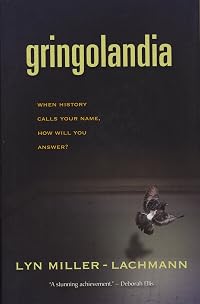
Gringolandia
by Lyn Miller-Lachmann
On This Page
Description
In 1986, when seventeen-year-old Daniel's father arrives in Madison, Wisconsin, after five years of torture as a political prisoner in Chile, Daniel and his eighteen-year-old "gringa" girlfriend, Courtney, use different methods to help this bitter, self-destructive stranger who yearns to return home and continue his work.Tags
Recommendations





















Member Reviews
Imagine waking up to soldiers in the middle of the night. Your father is dragged off and you don't know if you will ever see him again. A few years down the line, you have perfectly adjusted to a new life, when you find out your father is released from the prison he was placed in. If these things happen to you, chances are you are a character named Daniel in a book called Gringolandia.
Gringolandia takes place during the magical 80s. Turns out, 80s wasn't all great tv, movies and music. Actual things were happening in the world such as the Chilean revolution. What happened is the Chileans elected a socialist person to power. The US was like, no way bro, and totally killed the socialist and instituted a dictator in power. The Chileans show more were all, we don't like this! And people rebelled and fought for freedom. Daniel, who is the main character, has a freedom fighter father, who was TORTURED in jail. So his dad, understandably is messed up by that. Oh, and I forgot to mention, Daniel and his family now live in the United States.
I thought Gringolandia worked on several different levels. Characterization was tight. See, Daniel was layered. His dad is layered. OH and he has this girlfriend, Courtney, who sort of forced me to confront these ridiculous ideas I had. I'm not gonna lie, I thought Courtney was so annoying, because she was all trying to do annoying things like write a social justice newspaper and ask Daniel's dad these probing questions for her newspaper. Then she gets herself into these dangerous situations. But then I thought, self, would you be annoyed if she was a male? Or would you just think her very courageous? I like it when a book makes me consider my brainwaves.
As historical fiction, I thought Gringolandia was both absorbing and informative. I don't know much about the Chilean revolution except when Howard Zinn mentioned it in A People's History of the United States. I do think getting a teenager's perspective made the learning much more engaging. The teenager wasn't one of those fake ones either, you know, when the character seems contrived. I liked that the history was part of the story, but not the whole story.
The next layer which worked especially well was the family relationships. What I love here is just how complicated the relationships are. I don't know if I'm weird, but my relationship with my family is complicated. I love my family, but they do some very annoying things and I do very annoying things. Well, the way Daniel's father relates to his family is multilayered. On the one hand, he cares for his family. On the other, he is so messed up from being tortured, all he can think about is Chile and going back. Plus, he's dealing with all of these other problems. I won't go too in-depth, so as not to spoil.
In a nutshell, I found myself compelled during Gringolandia. show less
Gringolandia takes place during the magical 80s. Turns out, 80s wasn't all great tv, movies and music. Actual things were happening in the world such as the Chilean revolution. What happened is the Chileans elected a socialist person to power. The US was like, no way bro, and totally killed the socialist and instituted a dictator in power. The Chileans show more were all, we don't like this! And people rebelled and fought for freedom. Daniel, who is the main character, has a freedom fighter father, who was TORTURED in jail. So his dad, understandably is messed up by that. Oh, and I forgot to mention, Daniel and his family now live in the United States.
I thought Gringolandia worked on several different levels. Characterization was tight. See, Daniel was layered. His dad is layered. OH and he has this girlfriend, Courtney, who sort of forced me to confront these ridiculous ideas I had. I'm not gonna lie, I thought Courtney was so annoying, because she was all trying to do annoying things like write a social justice newspaper and ask Daniel's dad these probing questions for her newspaper. Then she gets herself into these dangerous situations. But then I thought, self, would you be annoyed if she was a male? Or would you just think her very courageous? I like it when a book makes me consider my brainwaves.
As historical fiction, I thought Gringolandia was both absorbing and informative. I don't know much about the Chilean revolution except when Howard Zinn mentioned it in A People's History of the United States. I do think getting a teenager's perspective made the learning much more engaging. The teenager wasn't one of those fake ones either, you know, when the character seems contrived. I liked that the history was part of the story, but not the whole story.
The next layer which worked especially well was the family relationships. What I love here is just how complicated the relationships are. I don't know if I'm weird, but my relationship with my family is complicated. I love my family, but they do some very annoying things and I do very annoying things. Well, the way Daniel's father relates to his family is multilayered. On the one hand, he cares for his family. On the other, he is so messed up from being tortured, all he can think about is Chile and going back. Plus, he's dealing with all of these other problems. I won't go too in-depth, so as not to spoil.
In a nutshell, I found myself compelled during Gringolandia. show less
This is a terrific YA novel that is set against the backdrop of the Pinochet dictatorship that ruled from 1973 until 1990 in Chile.
The story begins in 1980 in Santiago, when 11-year-old Daniel witnesses his father Marcelo’s beating and arrest for his anti-regime activities. Marcelo's prison time is harrowing, and he may not have survived but for the fact that his family - now in Madison, Wisconsin - has been successful in exerting pressure to get him released after six hard years in captivity. We next encounter Daniel at age 17, when he goes with his mom to pick up his father at the airport. They hardly recognize the man who limps toward them from the plane.
The remainder of the book focuses on the readjustment of the family - now show more “Americanized” - to a very much changed Marcelo, and Marcelo's readjustment to a life free of torture, but not free of pain. Although Daniel’s father is not yet 40, he looks at least 50, is partially paralyzed, has crippling nightmares, and tries to blot out his terrifying memories through drinking.
Daniel, his younger sister Tina, and his mother Vicky have lived in hope for six years for the return of a father and a husband. They are not prepared for the damaged man that returns to them. They struggle with balancing their own needs for attention against Marcelo’s needs arising from his disablements and stress. Further, Marcelo feels he owes it to his still-imprisoned comrades to help get them released. It does not seem right to him to relax in "Gringolandia" while his friends and country still suffer. But can he overcome his own disablement? Daniel’s “gringa” girlfriend, Courtney, thinks she can be the one to help save “Papa.” But the whole family needs saving as well.
Discussion: I am elated to find such a good book that is also instructional and informative, and that will familiarize readers both with international events and with the fact that the U.S. - generally through the C.I.A. - sometimes plays a clandestine role in manipulating them. Both the motives and consequences of this manipulation are not always positive. This book brings the actions of governments down to the personal level in a visceral and heart-rending way, but also shows that individual action can and does make a difference. Awareness is the first step towards change.
Because I don’t know how many readers may get to this book, I am including an excerpt from the “Author’s Note” that precedes the story about the real events that inspired it. (And I would also add here that I think it’s a great idea, in any historical fiction, for authors to set forth the actual historical background, and to distinguish fact from fiction at the outset.)
"Author’s Note:
In September 1970, the Chilean people elected as president the socialist physician and politician Salvador Allende. Allende moved to nationalize (place under state ownership) key industries and to redistribute the country’s wealth in a more equitable manner. His actions provoked the United States government, which feared the rise of another Communist nation in the Americas. After a three-year destabilization effort, the United States, through the Central Intelligence Agency, backed a military coup led by Chilean Army commander General Augusto Pinochet.
The coup, which took place on September 11, 1973, led to the deaths of Allende and approximately 3,000 of his supporters, the imprisonment and torture of more than 30,000 others, and the exile or emigration of nearly a tenth of the country’s population. The coup ended Chile’s long history of stable democracy and rule of law – a source of pride for this South American nation – and ushered in seventeen years of violent repression. The Pinochet regime reversed not only Allende’s policies but also earlier decades of social reforms, leaving the economy in the hands of free market policies that brought economic growth along with increasing misery for the poor. Today, Chile has one of the most unequal distributions of wealth in the Western Hemisphere.”
Evaluation: The story brings up so many issues for discussion even aside from those relating to political events. What happens when a parent changes, and when the relationship between parents changes? What happens when your own relationships go through changes? When is violence an appropriate response and when does it make things worse? What is the difference between courage and foolishness? What are the limits of love? I very highly recommend this book. And if you are to have a discussion of it, or just want more background, the author has a very helpful Teacher's Guide on her website. show less
The story begins in 1980 in Santiago, when 11-year-old Daniel witnesses his father Marcelo’s beating and arrest for his anti-regime activities. Marcelo's prison time is harrowing, and he may not have survived but for the fact that his family - now in Madison, Wisconsin - has been successful in exerting pressure to get him released after six hard years in captivity. We next encounter Daniel at age 17, when he goes with his mom to pick up his father at the airport. They hardly recognize the man who limps toward them from the plane.
The remainder of the book focuses on the readjustment of the family - now show more “Americanized” - to a very much changed Marcelo, and Marcelo's readjustment to a life free of torture, but not free of pain. Although Daniel’s father is not yet 40, he looks at least 50, is partially paralyzed, has crippling nightmares, and tries to blot out his terrifying memories through drinking.
Daniel, his younger sister Tina, and his mother Vicky have lived in hope for six years for the return of a father and a husband. They are not prepared for the damaged man that returns to them. They struggle with balancing their own needs for attention against Marcelo’s needs arising from his disablements and stress. Further, Marcelo feels he owes it to his still-imprisoned comrades to help get them released. It does not seem right to him to relax in "Gringolandia" while his friends and country still suffer. But can he overcome his own disablement? Daniel’s “gringa” girlfriend, Courtney, thinks she can be the one to help save “Papa.” But the whole family needs saving as well.
Discussion: I am elated to find such a good book that is also instructional and informative, and that will familiarize readers both with international events and with the fact that the U.S. - generally through the C.I.A. - sometimes plays a clandestine role in manipulating them. Both the motives and consequences of this manipulation are not always positive. This book brings the actions of governments down to the personal level in a visceral and heart-rending way, but also shows that individual action can and does make a difference. Awareness is the first step towards change.
Because I don’t know how many readers may get to this book, I am including an excerpt from the “Author’s Note” that precedes the story about the real events that inspired it. (And I would also add here that I think it’s a great idea, in any historical fiction, for authors to set forth the actual historical background, and to distinguish fact from fiction at the outset.)
"Author’s Note:
In September 1970, the Chilean people elected as president the socialist physician and politician Salvador Allende. Allende moved to nationalize (place under state ownership) key industries and to redistribute the country’s wealth in a more equitable manner. His actions provoked the United States government, which feared the rise of another Communist nation in the Americas. After a three-year destabilization effort, the United States, through the Central Intelligence Agency, backed a military coup led by Chilean Army commander General Augusto Pinochet.
The coup, which took place on September 11, 1973, led to the deaths of Allende and approximately 3,000 of his supporters, the imprisonment and torture of more than 30,000 others, and the exile or emigration of nearly a tenth of the country’s population. The coup ended Chile’s long history of stable democracy and rule of law – a source of pride for this South American nation – and ushered in seventeen years of violent repression. The Pinochet regime reversed not only Allende’s policies but also earlier decades of social reforms, leaving the economy in the hands of free market policies that brought economic growth along with increasing misery for the poor. Today, Chile has one of the most unequal distributions of wealth in the Western Hemisphere.”
Evaluation: The story brings up so many issues for discussion even aside from those relating to political events. What happens when a parent changes, and when the relationship between parents changes? What happens when your own relationships go through changes? When is violence an appropriate response and when does it make things worse? What is the difference between courage and foolishness? What are the limits of love? I very highly recommend this book. And if you are to have a discussion of it, or just want more background, the author has a very helpful Teacher's Guide on her website. show less
Gringolandia opens with an Author's Note explaining the very real circumstances and events in Chile that lead up to what is experienced by the fictional characters in the book. A short bibliography for further reading is also provided. Usually this kind of thing goes at the end of the story when readers are more likely to be interested in picking up 4-5 books on the topic. I thought it was a weird choice to put the note and bibliography at the beginning...until I started reading. Miller-Lachmann expects a lot of her readers, in a good way. She expects her readers to know what she's talking about without having to step away from the story to explain it, hence the need for the author's note preceeding the story.
Because, let's be honest, show more not many Americans know that much about Chile and certainly don't know that much about what it was like to live through the turbulent times Dan and his family live through. I don't read a lot of historical fiction about specific events, but much of the historical fiction published in the States of this type is about very well-known events. Even if the average American reader doesn't know the ins and outs of the actual event, they know the basics. Think about how much historical fiction is set during WWII or the French Revolution, or is about Anastasia Romanova. Gringolandia fills a huge gap. I can't think of any other historical fiction for teen readers about South America, let alone about Chile.
Even if there were tons of titles about political prisoners under Pinochet, I think that Gringolandia would still stand out. Without repeating events, this story is told from three distinctive points of view: Dan's, his father's, and his girlfriend's. Dan's father, Marcelo, talks about what it was like in prison (and believe me, even the polite version presented here can get graphic), but the strong point in his narrative is his passion for a free Chile. He doesn't regret the actions he took that led to his arrest; he desperately wants to continue that work, regardless of the consequences, now that he's been released. He's also going through some serious PTSD that is tearing his family apart. His perspective is contrasted with Dan's. Dan doesn't really know what his father did (you can't be questioned about what you don't know), and he doesn't understand how his father could put himself and his family at such great risk for a cause. He certainly can't understand why his father doesn't want to just move on and make the best of things. Like his father, Dan has trust issues and a serious flinch in the face of policemen, but without the conviction that helps his father work through these issues. Courtney, Dan's girlfriend, is all fired up about what happened to Marcelo and what is happening in Chile in general, but she is also woefully naive. Courtney breaks through to Marcelo when no one else can by believing whole-heartedly in what he believes in, guided by a simple sense of right and wrong and of fairness.
There is so much going on in this book along side of so much actually happening. I'm not going to lie, it's intense and not always easy to read. But it is so worth it! Not only will the reader learn about events not often discussed in American history classes, but they'll also get to know some ridiculously complex characters and watch them make impossible choices for themselves and the greater good.
Book source: Philly Free Library show less
Because, let's be honest, show more not many Americans know that much about Chile and certainly don't know that much about what it was like to live through the turbulent times Dan and his family live through. I don't read a lot of historical fiction about specific events, but much of the historical fiction published in the States of this type is about very well-known events. Even if the average American reader doesn't know the ins and outs of the actual event, they know the basics. Think about how much historical fiction is set during WWII or the French Revolution, or is about Anastasia Romanova. Gringolandia fills a huge gap. I can't think of any other historical fiction for teen readers about South America, let alone about Chile.
Even if there were tons of titles about political prisoners under Pinochet, I think that Gringolandia would still stand out. Without repeating events, this story is told from three distinctive points of view: Dan's, his father's, and his girlfriend's. Dan's father, Marcelo, talks about what it was like in prison (and believe me, even the polite version presented here can get graphic), but the strong point in his narrative is his passion for a free Chile. He doesn't regret the actions he took that led to his arrest; he desperately wants to continue that work, regardless of the consequences, now that he's been released. He's also going through some serious PTSD that is tearing his family apart. His perspective is contrasted with Dan's. Dan doesn't really know what his father did (you can't be questioned about what you don't know), and he doesn't understand how his father could put himself and his family at such great risk for a cause. He certainly can't understand why his father doesn't want to just move on and make the best of things. Like his father, Dan has trust issues and a serious flinch in the face of policemen, but without the conviction that helps his father work through these issues. Courtney, Dan's girlfriend, is all fired up about what happened to Marcelo and what is happening in Chile in general, but she is also woefully naive. Courtney breaks through to Marcelo when no one else can by believing whole-heartedly in what he believes in, guided by a simple sense of right and wrong and of fairness.
There is so much going on in this book along side of so much actually happening. I'm not going to lie, it's intense and not always easy to read. But it is so worth it! Not only will the reader learn about events not often discussed in American history classes, but they'll also get to know some ridiculously complex characters and watch them make impossible choices for themselves and the greater good.
Book source: Philly Free Library show less
In 1980, the terrifying Chilean military government throws Daniel’s activist father in jail, sending Dan, his mother, and his younger sister fleeing to the United States. Five years later, Dan is a high school senior when Papa is released from jail and returns to them, broken, angry, and alcoholic. Dan wants to reestablish a relationship with his father, but all Papa seems to care about is going back to Chile and continuing his dangerous revolutionary work. Meanwhile, Dan’s girlfriend Courtney seems to be ignoring Dan in favor of his father, whose stories she is passionate about. With the push-pull of different passions all around them, will Dan be able to have the relationship with his father that he’s always wanted?
GRINGOLANDIA show more is an important tale of the emotional trauma that resulted from the unstable Chilean government of the 1980s, but it will be hard-pressed to find the right audience for itself. This book is an important but not necessarily easy or sympathetic read.
I know little about Chilean 20th-century history, and GRINGOLANDIA was a different but effective way of introducing me to it. Instead of in-the-moment scenes of horror, we mostly see its emotional aftermath, the way it both physically and mentally scars its victims and tears apart families. Daniel’s father is hard to like—as most political prisoners are and probably should be. Lyn Miller-Lachmann touchingly portrays the strains of Papa’s ghosts on the family in a painful and real way.
However, I also felt that, despite the emotions within the story, this book was, in a ways, difficult for readers to reach emotionally. I never really connected with Dan’s struggles to get to re-know his father. Courtney I thought was even annoying, this white girl trying too hard to ingratiate herself into her Latino boyfriend’s family because of her fixation on his father’s political experiences. It was as if, in trying to work out the tensions between themselves, the characters in this book don’t allow us to sympathize with them.
Overall, GRINGOLANDIA will make a good read for readers interested in this period of South American history, even though it’s missing a few key elements of characterization that would’ve made it exceptional. show less
GRINGOLANDIA show more is an important tale of the emotional trauma that resulted from the unstable Chilean government of the 1980s, but it will be hard-pressed to find the right audience for itself. This book is an important but not necessarily easy or sympathetic read.
I know little about Chilean 20th-century history, and GRINGOLANDIA was a different but effective way of introducing me to it. Instead of in-the-moment scenes of horror, we mostly see its emotional aftermath, the way it both physically and mentally scars its victims and tears apart families. Daniel’s father is hard to like—as most political prisoners are and probably should be. Lyn Miller-Lachmann touchingly portrays the strains of Papa’s ghosts on the family in a painful and real way.
However, I also felt that, despite the emotions within the story, this book was, in a ways, difficult for readers to reach emotionally. I never really connected with Dan’s struggles to get to re-know his father. Courtney I thought was even annoying, this white girl trying too hard to ingratiate herself into her Latino boyfriend’s family because of her fixation on his father’s political experiences. It was as if, in trying to work out the tensions between themselves, the characters in this book don’t allow us to sympathize with them.
Overall, GRINGOLANDIA will make a good read for readers interested in this period of South American history, even though it’s missing a few key elements of characterization that would’ve made it exceptional. show less
Gringolandia
Lyn Miller-Lachmann
Curbstone Press 2009
ISBN: 978-1-931896-49-8
You know all those stories that end with “They lived happily ever after”? Gringolandia begins after the “ever after.”
Lyn Miller-Lachmann researched and wrote a heartfull story about a man’s life after having lived with torture for so many years and the effect this had on his family. His wife worked with others, wrote letters, and waited for her husband to return. Brother, Daniel, and sister, Tina, face different issues in accepting the dad that was so different from their recollection. After the father, Marcelo, was imprisoned, the mother and children moved to America to be safe. As with most moves, the family’s life was changed and their customs show more adjusted to their environment. When the father returns, his hold as the family head of household was shaken.
The jist of the story is that the father wants to return to Chile and continue his fighting the revolution. However, the family was not so sure about the idea. Yet everyone wanted to support him.
The father, Marcelo, can appear as rude or obnoxious, yet all his actions and discontentment are integrated with the history of his torture. The author doesn’t do a heavy analysis of what reactions are normal for a person recovering from torture. I’m sure she had to do tremendous research on the subject. However, she does an excellent job of showing and not telling us what was going on for the man: the confusion in his intentions combined with the confusions of the rest of the family’s expectations.
The story is told from Daniel’s point-of-view. He is a teen in high school, who plays a guitar and has a white girlfriend. The introduction of Courtney is a bit of a mystery to me. Probably because I am not smart enough to figure out the undertones. Courtney’s history with her own family is revealed, and we can understand her zeal in wanting to work with Daniel’s father. She takes upon herself to set in action things that Daniel is afraid will hurt his father more than he already is. I’m not sure why so many people let her get away with what she did. I think that the assertion all of us, people of color, grew up with was the essential factor in that decision. We know better than to call a white person on their actions in spite of their motives. Many times because the white person believes their intentions are noble. Too hard to explain to them the difference.
One finds it difficult to say they enjoyed this book because of the emotional upheaval everyone experience. Yet Gringolandia is an excellent read to see family dynamics at work, and the consequences of one’s belief in an unfair system. Or is it world? Get to know this family for they will stay in your memory teasing you with I wonder what happened to….
Jo Ann Hernández
BronzeWord1@yahoo.com
BronzeWord Latino Authors
http://authorslatino.com/wordpress show less
Lyn Miller-Lachmann
Curbstone Press 2009
ISBN: 978-1-931896-49-8
You know all those stories that end with “They lived happily ever after”? Gringolandia begins after the “ever after.”
Lyn Miller-Lachmann researched and wrote a heartfull story about a man’s life after having lived with torture for so many years and the effect this had on his family. His wife worked with others, wrote letters, and waited for her husband to return. Brother, Daniel, and sister, Tina, face different issues in accepting the dad that was so different from their recollection. After the father, Marcelo, was imprisoned, the mother and children moved to America to be safe. As with most moves, the family’s life was changed and their customs show more adjusted to their environment. When the father returns, his hold as the family head of household was shaken.
The jist of the story is that the father wants to return to Chile and continue his fighting the revolution. However, the family was not so sure about the idea. Yet everyone wanted to support him.
The father, Marcelo, can appear as rude or obnoxious, yet all his actions and discontentment are integrated with the history of his torture. The author doesn’t do a heavy analysis of what reactions are normal for a person recovering from torture. I’m sure she had to do tremendous research on the subject. However, she does an excellent job of showing and not telling us what was going on for the man: the confusion in his intentions combined with the confusions of the rest of the family’s expectations.
The story is told from Daniel’s point-of-view. He is a teen in high school, who plays a guitar and has a white girlfriend. The introduction of Courtney is a bit of a mystery to me. Probably because I am not smart enough to figure out the undertones. Courtney’s history with her own family is revealed, and we can understand her zeal in wanting to work with Daniel’s father. She takes upon herself to set in action things that Daniel is afraid will hurt his father more than he already is. I’m not sure why so many people let her get away with what she did. I think that the assertion all of us, people of color, grew up with was the essential factor in that decision. We know better than to call a white person on their actions in spite of their motives. Many times because the white person believes their intentions are noble. Too hard to explain to them the difference.
One finds it difficult to say they enjoyed this book because of the emotional upheaval everyone experience. Yet Gringolandia is an excellent read to see family dynamics at work, and the consequences of one’s belief in an unfair system. Or is it world? Get to know this family for they will stay in your memory teasing you with I wonder what happened to….
Jo Ann Hernández
BronzeWord1@yahoo.com
BronzeWord Latino Authors
http://authorslatino.com/wordpress show less
After visiting Chile and learning about the Pinochet regime at the Museum of Human Rights in Santiago, I was really interested to pick up this book, and sorry to put it down when I was done. Compelling, real and emotional, and an intense look at how power can destruct but conviction can overcome. A great read for those interested in this period of Chilean history and also for teens, that it will expand their perspectives on the world.
Reviewed by Allison Fraclose for TeensReadToo.com
On October 23, 1980, 12-year-old Daniel Aguilar awoke to a crash and his mother's screams from the living room of his family's apartment in Santiago, Chile. When the young boy got out of bed, soldiers held a gun to his head until his mother told them where his father was hiding.
For this reason, Daniel always blamed himself for his father's arrest. If not for him, then Marcelo Aguilar, AKA "Nino" and writer for the underground newspaper Justicia, would not have been sent to prison to endure years of torture at the hands of dictator Pinochet's cruel regime.
Six years later, Daniel and the rest of his family anxiously await his father's release to their new home in Madison, Wisconsin. Now a show more junior in high school, Daniel has adjusted well to life in the United States, playing guitar with his band and for the church that his girlfriend Courtney's father runs.
An extensive letter-writing campaign has finally freed Marcelo, who now joins them in exile in "Gringolandia," away from his compatriots who still suffer and die on the streets and in the prisons of Chile. Although Daniel wishes for a close relationship with the hero father he's admired all of these years, he and his family could never have prepared themselves for dealing with the man who bears more scars than his broken body can show.
As Marcelo wrestles with his own internal conflict and spirals into a pit of self-destruction, Courtney takes it upon herself to rescue him in any way, and makes it her personal mission to bring Marcelo's cause to the ears of anyone who will listen. But, for Daniel, it's not all about his father's cause, and he may end up risking everything just to set things right in his own world.
This politically charged novel brings a powerful twist of humanity to the stories that most Americans simply read about in the news. The aftermath and reconciliation of Marcelo's horrific experiences feel very real, and the effects that they have on the rest of the novel's characters can be quite unexpected at times, making the reader anxious to learn of the outcome.
I must note that readers with a weak stomach may find it hard to make it through this book, simply for the descriptions of grisly torture techniques and the resulting physical and emotional scars they leave on their victims. show less
On October 23, 1980, 12-year-old Daniel Aguilar awoke to a crash and his mother's screams from the living room of his family's apartment in Santiago, Chile. When the young boy got out of bed, soldiers held a gun to his head until his mother told them where his father was hiding.
For this reason, Daniel always blamed himself for his father's arrest. If not for him, then Marcelo Aguilar, AKA "Nino" and writer for the underground newspaper Justicia, would not have been sent to prison to endure years of torture at the hands of dictator Pinochet's cruel regime.
Six years later, Daniel and the rest of his family anxiously await his father's release to their new home in Madison, Wisconsin. Now a show more junior in high school, Daniel has adjusted well to life in the United States, playing guitar with his band and for the church that his girlfriend Courtney's father runs.
An extensive letter-writing campaign has finally freed Marcelo, who now joins them in exile in "Gringolandia," away from his compatriots who still suffer and die on the streets and in the prisons of Chile. Although Daniel wishes for a close relationship with the hero father he's admired all of these years, he and his family could never have prepared themselves for dealing with the man who bears more scars than his broken body can show.
As Marcelo wrestles with his own internal conflict and spirals into a pit of self-destruction, Courtney takes it upon herself to rescue him in any way, and makes it her personal mission to bring Marcelo's cause to the ears of anyone who will listen. But, for Daniel, it's not all about his father's cause, and he may end up risking everything just to set things right in his own world.
This politically charged novel brings a powerful twist of humanity to the stories that most Americans simply read about in the news. The aftermath and reconciliation of Marcelo's horrific experiences feel very real, and the effects that they have on the rest of the novel's characters can be quite unexpected at times, making the reader anxious to learn of the outcome.
I must note that readers with a weak stomach may find it hard to make it through this book, simply for the descriptions of grisly torture techniques and the resulting physical and emotional scars they leave on their victims. show less
Members
- Recently Added By
Author Information
15+ Works 317 Members
Awards and Honors
Awards
Distinctions
Notable Lists
Common Knowledge
- Important places
- Chile; Madison, Wisconsin, USA; Wisconsin, USA
Classifications
- Genres
- Teen, Fiction and Literature, Children's Books, Young Adult
- DDC/MDS
- 642 — Applied science & technology Home economics & family management Meals and table service
- LCC
- PZ7 .M6392 .G — Language and Literature Fiction and juvenile belles lettres Fiction and juvenile belles lettres Juvenile belles lettres
- BISAC
Statistics
- Members
- 93
- Popularity
- 345,377
- Reviews
- 8
- Rating
- (3.93)
- Languages
- English
- Media
- Paper, Ebook
- ISBNs
- 2
- ASINs
- 1