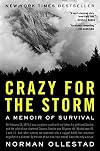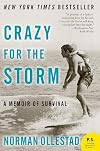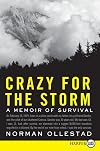
Crazy for the Storm: A Memoir of Survival
by Norman Ollestad
On This Page
Description
Set amid the spontaneous, uninhibited surf culture of Malibu and Mexico in the late 1970s, this riveting memoir, written in crisp Hemingwayesque prose, recalls Ollestad's childhood and the magnetic man whose determination and love infuriated and inspired him--and ultimately saved his life.Tags
Recommendations
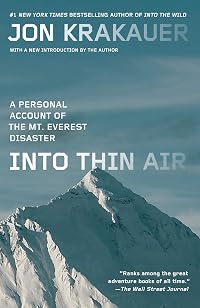
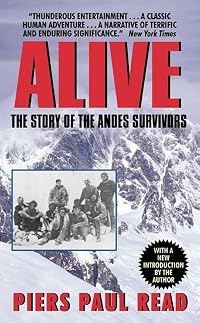
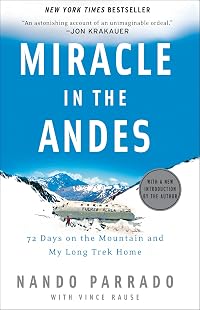
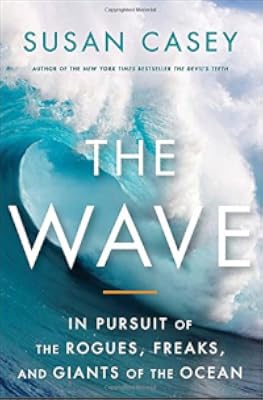
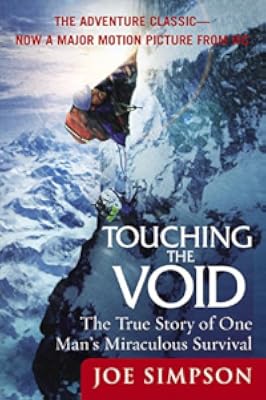

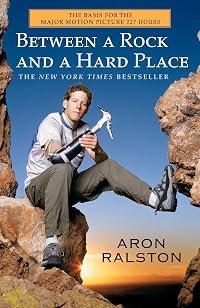








Member Recommendations
akblanchard Sons write about their difficult fathers.
Member Reviews
There is a line near the beginning of “Crazy for the Storm” that I think is very telling about the whole book.
“He had taught me to ride big waves, had pulled me from tree wells and fished me out of suffocating powder. Now it was my turn to save him.”
The author, Norman Ollestad, says this about his father (also Norman Ollestad), after the plane crash that took his father’s life and stranded him on a mountain, alone.
The reason I find it telling, is that as I read through the book, I found far more places where the son is saving the father, or at least living the life the father had wanted for himself. Norman’s father exposed him to so many dangerous situations (many that these days he’d probably get arrested for, per the show more author) but by doing so, also gave him the tools and the inner strength to survive.
“We stared at each other. I saw him so clearly. The cranium shelf rising off his forehead bumpy and uneven, the cluster of diamonds in the blue of his eyes fragile cracked windows, and I saw someone younger and full of grand ambitions and I thought about how he had wanted to be a professional basketball player. He looked at me as if into a mirror, studying me, like I was holding something that he admired, even desired.”
The author does a good job balancing the voice of his younger self, often angry at his father for making him live a different life, making him ski and surf and take risks that he didn’t want to…with the admiration he now feels for his father. Though Ollestad is making different choices now with his own son, Noah, the lessons taught to him as a child have taken deep root.
His father’s voice is always in the background…not only in the decisions he makes regarding his own son, but all throughout the book.
“All I care about is that you keep going, Boy Wonder. Don’t get stuck on how you finished last time or the turn you just made. Go after the next one with all you’ve got.”
Moments like that were the strongest part of this book. Though I thought I’d be more drawn to the crash itself and the miracle that an 11-year old boy was the only survivor and managed to get down a mountain in the winter by himself…it was the father/son relationships that were more powerful. The crash details (and some of the descriptions of surfing and skiing) that got too technical for me since I am unfamiliar with those worlds.
The writing was at times very choppy…short, staccato sentences that broke up the flow of other, very lyrical passages.
Agree or disagree with a father making his son take incredible risks, living a different life than the son wanted to at the time, in the end the author lets go of the right or wrong of his life. He maintains his love for his father, appreciates the gifts that came from the way he was raised, and has a wealth of experience, good and bad, with which to guide his own son. In the end, he has the memory of his father and the reality of his son.
“I guessed that at some point during his run, Noah had broken through the storm and locked into the bliss of his victory, the bliss of his connection to the ineffable – that sacred place unveiled to me, and now to my son, by the man with the sunshine in his eyes. There are few joys in life that can compare to that.” show less
“He had taught me to ride big waves, had pulled me from tree wells and fished me out of suffocating powder. Now it was my turn to save him.”
The author, Norman Ollestad, says this about his father (also Norman Ollestad), after the plane crash that took his father’s life and stranded him on a mountain, alone.
The reason I find it telling, is that as I read through the book, I found far more places where the son is saving the father, or at least living the life the father had wanted for himself. Norman’s father exposed him to so many dangerous situations (many that these days he’d probably get arrested for, per the show more author) but by doing so, also gave him the tools and the inner strength to survive.
“We stared at each other. I saw him so clearly. The cranium shelf rising off his forehead bumpy and uneven, the cluster of diamonds in the blue of his eyes fragile cracked windows, and I saw someone younger and full of grand ambitions and I thought about how he had wanted to be a professional basketball player. He looked at me as if into a mirror, studying me, like I was holding something that he admired, even desired.”
The author does a good job balancing the voice of his younger self, often angry at his father for making him live a different life, making him ski and surf and take risks that he didn’t want to…with the admiration he now feels for his father. Though Ollestad is making different choices now with his own son, Noah, the lessons taught to him as a child have taken deep root.
His father’s voice is always in the background…not only in the decisions he makes regarding his own son, but all throughout the book.
“All I care about is that you keep going, Boy Wonder. Don’t get stuck on how you finished last time or the turn you just made. Go after the next one with all you’ve got.”
Moments like that were the strongest part of this book. Though I thought I’d be more drawn to the crash itself and the miracle that an 11-year old boy was the only survivor and managed to get down a mountain in the winter by himself…it was the father/son relationships that were more powerful. The crash details (and some of the descriptions of surfing and skiing) that got too technical for me since I am unfamiliar with those worlds.
The writing was at times very choppy…short, staccato sentences that broke up the flow of other, very lyrical passages.
Agree or disagree with a father making his son take incredible risks, living a different life than the son wanted to at the time, in the end the author lets go of the right or wrong of his life. He maintains his love for his father, appreciates the gifts that came from the way he was raised, and has a wealth of experience, good and bad, with which to guide his own son. In the end, he has the memory of his father and the reality of his son.
“I guessed that at some point during his run, Noah had broken through the storm and locked into the bliss of his victory, the bliss of his connection to the ineffable – that sacred place unveiled to me, and now to my son, by the man with the sunshine in his eyes. There are few joys in life that can compare to that.” show less
What a fascinating survival story told in a fascinating way: The chapters vacillate between the survival and the upbringing that informed his survival. Additionally, once the tale is told, the coda of the rigors of growing into one's own is told with incredible passion and detail and nostalgia. There are no quotes around the spoken words in this book, which helps to convey the closeness the author feels to everyone in his book, as if he's fused with humanity, especially his father. A wonderful, powerful mesmerizing read.
>This is the memoir of a man who survived a plane crash in the mountains when he was only 11 years old. It's a compelling and unique story, but rather poorly told.
First, the author decides to use this alternating chapter format that I don't think did anything for the pacing. One chapter would be about the plane crash and the quest for survival. The next chapter would be backstory, which focused primarily on the relationship between young Norman and his father.
Second, while it should be really interested to read about how an 11 year old survives on a freezing cold mountain -- it just wasn't. The emotion isn't there. There's a lot of details that physically describe the mountain in an effort to help the reader picture the action - - but I show more never actually got a good, clear mental image.
The best part of the book (for me) was the parenting questions it raised. Norman's father had a huge zest for life that he clearly wanted to share with his son. And his method of sharing was cajoling little Norman to do some pretty risky stuff, like back country skiing, surfing, etc. The book raises questions of how this style of parenting played into Norman's survival of the plane crash and whether it really is a good way to parent.
Norman draws his own conclusions and that provides the theme that ties the whole book together. The content on this book was interesting enough to keep me reading, but the writing really didn't do it justice compared to other survival stories I've read. Just a ho-hum for me overall. show less
First, the author decides to use this alternating chapter format that I don't think did anything for the pacing. One chapter would be about the plane crash and the quest for survival. The next chapter would be backstory, which focused primarily on the relationship between young Norman and his father.
Second, while it should be really interested to read about how an 11 year old survives on a freezing cold mountain -- it just wasn't. The emotion isn't there. There's a lot of details that physically describe the mountain in an effort to help the reader picture the action - - but I show more never actually got a good, clear mental image.
The best part of the book (for me) was the parenting questions it raised. Norman's father had a huge zest for life that he clearly wanted to share with his son. And his method of sharing was cajoling little Norman to do some pretty risky stuff, like back country skiing, surfing, etc. The book raises questions of how this style of parenting played into Norman's survival of the plane crash and whether it really is a good way to parent.
Norman draws his own conclusions and that provides the theme that ties the whole book together. The content on this book was interesting enough to keep me reading, but the writing really didn't do it justice compared to other survival stories I've read. Just a ho-hum for me overall. show less
Growing Up With Divorced Parents
The teaser of Ollestad's new memoir "Crazy For the Storm" is sure to pull you in, a story about surviving a plane crash in the snowy California mountains. I won't spoil the plot, but the survival story is really not that remarkable. But deep down, the book is fundamentally about growing up with divorced parents and a physical and psychological abusive stepfather. The death of his father in the plane crash was the traumatic event that serves as the frame narrative, with flashbacks to his childhood and the relationships with his father, father's girlfriend, mother, and stepfather.
I honestly didn't feel that there was anything exceptional or unusual with Ollestad's upbringing. That is not to say that his show more story is boring, far from it. His story is the story of millions of children all over North America, dealing with the social consequences of split families, of domestic abuse, but also of unconditional love.
Overall, I recommend this book because it is extremely relatable. Most of it is predictable, yet Ollestad's appeal to the human condition keeps you engaged throughout. show less
The teaser of Ollestad's new memoir "Crazy For the Storm" is sure to pull you in, a story about surviving a plane crash in the snowy California mountains. I won't spoil the plot, but the survival story is really not that remarkable. But deep down, the book is fundamentally about growing up with divorced parents and a physical and psychological abusive stepfather. The death of his father in the plane crash was the traumatic event that serves as the frame narrative, with flashbacks to his childhood and the relationships with his father, father's girlfriend, mother, and stepfather.
I honestly didn't feel that there was anything exceptional or unusual with Ollestad's upbringing. That is not to say that his show more story is boring, far from it. His story is the story of millions of children all over North America, dealing with the social consequences of split families, of domestic abuse, but also of unconditional love.
Overall, I recommend this book because it is extremely relatable. Most of it is predictable, yet Ollestad's appeal to the human condition keeps you engaged throughout. show less
The author tells the true story of how he survived--as an 11 year old boy--a plane crash that left him stranded at the top of an ice covered mountain. To survive he had to make his way down an ice covered slope that threatened to send him tumbling down the treacherous chute at it's center. As he describes this remarkable feat, he explains how the lessons his father taught him were the real reason that he survived. In flashbacks he describes his childhood--a childhood filled with surfboards, skiing, the breakup of his parents, and an antagonistic new boyfriend of his mother's.
I enjoyed the survival parts of this story...I kept listening to see just how he was going to make it off of that mountain. Some of the descriptions of his youth show more are pretty wild and pretty interesting as well, but some parts it drug a bit. Still, I would recommend it to anyone who likes true tales of survival. show less
I enjoyed the survival parts of this story...I kept listening to see just how he was going to make it off of that mountain. Some of the descriptions of his youth show more are pretty wild and pretty interesting as well, but some parts it drug a bit. Still, I would recommend it to anyone who likes true tales of survival. show less
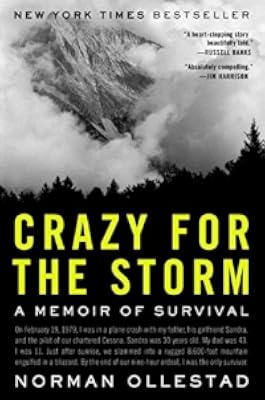
I'm also going to reprint the small paragraph on the cover. It grabbed me and I'm sure it will do the same to you.
"On February 19, 1979, I was in a plane crash with my father, his girlfriend Sandra and the pilot of our chartered Cessna. Sandra was 30 years old. My dad was 43. I was 11. Just after sunrise, we slammed into a rugged 8,600-foot mountain engulfed in a blizzard. by the end of our nine-hour ordeal I was the only survivor."
Hooked? This is a stunning, yet heartbreaking memoir. Knowing the outcome of Crazy for the Storm in no way detracts from the enjoyment of the book.
Norman Ollestad had an unusual childhood. He literally grew up on the beaches of Topanga Beach in California, part of a surfing community. He also excelled at show more competitive skiing and most other areas he attempted. Behind him, encouraging him, driving him was his father, also named Norman Ollestad. The senior Ollestad was a child actor, appearing in the original "Cheaper by the Dozen" movie. He was an FBI agent, under Herbert Hoover, but quit after a year and exposed the dirty secrets of that administration in a book called Inside the FBI. He was also a successful lawyer. Ollestad himself describes his father as 'larger than life'. But he was what most people would see as a risk taker, living in and for the moment. He pushes his son to do the same.
This new release from Harper Collins Canada is told in alternating chapters. It opens with the horrendous crash and the realization of their plight. It then abruptly switches to the author's childhood. At first I found this disconcerting as I was caught up in one story or the other. But I quickly realized that this dual story telling leads us the climax, where both stories collide on the top of a mountain.
The author had what would be seen by many as an idyllic childhood. But after his parents divorced, his mother's boyfriend moved in. This man was physically and mentally abusive to both Norman and his mother, but his mother chose Nick many times over her son. Luckily young Norman has a surrogate mother in a family friend - Eleanor.
Author Norman has a difficult relationship with his father at times. He laments that he wants to be a 'normal' kid sometimes, hanging out in a neighbourhood with friends. His father instead encourages him to excel and that step beyond in surfing and skiing. It is on the way to a ski competition that the plane crashes. Some of the childhood tales are incredible. On the way to Mexico to deliver a washing machine to his grandparents, they are chased and shot at by federales. They end up living in a remote village with locals for a bit before rescuing the vehicle and continuing.
To me, this memoir seemed to be a way of honouring and making peace with his father and the loss of him after many years. It is a personal journey that we are privileged enough to share.
As an adult and parent Ollestad physically revisits his childhood home, the crash site and the people involved. He realizes that without his father pushing him all those years, he never would have survived the crash. And he can see what his father wanted him to see.
"Off the point at Topanga Beach I stared into the eye of a distant wave. Somewhere in the oval opening I grasped what Dad had always tried to make me see. There is more to life than just surviving it. Inside each turbulence there is a calm - a sliver of light buried in the darkness."
There are colour photographs included with the book - arresting images of his father and candid shots of the family.
This is a memoir of survival - not just a plane crash, but of his life. A totally arresting read. show less
"On February 19, 1979, I was in a plane crash with my father, his girlfriend Sandra and the pilot of our chartered Cessna. Sandra was 30 years old. My dad was 43. I was 11. Just after sunrise, we slammed into a rugged 8,600-foot mountain engulfed in a blizzard. by the end of our nine-hour ordeal I was the only survivor."
Hooked? This is a stunning, yet heartbreaking memoir. Knowing the outcome of Crazy for the Storm in no way detracts from the enjoyment of the book.
Norman Ollestad had an unusual childhood. He literally grew up on the beaches of Topanga Beach in California, part of a surfing community. He also excelled at show more competitive skiing and most other areas he attempted. Behind him, encouraging him, driving him was his father, also named Norman Ollestad. The senior Ollestad was a child actor, appearing in the original "Cheaper by the Dozen" movie. He was an FBI agent, under Herbert Hoover, but quit after a year and exposed the dirty secrets of that administration in a book called Inside the FBI. He was also a successful lawyer. Ollestad himself describes his father as 'larger than life'. But he was what most people would see as a risk taker, living in and for the moment. He pushes his son to do the same.
This new release from Harper Collins Canada is told in alternating chapters. It opens with the horrendous crash and the realization of their plight. It then abruptly switches to the author's childhood. At first I found this disconcerting as I was caught up in one story or the other. But I quickly realized that this dual story telling leads us the climax, where both stories collide on the top of a mountain.
The author had what would be seen by many as an idyllic childhood. But after his parents divorced, his mother's boyfriend moved in. This man was physically and mentally abusive to both Norman and his mother, but his mother chose Nick many times over her son. Luckily young Norman has a surrogate mother in a family friend - Eleanor.
Author Norman has a difficult relationship with his father at times. He laments that he wants to be a 'normal' kid sometimes, hanging out in a neighbourhood with friends. His father instead encourages him to excel and that step beyond in surfing and skiing. It is on the way to a ski competition that the plane crashes. Some of the childhood tales are incredible. On the way to Mexico to deliver a washing machine to his grandparents, they are chased and shot at by federales. They end up living in a remote village with locals for a bit before rescuing the vehicle and continuing.
To me, this memoir seemed to be a way of honouring and making peace with his father and the loss of him after many years. It is a personal journey that we are privileged enough to share.
As an adult and parent Ollestad physically revisits his childhood home, the crash site and the people involved. He realizes that without his father pushing him all those years, he never would have survived the crash. And he can see what his father wanted him to see.
"Off the point at Topanga Beach I stared into the eye of a distant wave. Somewhere in the oval opening I grasped what Dad had always tried to make me see. There is more to life than just surviving it. Inside each turbulence there is a calm - a sliver of light buried in the darkness."
There are colour photographs included with the book - arresting images of his father and candid shots of the family.
This is a memoir of survival - not just a plane crash, but of his life. A totally arresting read. show less
Young Norman Ollestad shared a tight bond with his reckless, charismatic father, a man who pushed his son to excel in dangerous sports such as surfing and skiing. When a terrible small-engine plane crash results in 11-year-old Norman being stranded on the side of a California mountain, the survival skills his father taught him serve him well.
Crazy for the Storm is not the easiest book to read. The chronology jumps around and the narrative is sprinkled with jargon from skateboarding, surfing and skiing. I had a hard time picturing the action, and in the scenes that take place after the plane crash, young Ollestad doesn't come across as an eleven-year-old boy at all, but as an adult man. Even in such an extreme situation, he has an show more implausible knowledge of what to do next. Despite these reservations, however, I found this tribute to an unusually strong father-son relationship unexpectedly moving. show less
Crazy for the Storm is not the easiest book to read. The chronology jumps around and the narrative is sprinkled with jargon from skateboarding, surfing and skiing. I had a hard time picturing the action, and in the scenes that take place after the plane crash, young Ollestad doesn't come across as an eleven-year-old boy at all, but as an adult man. Even in such an extreme situation, he has an show more implausible knowledge of what to do next. Despite these reservations, however, I found this tribute to an unusually strong father-son relationship unexpectedly moving. show less
Members
- Recently Added By
Author Information
3 Works 763 Members
Awards and Honors
Common Knowledge
- Canonical title*
- Survivre à tout prix
- Original title
- Crazy for the storm
- Original publication date
- 2009
- Epigraph
- I am harnassed in a canvas papoose strapped to by dad's back. It's my first birthday. I peer over his shoulder as we glide the sea. Sun glare and blue ripple together. The surfboard rail engraves the arcing wave and spits... (show all) of sunflecked ocean tumble over his toes. I can fly.
- Dedication
- My father craved the weightless glide. He chased hurricanes and blizzard to touch the bliss of riding mighty waves and deep powder snow. An insatiable spirit, he was crazy for the storm. And it saved my life. This book is... (show all) for my father and for my son.
- First words
- February 19,1979.
- Last words
- (Click to show. Warning: May contain spoilers.)Great idea, Ollestad.
- Blurbers
- Cheever, Susan; Frank, Lucinda
*Some information comes from Common Knowledge in other languages. Click "Edit" for more information.
Classifications
- Genres
- Sports and Leisure, Biography & Memoir, General Nonfiction, Nonfiction, Travel
- DDC/MDS
- 979.40530922 — History & geography History of North America Great Basin and Pacific Slope region of United States California General California History
- LCC
- CT275 .O475 .A3 — Auxiliary Sciences of History Biography Biography National biography
- BISAC
Statistics
- Members
- 751
- Popularity
- 37,690
- Reviews
- 49
- Rating
- (3.40)
- Languages
- 7 — Dutch, English, French, German, Italian, Russian, Spanish
- Media
- Paper, Audiobook, Ebook
- ISBNs
- 30
- ASINs
- 11