On This Page
Description
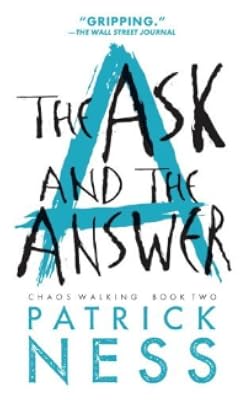
Alternate chapters follow teenagers Todd and Viola, who become separated as the Mayor's oppressive new regime takes power in New Prentisstown, a space colony where residents can hear each other's thoughts.Tags
Recommendations









Member Reviews
NOTE: This review applies to the entire Chaos Walking trilogy.
A young-adult trilogy set on a planet New World, where settlers from Old World (presumably Earth) headed looking for a new start. The initial landing went badly, resulting in a native species of intelligent beings being subdued as slaves, all the men being infected with a virus that makes every inner thought audible to everyone (known as Noise), and all the women dead in one of the original settlements, Prentisstown.
Out of Prentisstown comes Todd, a young teen who is forced to flee when the mayor, who is plotting a war to take over the planet, turns against him. He soon meets up with young Viola, a girl who crash-landed with a scout ship from an incoming group of new show more settlers. Todd and Viola travel across the planet to try to warn the incoming settlers before Mayor Prentiss can start his war. Along the way, they encounter other settlers from other towns, including a renowned woman healer who sets herself up as the leader of an armed resistance to now-President Prentiss.
I thought this trilogy (plus the very slight short story that showcases Viola's life on the scout ship just before it lands) was really well done. The writing is certainly on a young-adult level (sensible since all three novels are narrated in turns by Todd and Viola), but the themes that it tackles are far from simplistic: What is war? Is it ever OK to kill someone? Do the ends ever justify the means? Is it possible to do the wrong thing for the right reasons? Is redemption ever really possible? Time and again I braced myself for a pat answer, and time and again I was pleasantly surprised. Ness takes pains to present the good and bad sides of both heroes and villains, to the point where readers will find themselves questioning which is which.
Partway through the series, I expressed the opinion that this is a better YA trilogy than The Hunger Games. After finishing the third book, I stand by that opinion. While I enjoyed both series quite a bit, I think Ness does a better job of presenting and exploring the larger themes that lie behind the narrative. show less
A young-adult trilogy set on a planet New World, where settlers from Old World (presumably Earth) headed looking for a new start. The initial landing went badly, resulting in a native species of intelligent beings being subdued as slaves, all the men being infected with a virus that makes every inner thought audible to everyone (known as Noise), and all the women dead in one of the original settlements, Prentisstown.
Out of Prentisstown comes Todd, a young teen who is forced to flee when the mayor, who is plotting a war to take over the planet, turns against him. He soon meets up with young Viola, a girl who crash-landed with a scout ship from an incoming group of new show more settlers. Todd and Viola travel across the planet to try to warn the incoming settlers before Mayor Prentiss can start his war. Along the way, they encounter other settlers from other towns, including a renowned woman healer who sets herself up as the leader of an armed resistance to now-President Prentiss.
I thought this trilogy (plus the very slight short story that showcases Viola's life on the scout ship just before it lands) was really well done. The writing is certainly on a young-adult level (sensible since all three novels are narrated in turns by Todd and Viola), but the themes that it tackles are far from simplistic: What is war? Is it ever OK to kill someone? Do the ends ever justify the means? Is it possible to do the wrong thing for the right reasons? Is redemption ever really possible? Time and again I braced myself for a pat answer, and time and again I was pleasantly surprised. Ness takes pains to present the good and bad sides of both heroes and villains, to the point where readers will find themselves questioning which is which.
Partway through the series, I expressed the opinion that this is a better YA trilogy than The Hunger Games. After finishing the third book, I stand by that opinion. While I enjoyed both series quite a bit, I think Ness does a better job of presenting and exploring the larger themes that lie behind the narrative. show less
If the first book in Patrick Ness's Chaos Walking series was all about escape and survival, THE ASK AND THE ANSWER is a story about resistance. It marks the first time that Todd and Viola finally get answers to some of the questions that plagued them since they left Prentisstown. While the action confines itself to the area around Haven/New Prentisstown, New World remains as vibrant as ever, as our heroes discover more surprises and learn more about the other settlers.
One of my largest takeaways from THE ASK AND THE ANSWER is the need to remember that Todd and Viola are still so very young. It is too easy to forget that they are barely in their teens, just as it is easy to forget that they have nominal experience outside of living on a show more spaceship or farming in a small community. Their age and lack of expertise explain their more questionable actions, which eases your frustration about those actions. They are young and afraid, and they want, more than anything, for an adult to make it better for them. It is difficult to stay frustrated with how easy Mistress Coil and Mayor Prentiss manipulate them when you recall how out of their depth they are.
Their age also explains their heightened emotions throughout the story. Todd, in particular, struggles with the things he witnesses and what he does at the behest of the Mayor. He doesn't have a calm thought in the entire story, and your heart bleeds for the brutal way in which he grows up. Viola has an easier time adapting, or at least controlling her emotions, but hers also surge and spike with frequency. No one should have to face puberty at the same time as they are trying to save a loved one or fight a revolution.
I find it interesting that Mistress Coil and Mayor Prentiss are essentially the same villain. Both want control over the remaining settlers, and both firmly believe in their righteousness. Neither one readily shares information, preferring to dole it out piecemeal so that no one person can see the full picture. And both are more prepared for a war than you would think possible, given that the action occurs over a relatively short period of time. Both manipulate and lie to maintain order among their followers, something Viola and Todd instinctively know but still fall prey to more than once.
This all means that by the time the two sides face each other in battle, there are no good answers available to our heroes. They are still young and inexperienced, loyal to each other only, but still prone to believing the calmer adults can provide safety in a world that is growing increasingly perilous every minute.
There is no doubt that Mr. Ness is building the story for an explosive, probably literally, conclusion to his series. The question that remains is whether any of the various factions will survive and what the damage is to those potential survivors. I have a feeling the finale is going to be brutal; I hope it is not Manchee-levels of brutal. I'm still haunted by that scene. show less
One of my largest takeaways from THE ASK AND THE ANSWER is the need to remember that Todd and Viola are still so very young. It is too easy to forget that they are barely in their teens, just as it is easy to forget that they have nominal experience outside of living on a show more spaceship or farming in a small community. Their age and lack of expertise explain their more questionable actions, which eases your frustration about those actions. They are young and afraid, and they want, more than anything, for an adult to make it better for them. It is difficult to stay frustrated with how easy Mistress Coil and Mayor Prentiss manipulate them when you recall how out of their depth they are.
Their age also explains their heightened emotions throughout the story. Todd, in particular, struggles with the things he witnesses and what he does at the behest of the Mayor. He doesn't have a calm thought in the entire story, and your heart bleeds for the brutal way in which he grows up. Viola has an easier time adapting, or at least controlling her emotions, but hers also surge and spike with frequency. No one should have to face puberty at the same time as they are trying to save a loved one or fight a revolution.
I find it interesting that Mistress Coil and Mayor Prentiss are essentially the same villain. Both want control over the remaining settlers, and both firmly believe in their righteousness. Neither one readily shares information, preferring to dole it out piecemeal so that no one person can see the full picture. And both are more prepared for a war than you would think possible, given that the action occurs over a relatively short period of time. Both manipulate and lie to maintain order among their followers, something Viola and Todd instinctively know but still fall prey to more than once.
This all means that by the time the two sides face each other in battle, there are no good answers available to our heroes. They are still young and inexperienced, loyal to each other only, but still prone to believing the calmer adults can provide safety in a world that is growing increasingly perilous every minute.
There is no doubt that Mr. Ness is building the story for an explosive, probably literally, conclusion to his series. The question that remains is whether any of the various factions will survive and what the damage is to those potential survivors. I have a feeling the finale is going to be brutal; I hope it is not Manchee-levels of brutal. I'm still haunted by that scene. show less
The Ask and the Answer starts right where The Knife of Never Letting Go left off. Again it is difficult to review this book without giving anything away.
Although the pace of this book is less frantic than in The Knife of Never Letting Go, that does not mean less happens. If anything the plot is even more frantic in this one with even more twists and turns. In this book enemies become friends and friends become enemies. The Chaos Walking books are really all about the strength of their characters. And in The Ask and the Answer, the characters we know and love (and some that we hate with every fiber of our beings) are back with a vengeance, just as compelling as we remember them from The Knife of Never Letting Go, but growing and changing show more too . Characters you love are forced to do horrible, horrible things. Characters you hate with a passion, you are forced to reassess and identify (if not agree) with their motives. Things are not always black and white now. And the shades of gray can be very dangerous.
One overarching theme of this book is war - the harshness, the necessity, and the fascination of it. The more we are aware of what goes on “on the ground” in war time, the war crimes, the things people will do and suffer through just to survive, the more we can hear phrases, such as, “If not us, then who? At least we will do it with some level of humanity…” and only be shocked at what is being done, not that someone had to say it, then the more harrowing this book gets.
Themes of dictatorship, terrorism, genocide and slavery reign. Driven by politics and tackling some big questions about absolute power, imprisonment, and even insurgent terrorism, this second book is a very timely and intelligent novel but never feels heavy-handed or condescending. These Chaos Walking books are marketed as books of YA dystopian sci-fi, I think their sophistication and the life experience required to understand their sentiment makes them even more meaningful for adults.
3.75 stars show less
Although the pace of this book is less frantic than in The Knife of Never Letting Go, that does not mean less happens. If anything the plot is even more frantic in this one with even more twists and turns. In this book enemies become friends and friends become enemies. The Chaos Walking books are really all about the strength of their characters. And in The Ask and the Answer, the characters we know and love (and some that we hate with every fiber of our beings) are back with a vengeance, just as compelling as we remember them from The Knife of Never Letting Go, but growing and changing show more too . Characters you love are forced to do horrible, horrible things. Characters you hate with a passion, you are forced to reassess and identify (if not agree) with their motives. Things are not always black and white now. And the shades of gray can be very dangerous.
One overarching theme of this book is war - the harshness, the necessity, and the fascination of it. The more we are aware of what goes on “on the ground” in war time, the war crimes, the things people will do and suffer through just to survive, the more we can hear phrases, such as, “If not us, then who? At least we will do it with some level of humanity…” and only be shocked at what is being done, not that someone had to say it, then the more harrowing this book gets.
Themes of dictatorship, terrorism, genocide and slavery reign. Driven by politics and tackling some big questions about absolute power, imprisonment, and even insurgent terrorism, this second book is a very timely and intelligent novel but never feels heavy-handed or condescending. These Chaos Walking books are marketed as books of YA dystopian sci-fi, I think their sophistication and the life experience required to understand their sentiment makes them even more meaningful for adults.
3.75 stars show less
Oh my . . . oh my god. I can't even form coherent thoughts right now. I probably should wait at least a day before I review this book just so I can actually think.
Because the first book was driven, focused, a beautiful telling, but the second book is where Patrick Ness's genius absolutely leaps off the page and grabs you. All those plot twists, character arcs, the meticulous planning of events, they could only be thought up by a genius. I've decided. Ness is a genius. A masterful storyteller. He knows how leave readers dying for the next page, how to make his characters and relationships fester in one's mind until they have to pick the book back up again. He knows people, too. Real people, not just characters slapped on a page. These show more are real, breathing people with minds and personalities of their own as complex as people I know (heck, even more so). What would this character do in this situation? It seems as if most writers put down what THEY want the character to do to further the plot. What Ness does is listen to the character. These are all actions of the characters, not the writer. I rarely ever see this done well. Perfect, actually.
I can't praise this book highly enough. It made me feel every emotion, and not just feel it, suffer it. This book is TERRIBLY traumatic. I might have been screaming as I was reading it and freaking out those around me. The manipulation, the thought processes, they were all so traumatic because they were so believable and well-written.
I'd also like to point out the absolute flawlessness of Viola and Todd's relationship. It's not even something easily explained, because it, like the characters themselves, is complex and so, so very genuine.
Again, this man is a genius. A storytelling genius. I know I'm gushing, but I can't seem to stop. This trilogy gets inside my head and I can't think of anything else. One of my favorite books, hands down. I don't think I'll ever get over it. show less
Because the first book was driven, focused, a beautiful telling, but the second book is where Patrick Ness's genius absolutely leaps off the page and grabs you. All those plot twists, character arcs, the meticulous planning of events, they could only be thought up by a genius. I've decided. Ness is a genius. A masterful storyteller. He knows how leave readers dying for the next page, how to make his characters and relationships fester in one's mind until they have to pick the book back up again. He knows people, too. Real people, not just characters slapped on a page. These show more are real, breathing people with minds and personalities of their own as complex as people I know (heck, even more so). What would this character do in this situation? It seems as if most writers put down what THEY want the character to do to further the plot. What Ness does is listen to the character. These are all actions of the characters, not the writer. I rarely ever see this done well. Perfect, actually.
I can't praise this book highly enough. It made me feel every emotion, and not just feel it, suffer it. This book is TERRIBLY traumatic. I might have been screaming as I was reading it and freaking out those around me. The manipulation, the thought processes, they were all so traumatic because they were so believable and well-written.
I'd also like to point out the absolute flawlessness of Viola and Todd's relationship. It's not even something easily explained, because it, like the characters themselves, is complex and so, so very genuine.
Again, this man is a genius. A storytelling genius. I know I'm gushing, but I can't seem to stop. This trilogy gets inside my head and I can't think of anything else. One of my favorite books, hands down. I don't think I'll ever get over it. show less
I effing love this trilogy.
I'm not a fan of cliffhanging books. And the first two books have been just that. But somehow, Ness has managed to keep me satiated with open endings that somehow seem tidy. Two things have kept me engrossed with the story.
The characters. The Mayor is a top-notch antagonist. He's sinister, cool and calculated; he's deceptive and pure effing evil, but somehow manages to convince you he's not. Every single time. Todd continues to grow into a strong, sympathetic and, most certainly, flawed hero. Viola, as well. And their relationship continues to mature without ever being physical in a way that is deep and meaningful, setting up the never-failing power couple that is stronger together than apart. And, a nice show more surprise, is seeing Davy's character grow from this whiny brat bully into a broken kid that you almost feel sorry for.
The story. Ness kept me intrigued. I was never quite sure where the story was going. There has continually been a turn or twist that I couldn't quite guess. And I think he's put together quite a convoluted plot with many moving parts that seem to be slowly coming together at a very satisfying pace, setting the stage for an interesting conclusion in the third book.
I could still do without the phonetic-style of writing for Todd and other uneducated Prentisstownies. I'm afraid it turns off people in the beginning (it almost did for me). But I've enjoyed his often rambling style of writing.
I'm eager to get to the third book. And please, Lord, let there be a conclusive ending. That would be cool. show less
I'm not a fan of cliffhanging books. And the first two books have been just that. But somehow, Ness has managed to keep me satiated with open endings that somehow seem tidy. Two things have kept me engrossed with the story.
The characters. The Mayor is a top-notch antagonist. He's sinister, cool and calculated; he's deceptive and pure effing evil, but somehow manages to convince you he's not. Every single time. Todd continues to grow into a strong, sympathetic and, most certainly, flawed hero. Viola, as well. And their relationship continues to mature without ever being physical in a way that is deep and meaningful, setting up the never-failing power couple that is stronger together than apart. And, a nice show more surprise, is seeing Davy's character grow from this whiny brat bully into a broken kid that you almost feel sorry for.
The story. Ness kept me intrigued. I was never quite sure where the story was going. There has continually been a turn or twist that I couldn't quite guess. And I think he's put together quite a convoluted plot with many moving parts that seem to be slowly coming together at a very satisfying pace, setting the stage for an interesting conclusion in the third book.
I could still do without the phonetic-style of writing for Todd and other uneducated Prentisstownies. I'm afraid it turns off people in the beginning (it almost did for me). But I've enjoyed his often rambling style of writing.
I'm eager to get to the third book. And please, Lord, let there be a conclusive ending. That would be cool. show less
Rarely does a sequel outdo its predecessor. Not necessarily because the writing is bad or the story less enjoyable. But because the feeling that the reader gets when reading the story for ths first time is incomparable...the original can rarely be replicated, and is even less likely to be bettered.
That being said, The Ask and The Answer does all that, and more. The Knife of Never Letting Go was an excellent first novel; full of original ideas, excellent storytelling and characters who it was easy to care about. Left on a cliffhanger ending (to say the least!), it was hard not to rush out and read the sequel to Knife straight away. Hard that is because the library copies had been reserved for what seemed like eternity, and I couldn't show more justify buying it when I already had so many books on my shelf. So I waited, and low and behold, The Ask and The Answer became available and was subsequently devoured in a matter of days.
Gripping is an understatement. Ness has the ability to take your average characters, your far-from-extraordinary plot and turn it into an absolutely riveting read. With one emotional rollercoaster after another and a corker of a plot twist at the end (I'm sure some readers saw it coming but I certainly didn't!), Ness deftly navigates the somewhat busy field of young adult fantasy and created something truly special. Suffice to say, if you enjoyed the Knife of Never Letting Go, I guarantee that you will love the sequel. Oh yes.
Characters developed throughout the first novel have been fully fleshed out in the sequel. Without giving too much away, our protagonists, Todd and Viola, have been dragged through the most dire of circumstances and find themselves in deadly peril from the first page. Having suffered the most tragic of personal losses, and running from one danger to another, Todd and Viola are forced to face the darkest of situations and worse, the darkness inside themselves. What they each are willing and capable of doing...and sacrificing. It is this that makes the book so enjoyable and so gripping, better than any suspense film that I have seen over the past years. The Ask and The Answer is dark, darker than I expected and far darker than the covers of either book suggest.
It is Ness' expert handling of his characters' plight and the truly devastating effects of their decisions that make the book stand out from its contemporaries, especially in a time where run-of-the-mill YA fantasies seem to be churned out by the dozen. Understated, powerful, heartfelt yet sharp as a knife, Ness' writing really delivers. My only complaint is that we are yet again left with a cliffhanger. And this time, I do not have the next installment readily available to read at my leisure. I guess I'll have to wait with the rest of you! Mr Ness, you have certainly set the bar very high.
I was slightly concerned that a childrens fantasy would not live up to the standard of my first reads of the past three years...I need not have worried. Cracking stuff. show less
That being said, The Ask and The Answer does all that, and more. The Knife of Never Letting Go was an excellent first novel; full of original ideas, excellent storytelling and characters who it was easy to care about. Left on a cliffhanger ending (to say the least!), it was hard not to rush out and read the sequel to Knife straight away. Hard that is because the library copies had been reserved for what seemed like eternity, and I couldn't show more justify buying it when I already had so many books on my shelf. So I waited, and low and behold, The Ask and The Answer became available and was subsequently devoured in a matter of days.
Gripping is an understatement. Ness has the ability to take your average characters, your far-from-extraordinary plot and turn it into an absolutely riveting read. With one emotional rollercoaster after another and a corker of a plot twist at the end (I'm sure some readers saw it coming but I certainly didn't!), Ness deftly navigates the somewhat busy field of young adult fantasy and created something truly special. Suffice to say, if you enjoyed the Knife of Never Letting Go, I guarantee that you will love the sequel. Oh yes.
Characters developed throughout the first novel have been fully fleshed out in the sequel. Without giving too much away, our protagonists, Todd and Viola, have been dragged through the most dire of circumstances and find themselves in deadly peril from the first page. Having suffered the most tragic of personal losses, and running from one danger to another, Todd and Viola are forced to face the darkest of situations and worse, the darkness inside themselves. What they each are willing and capable of doing...and sacrificing. It is this that makes the book so enjoyable and so gripping, better than any suspense film that I have seen over the past years. The Ask and The Answer is dark, darker than I expected and far darker than the covers of either book suggest.
It is Ness' expert handling of his characters' plight and the truly devastating effects of their decisions that make the book stand out from its contemporaries, especially in a time where run-of-the-mill YA fantasies seem to be churned out by the dozen. Understated, powerful, heartfelt yet sharp as a knife, Ness' writing really delivers. My only complaint is that we are yet again left with a cliffhanger. And this time, I do not have the next installment readily available to read at my leisure. I guess I'll have to wait with the rest of you! Mr Ness, you have certainly set the bar very high.
I was slightly concerned that a childrens fantasy would not live up to the standard of my first reads of the past three years...I need not have worried. Cracking stuff. show less
Okay, okay, breathe, Mia, breathe.
Okay.
So many thoughts. So many feels. I'll be damned if I could coherently write them all down here in a clear and concise manner two minutes after reading that kick-in-the face ending. But I'd also be damned if I didn't try. So here goes:
All readers know that it is a very rare thing indeed when the sequel is even better than its predecessor. But it does happen, and The Ask and the Answer is, I believe, so much better than The Knife of Never Letting Go. (For those who haven't figured it out yet, this is the second book of the Chaos Walking Trilogy, The Knife of Never Letting Go being the first and Monsters of Men being the last. If you haven't read The Knife yet, you should get on it, because there are show more some very minor spoilers in this review that would ruin a few things for those who have not yet read the first. If you were as on the fence about it as I was, read on, because I promise this one is MUCH better.)
For me, what really made this book was the characters, so that's what I'm going to focus mainly on.
Todd: Oh, Todd. He hit some record lows in this book, but somehow he got back up. The dynamic between him and the Mayor is super fascinating, if utterly depressing on Todd's part. As you can see in my multiple progress updates, I really felt for Todd throughout this whole ordeal, but he made a few decisions that were questionable enough where I couldn't root for him for a while. Eventually I just gave up and let the book do what it does- totally engulf me- and I realized Todd's character does fluctuate much more in this book than in the last. You had me scared for a minute there, Todd!But he does come back somewhere around the middle and is more recognizable as the loyal Todd Hewitt we know from the first book.
Viola: Amazing. The dual narration of this book adds a whole new perspective to Viola, and I was pleasantly surprised at how awesome she actually is. Her fierceness, wit, and general badassery earned this book a spot on my "kickass heroines" shelf. Also, she and Todd are the best duo in YA science fiction.
Mayor Prentiss: Or should I say President Prentiss? It's the man we all know and f*cking hate: David Ruddy Prentiss. Yes, he's back, and with a vengeance, but he's definitely not your textbook antagonist:
Sure, the Mayor does all the things that villains do; he's cruel and cold and manipulative. But it's also undeniable that he's smart as a whip, and THAT'S what makes him so dangerous. He can find the very thing that will make you hold on and use it against you. He will have his henchmen beat you within an inch of death but just as they're about to deliver the final blow, he heals you. As Todd says, "He puts bandages on the people". He makes people trust him, makes the enemy seem so outlandish that joining him is the only logical choice. He keeps his friends close but his enemies closer. He's charming and brilliant in that sick, evil way of his, and it's nearly impossible to not hate him. AND to complete the image, he has a scary-ass horse and lives in an old cathedral. He is the prefect antagonist, psychotic and mad- and he knows it- but controlled. One of my top villains, hence the "best villains ever" shelf.
Davy Prentiss: The mayor's son, while absolutely a dunce in some points and a complete asshole in others, was a nice addition to this. I started out wanting to backhand him across the face, but eventually kind of wanted to hug him for being kind in his stupid way. By the end I genuinely liked his character: his lame jokes, his hopeless optimism, always trying to serve a father who won't notice him.
Mistress Coyle: The leader of the rebel group the Answer is a woman after my own heart. The fact alone that it's made up of mostly women is freaking awesome, but the fact that many of them are healers that fought in the Spackle War and know their way around a bomb is double awesome. Mistress Coyle started out as a bit of a prude in my opinion, but, like many other characters, I grew to like her.
THEN we find out more about her. We see how she uses Viola as an expendable pawn and, by the end of the book, I only hated the Mayor slightly more than I hated her.
Favourite Character: Weirdly enough, Mayor David Prentiss. Though it seems like I should hate him for all the shit he's put dear Todd and Viola through, I also love him. He's real and complex, a villain with so many dimensions that you can't simply classify him as just plain evil. He breaks the mold of the traditional antagonistic role in science fiction. First of all, the Mayor cannot be defeated easily. Second, he hides his evil under layers of cunning and charm and intelligence, keeping you just confused enough to wonder what his true intentions are, but knowing just enough for you to hate his guts.
He's also surrounded by a certain mystery- since Todd narrated the first book and Todd and Viola the second, we never know more than they do. So since the founding of Prentisstown and the Spackle War happened before Todd's lifetime, we don't know much about the Mayor's background or motives. The reader sees in him only what Todd and Viola see, and the fact that you never see what he does behind closed doors always keeps you guessing. Imagine a mix of President Snow, Professor Moriarty, Mustapha Mond, and every Disney villain. He has Snow's coldness and cruelty, Moriarty's smarts and cunning, Mond's manipulation of the public, and the classic Disney villains' outright evil. Yeah, that's Prentiss for ya.
Some Final Grievances: Manchee ;( RIP Little Buddy. Yes, I still miss Manchee, and his absence in this book (Poo, Todd? Poo? Todd? Good poo, Todd!) was noticeable. The only other thing that bothered me were the spelling deviancies in Todd's narration: while when it's him speaking or narrating he uses the same spelling and contractions as he did in the first book (conversayshun, confuzhun, etc.), when it's someone else talking, usually the Mayor, he uses the correct spelling and grammar. Is this supposed to represent the differences in their language patterns and, thus, their morals? Not sure.
Overall, this was a great read, if completely exhausting. The ending was awesome, and I can't wait to crack open the final book to the Chaos Walking Trilogy, Monsters of Men. Stay tuned for my review of that- as I'm sure there will be one- since if the second is better than the first, will the last be better than the second? IS IT EVEN POSSIBLE? I guess I'll find out soon enough.
Apologies for the long review (it was a long book with a lot of stuff in it) and for the scattering of thoughts. I try to write my reviews immediately after finishing a book so all my feelings and thoughts are still fresh in my mind, but maybe next time I'll wait a bit to try and sort them out.
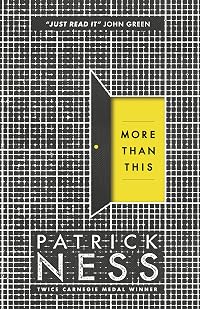
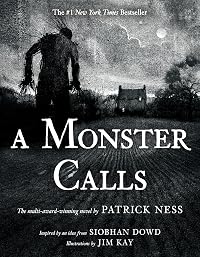
Oh, and by the way, if you're reading this and you're a fan of Patrick Ness' work, I highly suggest you read A Monster Calls & More Than This, both by him and both fantastic. I've reviewed also both so pop on over there. show less
Okay.
So many thoughts. So many feels. I'll be damned if I could coherently write them all down here in a clear and concise manner two minutes after reading that kick-in-the face ending. But I'd also be damned if I didn't try. So here goes:
All readers know that it is a very rare thing indeed when the sequel is even better than its predecessor. But it does happen, and The Ask and the Answer is, I believe, so much better than The Knife of Never Letting Go. (For those who haven't figured it out yet, this is the second book of the Chaos Walking Trilogy, The Knife of Never Letting Go being the first and Monsters of Men being the last. If you haven't read The Knife yet, you should get on it, because there are show more some very minor spoilers in this review that would ruin a few things for those who have not yet read the first. If you were as on the fence about it as I was, read on, because I promise this one is MUCH better.)
For me, what really made this book was the characters, so that's what I'm going to focus mainly on.
Todd: Oh, Todd. He hit some record lows in this book, but somehow he got back up. The dynamic between him and the Mayor is super fascinating, if utterly depressing on Todd's part. As you can see in my multiple progress updates, I really felt for Todd throughout this whole ordeal, but he made a few decisions that were questionable enough where I couldn't root for him for a while. Eventually I just gave up and let the book do what it does- totally engulf me- and I realized Todd's character does fluctuate much more in this book than in the last. You had me scared for a minute there, Todd!
Viola: Amazing. The dual narration of this book adds a whole new perspective to Viola, and I was pleasantly surprised at how awesome she actually is. Her fierceness, wit, and general badassery earned this book a spot on my "kickass heroines" shelf. Also, she and Todd are the best duo in YA science fiction.
Mayor Prentiss: Or should I say President Prentiss? It's the man we all know and f*cking hate: David Ruddy Prentiss. Yes, he's back, and with a vengeance, but he's definitely not your textbook antagonist:
Sure, the Mayor does all the things that villains do; he's cruel and cold and manipulative. But it's also undeniable that he's smart as a whip, and THAT'S what makes him so dangerous. He can find the very thing that will make you hold on and use it against you. He will have his henchmen beat you within an inch of death but just as they're about to deliver the final blow, he heals you. As Todd says, "He puts bandages on the people". He makes people trust him, makes the enemy seem so outlandish that joining him is the only logical choice. He keeps his friends close but his enemies closer. He's charming and brilliant in that sick, evil way of his, and it's nearly impossible to not hate him. AND to complete the image, he has a scary-ass horse and lives in an old cathedral. He is the prefect antagonist, psychotic and mad- and he knows it- but controlled. One of my top villains, hence the "best villains ever" shelf.
Davy Prentiss: The mayor's son, while absolutely a dunce in some points and a complete asshole in others, was a nice addition to this. I started out wanting to backhand him across the face, but eventually kind of wanted to hug him for being kind in his stupid way. By the end I genuinely liked his character: his lame jokes, his hopeless optimism, always trying to serve a father who won't notice him.
Mistress Coyle: The leader of the rebel group the Answer is a woman after my own heart. The fact alone that it's made up of mostly women is freaking awesome, but the fact that many of them are healers that fought in the Spackle War and know their way around a bomb is double awesome. Mistress Coyle started out as a bit of a prude in my opinion, but, like many other characters, I grew to like her.
THEN we find out more about her. We see how she uses Viola as an expendable pawn and, by the end of the book, I only hated the Mayor slightly more than I hated her.
Favourite Character: Weirdly enough, Mayor David Prentiss. Though it seems like I should hate him for all the shit he's put dear Todd and Viola through, I also love him. He's real and complex, a villain with so many dimensions that you can't simply classify him as just plain evil. He breaks the mold of the traditional antagonistic role in science fiction. First of all, the Mayor cannot be defeated easily. Second, he hides his evil under layers of cunning and charm and intelligence, keeping you just confused enough to wonder what his true intentions are, but knowing just enough for you to hate his guts.
He's also surrounded by a certain mystery- since Todd narrated the first book and Todd and Viola the second, we never know more than they do. So since the founding of Prentisstown and the Spackle War happened before Todd's lifetime, we don't know much about the Mayor's background or motives. The reader sees in him only what Todd and Viola see, and the fact that you never see what he does behind closed doors always keeps you guessing. Imagine a mix of President Snow, Professor Moriarty, Mustapha Mond, and every Disney villain. He has Snow's coldness and cruelty, Moriarty's smarts and cunning, Mond's manipulation of the public, and the classic Disney villains' outright evil. Yeah, that's Prentiss for ya.
Some Final Grievances: Manchee ;( RIP Little Buddy. Yes, I still miss Manchee, and his absence in this book (Poo, Todd? Poo? Todd? Good poo, Todd!) was noticeable. The only other thing that bothered me were the spelling deviancies in Todd's narration: while when it's him speaking or narrating he uses the same spelling and contractions as he did in the first book (conversayshun, confuzhun, etc.), when it's someone else talking, usually the Mayor, he uses the correct spelling and grammar. Is this supposed to represent the differences in their language patterns and, thus, their morals? Not sure.
Overall, this was a great read, if completely exhausting. The ending was awesome, and I can't wait to crack open the final book to the Chaos Walking Trilogy, Monsters of Men. Stay tuned for my review of that- as I'm sure there will be one- since if the second is better than the first, will the last be better than the second? IS IT EVEN POSSIBLE? I guess I'll find out soon enough.
Apologies for the long review (it was a long book with a lot of stuff in it) and for the scattering of thoughts. I try to write my reviews immediately after finishing a book so all my feelings and thoughts are still fresh in my mind, but maybe next time I'll wait a bit to try and sort them out.
Oh, and by the way, if you're reading this and you're a fan of Patrick Ness' work, I highly suggest you read A Monster Calls & More Than This, both by him and both fantastic. I've reviewed also both so pop on over there. show less
Members
- Recently Added By
Lists

Best Dystopias
280 works; 276 members

Best Feminist Science Fiction
188 works; 35 members

NPRs your favorites: 100 Best Ever Teen Novels
237 works; 49 members

Carnegie Medal books I've read (shortlist and winners)
86 works; 17 members

Children's and YA Dystopias
123 works; 10 members

Books Read in 2018
4,360 works; 110 members

Books Read in 2021
5,361 works; 114 members

Books Read in 2011
684 works; 19 members

Read in 2011
81 works; 1 member

Kindle Action/Adventure - Junior and Teenage Re-Read
247 works; 1 member
Author Information

44+ Works 29,645 Members
Patrick Ness was born on October 17, 1971 near Fort Belvoir, Virginia. He studied English Literature and is a graduate of the University of Southern California. He was a corporate writer before moving to London in 1999. He taught creative writing at Oxford University and is a literary critic and reviewer for the Guardian and other major show more newspapers. He is the author of eight novels including The Rest of Us Just Live Here and a short story collection entitled Topics About Which I Know Nothing. His young adult novels include the Chaos Walking trilogy, More Than This, and Monsters of Men, which won the Carnegie Medal. A Monster Calls won the Kate Greenaway Medal for illustration, the Carnegie Medal, and was made into a movie and released in October 2016. (Bowker Author Biography) show less
Some Editions
Awards and Honors
Awards
Distinctions
Series

Belongs to Publisher Series
Gallimard, Folio SF (493)
Work Relationships
Common Knowledge
- Canonical title
- The Ask and the Answer
- Original title
- The Ask and the Answer
- Original publication date
- 2009-05-04; 2009
- People/Characters
- Todd Hewitt; Viola Eade; Mayor Prentiss; David 'Davy' Prentiss Jr; Mistress Nicola Coyle; Wilf (show all 17); 1017; Angharrad; Ivan Farrow; Con Ledger; Corinne Wyatt; Lee; Magnus; Mistress Lawson; Mistress Braithwaite; Mr Collins; Sergeant Hammar
- Important places
- New Prentisstown, New World
- Epigraph
- Battle not with monsters lest you become a monster and if you gaze into the abyss the abyss gazes into you. Friedrich Nietzsche
- Dedication
- For Patrick Gale
- First words
- "Your Noise reveals you, Todd Hewitt."
- Quotations
- We are the choices we make.
"You are either forgetting or do not know that we already fought a great war, a war to end all wars, at just about the time you would have been born. If any repeat of that can be avoided—" (p. 36)
She looks at me carefully. "Appeasement," she says. "That's what it's called. Appeasement. It's a slippery slope."
"What does it mean?"
"It means you want to work with the enemy. It means you'd... (show all) rather join him than beat him, and it's a sure-fire way to stay beaten."
(p. 153)
"You've got to be practical," Mayor Ledger says, "even in the face of tyrants."
(p. 301)
"I was only following orders," the Mayor mocks. "The refuge of scoundrels since the dawn of time."
(p. 454) - Last words
- (Click to show. Warning: May contain spoilers.)He rubs his hands together and his eyes flash as he says the word. "WAR"
- Blurbers*
- Vendel, Edward van de
- Original language
- Engels; English; English UK
*Some information comes from Common Knowledge in other languages. Click "Edit" for more information.
Classifications
- Genres
- Teen, Fiction and Literature, Young Adult, Science Fiction
- DDC/MDS
- 813.6 — Literature & rhetoric American literature in English American fiction in English 2000-
- LCC
- PZ7 .N43843 .A — Language and Literature Fiction and juvenile belles lettres Fiction and juvenile belles lettres Juvenile belles lettres
- BISAC
Statistics
- Members
- 3,494
- Popularity
- 4,744
- Reviews
- 182
- Rating
- (4.12)
- Languages
- 12 — Czech, Dutch, English, French, German, Italian, Polish, Russian, Spanish, Swedish, Turkish, Portuguese (Portugal)
- Media
- Paper, Audiobook, Ebook
- ISBNs
- 78
- UPCs
- 1
- ASINs
- 22