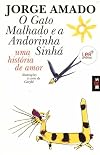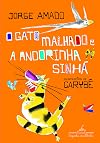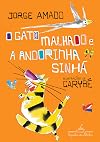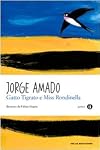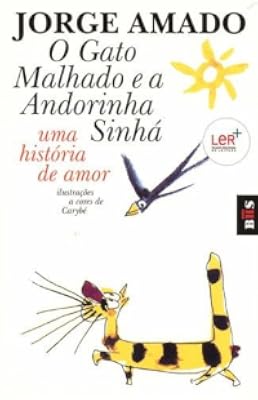
The Swallow and the Tom Cat: A Love Story
by Jorge Amado, Carybe (Illustrator)
On This Page
Description
What a fine world this would be if a swallow could fall in love with a stray cat and the two of them could live happily ever after! In this marvelous dreamworld there is no prejudice at all between creatures or people high and low.Tags
Recommendations




















Member Reviews
Jorge Amado wrote this story in 1948 as a gift for his young son, João Jorge, but without any idea of publishing it. When João Jorge chanced upon the manuscript in 1976, he had the idea of making at least one proper copy, and asked his father's friend, the artist Carybé, to add some pictures — and before they knew what was happening the book had been published and was a big success.
It's an innocent-looking little fable about a doomed love affair between the stripy tom-cat and the swallow Sinhá, against the background of the changing seasons in a park, but it turns out to be a story that refuses to resolve itself into any neat moral, and which has some modernist leaps of narrative logic that must have been quite challenging for a show more one-year-old to follow, not to mention a frame-story that seems to be a parody of Vergil, whilst the animals in the park include a parrot-priest (with at least one illegitimate child) and a toad-literary-critic. Quite a bit for grown-ups to laugh at! show less
It's an innocent-looking little fable about a doomed love affair between the stripy tom-cat and the swallow Sinhá, against the background of the changing seasons in a park, but it turns out to be a story that refuses to resolve itself into any neat moral, and which has some modernist leaps of narrative logic that must have been quite challenging for a show more one-year-old to follow, not to mention a frame-story that seems to be a parody of Vergil, whilst the animals in the park include a parrot-priest (with at least one illegitimate child) and a toad-literary-critic. Quite a bit for grown-ups to laugh at! show less
O temperamento do Gato Malhado não era nada bom: bastava aparecer no parque para todos fugirem às pressas. E ele não se importava mesmo com os outros, ia tocando a vida com a indiferença habitual. Até que, chegada certa primavera, o Gato nota que a Andorinha Sinhá não tem receio algum dele.
Foi o suficiente para que dali nascesse a amizade dos dois, que se aprofunda com o tempo. No outono, os bichos já viam o Gato com outros olhos, achando que talvez ele não fosse tão ruim e perigoso, uma vez que passara toda a primavera e o verão sem aprontar. Durante esse tempo, até soneto o Gato escreveu. E confessou à Andorinha: "Se eu não fosse um gato, te pediria para casares comigo". Mas o amor entre os dois é proibido, não só show more porque o Gato é visto com desconfiança, mas também porque a Andorinha está prometida ao Rouxinol.
Jorge Amado colheu a história desse amor impossível de uma trova do poeta Estêvão da Escuna, que a costumava recitar no Mercado das Sete Portas, em Salvador, e a colocou no papel com o tom fabular dos contos infanto-juvenis em 1948, quando vivia em Paris. Não era uma história para ser publicada em livro, mas um presente para o filho, João Jorge, que completava um ano de idade. Guardado entre as coisas do menino, o texto só foi reencontrado em 1976. João Jorge entregou então a narrativa a Carybé, que ilustrou as páginas datilografadas. Jorge Amado deu-se por vencido: o livro foi publicado no mesmo ano.
O texto foi adaptado mais tarde para teatro e balé. show less
Foi o suficiente para que dali nascesse a amizade dos dois, que se aprofunda com o tempo. No outono, os bichos já viam o Gato com outros olhos, achando que talvez ele não fosse tão ruim e perigoso, uma vez que passara toda a primavera e o verão sem aprontar. Durante esse tempo, até soneto o Gato escreveu. E confessou à Andorinha: "Se eu não fosse um gato, te pediria para casares comigo". Mas o amor entre os dois é proibido, não só show more porque o Gato é visto com desconfiança, mas também porque a Andorinha está prometida ao Rouxinol.
Jorge Amado colheu a história desse amor impossível de uma trova do poeta Estêvão da Escuna, que a costumava recitar no Mercado das Sete Portas, em Salvador, e a colocou no papel com o tom fabular dos contos infanto-juvenis em 1948, quando vivia em Paris. Não era uma história para ser publicada em livro, mas um presente para o filho, João Jorge, que completava um ano de idade. Guardado entre as coisas do menino, o texto só foi reencontrado em 1976. João Jorge entregou então a narrativa a Carybé, que ilustrou as páginas datilografadas. Jorge Amado deu-se por vencido: o livro foi publicado no mesmo ano.
O texto foi adaptado mais tarde para teatro e balé. show less
O livro nos traz o Gato Malhado, animal de gênio difícil, de quem todos os outros bichos fugiam ao aparecer no parque. Ele era indiferente a esse comportamento e seguia sua vida sem se importar muito até que com a chegada da primavera, o Gato Malhado nota que a Andorinha Sinhá não tem receio algum dele. Foi o suficiente para que dali nascesse a amizade dos dois, que se aprofundou com o tempo. No outono, os bichos já viam o Gato com outros olhos, achando que talvez ele não fosse tão ruim e perigoso, uma vez que passara toda a primavera e o verão sem aprontar. A mudança de comportamento do Gato foi tão forte, que ele até escreveu um poema, mostrando-se sensível.
Um belo dia ele confessa a Andorinha que se não fosse um gato, a show more pediria em casamento. Mas o amor entre os dois era proibido, não só porque o Gato era visto com desconfiança, mas também porque a Andorinha estava prometida ao Rouxinol.
Apesar de ser uma história curta, o autor quebrou a quarta parede, conversando com o leitor e explicando alguns detalhes que julgava pertinente salientar.
Como toda boa fábula, temos aqui um ensinamento nas entrelinhas que é muito relevante para os dias de hoje, ainda que essa história seja realmente antiga. A história aborda o amor e temas como discriminação, preconceitos, amor proibido e traição. (Resenha de Ivy Campos) show less
Um belo dia ele confessa a Andorinha que se não fosse um gato, a show more pediria em casamento. Mas o amor entre os dois era proibido, não só porque o Gato era visto com desconfiança, mas também porque a Andorinha estava prometida ao Rouxinol.
Apesar de ser uma história curta, o autor quebrou a quarta parede, conversando com o leitor e explicando alguns detalhes que julgava pertinente salientar.
Como toda boa fábula, temos aqui um ensinamento nas entrelinhas que é muito relevante para os dias de hoje, ainda que essa história seja realmente antiga. A história aborda o amor e temas como discriminação, preconceitos, amor proibido e traição. (Resenha de Ivy Campos) show less
Apr 23, 2025Portuguese (Brazil)
Érase una vez antiguamente, pero muy antiguamente, en las profundidades del pasado, cuando los animales hablaban, los perros eran atados con longanizas, los sastres se casaban con princesas y los bebés llegaban en el pico de las cigüeñas. Hoy niños y niñas ya nacen sabiéndolo todo, aprenden en el vientre materno, donde se hacen psicoanalizar para escoger cada cual el complejo preferido, la angustia, la soledad, la violencia. Sucedió en aquel entonces una historia de amor.
Nov 28, 2008Spanish
Livro recomendado no programa de Português do 8º ano de escolaridade, destinado a leitura orientada na sala de aula - Grau de Dificuldade I.
Jorge Amado escreveu O Gato Malhado e a Andorinha Sinhá em 1948, para o seu filho João Jorge, quando este completou um ano de idade. O texto andou perdido, e só em 1978 conheceu a sua primeira edição, depoi de ter sido recuperado pelo filho e levado a Carybé para ilustrar. Com ilustrações belíssimas, para um belíssimo texto, a história de amor do Gato Malhado e da Andorinha Sinhá continua a correr mundo fazendo as delícias de leitores de todas as idades.
in woork
Jorge Amado escreveu O Gato Malhado e a Andorinha Sinhá em 1948, para o seu filho João Jorge, quando este completou um ano de idade. O texto andou perdido, e só em 1978 conheceu a sua primeira edição, depoi de ter sido recuperado pelo filho e levado a Carybé para ilustrar. Com ilustrações belíssimas, para um belíssimo texto, a história de amor do Gato Malhado e da Andorinha Sinhá continua a correr mundo fazendo as delícias de leitores de todas as idades.
in woork
Feb 6, 2011Portuguese (Portugal)
O Gato Malhado e a Andorinha Sinhá é um livro infanto-juvenil do escritor brasileiro Jorge Amado, publicado em 1976. É uma história de amor escrita em 1948, em Paris, onde então residia com sua esposa, Zélia Gattai e seu filho João Jorge, quando este completou um ano de idade, como presente de aniversário.
May 14, 2021Portuguese (Portugal)
Members
- Recently Added By
Author Information

150+ Works 10,809 Members
Jorge Amado, August 10, 1912 - August 6, 2001 Elected to the Brazilian Academy of Letters, Jorge Amado possesses a talent for storytelling as well as a deep concern for social and economic justice. He was born in Bahia, Brazil, in 1912. Some critics claim that his early works suffer from his politics. Others commonly express reservations show more concerning Amado's sentimentality and erotico-mythic stereotyping. In the works represented in English translation, his literary merits prevail. The Violent Land (1942) chronicles the development of Brazilian territory and struggles for its resources, memorializing the deeds of those who built the country. Gabriela, Clove and Cinnamon (1958), which achieved critical and popular success in both Brazil and the United States, tells a sensual love story of a Syrian bar owner and his beautiful cook. Home Is the Sailor (1962) introduces Captain Vasco Moscoso de Aragao, a comic figure in the tradition of Don Quixote. In Dona Flor and Her Two Husbands (1966), Amado introduced the folk culture of shamans and Yorube gods. The protagonists of Shepherds of the Night (1964) are Bahia's poor. (Bowker Author Biography) Jorge Amado has been called the greatest twentieth-century Brazilian novelist. He was born in 1912 in Ilheus, in the northeastern-most state of Bahai. This area serves as the backdrop for most of Amado's work, which reflects a deep appreciation of the Brazilian essence. Amado's works have made him a national figure in Brazil. Amado's early novels were shaped by a belief in Marxism, and relate the sufferings of humble fishermen and cocoa plantation workers. By the 1950s, he had turned his attention to the plight of middle-class Bahains. This more jovial approach brought him worldwide acclaim, and his keen comic sense and appreciation of the common man have drawn comparisons to the novels of Charles Dickens. Music, cuisine, and passion figure prominently in Amado's literary output. Amado's works have been translated from Portuguese into more than forty languages, have sold over fifty million copies worldwide, and have been reworked for film, television, and stage. His portraits of commanding female characters, including Gabriela from Gabriela, Clove and Cinnamon, and Dona Flor from Dona Flor and Her Two Husbands, have been adapted to the screen, and actress Sonia Braga earned her initial success in these roles. Other titles include The Sand Captains; Memory of a Child; The War of the Saints; and Home Is the Sailor. (Bowker Author Biography) show less
Series
Belongs to Publisher Series
Insel-Bücherei (Nr. 1457)
Common Knowledge
- Canonical title
- The Swallow and the Tom Cat: A Love Story
- Original title
- O gato malhado e a andorinha sinha
- Original publication date
- 1976
- People/Characters
- The Morning; The Wind; The Tom Cat; The Swallow; The Solemn Cow; The Old Owl (show all 9); The Parrot; The Nightingale; The Rattlesnake
- Important places
- The Park
- Epigraph
- A good place to live in/This world would be/If the day should happen/Where one could see/A swallow marry/A striped cat/And if those two/Could fly away - /Happy together/Forever and a day - Estevao da Escuna, popular poet at t... (show all)he Market of Seven Gables in Bahia
- First words
- Here comes Morning, slow and sleepy, three quarters of an hour late on the job as usual.
- Last words
- (Click to show. Warning: May contain spoilers.)Amen (said the Parrot)
Classifications
- Genre
- Fiction and Literature
- DDC/MDS
- 869.3 — Literature & rhetoric Spanish Literature Literatures of Portuguese and Galician languages Portuguese fiction
- LCC
- PQ9697 .A647 .G3813 — Language and Literature French, Italian, Spanish and Portuguese literatures Portuguese literature Provincial, local, colonial, etc. Brazil
- BISAC
Statistics
- Members
- 315
- Popularity
- 101,270
- Reviews
- 8
- Rating
- (3.88)
- Languages
- 9 — English, Finnish, French, German, Galician, Guarani, Italian, Portuguese, Spanish
- Media
- Paper, Audiobook, Ebook
- ISBNs
- 29
- ASINs
- 3